Full article · 7 min read
Mount Fuji: The Beautiful Volcano Still Active
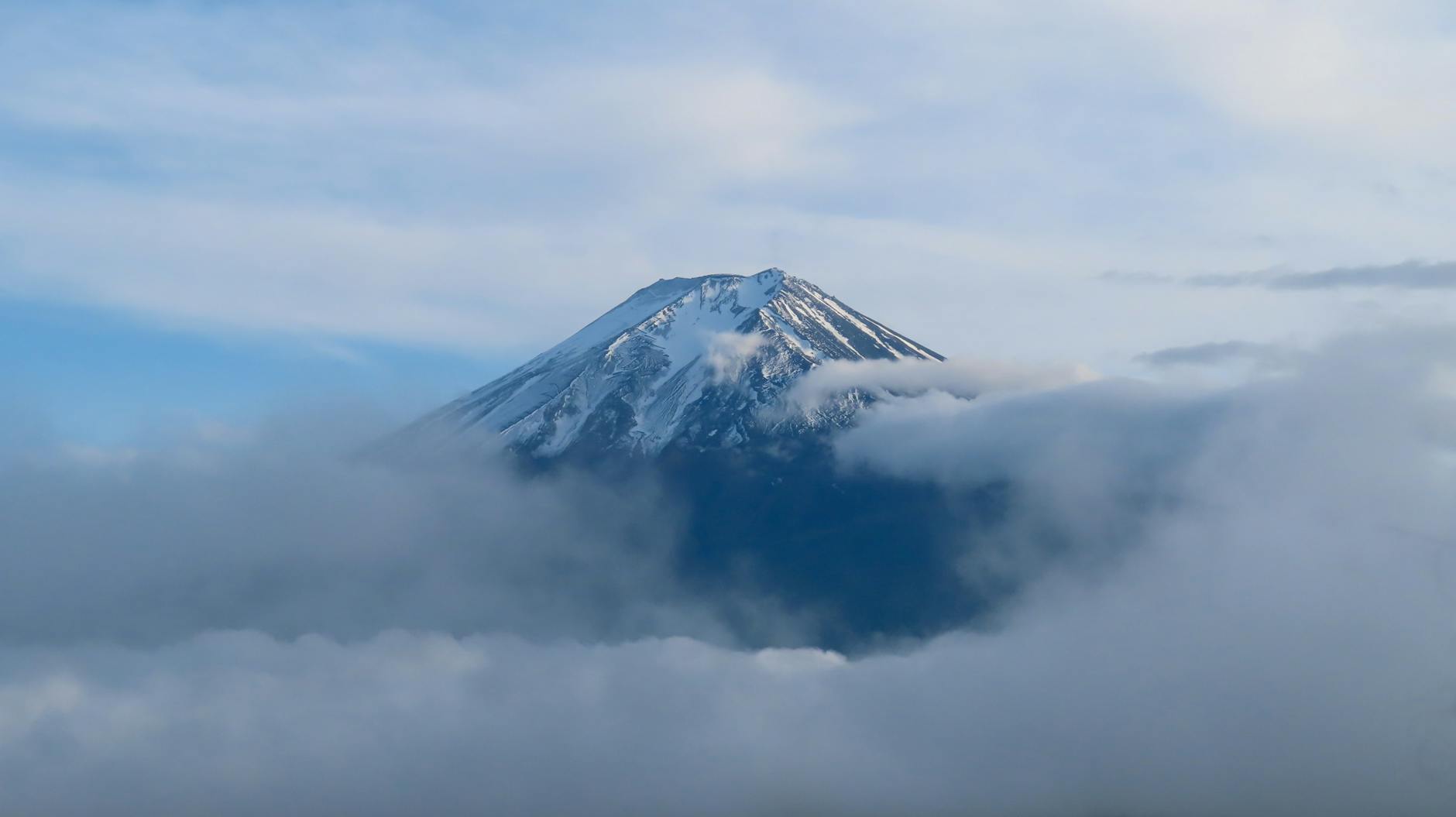
Mount Fuji is one of the most recognizable mountains on Earth. Its near-perfect cone, snow-covered upper slopes, and towering height make it look calm, balanced, and almost unreal. Yet that famous silhouette belongs to an active stratovolcano.
A stratovolcano is a steep-sided volcano built up over time from many layers of lava, ash, and rock. Mount Fuji is a classic example. It rises to 3,776.24 meters, making it the highest mountain in Japan, and it last erupted in 1707–1708. That combination is what makes Fuji so fascinating: it is admired as a symbol of beauty, but it also has a very real volcanic history.
A postcard-perfect cone with real volcanic power
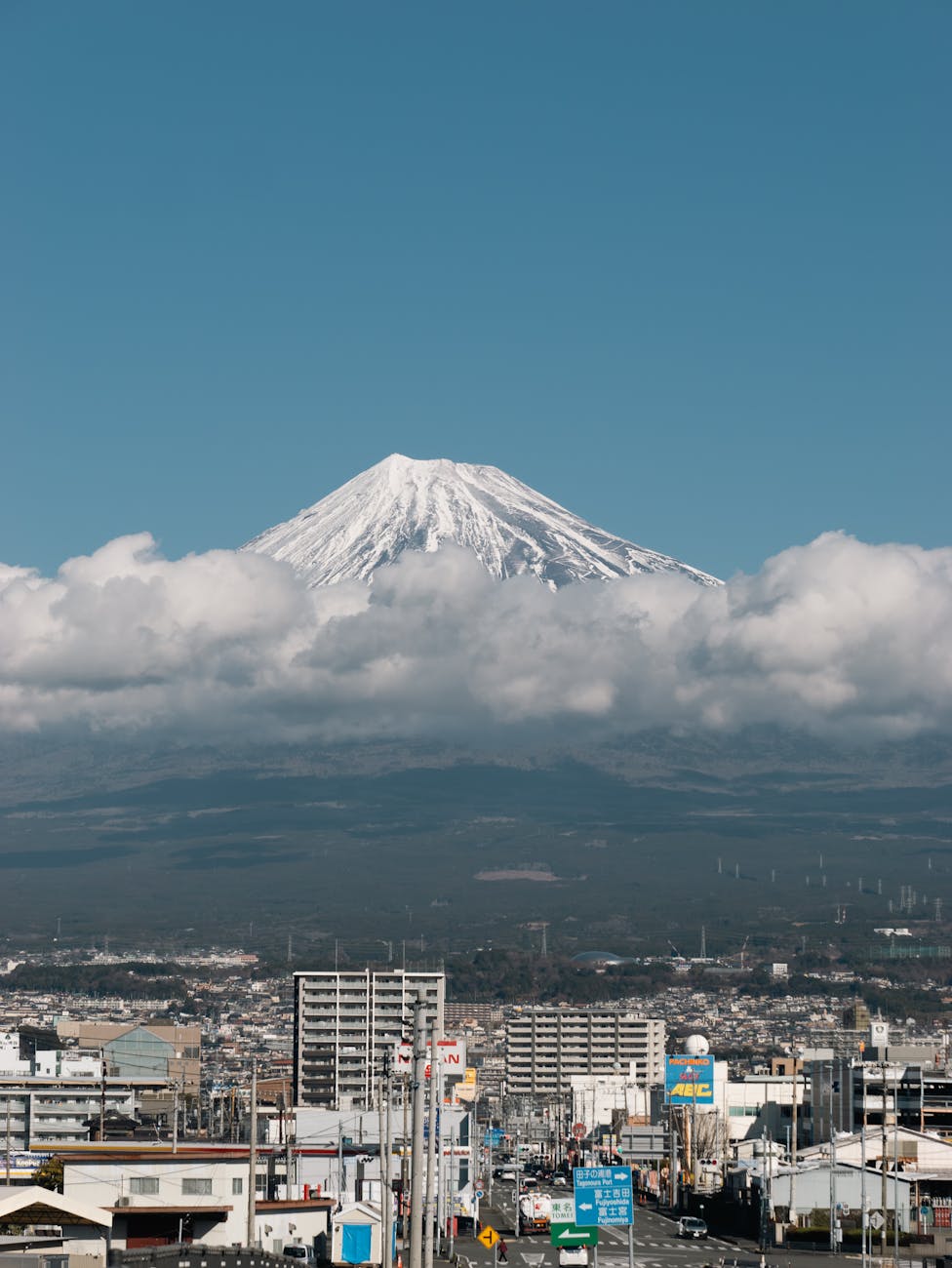
Part of Mount Fuji’s impact comes from its shape. The mountain is noted for its exceptionally symmetrical cone, a form so striking that it has inspired artists, poets, photographers, and travelers for centuries. It is visible from about 100 kilometers away in Tokyo on clear days, which helps explain why it holds such a powerful place in the Japanese imagination.
But symmetry should not be mistaken for safety. Fuji’s elegant form was created by repeated volcanic activity over a long span of time. Scientists have identified four distinct phases in its formation. Beneath the present mountain lies an older volcanic history, including Sen-komitake, Komitake Fuji, Old Fuji, and finally New Fuji, the modern mountain believed to have formed around 10,000 years ago.
This means the peaceful-looking peak seen today is the latest version of a landscape shaped by eruptions, lava, ash, cinder cones, landslides, and crater-building events.
What “active” really means for Mount Fuji
Mount Fuji is classified as an active volcano with a low risk of eruption. In simple terms, “active” means it is not considered extinct. It has erupted in recorded history, and the geological conditions that created it still exist.
Fuji sits in a complex tectonic setting near a triple junction trench where the Eurasian Plate, North American Plate, and Philippine Sea Plate meet. The Pacific Plate is subducting beneath these plates, and that process helps drive volcanic activity. Subduction happens when one tectonic plate is forced beneath another, deep into the Earth. This can generate the heat and pressure that feed volcanoes.
The volcano’s main crater is also impressive in size, measuring 780 meters across and 240 meters deep. Its slopes change angle at different distances from the summit, reflecting the different materials that built the mountain, including dry gravel and scoria. Scoria is a rough, lightweight volcanic rock full of gas bubbles, often produced during explosive eruptions.
The 1707–1708 eruption that changed Fuji
Mount Fuji’s most recent eruption, the Hōei eruption, began on December 16, 1707, and ended around January 1, 1708. This event is especially important because it did more than produce ash and cinders. It physically changed the mountain.
The eruption formed a new crater and a second peak called Mount Hōei, located halfway down Fuji’s southeastern side. During the eruption, Fuji spewed cinders and ash that were described as resembling rainfall in surrounding regions including Izu, Kai, Sagami, and Musashi.
That detail matters because it shows how far the effects of an eruption can spread beyond the mountain itself. Even a volcano famous for its stillness can produce dramatic and disruptive events.
Since that eruption, no signs of another eruption have been recorded. Even so, Fuji remains officially active, and public attention has returned to the question of future risk more than once.
A volcano close to Tokyo
One reason Mount Fuji feels so compelling is its location. It stands near the Pacific coast of central Honshu, about 100 kilometers southwest of Tokyo. On clear days, people in the capital can see it rising above the horizon.
That visibility gives Fuji a double identity. It is at once a scenic landmark and a nearby geologic threat. A geologic threat is a natural danger created by processes within the Earth, such as earthquakes, landslides, or volcanic eruptions.
Fuji is surrounded by towns and cities, including Gotemba, Fujiyoshida, Fujinomiya, and Fuji, and by the famous Five Lakes: Kawaguchi, Yamanaka, Sai, Motosu, and Shōji. The mountain is also part of Fuji-Hakone-Izu National Park. This is not an isolated volcano in a remote wilderness. It is woven into the daily geography of a heavily populated region.
Eruption fears in the modern era
Questions about Mount Fuji’s future have repeatedly resurfaced. After the 2011 Tōhoku earthquake, media reports speculated that the shock might trigger volcanic unrest. In 2012, mathematical models suggested the pressure in Fuji’s magma chamber could be higher than before the 1707 eruption. A magma chamber is an underground zone where molten rock collects beneath a volcano.
Those calculations drew attention, but they remained indirect and speculative. Other signs sometimes mentioned in discussions of volcanic danger, such as active fumaroles and recently discovered faults, were described as typical occurrences for this kind of volcano. A fumarole is an opening in the Earth that releases volcanic gases.
Concern continued into the 2020s. In 2021, a new hazard map was created to help residents plan for evacuation. A hazard map is a planning tool that shows areas potentially at risk from events such as lava flows. The update increased estimates of lava flow and added vents, which are openings through which volcanic material can escape. Soon afterward, a magnitude 4.8 earthquake struck the area, but the Japan Meteorological Agency said that it did not increase eruption risk. In 2023, a new evacuation plan was developed based on the updated hazard map.
All of this underlines the same point: Fuji may be quiet, but it is monitored because it is still a live volcanic system.
Why the mountain’s beauty can feel unsettling
Mount Fuji’s appearance creates a strange emotional effect. It looks orderly, still, and almost serene. Snow covers the cone for several months of the year, and its form appears so balanced that it has become an icon of natural perfection.
Yet the mountain’s geology tells a different story. It has a crater at the summit, more than 100 cinder cones aligned around it, more than 70 lava tunnels, and evidence of large landslides. Ancient and modern Fuji were shaped by repeated eruptions over thousands of years. The mountain that seems most stable is, in reality, the product of instability.
That contrast is part of what makes Fuji unforgettable. It is not simply beautiful despite being a volcano. Its beauty is the visible result of volcanic forces.
A sacred peak, a climbing destination, a living symbol
Mount Fuji is not only a volcano. It is also one of Japan’s “Three Holy Mountains,” a Special Place of Scenic Beauty, a Historic Site, and a World Heritage Cultural Site. UNESCO recognized it in 2013, noting its long influence on artists and poets and its role as an object of pilgrimage for centuries.
Its summit was considered sacred from ancient times. In later eras, worshippers climbed the mountain, shrines developed around it, and religious traditions such as Shugendō and Fuji-kō became closely tied to it. These spiritual associations add another layer to Fuji’s unusual identity: it is a mountain admired aesthetically, revered culturally, and studied scientifically.
Today it is also a major destination for hikers and climbers. Roughly 300,000 people climbed it in 2009. The main climbing season is July to August, when huts and other facilities are operating. Many people climb at night to witness the sunrise from near the summit, a spectacle known as goraikō, meaning “arrival of light.”
Even this modern hiking culture reflects the mountain’s dual nature. People come for the view, the symbolism, and the challenge. But they are also ascending an active volcano.
The enduring paradox of Mount Fuji
Mount Fuji is famous because it seems timeless, but its story is one of change. It stands serene above cities, lakes, roads, shrines, and climbing trails. It appears fixed and perfect. Yet it was built by eruptions, altered by collapse, reshaped by ash and cinders, and classified to this day as active.
That is the real power of Fuji’s image. It is not just a beautiful mountain beside a megacity. It is a reminder that some of nature’s calmest faces are shaped by deep and restless forces.
Sources
Based on information from Mount Fuji.
More like this
More about geography
More about nature
More about science
Mount Fuji proves that calm on the outside can hide something powerful underneath — tap into your own inner volcano and download DeepSwipe for daily eruptions of knowledge.


