Full article · 7 min read
Himeji Castle: The Fortress Built Like a Maze
Himeji Castle is famous for its brilliant white exterior and elegant silhouette, but its beauty hides a remarkably calculated defensive design. Beneath the image of the “White Egret Castle” was a fortress planned to frustrate, delay, and expose intruders long before they could ever reach the main keep.
This hilltop castle complex in Himeji, Hyōgo Prefecture, is regarded as the finest surviving example of prototypical Japanese castle architecture. It contains a network of 83 structures and a sophisticated defensive system from Japan’s feudal period. Among its most ingenious features was the approach to the keep: a route designed less like a straight road and more like a puzzle.
A Castle That Turned Movement Into a Weapon
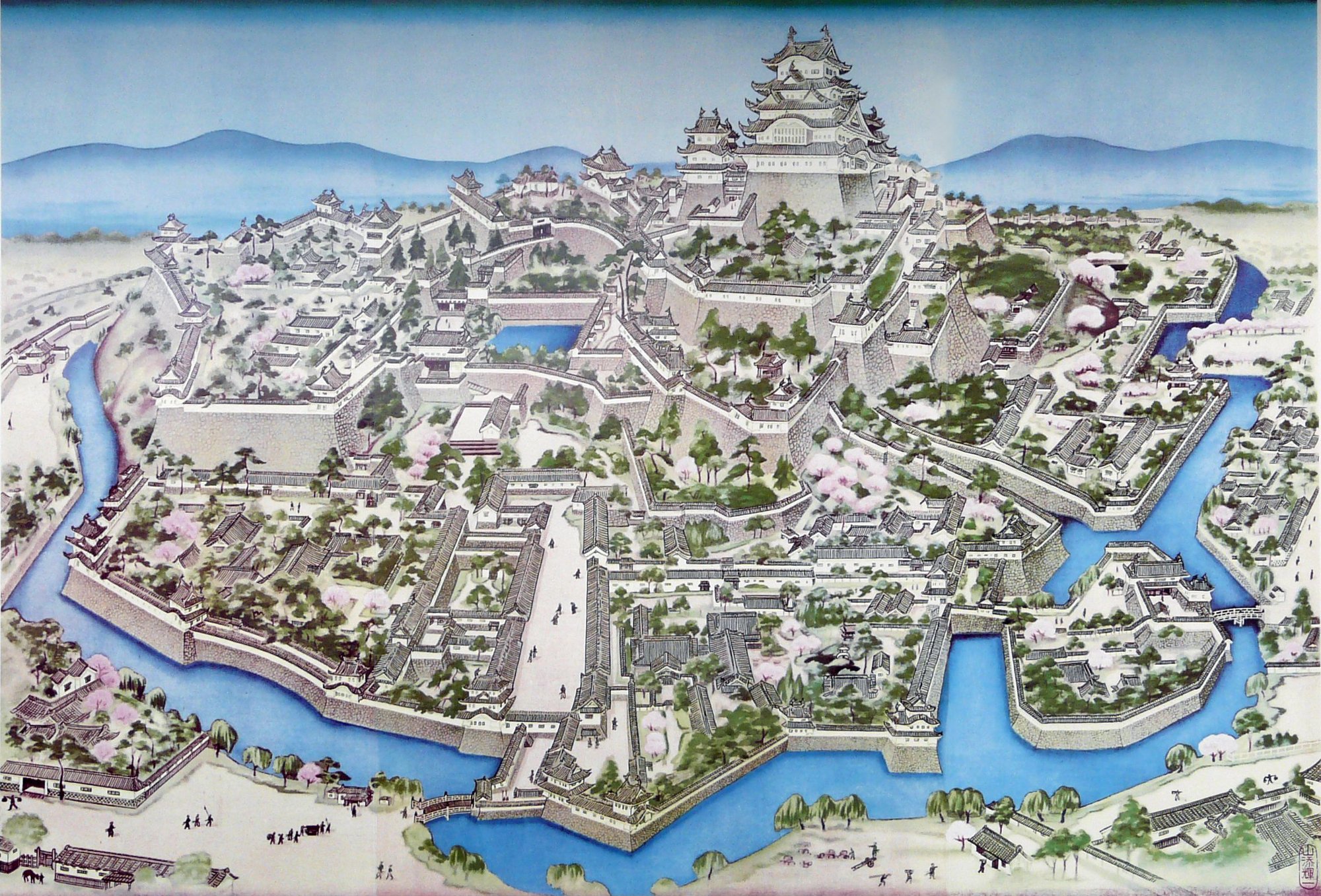
One of the most important defensive elements at Himeji Castle is the confusing maze of paths leading to the main keep, known as the tenshu. In Japanese castles from the Azuchi-Momoyama period onward, the tenshu was the most prominent structure. In peacetime, it served as a storehouse; in wartime, it functioned as a fortified tower.
At Himeji, the paths to that tower were carefully organized to disorient attackers. Gates, outer walls, and baileys were arranged to force an approaching enemy into a spiral pattern around the complex. A bailey is an enclosed courtyard within a castle’s defenses, and at Himeji these spaces were not simply open areas—they were part of a larger system meant to control how people moved.
Instead of allowing a direct advance, the castle pushed intruders through a winding route. This made the approach longer, more tiring, and more dangerous. The design effectively turned the landscape of the castle into a defensive weapon.
The Path Was Much Longer Than It Looked
The best example of this deceptive planning is the route from Hishi Gate to the main keep. In a straight line, the distance is only 130 meters. But anyone actually trying to get there on foot through the castle’s intended route would have to travel 325 meters.
That difference reveals the genius of the layout. An enemy could see the objective, but reaching it was another matter entirely. The walkways were designed to turn back on themselves, greatly inhibiting navigation. This kind of layout could create hesitation and confusion at exactly the moment attackers needed speed and coordination.
Even now, with the route clearly marked for visitors, many people still have trouble navigating the complex. That modern confusion offers a glimpse of how disorienting the castle must have been when filled with gates, defensive positions, and the threat of armed defenders.
Narrow Passages, Steep Walkways, Constant Exposure
The maze-like route did more than slow people down. It also made them vulnerable.
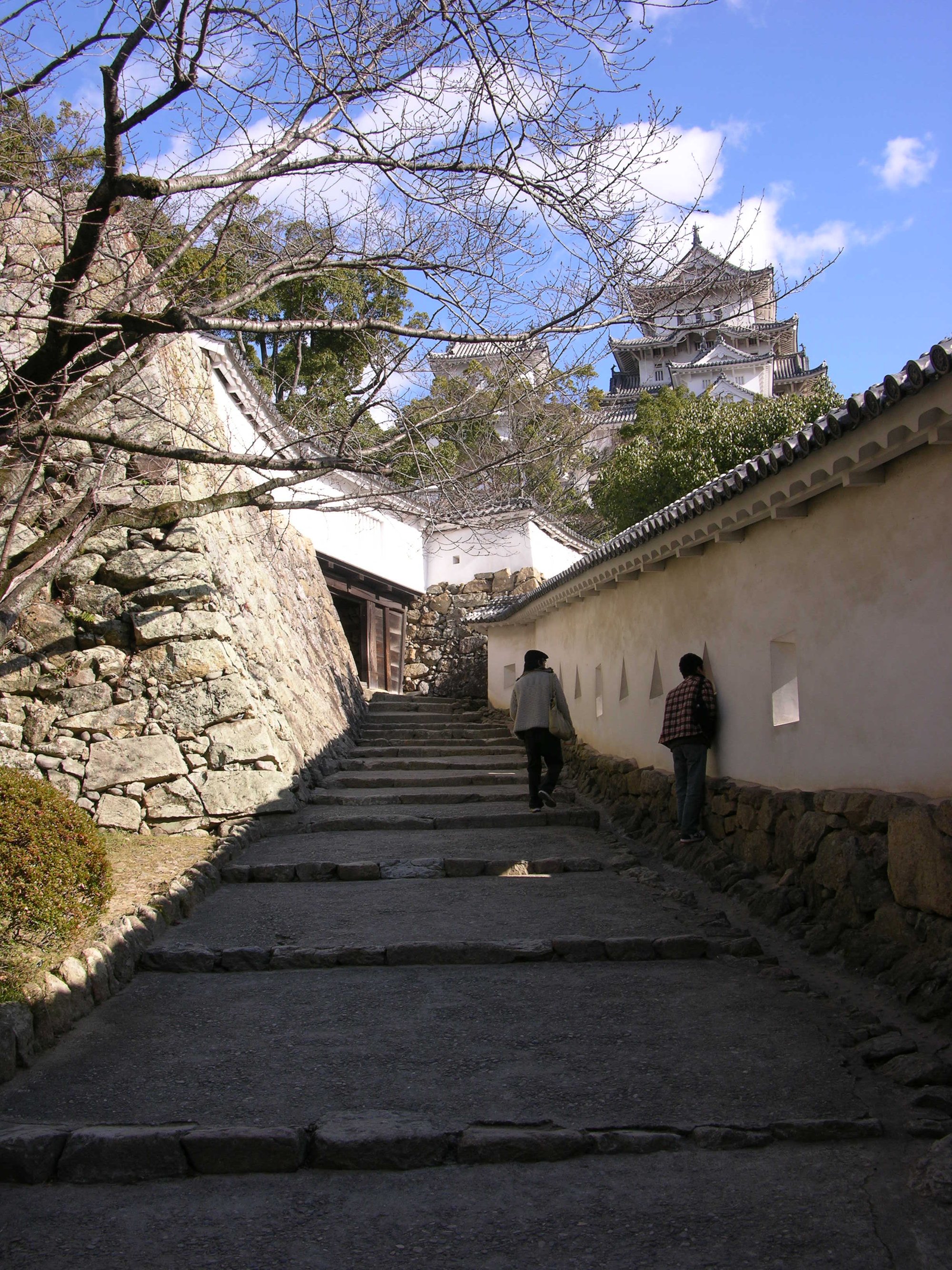
The passages leading toward the keep were steep and narrow, further inhibiting entry. A steep path tires climbers and breaks their momentum. A narrow path limits how many people can move forward at once and makes it harder to maneuver. In a military context, those details matter enormously.
As intruders struggled through these constrained passageways, defenders could watch their approach from above. The system was designed so that enemies could be observed and fired upon during their lengthy progress toward the keep. Rather than confronting attackers in one dramatic clash at the entrance, the castle forced them into a long, exposed advance.
That idea is central to Himeji Castle’s defensive brilliance: it was built not just to block entry, but to shape the attacker’s experience step by step.
Fire From Loopholes, Attacks From Above
The maze worked hand in hand with other defensive features throughout the castle.
Himeji Castle contains roughly 1,000 loopholes in the remaining buildings. These openings, called sama, come in shapes including circles, triangles, squares, and rectangles. They allowed defenders armed with tanegashima or bows to fire on attackers without exposing themselves.
The castle also had angled chutes known as “stone drop windows,” or ishi-otoshi-mado. These were set into the walls so that defenders could drop stones or pour boiling oil on attackers passing below. In other words, the threat did not only come from the front. It could come from hidden openings, upper walls, and elevated positions all along the route.
Platforms on the third and fourth floors of the main keep added yet another layer. These “stone-throwing platforms,” called ishiuchidana, were placed at the north and south windows, allowing defenders to observe or attack people below. The same floors also included enclosed “warrior hiding places,” or mushakakushi, where defenders could conceal themselves and launch surprise attacks on intruders entering the keep.
Taken together, these features made the castle approach a deadly obstacle course.
Gates, Moats, and Layers of Delay
The maze-like route was only one part of a much larger system of layered defense.
When Ikeda Terumasa rebuilt and expanded Himeji Castle from 1601 to 1609, he added three moats and transformed it into the castle complex seen today. Moats are water-filled defensive barriers, and at Himeji they formed another obstacle before attackers could even begin navigating the internal routes. Parts of the central moat and all of the inner moats still survive. Their average width is 20 meters, with a maximum width of 34.5 meters and a depth of about 2.7 meters.
Inside the complex, the castle originally had 84 gates, 15 of them named according to the Japanese syllabary iroha. Today, 21 gates remain intact, and 13 of those still carry iroha names. The large number of gates itself hints at how segmented and controlled the site was. Each threshold could redirect movement, slow progress, and expose intruders to another defensive angle.
The result was a fortress where reaching the center was never simply a matter of breaking through one barrier. It meant surviving a sequence of controlled spaces, each one designed to wear down an attacker’s options.
A Fortress Prepared for Siege
Himeji Castle’s route system was supported by practical preparations for prolonged defense.
The complex contained numerous warehouses in the Waist Quarter, or koshikuruwa, where rice, salt, and water could be stored in case of siege. A siege is a military attempt to isolate and wear down a fortified place rather than storm it quickly. Himeji was built with that possibility in mind.
A structure called the Salt Turret was used specifically to store salt, and it is estimated to have held as many as 3,000 bags. The complex also had 33 wells within the inner moat, 13 of which remain. The deepest reaches 30 meters.
There was even a pond inside the castle called the Three Country Moat, with an area of 2,500 square meters, used in part to store water for fire prevention. White plaster was also used in construction because of its resistance to fire.
All of this shows that Himeji’s defenses were not only about defeating a sudden assault. They were also about endurance.
The Brilliant Trap That Was Never Truly Used
For all its ingenuity, Himeji Castle’s famous spiral defense was never tested in the way it was intended.
The system allowed intruders to be watched and fired upon from the keep during their long approach, but Himeji Castle was never attacked in this manner. That gives the castle an almost paradoxical legacy: one of the most sophisticated route-trap defenses in Japan became famous without ever proving itself in a real assault on the keep.
Yet that does not make the design less impressive. If anything, it makes Himeji even more fascinating. It remains a masterpiece of military planning preserved in wood, stone, plaster, and space—a place where architecture itself was meant to confuse, intimidate, and control.
Why Himeji Castle Still Captivates Visitors
Himeji Castle survives as the largest and most visited castle in Japan, and it was registered in 1993 as one of the first UNESCO World Heritage Sites in the country. It has also endured extraordinary threats over time. The castle survived the bombing of Himeji in 1945, when much of the surrounding area burned, and it came through the 1995 Great Hanshin earthquake virtually undamaged.
Its appearance may be graceful, even serene, but its design tells a different story. This was a fortress where every gate, turn, slope, and corridor could become part of a defense. Its beauty drew the eye, but its layout was built to mislead the feet.
That is what makes Himeji Castle so memorable. It was not only a castle with walls. It was a castle with a plan for how an enemy would move, hesitate, bunch together, get lost, and remain exposed all the way to the center.
And centuries later, people still walk its paths and discover the same thing: the maze still works.
Sources
Based on information from Himeji Castle.
More like this
More about architecture
More about history
More about war
Get delightfully lost in great stories instead — download DeepSwipe and wander deeper into knowledge every day.


