Full article · 8 min read
Mount St. Helens and the Eruption That Blew Sideways
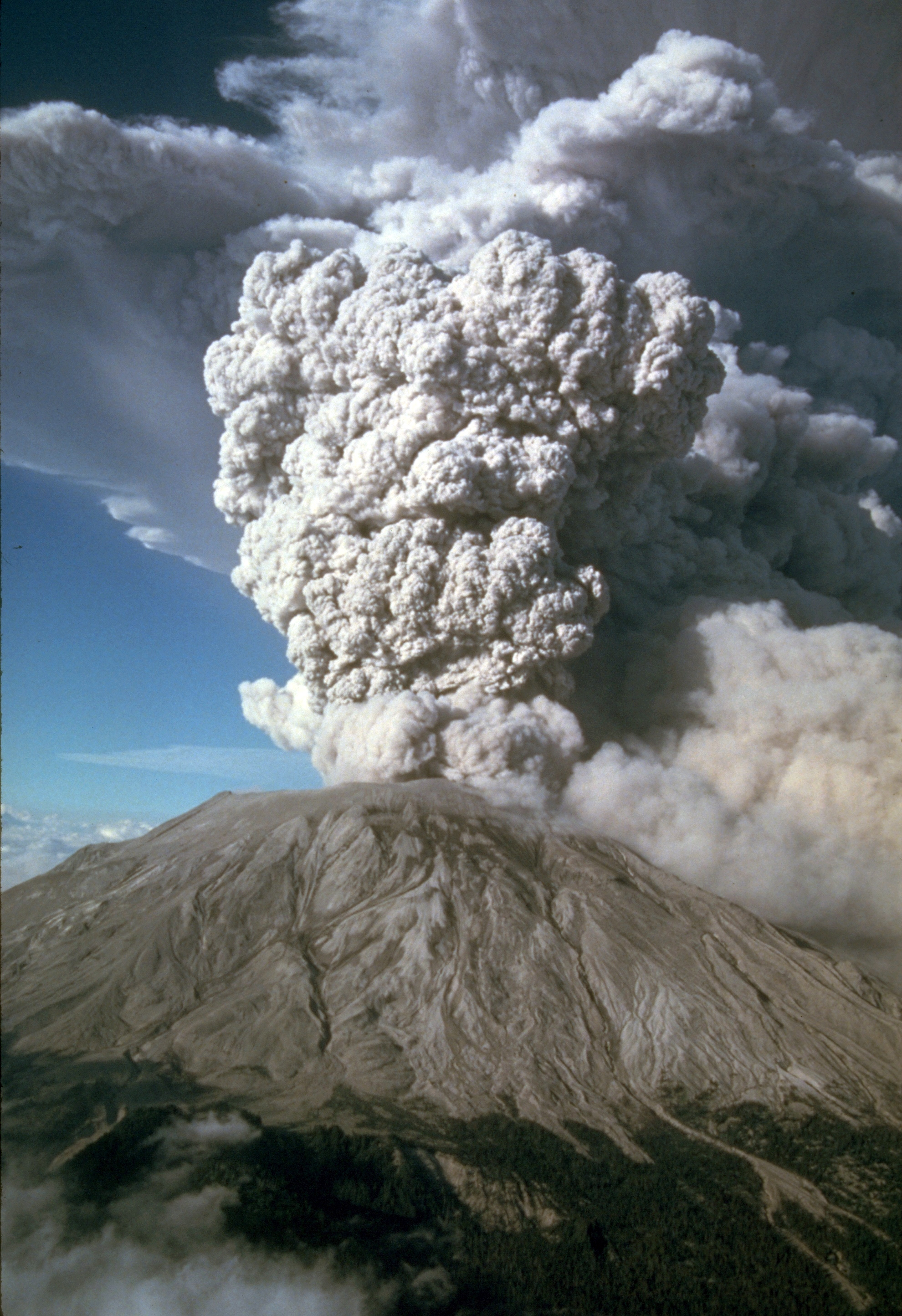
Most people picture a volcano erupting like a chimney: pressure builds, then ash and lava blast straight into the sky. On May 18, 1980, Mount St. Helens in Washington showed that volcanoes can behave in a far more dangerous way. Instead of simply exploding upward, the mountain’s weakened north side collapsed, and the eruption blasted outward in a devastating lateral burst.
That sideways explosion became one of the defining features of the disaster. It helps explain why the eruption was so destructive, why the surrounding landscape was transformed so quickly, and why Mount St. Helens is often remembered as the most disastrous volcanic event in U.S. history.
Why Mount St. Helens was primed for collapse
Before the climactic eruption, the volcano had been showing signs of unrest for weeks. Small earthquakes began on March 15, 1980, suggesting magma was moving below the mountain. Magma is molten rock beneath Earth’s surface, and when it pushes upward, it can deform the ground above it.
That is exactly what happened at Mount St. Helens. The north side of the volcano started swelling outward into a massive bulge. By late April, a section about 1.5 miles in diameter had already been pushed outward by at least 270 feet. Through late April and early May, the bulge kept growing by about 5 to 6 feet per day. By mid-May, it extended more than 400 feet north.
This was not just a cosmetic change in the mountain’s shape. It was a warning that the volcano’s flank had become unstable. Geologists considered the sliding bulge the greatest immediate danger because a collapse could trigger a much larger eruption.
The magma causing this deformation remained below the ground rather than breaking out as visible lava. Because it was hidden underground, it was called a cryptodome. In simple terms, that means a mound of magma pushing up from within the volcano without fully emerging at the surface.
The earthquake that uncorked the volcano
By the morning of May 18, Mount St. Helens did not appear dramatically different from the previous month. Measurements of the bulge, sulfur dioxide emissions, and ground temperature did not clearly signal that a catastrophic eruption was only moments away.
Then, at 8:32 a.m., a magnitude 5.1 earthquake struck directly below the volcano’s north slope. Magnitude is a number used to describe the strength of an earthquake. This quake triggered the collapse of the mountain’s already weakened north face.
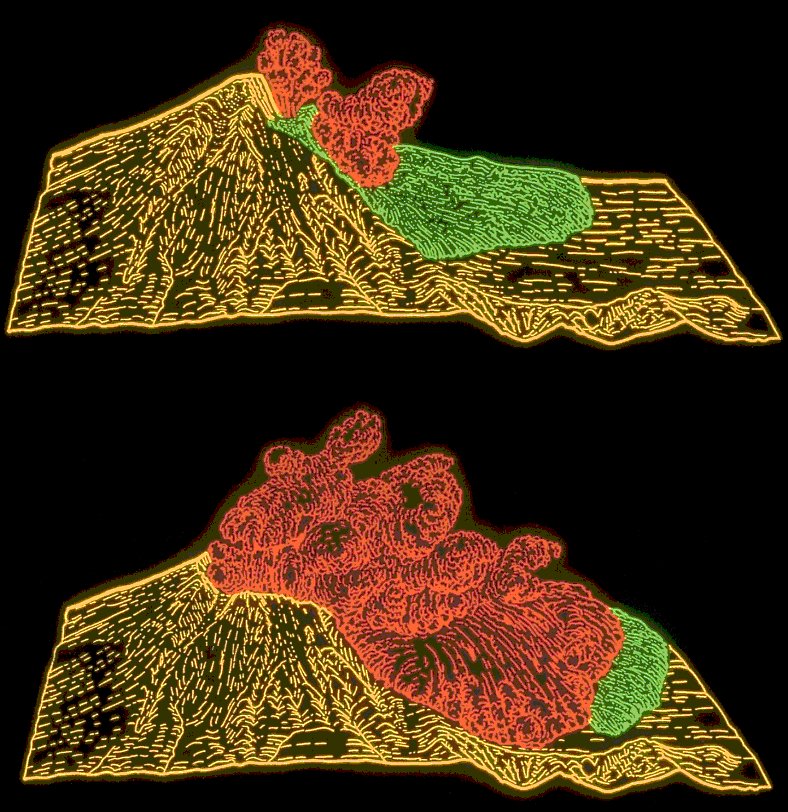
The result was extraordinary: the entire unstable section slid away in what became the largest subaerial landslide in recorded history. “Subaerial” simply means it happened on land rather than underwater.
The collapsing mass moved at speeds of roughly 110 to 155 miles per hour. It swept across Spirit Lake’s west arm, spilled down the North Fork Toutle River valley, and left behind a vast deposit of rubble. Much of the former north side of Mount St. Helens became a debris field stretching 17 miles long.
Why the eruption went sideways
The landslide did more than strip away part of the mountain. It suddenly removed pressure from the gas-rich, partly molten rock inside the volcano. That rapid loss of pressure was like uncorking a violently shaken bottle.
A few seconds after the collapse began, the exposed material exploded northward. This was the famous lateral blast, an eruption directed sideways instead of mainly upward.
The blast consisted of extremely hot volcanic gases, ash, pumice, and pulverized older rock. Pumice is a lightweight volcanic rock formed from gas-rich lava. Because the blast hugged the ground rather than rising immediately into the air, it became especially destructive.
Initially traveling around 220 miles per hour, the lateral blast quickly accelerated to about 670 miles per hour and may have briefly exceeded the speed of sound. It spread across a fan-shaped area about 23 miles wide and 19 miles long.
This is what made Mount St. Helens so different from the usual mental image of a volcano. The mountain did not simply send danger upward into the atmosphere. It sent it racing sideways through forests, across ridges, and into everything in its path.
A blast that erased forests
The lateral blast devastated around 230 square miles of forest. In the innermost zone, virtually everything was obliterated or swept away. Farther out, the force flattened trees in the same direction, leaving entire forests looking as if they had been cut down by a gigantic invisible scythe. In the outermost affected zone, trees remained standing but were seared brown by the heat.
The effects varied depending on the terrain. In some places, the blast scoured away vegetation and even topsoil, making recovery slow. In other places, where the flow was deflected overhead by local topography, seeds and soil remained, allowing faster regrowth.
The eruption also hurled an ash column 80,000 feet into the atmosphere and spread ash across 11 U.S. states and into Canadian provinces. But the sideways-moving blast was the feature that instantly transformed the area north of the volcano into a disaster zone.
What a pyroclastic flow means
The sideways blast is often described as a pyroclastic flow, or as part of a pyroclastic surge. In practical terms, that means a fast-moving current of superheated gas, ash, and rock fragments produced by an eruption. At Mount St. Helens, this material raced outward at astonishing speed and extreme temperature.
By the time it reached some of its first human victims, it was still about 680 degrees Fahrenheit and filled with suffocating gas and flying debris. Most of the 57 known deaths from the eruption were caused by asphyxiation, while others died from burns.
Among those killed were volcanologist David A. Johnston, photographers Reid Blackburn and Robert Landsburg, and lodge owner Harry R. Truman. Landsburg, who was near the summit, protected his film with his body; the surviving photos later provided valuable documentation of the eruption.
At least 17 separate pyroclastic flows occurred during the May 18 eruption. Even two weeks later, some deposits remained between about 570 and 790 degrees Fahrenheit.
Spirit Lake and the moving wall of destruction
The collapse and sideways blast also triggered dramatic changes at Spirit Lake. The landslide displaced the lake’s waters into a giant wave about 600 feet high. When the water rushed back, it carried thousands of uprooted trees and stumps.
The eruption zone became a tangled landscape of floating logs, muddy deposits, and shattered terrain. Even decades later, floating log mats persisted on Spirit Lake and nearby St. Helens Lake, shifting with the wind.
The blast and heat also melted snow, ice, and glaciers on the mountain, creating lahars. Lahars are volcanic mudflows made of water, ash, rock debris, and sediment. These muddy torrents rushed down river valleys and reached as far as the Columbia River, nearly 50 miles away. In some places they moved as fast as 90 miles per hour while still high on the volcano.
The human and economic toll
The May 18 eruption killed about 57 people and caused more than $1 billion in damage, equivalent to $3.5 billion in 2024. It destroyed 200 houses, 47 bridges, 15 miles of railway, and 185 miles of highway. Hundreds of square miles were reduced to wasteland.
The blast and ashfall also devastated wildlife and natural resources. Thousands of animals were killed. As many as 1,500 elk and 5,000 deer died, and millions of young salmon were lost when hatcheries were destroyed or when altered river conditions became deadly.
The eruption damaged or destroyed more than 4 billion board feet of timber. In agricultural areas downwind, crops including wheat, apples, potatoes, and alfalfa were destroyed where ash accumulated heavily.
A mountain permanently reshaped
Mount St. Helens did not just erupt. It physically lost part of itself. The removal of the north side of the volcano reduced its height by about 1,300 feet and left a crater 1 to 2 miles wide and about 2,100 feet deep, open to the north in a huge breach.
In total, the eruption released thermal energy equal to 24 megatons of TNT. More than 1 cubic mile of material was ejected, including fresh lava in the form of ash, pumice, and volcanic bombs, along with older fragmented rock.
The mountain continued erupting after May 18, with additional explosive eruptions between May and October 1980. Through early 1990, at least 21 periods of eruptive activity occurred, and Mount St. Helens remained active with smaller dome-building eruptions continuing into 2008.
Why the sideways blast still matters
Mount St. Helens became a powerful lesson in volcanic hazards because it showed that the deadliest danger may not come from a neat vertical plume. A volcano can fail structurally, lose a whole flank, and unleash a horizontal explosion that outruns intuition.
That is why the 1980 eruption remains so important in geology, disaster history, and public safety. It was not only an eruption. It was a landslide, a lateral blast, a pyroclastic disaster, an ash event, and a mudflow crisis all at once.
Mount St. Helens proved that when a mountain blows sideways, the landscape, and our understanding of volcanic danger, can change in seconds.
Sources
Based on information from 1980 eruption of Mount St. Helens.
More like this
More about nature
More about science
Knowledge can hit like a lateral blast — in a good way. Download DeepSwipe and let fascinating facts erupt into your day.