Full article · 7 min read
How Chernobyl’s Shutdown Button Helped Trigger the Explosion
The most haunting detail of the Chernobyl disaster is not just that reactor no. 4 exploded during a safety test. It is that the emergency shutdown system — the very mechanism meant to stop danger — briefly made the reactor more dangerous.
On 26 April 1986, the catastrophe at the Chernobyl Nuclear Power Plant unfolded during a test meant to simulate cooling the reactor in blackout conditions. What happened next has become one of the most shocking examples of how unstable operating conditions and a hidden design flaw can combine into disaster.
The Reactor Was Not Supposed to Behave This Way
Under normal circumstances, an emergency shutdown, also called a scram, should rapidly reduce the nuclear chain reaction. At Chernobyl, pressing the AZ-5 emergency button was intended to insert all control rods into the reactor core and shut the reactor down.
Control rods are used to regulate reactor power. They work by affecting the chain reaction inside the core. In reactor no. 4, however, the control rods had graphite extensions attached to their ends. Graphite is a neutron moderator, which means it helps sustain the reaction under certain conditions. Water inside the reactor, by contrast, absorbed neutrons.
That combination created a dangerous quirk. When the rods began moving downward from their fully withdrawn position, the graphite extensions first displaced neutron-absorbing water before the absorbing sections of the rods could do their job. So, for a brief moment, inserting the rods could increase reactivity instead of decreasing it.
Reactivity is simply a measure of how strongly the nuclear chain reaction is running. More reactivity means more power. At Chernobyl, that temporary boost became catastrophic.
A Safety Test Drifted Into Unsafe Territory
The accident began during a planned test of whether the rotational momentum of the steam turbine could provide enough electricity to run coolant pumps for a short period after a power loss, before backup diesel generators reached full output.
This test had already failed in 1982, 1984, and 1985. It was scheduled again in 1986 during a controlled power-down before maintenance. The procedure called for lowering reactor power to between 700 and 1,000 megawatts thermal.
But the schedule did not hold. On 25 April, the Kiev electrical grid controller requested that the reduction in Chernobyl’s output be postponed because another power station had unexpectedly gone offline. As a result, the reactor remained in an altered operating state for hours. The emergency core cooling system had already been disabled as part of the test preparation and was left disabled through the delay.
By the time the shutdown resumed late that night, the day shift was gone, the evening shift was leaving, and the night shift had little time to prepare. The experiment that should have been completed earlier was now being carried out under pressure, at the wrong time, by a team forced to inherit a delayed and increasingly awkward setup.
The Power Drop That Put the Reactor on Edge
The plan called for a gradual reduction to a stable level. Instead, reactor power dropped far below the intended range.
One major reason was xenon-135, a fission byproduct described as a neutron absorber. In simple terms, xenon-135 makes it harder for the chain reaction to continue. At higher power, it gets burned off quickly. But when power falls, xenon can build up faster than it disappears, suppressing the reactor. This phenomenon is known as reactor poisoning.
At around midnight, power reached about 720 MW, near the intended target. Then it dropped much further, to an unintended near-shutdown state of around 30 MW thermal or less. That was only a tiny fraction of the minimum level planned for the test.
To recover power, operators removed numerous control rods. Eventually the reactor was brought back only to about 160 MW, and later to about 200 MW — still far below the prescribed range. By then, the configuration had become deeply unsafe.
Why Boiling Water Became a Threat
At 200 MW, the reactor was extremely unstable. More main circulating pumps were activated, increasing coolant flow and reducing steam bubbles for a time. But the operators had to remove even more control rods to maintain power.
This mattered because the RBMK reactor design had what is called a positive void coefficient. That sounds technical, but the idea is simple and crucial: when water in the core boiled into steam, the steam pockets — called voids — increased reactivity instead of reducing it.
In many systems, boiling would help dampen the reaction. Here, boiling pushed it higher.
So the reactor entered a dangerous feedback loop:
- more boiling created more steam voids
- more steam voids increased reactivity
- increased reactivity produced more heat
- more heat caused more boiling
At the same time, nearly all control rods had been withdrawn. The reactor had become highly sensitive to steam formation and increasingly vulnerable to an uncontrolled power surge.
The Fatal Design Flaw in the Control Rods
At 01:23:04, the test began. Steam to the turbine was shut off, and as the turbine coasted down, pump power started to fall. Water flow decreased. Steam voids increased.
Then, at 01:23:40, just as the experiment was ending, an operator pressed the AZ-5 button to initiate emergency shutdown.
This should have ended the danger.
Instead, the design flaw struck.
Because the control rods had graphite extensions at their ends, the first motion of insertion displaced neutron-absorbing water with neutron-moderating graphite. In the unstable conditions inside reactor no. 4, that created an initial rise in the reaction rate.
This effect was not completely unknown. A similar reactor at Ignalina Nuclear Power Plant had experienced a power spike during control rod insertion in 1983. But countermeasures were not implemented.
At Chernobyl, the exact conditions that made this flaw devastating had now fallen into place almost perfectly: very low power, too many rods withdrawn, unstable coolant conditions, and a reactor highly sensitive to void formation.
Three Seconds to Destruction
Only a few seconds into the shutdown, a power spike occurred.
The core overheated so rapidly that some fuel rods fractured. It has been speculated that this damage may have jammed the control rods at about one-third insertion, preventing the full shutdown from completing. Within three seconds, reactor output had risen above 530 MW. Then the surge accelerated beyond what the instruments could properly record.
The last indicated reading on the control panel was around 30,000 MW thermal — ten times normal operational output. Some estimates suggest the spike may have been even higher.
That power surge caused fuel temperatures and steam pressure to soar. Fuel cladding failed. Fuel elements were released into the coolant. Channels ruptured.
Then came the explosions.
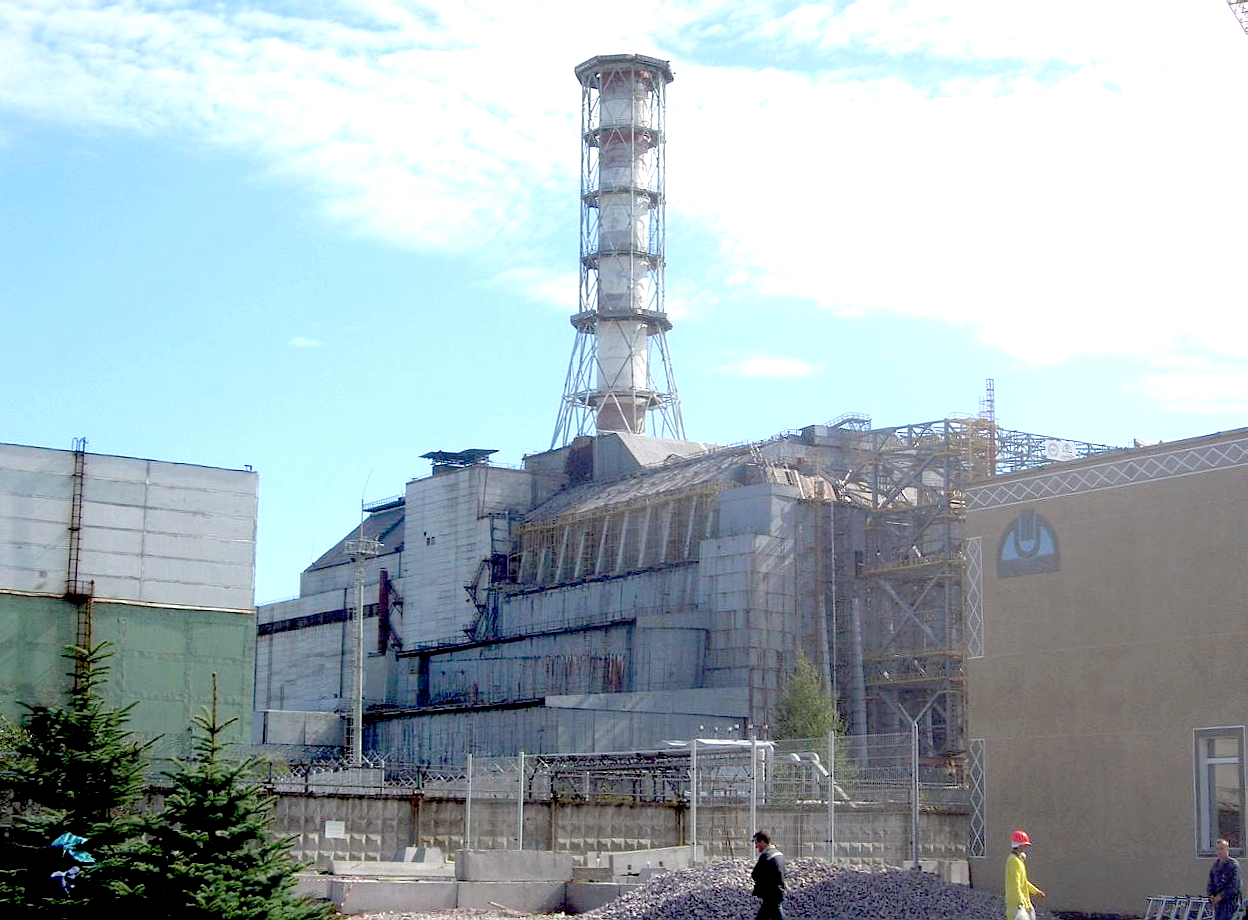
A steam explosion appears to have been the next event, destroying the reactor casing and blasting off the upper biological shield, a massive upper plate to which the reactor assembly was fastened. A second, more powerful explosion followed two or three seconds later, dispersing damaged reactor core material and effectively ending the nuclear chain reaction.
Burning graphite and fuel fragments were thrown into the air. Fires started. Airflow through the destroyed core helped spread radioactive contamination far beyond the plant.
Why This Design Flaw Matters So Much
The Chernobyl accident was not caused by one thing alone. It emerged from a combination of test conditions, operator actions, reactor instability, and poor safety culture. But the shutdown button’s role remains one of the most chilling parts of the story because it reveals how a safety system can fail in reverse.
According to later investigation by the International Nuclear Safety Advisory Group, earlier reporting focused heavily on operator actions. A revised assessment placed the main cause on the reactor’s design, while still identifying inadequate safety culture at managerial and operational levels as a major underlying factor.
That distinction matters. It means the disaster was not simply a case of someone pushing the wrong button. The reactor had been brought into a state where the design itself turned an emergency shutdown into the trigger for the final surge.
The Twist That Defined Chernobyl
The brutal irony of Chernobyl is hard to overstate. A reactor already primed by low power, withdrawn control rods, unstable coolant flow, and a positive void coefficient was given one last push by the very system meant to suppress it.
A shutdown button should be the end of the story. At Chernobyl, it was the beginning of the final three seconds.
That is why the reactor design flaw remains central to understanding the disaster: the catastrophe did not start with an intent to explode a reactor. It started with a safety test, an unstable machine, and an emergency action that briefly made the chain reaction race faster instead of slower.
Sources
Based on information from Chernobyl disaster.
More like this
More about history
More about science
More about technology
Hit the AZ-5 button on boredom instead — download DeepSwipe and trigger a safer kind of power surge.