Full article · 8 min read
Himeji Castle: How One Japanese Castle Survived Bombs, Fire, and Earthquakes
Himeji Castle has a reputation that feels almost mythical. For nearly 700 years, this hilltop castle complex in Himeji, Hyōgo Prefecture, has remained standing through political upheaval, abandonment, wartime destruction around it, and major natural disaster. That survival is one reason it stands apart not just as the largest castle in Japan, but as one of the most astonishingly resilient historic structures anywhere.
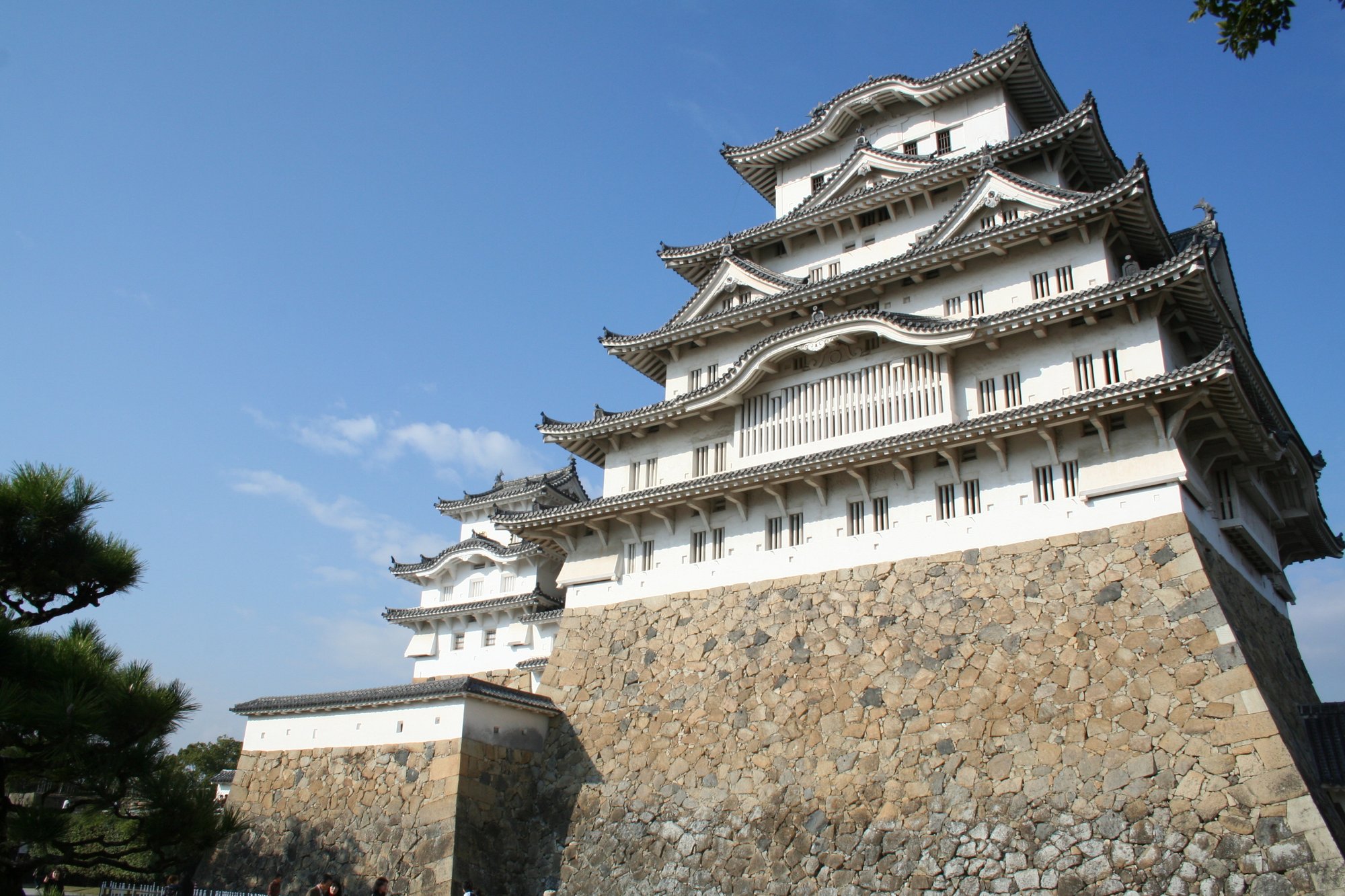
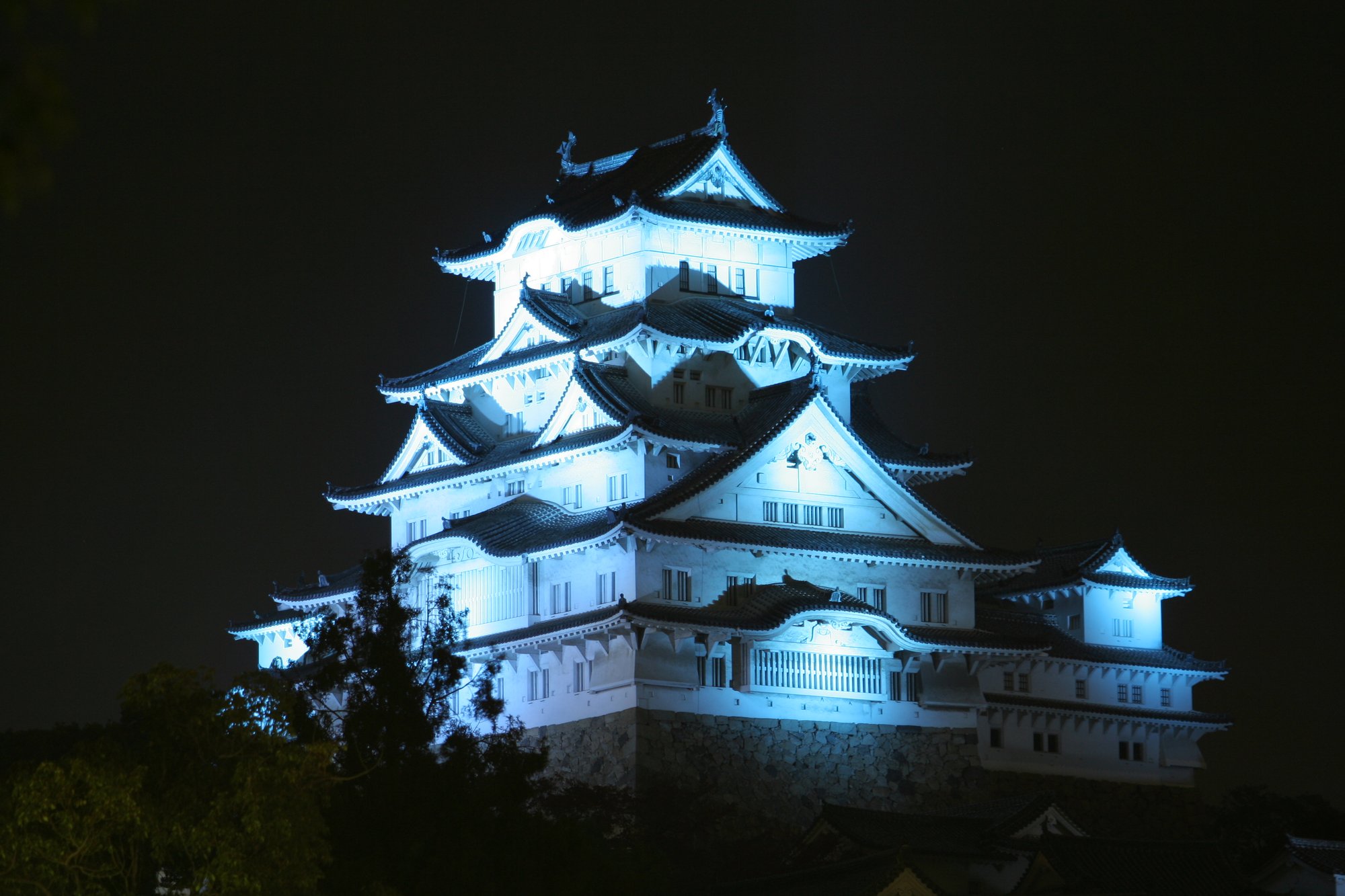
Often called White Egret Castle or White Heron Castle because of its brilliant white exterior and birdlike silhouette, Himeji Castle is famous for beauty. But its endurance may be even more impressive. This is a fortress that outlasted the feudal period, escaped demolition in the modern era, survived the bombing of Himeji in World War II, and came through the 1995 Great Hanshin earthquake with virtually no damage.
A survivor in the middle of destruction
Near the end of World War II, Himeji was heavily bombed in 1945. Most of the surrounding area was burned to the ground. In many cities, that kind of devastation would have meant the end of a centuries-old wooden castle.
But not here.
Himeji Castle survived intact. One firebomb even struck the top floor of the castle and failed to explode. That detail alone makes the story feel unreal: a direct wartime hit on the keep, yet the castle remained standing.
The keep, called the tenshu in Japanese castle architecture, was the castle’s main tower and most prominent structure. In times of war, it served as a fortified tower. In times of peace, it functioned more as a storehouse, while the feudal lord’s offices and residences were located in nearby buildings and turrets. At Himeji, that central tower became the symbol of a structure that somehow passed through one of the most destructive periods of the 20th century.
The earthquake test that stunned observers
Himeji Castle’s wartime survival would already be remarkable enough. But the castle faced another severe test in January 1995, when the city of Himeji was substantially damaged by the Great Hanshin earthquake.
Once again, the castle survived virtually undamaged.
Its resistance to the quake was so striking that even a bottle of sake placed on the altar at the top floor of the keep remained in place. That small image says a lot. Earthquakes can topple walls, crack foundations, and shake loose centuries of careful construction. Yet the castle’s structure held so well that even a ceremonial bottle did not fall.
That resilience is especially impressive because Himeji Castle is not a small structure. The main keep rises 46.4 meters high and stands 92 meters above sea level. It forms a cluster of towers with three smaller subsidiary keeps, creating one of the most recognizable castle silhouettes in Japan.
Why Himeji Castle was built to endure
Himeji Castle was not designed as a decorative building alone. It was a defensive complex from the feudal period, and much of its architecture reflects that purpose.
The castle includes 83 structures, such as gates, corridors, storehouses, and turrets. A turret, known in Japanese as a yagura, is a watchtower-like structure used for defense, storage, or support around the main keep. The complex also had advanced defensive systems intended to slow, confuse, and expose attackers.
Loopholes were built throughout the castle in shapes such as circles, triangles, squares, and rectangles. These openings allowed defenders armed with matchlocks or bows to fire on attackers while staying protected. Matchlocks were early firearms used in the feudal era. Roughly 1,000 loopholes still exist in the remaining castle buildings.
The walls also featured angled openings called stone drop windows. These allowed defenders to drop stones or boiling oil onto attackers below. White plaster was used in the construction because it resisted fire, an especially important feature for a large complex built primarily from wood and stone.
Then there was the layout itself. One of Himeji Castle’s most important defenses was its maze-like approach. The gates, baileys, and outer walls were arranged to confuse anyone advancing toward the main keep. A bailey is an enclosed defensive courtyard within a castle. At Himeji, intruders would be forced to move in a spiral-like route around the complex rather than travel directly to the center.
Even where the main keep looks close, the path can be much longer than expected. From Hishi Gate to the main keep, the straight-line distance is only 130 meters, but the actual path runs 325 meters. The passages are steep and narrow, and some routes even double back on themselves. The system was meant to slow attackers so they could be watched and fired upon during their approach.
Interestingly, Himeji Castle was never attacked in this way, so this elaborate defensive design remained untested in actual combat. Even so, visitors today still find the castle layout confusing, despite clearly marked routes.
Built, rebuilt, and preserved across centuries
The long survival of Himeji Castle begins with a long construction history. The site on Himeyama hill was first fortified in 1333 by Akamatsu Norimura during the Genkō War. In 1346, the original fort was replaced by Himeyama Castle. Later, the site was remodeled again into Himeji Castle.
In 1581, Toyotomi Hideyoshi significantly expanded it by adding a three-story keep. Then, after the Battle of Sekigahara in 1600, Tokugawa Ieyasu awarded the castle to Ikeda Terumasa. Ikeda demolished Hideyoshi’s keep and completely rebuilt and expanded the castle from 1601 to 1609, creating the large castle complex seen today. The work was enormous, with labor believed to total 2.5 million man-days.
Additional buildings were added by Honda Tadamasa from 1617 to 1618, including a special tower for Princess Sen called the Dressing Tower.
That long building history matters because Himeji Castle is not a single isolated tower. It is a massive complex measuring 950 to 1,600 meters east to west and 900 to 1,700 meters north to south, with a circumference of 4,200 meters. It covers 233 hectares. The size of the site, along with its moats, walls, gates, and layered structures, helped make it both formidable and enduring.
A castle that nearly disappeared anyway
War and earthquakes were not the only threats.
During the Meiji period, many Japanese castles were destroyed. Himeji Castle was abandoned in 1871, and some of its corridors and gates were torn down to make room for army barracks. The entire complex was even slated for demolition under government policy.
It was spared through the efforts of army colonel Nakamura Shigeto. A stone monument honoring him was later placed within the castle complex near the Hishi Gate. In 1872, the castle was officially designated for military use, and by 1874 it briefly served as the headquarters for the 10th Infantry Regiment before being replaced by another military unit later that year.
Preservation efforts began in 1877, though major government funding for comprehensive restoration did not come until 1910. After World War II, even more repair work was needed. Starting in 1956, substantial repairs were carried out with 250,000 man-days of labor at a cost of 550 million yen.
So Himeji Castle’s survival was not just a matter of luck. It also depended on repeated human decisions to save, repair, and protect it.
The structure behind the legend
Part of what makes Himeji Castle feel almost unreal is how perfectly its reputation matches its appearance. The castle’s white exterior gives it an elegant, almost weightless look, even though it is fundamentally a fortress with thick walls, defensive openings, moats, and hidden tactical features.
Inside the main keep, the first floor is enormous, covering 554 square meters and often called the “thousand-mat room” because it has more than 330 tatami mats. Tatami are traditional floor mats used in Japanese interiors. The walls on that floor once held weapon racks for matchlocks and spears, and at one point the castle contained as many as 280 guns and 90 spears.
The upper floors included stone-throwing platforms near windows and small enclosed spaces called warrior hiding places, where defenders could conceal themselves and surprise attackers entering the keep. The complex also had warehouses for rice, salt, and water in case of siege, along with 33 wells within the inner moat area, 13 of which remain.
These are not the features of a fragile monument. They are the features of a carefully engineered defensive system.
From fortress to world icon
Today, Himeji Castle is recognized as one of Japan’s three premier castles, alongside Matsumoto Castle and Kumamoto Castle. In 1993, it became one of the first UNESCO World Heritage Sites in Japan. Five of its structures are designated National Treasures, and the area within the middle moat is a designated Special Historic Site.
It is also the most visited castle in Japan, drawing more than 2.86 million visitors in 2015. Restoration work that began in 2010 helped preserve the buildings and culminated in the castle reopening to the public on March 27, 2015. That work removed decades of dirt and grime and restored the roof to its original brilliant white color.
That brightness is part of why Himeji Castle looks so timeless. But the deeper reason it fascinates people is simpler: it endured.
For centuries, Himeji Castle has survived abandonment, planned demolition, wartime bombing, and devastating earthquake. Few buildings can claim beauty, scale, historical importance, and such an extraordinary survival record all at once. Himeji Castle can.
Sources
Based on information from Himeji Castle.
More like this
More about architecture
More about history
More about war
Survive boring scrolling like Himeji Castle survived bombs and earthquakes — download DeepSwipe and fortify your brain daily.