Full article · 8 min read
Chernobyl Cleanup That Still Isn’t Over
Chernobyl is often remembered as a single night of catastrophe in April 1986, when reactor no. 4 exploded at the Chernobyl Nuclear Power Plant. But the harder truth is that the disaster did not end with the explosion, the fire, or even the evacuation of Pripyat. It became a cleanup project measured not in weeks or years, but in generations.
The wrecked reactor had to be sealed, studied, stabilized, and enclosed again. Inside the ruins, melted nuclear fuel mixed with sand and concrete to form lava-like radioactive masses. Even after a giant new shelter was built over the site, the remains of the reactor continued to demand constant monitoring. Clean-up is scheduled through 2065, making Chernobyl one of the longest-running engineering and environmental responses in history.
The first shelter was never the final answer
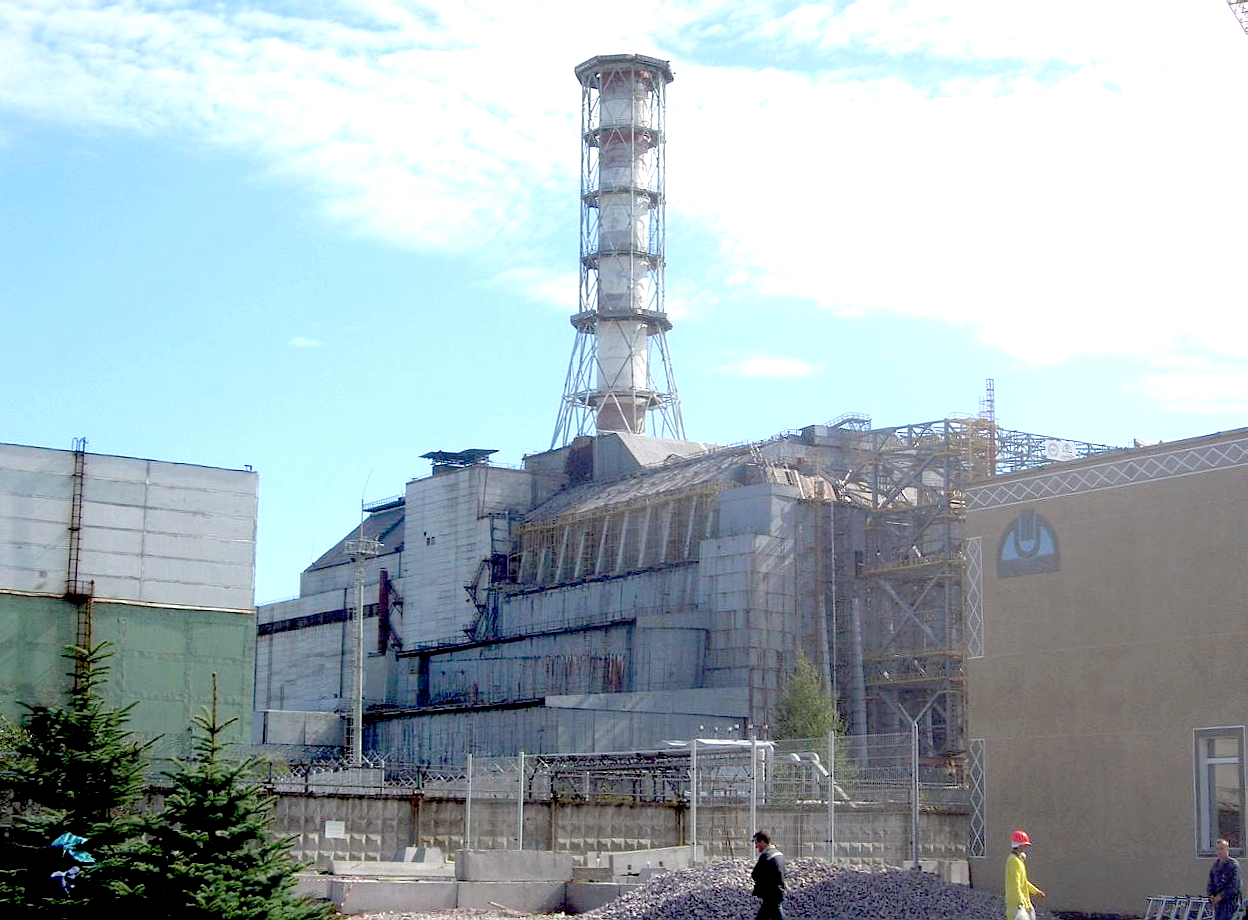
After the explosion and reactor fire, one urgent goal was to reduce the spread of radioactive contamination and protect workers at the undamaged reactors nearby. The solution built in 1986 was the Chernobyl sarcophagus, a huge steel-and-concrete shelter erected around reactor no. 4.
It had to be built quickly and under dangerous conditions. Construction began in June 1986 and continued into late November. Workers faced high levels of gamma radiation, so even ordinary building tasks became extraordinary. Crane drivers, for example, worked from lead-lined control cabins. The job included clearing contaminated ground, constructing shielding walls, strengthening unstable structures, adding a roof, and installing ventilation to capture airborne contamination within the shelter.
But this structure was never intended to last. Its expected lifespan was only about 30 years. In other words, the sarcophagus was a rapid containment measure, not a permanent solution. It reduced the spread of radioactive material and provided radiological protection, but it enclosed a reactor that had not truly been cleaned up.
That temporary nature is what makes Chernobyl so haunting: the first “fix” was built with the full knowledge that another, larger fix would one day be necessary.
Inside the ruins, fuel became radioactive lava
One of the strangest and most unsettling parts of the Chernobyl cleanup was discovering what had happened inside the destroyed reactor after the explosions and fire.
Beneath the reactor, smoldering steel, fuel, serpentinite, and other materials heated to more than 1,200°C and pooled into a semi-liquid substance called corium. Corium is a lava-like radioactive mass formed when nuclear fuel, structural materials, and concrete melt together. In Chernobyl’s case, this material later hardened into ceramic-like forms known as fuel-containing materials.
These substances were not all the same. Three different lavas were found in the reactor basement: black, brown, and a porous ceramic form. The porous brown lava had dropped into water and cooled quickly. These hardened flows contained silicate glass and embedded materials from the destroyed reactor.
The most famous of these masses became known as the Elephant’s Foot because of its wrinkled appearance. It was discovered in December 1986 after months of investigation. Samples later showed it was made of melted sand, concrete, and a large amount of nuclear fuel that had escaped from the reactor. The mass was once so hard that an armour-piercing AK-47 round had to be used to remove a chunk for study.
That image captures the sheer unnaturalness of the cleanup. This was not loose rubble that could simply be scooped away. It was a new, highly radioactive material created by the disaster itself.
Finding the fuel was a dangerous puzzle
Cleanup was not only about building barriers. It was also about figuring out where the reactor fuel had gone and whether it could become dangerous again.
Teams from scientific institutes carried out dosimetric surveys, meaning they measured radiation levels inside the wrecked structures. Progress was painfully slow because radiation in lower parts of the building was so intense. Workers trying to move deeper into the reactor complex were repeatedly forced back.
Eventually, investigators determined that about 90% of the nuclear fuel remained inside the building. That was a crucial finding, but it did not solve the larger challenge. The fuel was no longer sitting neatly where engineers expected it. Some of it had melted, flowed downward through the building, and solidified in strange, unpredictable shapes.
This raised a major concern: if the molten fuel still contained enough fuel and enough moderating material, could it go critical again? In simple terms, “going critical” means a nuclear chain reaction becomes self-sustaining. That fear shaped much of the continuing monitoring and containment work at Chernobyl.
Why rainwater could still trigger alarms
One of the most surprising long-term hazards involved something very ordinary: water.
Before the New Safe Confinement was completed, rainwater could enter parts of the wreckage. Water can act as a neutron moderator, meaning it slows neutrons down. In some reactor conditions, slower neutrons are more likely to sustain fission, the process that releases nuclear energy. That is why water inside the ruins was not just a leak problem; it could affect the behavior of the remaining fuel-containing materials.
To reduce this risk, gadolinium nitrate solution was used to quench neutrons, helping slow fission reactions. Even after the newer shelter was completed, monitoring continued because the destroyed reactor still contained unstable radioactive materials.
From 2017 until late 2020, neutron density doubled in one sub-reactor space before leveling off in early 2021. Neutron density simply means the amount of neutrons detected in a given area. A rise can suggest increasing fission activity. What made this especially unsettling was that it happened while water levels were dropping, which was the opposite of what had been expected.
The increase eventually leveled off, but the episode showed that Chernobyl’s wreckage was still active enough to surprise experts decades after the accident.
The New Safe Confinement: a giant shelter for a giant problem
Because the original sarcophagus was aging and unstable, an international effort created a more durable enclosure: the New Safe Confinement.
Construction began in 2010. The structure was enormous — a metal arch 105 meters high and 257 meters wide. It was built on rails next to reactor no. 4 and then slid into place over the existing sarcophagus on 29 November 2016. Its purpose was not just to cover the old shelter, but to create conditions that would finally allow the removal of reactor debris.
That is a key point. The New Safe Confinement was not the end of the cleanup. It was a tool to make the next phase possible.
The long timeline says everything: cleanup of the reactor debris is scheduled for completion by 2065. By then, nearly 80 years will have passed since the explosion.
Why the cleanup takes so long
Several factors make Chernobyl’s cleanup exceptionally slow.
First, radiation levels in some locations were so extreme that many early inspections had to stop short. Even robots failed during parts of the response because radiation damaged their electronics. On the roofs around the reactor, most of the highly radioactive debris ended up being cleared not by machines, but by liquidators — workers and soldiers who could spend only 40 to 90 seconds at a time in the worst areas.
Second, the reactor’s remains are physically complicated. Fuel-containing materials are spread through the building in hardened, irregular masses. They are not easy to remove, handle, or store.
Third, the materials are still changing. Published research described concern that self-irradiation could degrade some lava-like fuel materials over time. By 2021, the Elephant’s Foot had softened dramatically from its once rock-hard state to something more like sand. That kind of change matters, because fragile radioactive material can produce dust, and dust is far easier to spread.
Finally, the entire site has to be managed safely while preventing further contamination of workers, structures, and the surrounding environment.
A disaster from the past, but not only from the past
It is tempting to think of Chernobyl as history — a Cold War tragedy sealed inside concrete and steel. But the cleanup story shows something different. Chernobyl is still an unfinished engineering challenge.
The sarcophagus bought time. The New Safe Confinement bought better conditions. But neither erased the melted fuel, the radioactive debris, or the need for decades of careful work. Even the language surrounding the site reflects this uneasy reality: fuel-containing materials, neutron density, confinement, debris removal, long-term waste storage. These are not the words of a disaster that is over. They are the vocabulary of a disaster still being managed.
Chernobyl remains a place where the past physically persists — inside hardened lava, beneath sheltering steel, and in a cleanup schedule stretching far into the future.
The long shadow of 2065
When a cleanup plan runs to 2065, it changes how we think about time. The workers who first responded in 1986 did not live in the same phase of the crisis as the engineers designing the New Safe Confinement, and those engineers are not the ones who will necessarily see the end of debris removal.
That is what makes Chernobyl so extraordinary. It is not only a story of explosion and contamination. It is also a story of long-duration problem-solving under conditions no one wanted to inherit.
The wrecked reactor is still there. The fuel is still there. The monitoring is still there. And the cleanup, even now, is still not over.
Sources
Based on information from Chernobyl disaster.
More like this
More about history
More about science
More about technology
Chernobyl took decades to unpack — your next mind-blowing rabbit hole starts faster. Download DeepSwipe and explore knowledge that stays with you.