Full article · 7 min read
Post-classical History: When Climate Changed Civilizations
Climate is often treated as background scenery in history, but during the post-classical era it acted more like a powerful hidden force. Between about 500 and 1500, many societies across the world faced shifting temperatures, changing rainfall, crop failures, migrations, and disrupted growing seasons. Political leaders, merchants, farmers, and entire civilizations lived inside environmental conditions they could not control.
What makes climate especially striking in this period is that it affected many human populations at once, even though the results were not identical everywhere. Some regions became warmer for a time, others colder, and the timing was not perfectly uniform. Still, historians have pointed to climate as one of the few forces that can help connect very different societies across the post-classical world.
A world linked by climate, even before global travel
The post-classical period is known for expanding trade networks, the spread of major religions, and the growth of civilizations into new regions. But alongside trade and empire, climate shaped daily survival. Temperature and precipitation changes could influence harvests, food supplies, migration, and social stability.
The evidence suggests that many regions were affected by broad climate conditions, though the exact effects differed from place to place. Studies indicate that temperatures were relatively warmer in the 11th century, but colder by the early 17th century. Historians also note that climate trends are easier to trace in the Northern Hemisphere than in the Southern Hemisphere, although there is evidence that parts of the Southern Hemisphere became colder between 950 and 1250.
This matters because climate did not stay neatly inside political borders. Kingdoms, empires, and villages all had to respond to environmental pressure, whether through adaptation, expansion, trade, or collapse.
The volcanic shock of 536–537
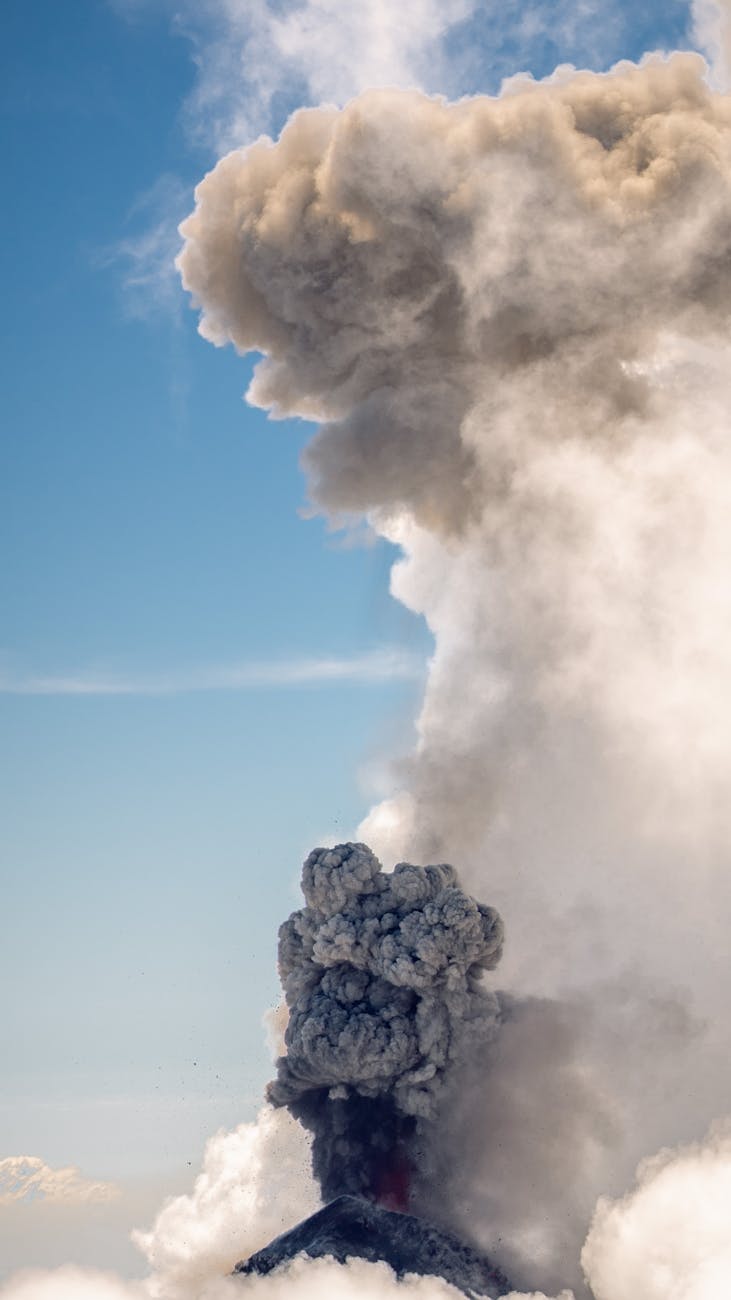
One of the most dramatic climate events of the era came in 536–537. Extreme weather during these years was likely initiated by the eruption of the Lake Ilopango caldera in El Salvador. A caldera is a huge volcanic crater formed when the ground collapses after a major eruption.
The eruption released sulfate into the air, and that helped trigger global cooling. The consequences were severe: migrations increased, crop failures were reported worldwide, and the world’s average temperature appears to have remained colder for at least a century afterward.
This was not just a local disaster. It was the kind of environmental shock that rippled across regions and added stress to already fragile societies. When crops fail repeatedly, the effects multiply quickly. Food shortages can push people to move, weaken governments, and heighten conflict over land and resources. In a period already marked by warfare and political change, this kind of cooling would have made life even harder.
Climate periods that shaped the age
Several named climate phases help explain the environmental story of the post-classical era. These include the Late Antique Little Ice Age, the Medieval Warm Period, and the Little Ice Age.
These labels do not mean every place experienced exactly the same weather at exactly the same time. Instead, they describe broad trends visible across many regions.
The Late Antique Little Ice Age
The cooling associated with the 536–537 event intensified an already cooler period. This phase is often grouped into what historians call the Late Antique Little Ice Age. It forms part of the environmental backdrop to the early centuries of the post-classical world.
When temperatures remain depressed for long stretches, agricultural systems become more vulnerable. A bad season can become a pattern. In societies where most people depended directly on farming, long cooling periods could have enormous consequences.
The Medieval Warm Period
From about 950 to 1250, many areas in the Northern Hemisphere experienced warmer conditions in what is called the Medieval Warm Period. Summers were warmer in many places, and these temperatures would not be surpassed until the global warming of the 20th and 21st centuries.
This warming may have had important historical effects. It has been hypothesized that warmer conditions and ice-free waters helped the Norse colonize Greenland. In other words, a temporary climate shift may have opened possibilities for settlement and travel that would have been much harder under colder conditions.
The warm period was not universally beneficial, however. Outside Europe there is evidence of warming conditions in China, and major droughts in North America adversely affected numerous cultures. A warmer climate did not simply mean easier living. Depending on the region, it could improve navigation and agriculture or instead worsen dryness and strain local societies.
Greenland as a climate frontier
Few examples make climate’s role more vivid than Greenland. During the warmer centuries, Norse settlers were able to establish colonies there. Ice-free waters may have made access easier, helping support colonization.
But conditions did not stay favorable. After 1250, glaciers began to expand in Greenland. This affected thermohaline circulation, a large-scale movement of ocean water driven by temperature and salinity, and helped cool the entire North Atlantic.
That shift mattered far beyond Greenland itself. Ocean circulation helps distribute heat across vast areas, so changes in the North Atlantic could influence weather and growing conditions across connected regions. Greenland thus sits at the center of a larger climate story: warming enabled expansion, then renewed cooling tightened environmental limits.
When the cold returned: the Little Ice Age
After the warmer centuries, colder conditions became more severe. The Little Ice Age had especially strong cultural ramifications in Europe, where the growing season became unreliable. A growing season is the part of the year when crops can develop successfully. If it shortens or becomes erratic, food production becomes much more difficult.
The cooling was visible elsewhere too. In China, colder temperatures pushed the cultivation of oranges southward. That detail captures how climate can reshape agriculture without a single battle being fought. Crops have environmental limits, and when climate changes, farming zones can shift with it.
The Little Ice Age continued long after the post-classical period, lasting until the Industrial Revolution. Yet its origins remain unclear. Possible explanations include sunspots, orbital cycles of the Earth, volcanic activity, ocean circulation, and even man-made population decline.
That uncertainty is part of what makes this period so fascinating. Historians can identify major consequences, but no single explanation fully solves the puzzle.
Climate and the fate of societies
Climate did not mechanically determine history, but it created pressures and opportunities that shaped what societies could do. In some places, warming may have aided expansion or settlement. In others, drought or cooling contributed to stress, abandonment, or decline.
There are examples across the wider post-classical world of environmental conditions interacting with human systems. The decline of Teotihuacan in Mesoamerica may have been linked to severe environmental damage caused by extreme weather events in 535–536. In North America, the structures of Chaco Canyon were likely abandoned after severe drought. In the Andes, the states of Wari and Tiwanaku declined after changing environmental conditions. In Southeast Asia, the Khmer Empire eventually lost the functionality and engineering knowledge behind its advanced water management system after persistent years of war, showing how vulnerable even sophisticated systems could become when conditions turned against them.
These cases do not reduce history to weather alone. Human decisions, war, trade, religion, and political organization still mattered. But climate could intensify existing weaknesses or help explain why stability suddenly failed.
A global force with local consequences
One of the most important lessons from post-classical climate history is that global patterns and local outcomes are not the same thing. Broad cooling or warming might affect many regions at once, but each society experienced those shifts differently.
A farming community, a maritime trading network, and a steppe empire would not all respond in the same way to colder temperatures or changing rainfall. Even neighboring regions could face different outcomes depending on crops, geography, trade links, and political strength.
That is why climate is best understood as a powerful background condition rather than a simple master key. It set limits, created risks, and occasionally opened doors. Human societies then reacted within those constraints.
Why climate belongs at the center of post-classical history
The post-classical world was defined by expansion, trade, religion, and empire. Yet climate belongs in that story too. Volcanic cooling in the 530s likely damaged crops and encouraged migration on a planetary scale. The Medieval Warm Period may have supported Norse movement into Greenland. After 1250, expanding glaciers and a cooling North Atlantic helped mark a new phase of environmental difficulty. The Little Ice Age brought unreliable growing seasons and lasting consequences, especially in Europe.
In a period before modern industry, refrigeration, and global relief systems, societies were far more exposed to nature’s swings. A changing climate could touch food, trade, migration, warfare, and belief all at once.
That makes climate one of the most revealing ways to understand the post-classical era: not as a quiet backdrop, but as a force that shaped the possibilities of civilization itself.
Sources
Based on information from Post-classical history.
More like this
More about history
More about nature
Swipe through history’s hottest chills — download DeepSwipe and explore how climate changed civilizations.


