Full article · 8 min read
Chernobyl Firefighters and Radiation: The Night They Entered an Invisible Disaster
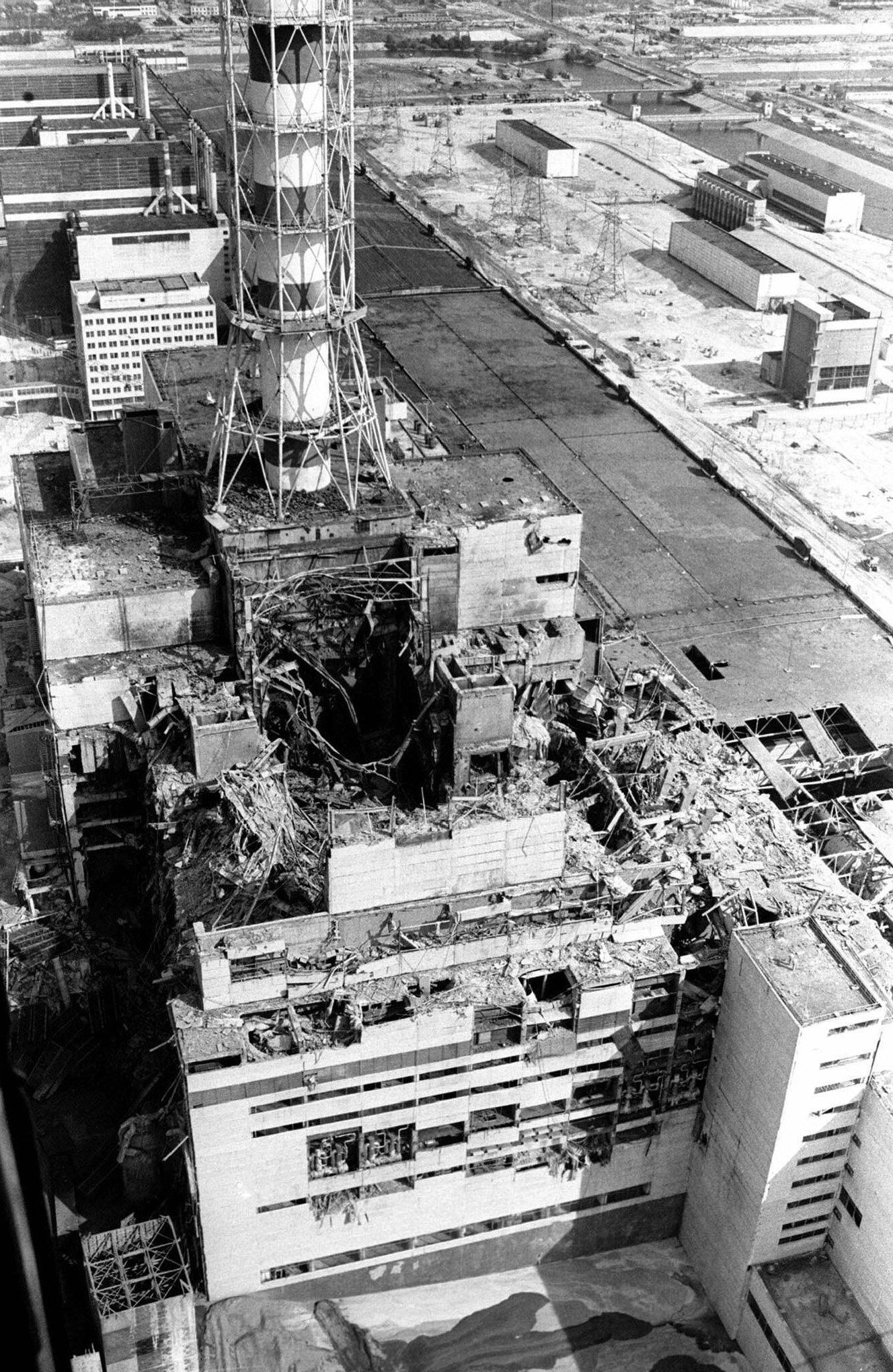
When firefighters arrived at Chernobyl in the early hours of 26 April 1986, many believed they were responding to an ordinary industrial fire. What they encountered was something far more dangerous: a destroyed nuclear reactor, burning debris from the core, and radiation so intense in some places that an unprotected person could receive a fatal dose in less than a minute.
Their mission was brutally simple and unimaginably dangerous. Fires had broken out on and around reactor no. 4, and burning material had also ignited parts of nearby reactor no. 3, which was still operating. Those blazes had to be stopped fast. If they spread further, the damage could become even worse.
The tragedy of the firefighters at Chernobyl lies not only in the danger they faced, but in the fact that many of them were not told what kind of danger it really was.
A fire that was not just a fire
The explosion at reactor no. 4 had ripped apart the reactor building. Steam explosions and the destruction of the core threw out fragments of reactor material, including graphite moderator and damaged fuel-channel material. Burning lumps and sparks were seen shooting into the air above the reactor, and some of that material landed on surrounding roofs and started more fires.
This mattered immediately because reactor no. 3 stood next to the ruined unit. At least five fires had broken out on the roof of the adjacent reactor no. 3, and there was urgent pressure to extinguish them and protect its cooling systems.
Inside no. 3, there was already tension over how serious the situation was. The chief of the night shift wanted to shut the reactor down immediately, but the chief engineer refused. Operators were given respirators and potassium iodide tablets and told to keep working. At 05:00, the reactor was finally shut down.
For the firefighters outside, though, the first moments were chaos, smoke, and heat. They were entering a scene shaped by a nuclear accident, but many did not know that. One firefighter brigade from the power station, commanded by Lieutenant Volodymyr Pravyk, was among the first on scene. They were not told how dangerously radioactive the smoke and debris were, and some may not even have known that the reactor itself had exploded.
The roof was covered in pieces of the reactor
One of the most haunting details from that night is how ordinary some of the deadly debris must have seemed. Graphite from the destroyed core was scattered around the site. To someone without warning, it could look like chunks of industrial rubble.
Fire engine driver Grigorii Khmel later described arriving and seeing graphite lying about. He recalled that the pieces came in different sizes, some large, some small enough to pick up by hand. One man even handled a piece and remarked that it was hot.
That detail is chilling because graphite should never have been outside the reactor in the first place. Its presence on the ground and on rooftops was evidence that the core had been violently torn open. But in the confusion of the night, that evidence was not fully understood by the people trying to fight the fires.
The rooftop fires were especially dangerous. Firefighters climbed ladders and moved onto roofs where radioactive debris had landed. They were dealing with flames in darkness, surrounded by shattered reactor material, without a clear picture of the invisible hazard around them.
Radiation: the danger they could not see
Radiation does not look like smoke or flame. It does not announce itself the way a collapsing wall or a blast wave does. At Chernobyl, that invisibility was part of what made the disaster so deadly.
The explosion and reactor fire had thrown hot particles of nuclear fuel and fission products into the air. Fission products are radioactive substances created inside a reactor during nuclear fission, the process that generates heat and power. Once released, these materials can expose people externally and can also be inhaled or deposited on skin and clothing.
In the worst-hit parts of the reactor building, ionizing radiation levels were estimated at 5.6 roentgens per second, more than 20,000 roentgens per hour. A roentgen is an older unit used to describe exposure to radiation. The numbers matter because a lethal dose was around 500 roentgens over five hours. In some areas at Chernobyl, the radiation was so extreme that an unprotected worker could receive a fatal dose in under a minute.
That helps explain why some early decisions were so catastrophic. Most available dosimeters, instruments used to measure radiation, had low limits and simply read off scale. One more capable dosimeter was buried in rubble, and another failed when turned on. As a result, some workers and supervisors did not grasp how high the real radiation levels were.
The strange first sensations of exposure
Some of the men on site reported a metallic taste in their mouths. Others described a pins-and-needles feeling across their faces. One firefighter said the radiation felt like tasting metal. These accounts are among the most vivid human descriptions associated with the night of the disaster.
They did not need to understand the physics to know that something was wrong. Within hours, many people began to feel sick. In nearby Pripyat, residents later reported severe headaches, metallic tastes, coughing fits, and vomiting. But among those working directly in the fire zone, the exposure was vastly more severe.
The firefighters were inhaling smoke, moving through radioactive debris, and standing on roofs contaminated by fragments from the core. Some also wore dusty, soaked uniforms, which later contributed to severe beta burns over large areas of skin. Beta burns are injuries caused by certain kinds of radiation interacting strongly with exposed tissue or contaminated clothing.
Why they kept going anyway
The men who fought those fires were not acting under ideal safety procedures. Some were poorly informed. Some lacked a full understanding of radiation danger. Yet they kept working because the immediate problem was obvious: the station was burning, and reactor no. 3 had to be protected.
One firefighter later said that if they had strictly followed regulations, they would never have gone near the reactor. But he described going anyway as a moral obligation, their duty.
That sense of duty shaped the entire early response. The immediate priority was to extinguish the fires on the roof of the station and around reactor no. 4 so that reactor no. 3 could be protected. By 05:00, those external fires had been put out. It was an extraordinary feat under appalling conditions.
But the cost was terrible. Many firefighters received very high doses of radiation. Lieutenant Volodymyr Pravyk, one of the first commanders on the scene, died two weeks later of acute radiation sickness.
Acute radiation sickness and the human toll
Acute radiation syndrome, often abbreviated ARS, is the severe illness that can follow a large radiation dose delivered over a short period. Among the workers hospitalized after the disaster, 134 showed symptoms of ARS, and 28 of them died within three months.
The only confirmed radiation-related fatalities in the history of commercial nuclear power came from this disaster. That fact alone shows how extreme the conditions were.
The plant workers and firefighters who were hardest hit suffered not only from radiation itself but also from its cascading effects. According to accounts of the medical response, many fatal cases were worsened by extensive skin injury and bacterial infections of the gastrointestinal tract. American specialist Robert Peter Gale helped supervise bone marrow transplant procedures for serious ARS cases, though these efforts were unsuccessful.
The firefighters’ ordeal therefore was not limited to one terrifying night. For many, the injury had already begun while they were still working, long before the full reality of their exposure was understood.
The fire was out, but the reactor kept burning
Even after the rooftop and surrounding fires were extinguished by 05:00, the crisis was far from over. The fire inside reactor no. 4 continued to burn until 10 May 1986, and it may be that well over half of the graphite eventually burned out.
To try to suppress the burning reactor and reduce the release of radioactive material, more than 5,000 tonnes of sand, lead, clay, and neutron-absorbing boron were dropped from helicopters. Around 600 Soviet pilots took part in the flights needed for this effort, risking dangerous radiation exposure themselves.
But the firefighters’ role in those first crucial hours remains distinct. They were the ones who confronted the immediate flames threatening nearby structures, including an operating reactor. Their work helped prevent the already catastrophic situation from becoming even worse.
Courage in an invisible battlefield
Chernobyl is often remembered through giant numbers: contamination across Europe, mass evacuations, exclusion zones, and staggering long-term costs. But one of the clearest windows into the disaster is the experience of the firefighters on that first night.
They arrived expecting a blaze. Instead, they walked into a shattered reactor scene where pieces of the core lay on rooftops, smoke carried radioactive particles, and radiation was delivering lethal doses without flame or sound. Some tasted metal. Some felt needles in their skin. Many still climbed, sprayed water, and kept going.
Their story is not only about heroism. It is also about misinformation, inadequate warning, and the deadly consequences of not understanding what had happened quickly enough. They fought a nuclear disaster as if it were a conventional fire, because many of them were never properly told otherwise.
That is what makes their courage so stark. They ran toward a danger they could not see, and in many cases did not fully know, because the fire in front of them had to be stopped.
Sources
Based on information from Chernobyl disaster.
More like this
More about history
More about science
More about war
Invisible danger, unforgettable courage — download DeepSwipe and step into the stories behind history’s most intense moments.