Full article · 8 min read
Rosetta Stone Discovery at Fort Julien
The famous stone was found in a surprisingly ordinary place
The Rosetta Stone is often imagined as a treasure dramatically uncovered in an ancient temple. In reality, its rediscovery happened in a far less glamorous setting: it was found reused as building material in Fort Julien near Rashid, in the Nile Delta. That detail is part of what makes the story so compelling. One of history’s most important archaeological finds was not standing proudly in its original location. It was hidden in plain sight, built into a fortification.
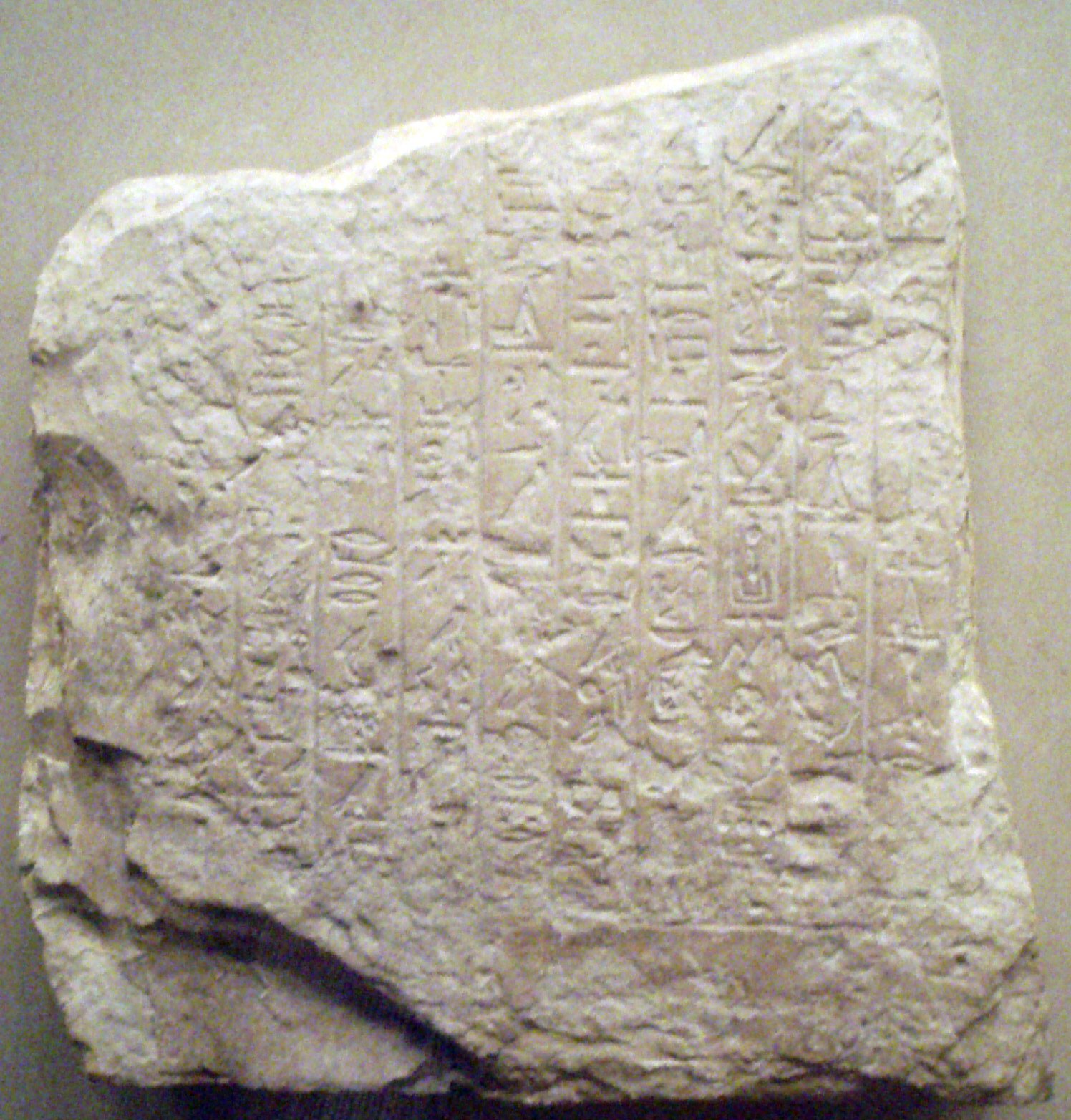
The stone itself is a fragment of a larger stele, which is a carved stone slab set up to display an official text. It was inscribed with a decree issued in 196 BC during the reign of King Ptolemy V Epiphanes. The surviving fragment carries the same decree in three scripts: hieroglyphic at the top, Demotic in the middle, and Ancient Greek at the bottom. Because the three versions closely matched one another, the stone later became the crucial key to deciphering Egyptian scripts.
But before it changed the study of the ancient world, it had to survive a long and messy physical journey.
From temple monument to recycled stone block
The Rosetta Stone was carved during the Hellenistic period and was probably originally displayed in a temple, possibly at Sais. A temple display would have made sense because the decree itself ordered that copies be placed in every temple, written in the “language of the gods” for hieroglyphs, the “language of documents” for Demotic, and the language of the Greeks used by the Ptolemaic government.
At some later point, the original stele broke. The surviving Rosetta Stone is only one piece of that larger monument, and no additional fragments were found at the Rosetta site. Of the three texts, the hieroglyphic section suffered the worst damage, while the Demotic section survived best.
After the stele was broken, it was likely moved from its original temple setting. It may have been relocated in late antiquity or during the Mamluk period. Ancient Egyptian temples were often quarried for later building projects, and the Rosetta Stone appears to have been caught up in that process of reuse. Eventually it was incorporated into the structure of Fort Julien, a fortress built near Rashid to defend the Bolbitine branch of the Nile.
That means the stone spent centuries not as a celebrated artifact, but as a practical chunk of masonry.
The rediscovery in 1799
The Rosetta Stone was found in July 1799, during France’s invasion of Egypt. Napoleon’s campaign was not only military. The French army was accompanied by 151 technical experts, known as savants, who studied Egypt’s land, history, monuments, and natural world.
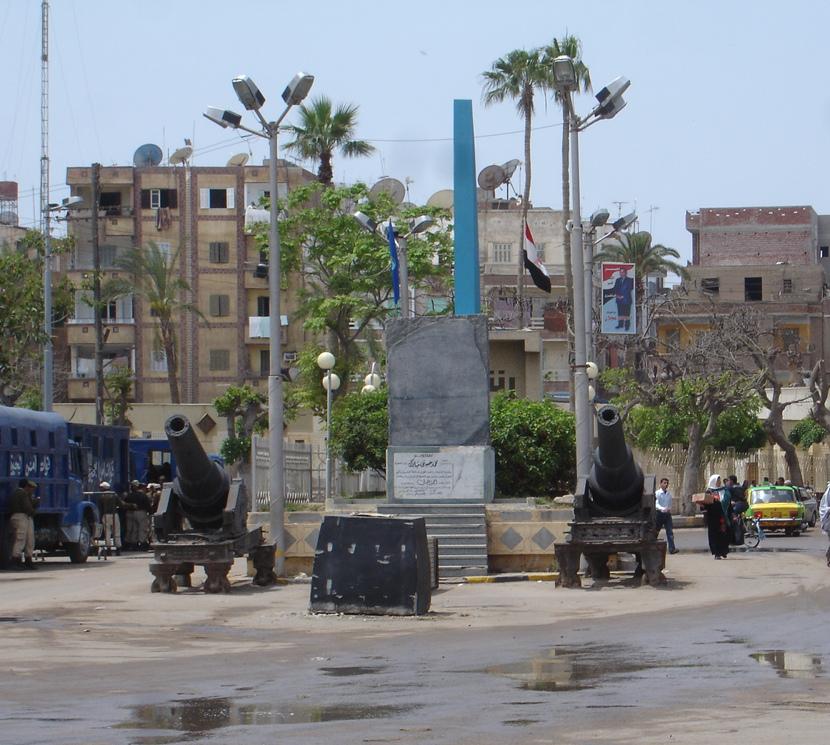
In mid-July 1799, French soldiers under Colonel d'Hautpoul were strengthening the defenses of Fort Julien, a short distance northeast of the port city of Rosetta, now called Rashid. During demolition work inside the fort, Lieutenant Pierre-François Bouchard noticed a slab with inscriptions on one side. He and d'Hautpoul immediately recognized that it might be something important.
This moment is one of the great turning points in archaeological history: a military engineering project exposed a broken inscribed stone that had been hidden inside a fort wall. Bouchard informed General Jacques-François Menou, and the discovery was quickly reported to scholars in Cairo.
A member of the Commission des Sciences et des Arts, Michel Ange Lancret, announced that the slab contained three inscriptions. Even more importantly, he correctly suggested that they were versions of the same text. That insight mattered enormously. If one of those texts could be read, perhaps the others could be unlocked too.
Why Fort Julien mattered so much
Fort Julien was not important because it was ancient in itself. It mattered because it preserved, by accident, an ancient object that had been stripped from its original setting and reused. This is a recurring theme in archaeology: objects survive not only through careful preservation, but sometimes through neglect, repurposing, or burial in later structures.
The Rosetta Stone’s reuse in Fort Julien also explains why it was found far from where it was likely first erected. It was almost certainly not originally placed at Rashid. It more likely came from a temple farther inland, perhaps from Sais. Its journey from temple monument to broken fragment to construction material reflects the changing political and religious landscape of Egypt across many centuries.
By the time French soldiers uncovered it, the stone had already lived several lives.
What the soldiers actually found
The object Bouchard spotted was no small tablet. The Rosetta Stone is about 112.3 centimeters high at its highest point, 75.7 centimeters wide, and 28.4 centimeters thick. It weighs approximately 760 kilograms. It is made of granodiorite, not basalt, although it was once mistakenly identified as black basalt because later treatments darkened its appearance.
Its front surface was polished and inscribed. The sides were smoothed, while the back was only roughly worked, suggesting it had originally stood upright with only the front intended to be seen. The surviving stone contains three text zones, or registers:
- the top in Egyptian hieroglyphs
- the middle in Demotic, a script used for documents
- the bottom in Ancient Greek
This combination made the discovery instantly intriguing. Ancient Greek was known to scholars, but Egyptian hieroglyphs and Demotic had not yet been understood. A single stone carrying one decree in multiple scripts looked like a direct invitation to comparison.
A discovery that spread across Europe
Once the stone reached Cairo, interest grew quickly. The find was reported in the French authorities’ newspaper, and hopes were already being expressed that it might help decipher hieroglyphs.
In 1800, specialists developed methods to make copies of the inscriptions. This step was crucial. Instead of one heavy stone being available only to the few people standing near it, reproductions could circulate widely. Prints and casts were sent to Paris and then beyond. European scholars could examine the texts without traveling to Egypt.
That transformed the Rosetta Stone from a local military discovery into an international intellectual puzzle.
One early breakthrough came when Jean-Joseph Marcel recognized that the middle text was written in Demotic, an Egyptian script that was rarely seen by scholars at that time. Once the three text sections were more clearly identified, they became the focus of a growing scholarly effort.
The excitement was easy to understand. This was the first Ancient Egyptian bilingual text recovered in modern times. Scholars suddenly had a text in Greek, which they could read, alongside two Egyptian scripts they could not.
From French discovery to British possession
The Rosetta Stone’s journey did not stop with its discovery. After Napoleon returned to Europe, the military situation in Egypt changed. British forces landed in 1801, and after the French were defeated and Alexandria was besieged, the fate of the stone became part of a wider dispute over the collections assembled by the French expedition.
Under the terms that followed the French surrender, the stone passed into British hands. Accounts differ on the exact details of the transfer, but it was taken to England and arrived in Portsmouth in February 1802. It was then directed to the British Museum, where it has been on public display almost continuously since 1802.
Before settling there permanently, it was shown to the Society of Antiquaries of London. Plaster casts and printed copies were then distributed to institutions including Oxford, Cambridge, Edinburgh, and Trinity College Dublin. This further accelerated scholarly study.
So even the political struggle over possession helped spread the stone’s text more widely. The physical object changed owners, but the inscriptions themselves became increasingly public.
Why the Fort Julien discovery changed everything
The Rosetta Stone was not actually unique for being multilingual. Other copies of the same decree were found later, and other bilingual or trilingual inscriptions from Ptolemaic Egypt are known. But this stone was the essential breakthrough because it was recovered at the right moment, recognized quickly, copied efficiently, and studied intensely.
Major steps in decipherment followed over the next decades. Scholars realized that the stone offered three versions of the same text. They learned that Demotic used phonetic characters for foreign names. They recognized that hieroglyphic script did this too, and that hieroglyphic and Demotic had significant connections. The decisive advances culminated in Jean-François Champollion’s announcement in 1822 of the transliteration of the Egyptian scripts.
None of that would have happened without the 1799 rediscovery at Fort Julien.
That is what makes the fort so memorable in the story. It was not the original home of the stone. It was the accidental hiding place that preserved a vital clue until a group of soldiers, busy with fortifications, stumbled into one of the most consequential finds in the history of writing.
More than a broken slab
Today, the phrase “Rosetta Stone” has become a metaphor for the key that unlocks a mystery. That broader meaning exists because of what happened at Fort Julien. A damaged fragment, ripped from its original monument and buried in reused stonework, turned out to be the clue that opened the door to ancient Egyptian inscriptions and literature.
Its story is a reminder that world-changing discoveries do not always emerge from dramatic treasure chambers. Sometimes they come from rubble, repair work, and a sharp-eyed officer who realizes that a strange slab in a wall might matter.
At Fort Julien, history was not just uncovered. It was decoded.
Sources
Based on information from Rosetta Stone.
More like this
More about archaeology
More about geography
More about history
Unlock hidden meaning like the Rosetta Stone — download DeepSwipe and discover the clues behind history, one swipe at a time.