Full article · 8 min read
Post-classical History: Why China Was Different
Between about 500 and 1500 CE, much of Eurasia was marked by fragmented rule, warrior elites, and systems often described as feudal. In many places, central authority weakened and local lords, military obligations, and personal loyalties became the main glue holding society together. China stood out.
Throughout much of the post-classical era, China often maintained something rare for the time: a centralized bureaucracy. In simple terms, that means government was run through an organized state system led by officials, rather than being handed over mainly to local military nobles. This difference shaped China’s politics, economy, trade, and influence across East Asia.
A different path from much of Eurasia
Historians sometimes use the word feudalism to describe societies where central power breaks down and is replaced by a warrior aristocracy. In such systems, rulers depend heavily on local military elites and personal obligations between lord and vassal, rather than on a professional state apparatus.
That pattern appeared widely across Eurasia during the post-classical period. Yet China followed a different course for much of the era. Instead of relying primarily on fragmented local rule, it preserved a centralized bureaucracy, especially after 1000. This meant that the state remained more concentrated at the center than in many other regions.
One important distinction was political culture. Local leaders in China were often reluctant to define themselves only by their region. Instead, they typically showed an ambition to unite the country during times of disunity. That outlook made China different from places where political fragmentation became a more lasting norm.
Why centralized government mattered
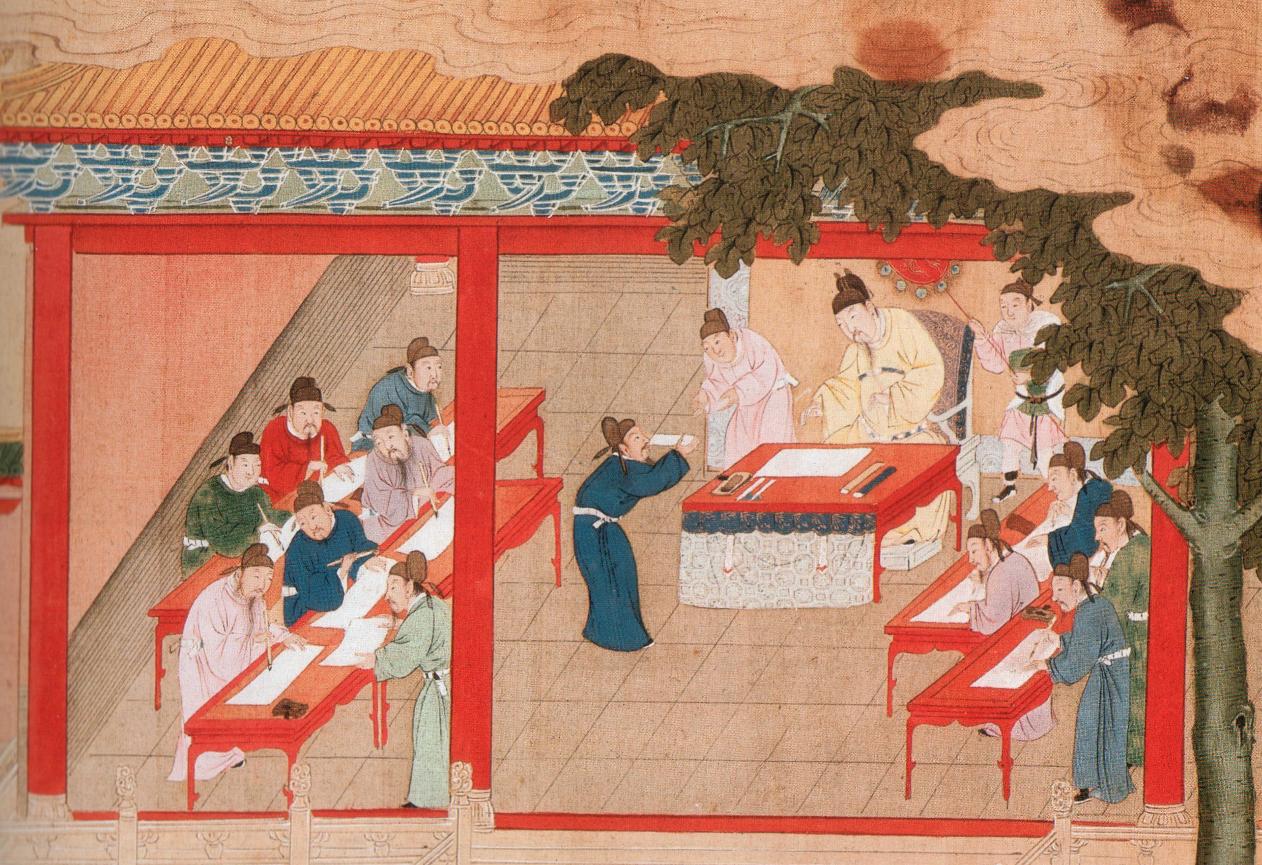
A bureaucracy is more than just paperwork. In historical terms, it means a state can organize taxation, administration, communication, and policy across a large territory through appointed officials. In post-classical China, that helped create continuity even when dynasties rose and fell.
This centralized structure also helps explain why China is often described as more politically unified than many of its contemporaries. While Europe, for example, developed feudal and manorial systems after the fall of Roman civilization, China continued to operate with concentrated imperial authority through much of the period.
That did not mean China was always stable or unified. The era included civil wars, rival kingdoms, foreign invasions, and conquest. But even in division, the idea of a unified imperial order remained powerful.
The world’s largest economy
China’s political structure mattered because it supported astonishing economic strength. During the Sui, Tang, and Song dynasties, China remained the world’s largest economy and one of its most technologically advanced societies.
That is a huge claim, but it fits the broader picture of the post-classical world. While many regions were expanding their trade and state systems, China combined scale, administrative organization, and innovation in a way that made it exceptionally powerful.
The article highlights three famous technologies that were improved in this era: gunpowder, woodblock printing, and the magnetic compass.
Woodblock printing allowed text to be reproduced by carving whole pages into blocks and pressing them onto paper. That made copying written material easier than doing everything by hand. The magnetic compass helped with navigation, which mattered enormously as Chinese maritime trade expanded. Gunpowder would later become one of the most consequential military inventions in world history.
China also saw broader economic development during the Song period. Its economy began to use machines to manufacture goods and coal as a source of energy. Some historians have even considered Song advances in the 11th and 12th centuries an early industrial revolution. That phrase does not mean it was identical to the much later Industrial Revolution, but it does suggest a striking level of economic dynamism.
Tang China and the Silk Road
China’s outward reach was not only about internal strength. It was also about trade.
From the 7th through the 10th centuries, Tang China was highly interested in securing the Silk Road. The Silk Road was a vast Eurasian trade route linking China with Central Asia, the Roman world earlier on, and many regions in between. It was not just a road for silk. It moved goods, ideas, religions, languages, and disease.
For Tang rulers, protecting these routes mattered because selling goods westward was central to the economy. Tang China expanded into Central Asia and, for a time, successfully secured its frontiers by integrating nomadic neighbors, the Göktürks, into its civilization. The dynasty also received tribute from lands as distant as Eastern Iran.
This expansion did not continue forever. Western growth ended with wars against the Abbasid Caliphate and the devastating An Lushan Rebellion, which caused a deadly but uncertain toll in the millions. Even so, the Tang period shows how strongly China was tied to continental exchange.
Song China and the turn to the sea
After the Tang collapse and later civil wars, China’s foreign engagement changed shape. The Song dynasty specialized more in overseas trade and built a maritime network instead of focusing mainly on overland expansion.
This shift was transformative. Chinese merchant ships reached Indonesia, India, and Arabia. As trade expanded, China’s population became concentrated in the south, showing how commerce could reshape the geography of everyday life. Southeast Asia also flourished through trade with Song China.
Sea trade did not replace all older routes at once, but it became increasingly important. In practical terms, maritime exchange connected China to the wider Indian Ocean world. Goods, people, and ideas moved across great distances, and coastal regions benefited from that traffic.
This outward turn helps explain why post-classical China was so influential beyond its borders. Through trade and conquest, China affected neighboring regions such as Japan, Korea, and Vietnam. More broadly, East Asia experienced the entrenchment of a unitary and imperial China whose governance and culture shaped surrounding societies.
China’s influence in East Asia
China’s power was not only military or economic. It was also cultural and political.
Japan and Korea underwent voluntary Sinicization, meaning their ruling elites adopted important elements of Chinese culture and government because they admired them or found them useful. Major Chinese influences included Confucianism, Buddhism, and centralized governance.
Confucianism functioned as an ideology of social cohesion and state power. Buddhism was especially visible in monasteries and educational institutions. These influences helped spread Chinese models across East Asia, even where China did not directly rule.
Vietnam’s relationship was more complicated because conquest played a larger role. But the broader pattern still holds: China was a major center from which ideas, institutions, and cultural practices radiated outward.
Why China did not fully become “feudal”
One of the most striking themes of post-classical history is that although many parts of Eurasia moved toward feudal or feudal-like systems, China generally did not. The imperial government retained concentrated central authority, setting it apart from regions where military landlords overshadowed the state.
This difference is important because it shaped everything else. A centralized system could mobilize resources differently, regulate trade more broadly, and maintain a stronger vision of political unity. It also meant that when China fragmented, the expectation of reunification remained unusually strong.
That continuity helps explain why China could pass through periods of disunity and still re-emerge as a single imperial power.
Conquest by the Mongols
Even a powerful centralized civilization could be conquered.
By 1200, China was divided among several states, including the Western Liao, Western Xia, Jin, Southern Song, and Dali. Because these states competed with one another, they were eventually annexed by the rising Mongol Empire. By 1279, after about seventy years of conquest, the Mongols had taken all of them and proclaimed the Yuan dynasty.
The Mongol Empire was the largest continuous land empire in history. It connected east and west through the Pax Mongolica, an enforced peace that allowed trade, commodities, technologies, and ideas to move more easily across Eurasia. Under Mongol rule, China also became more accessible to travelers from Europe, including Marco Polo.
Yet Mongol rule in China was relatively brief. The era was weakened by plagues and famine, and in 1368 the Ming dynasty replaced the Yuan and restored Chinese rule.
The Ming restoration and turning inward
The Ming takeover marked a major political shift. After foreign conquest, Chinese rule was re-established, ushering in a period of prosperity and brief foreign expeditions.
But that outward energy did not last. The Ming later isolated itself from global affairs for centuries. In the context of post-classical history, this is one of the most dramatic turns in China’s story: from powerful centralized empire, to expansive trade power, to conquest under the Mongols, and then to renewed native rule followed by a more inward-looking stance.
That final turn mattered because the end of the post-classical period was also a time when sea-based global trade was becoming increasingly important. As overland routes like the Silk Road lost their old dominance, maritime powers were beginning to reshape the world.
Why China stands out in post-classical history
China was different because it did not simply follow the broad Eurasian trend toward fragmentation and feudal-style rule. It often preserved a centralized bureaucracy, sustained the world’s largest economy during major dynasties, improved transformative technologies, and projected influence through both overland and maritime trade.
Tang China pushed outward to secure the Silk Road. Song China turned to the sea and connected with Indonesia, India, and Arabia. Even after conquest by the Mongols, the idea and structure of imperial unity returned under the Ming.
In a period defined by shifting empires, expanding religions, and growing trade networks, China was not isolated from the wider world. It was one of the main forces shaping it.
Sources
Based on information from Post-classical history.
More like this
More about history
More about technology
Swipe through history like a Silk Road traveler — download DeepSwipe and explore big ideas, one stop at a time.


