Full article · 7 min read
Roman Britain and Boudicca: When Rome Tried to Hold England
Roman Britain is one of the most dramatic chapters in the long history of England. It begins with a military invasion, grows into centuries of imperial rule, and then erupts into one of the most famous rebellions in ancient history: the uprising led by Boudicca. Even after Roman rule ended, its mark did not disappear. For roughly 350 years, Rome shaped power, borders, cities, and the political landscape of what would later become England.
Rome’s serious conquest begins in AD 43
Before the full conquest, Britain had already come into contact with Rome. Julius Caesar invaded in 55 and 54 BC during his campaigns in Gaul. He claimed victories, but he did not establish a Roman province and never pushed further than Hertfordshire. Even so, those invasions changed the balance of power. Southern British elites became more tied to Rome through trade, resources, prestige goods, and patronage.
The real conquest began later, in AD 43, under Emperor Claudius. The Romans landed in Kent with four legions. A legion was a major unit of the Roman army, made up of professional soldiers. They defeated forces led by Caratacus and Togodumnus, kings of the Catuvellauni, in battles at the Medway and the Thames.
Togodumnus was killed, and Caratacus fled to Wales. The Roman commander Aulus Plautius then waited for Claudius to arrive and lead the final advance on Camulodunum, now Colchester. That city became the capital of the new Roman province. A province was a territory ruled as part of the Roman Empire.
Eleven local rulers surrendered. Some client kingdoms were created, meaning local rulers remained in place but under Roman influence, while other territories were absorbed more directly into Roman rule. Over the next few years, Roman control spread further. By AD 54, the frontier had been pushed back to the Severn and the Trent, and campaigns were underway in Northern England and Wales.
Why Roman Britain mattered
Rome did not just raid Britain and leave. It stayed. That made the conquest fundamentally different from earlier invasions.
For centuries, the Romans maintained control of Britannia, their province in Britain. Their rule brought a new political structure, military occupation, and urban centres that became focal points of administration. Camulodunum was the early capital, and cities such as Londinium and Verulamium became major places in the province.
A frontier is the edge of controlled territory, and in Roman Britain that frontier became one of the clearest symbols of imperial power. The border gradually formed along the Stanegate road in Northern England. Later, it was solidified by Hadrian’s Wall, built in AD 138. Although the Romans made temporary pushes farther north into Scotland, the wall became the enduring line associated with the limit of Roman authority.
This is part of why Roman Britain remains so memorable. It was not only about conquest. It was about holding territory, organizing it, and turning military success into long-term rule.
Boudicca and the great revolt of AD 60
Then came the explosion.
In AD 60, under the leadership of the warrior-queen Boudicca, tribes rose in revolt against Roman rule. This was not a minor disturbance. It was one of the most destructive uprisings the Romans faced in Britain.
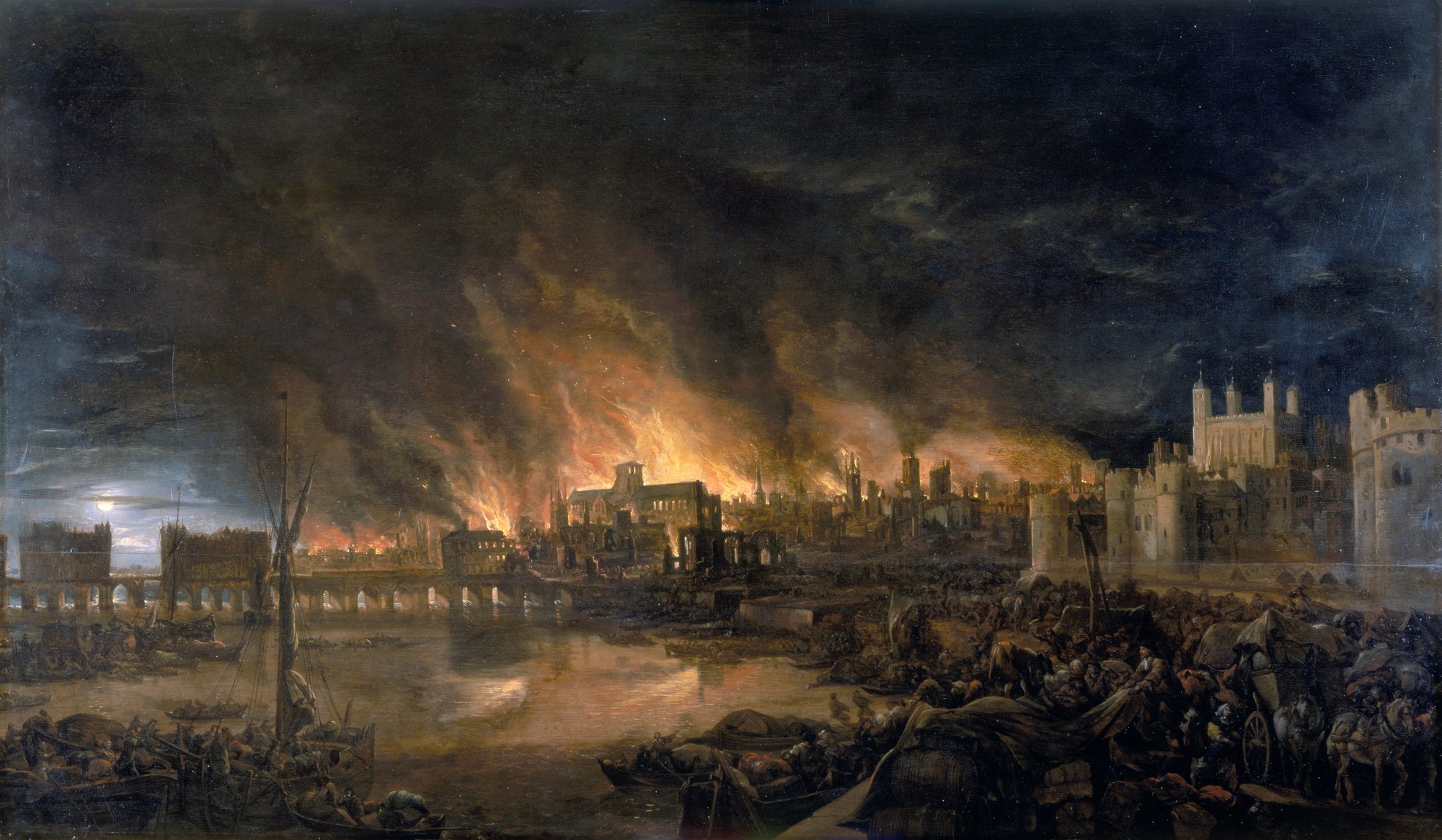
At first, the rebels were devastatingly successful. They burned Camulodunum, Londinium, and Verulamium to the ground. These are modern Colchester, London, and St Albans. Archaeological evidence suggests that Winchester may also have suffered the same fate.
The destruction at Londinium became especially legendary. The fire was said to be so intense that it left a ten-inch layer of melted red clay fifteen feet below London’s streets. That detail captures the violence of the rebellion better than almost anything else. This was not just looting or a passing attack. Entire urban centres were incinerated.
The scale of the crisis shook Roman control. The Second Legion Augusta, stationed at Exeter, refused to move, fearing revolt among local people. Meanwhile, the governor of Londinium, Suetonius Paulinus, evacuated the city before it was sacked and burned.
Ancient accounts cited in the historical tradition say that the rebels killed 70,000 Romans and Roman sympathisers. Whether imagined in a city street, a temple, or a settlement on the edge of Roman territory, the revolt represented a moment when Roman Britain nearly came apart.
The battle that crushed the rebellion
Boudicca’s uprising was spectacular, but it did not last.
Suetonius Paulinus gathered what remained of the Roman army. In the decisive battle, somewhere along Watling Street, 10,000 Romans were said to have faced nearly 100,000 warriors. A force that small defeating one so much larger sounds astonishing, but that is how the clash is described in the surviving record summarized here.
The result was total defeat for the rebels. Boudicca was utterly beaten. It was said that 80,000 rebels were killed, compared with only 400 Romans.
That battle mattered far beyond the immediate moment. If the revolt had succeeded, Roman rule in Britain might have collapsed only a couple of decades after the conquest began. Instead, the Romans reasserted control and continued ruling for centuries.
The north: Stanegate and Hadrian’s Wall
After suppressing rebellion and consolidating control, the Romans kept expanding for a time. Over the next 20 years after Boudicca’s revolt, the borders moved slightly. The governor Agricola incorporated the last independent pockets in Wales and Northern England and even led a campaign into Scotland, though that advance was later recalled by Emperor Domitian.
Eventually, the Romans settled on a more stable northern boundary. First came the Stanegate road. Later, Hadrian’s Wall made that frontier unmistakable.
Hadrian’s Wall, built in AD 138, became the symbol of where Roman power stopped. Although Roman forces sometimes moved beyond it, the wall represented the practical limit of long-term imperial control in Britain. That is why it remains one of the most recognizable monuments connected with Roman England.
A wall on this scale was not just stone and turf. It was a statement: this far, and no farther. It marked the edge between Roman administration and lands beyond sustained Roman rule.
350 years of Roman rule
The Romans and their culture stayed in charge for about 350 years. That is an extraordinary span of time. It means Roman Britain was not a brief episode but a major era in the history of England.
During those centuries, Roman presence became embedded in the landscape. Traces of it were said to be ubiquitous throughout England. That helps explain why Roman Britain still feels visible long after the empire itself vanished from the island.
The article ties Roman rule not only to roads and ruins but to the deeper structure of later power. Even after Rome withdrew in the early 5th century, the end of Roman rule created the conditions for the Anglo-Saxon settlement that followed. In that sense, Roman Britain helped shape what came next even through its collapse.
Why Boudicca still stands out
Many ancient conflicts are remembered only by specialists. Boudicca is different. Her story stands out because it combines several unforgettable elements: a queen leading a rebellion, famous cities put to the torch, and a desperate Roman struggle to survive.
Her revolt also exposes a basic truth about Roman Britain. Roman control could look permanent, but it depended on armies, supply, loyalty, and fear. In AD 60, all of that was tested. For a brief moment, Britain was not a secure province but a war zone.
And yet the Roman system endured. That endurance is part of the fascination. Boudicca showed how fragile Roman rule could be. The centuries that followed showed how resilient it was.
The Roman legacy in England
When people think of Roman Britain, they often picture soldiers, walls, and ruined towns. Those images are fitting, but the deeper legacy is political and geographic. Rome turned conquered territory into a province, fixed borders, established capitals, and imposed a durable system of control.
Camulodunum as capital, Londinium as a key city, the northern frontier along the Stanegate and Hadrian’s Wall, and the survival of Roman traces across England all point to the same conclusion: Roman rule never fully vanished from memory or from the ground.
That is why the era still matters. Roman Britain was not just the time when Rome arrived with legions. It was the time when imperial rule was tested by fire, when Boudicca nearly broke it, and when the outlines of power in England were changed for centuries.
Sources
Based on information from History of England.
More like this
More about archaeology
More about history
More about war
March through history like a legion—download DeepSwipe and conquer a new fascinating fact every day.