Full article · 7 min read
Why Civilians Pay So Much in War
When people imagine war, they often picture soldiers, front lines, and battles. But one of the harshest realities of war is that civilians often bear an enormous share of the suffering. In many conflicts, the damage stretches far beyond the battlefield and into homes, schools, hospitals, water systems, farms, and entire cities.
World War II is one of the clearest examples. Most estimates put the total death toll at around 60 million people, and roughly 40 million of those killed were civilians. That means people who were not formal combatants made up most of the dead. It is a stark reminder that in war, the line between battlefield and daily life can collapse.
Why civilians are so vulnerable
A civilian is a person who is not a member of the armed forces and is not taking part in fighting. In theory, civilians are supposed to be protected. In practice, war often disrupts everything they depend on to survive.
When a war breaks out, one or more areas can become a war zone or conflict zone. These are places where normal life is interrupted and movement becomes dangerous or impossible. Travel may be cut off. Families may be forced to flee. Access to food, medicine, and clean water can become uncertain very quickly.
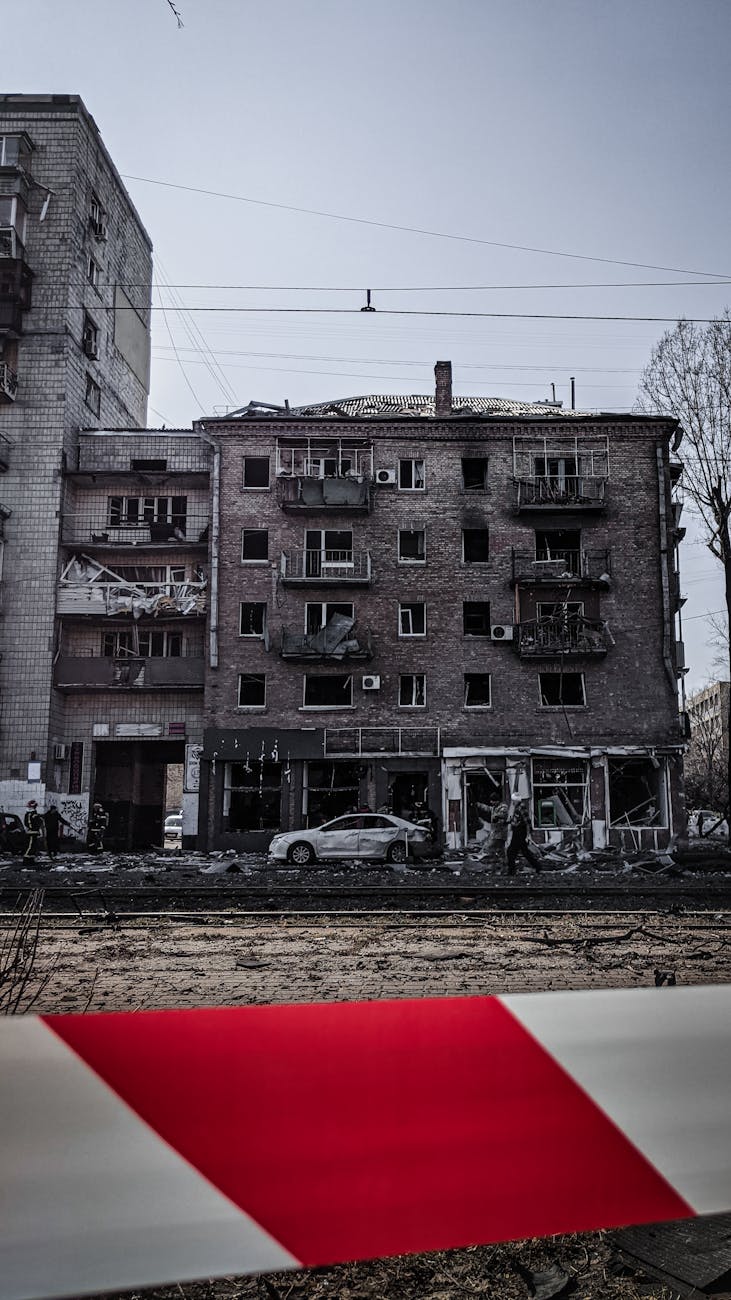
War usually causes significant deterioration of infrastructure and the ecosystem. Infrastructure means the essential systems a society depends on, such as roads, railways, power networks, hospitals, schools, and communications. Once these systems are damaged or destroyed, the effects spread through civilian life fast. A bombed road can stop food deliveries. A damaged power grid can shut down hospitals. A broken water system can turn a public health emergency into a catastrophe.
The damage goes far beyond bullets and bombs
Civilian suffering in war is not limited to direct attacks. War is also linked to famine, disease, large-scale emigration from war zones, and the mistreatment of prisoners of war or civilians. Even people who survive the fighting may face years of hardship because the systems that support ordinary life no longer function.
The impact can be measured in surprisingly concrete ways. A medium-sized conflict with about 2,500 battle deaths reduces civilian life expectancy by one year. It also increases infant mortality by 10% and malnutrition by 3.3%. On top of that, about 1.8% of the population loses access to drinking water.
These numbers show that war is not just a military event. It is a public health crisis, an economic shock, and a humanitarian disaster all at once.
Life expectancy is the average number of years a person is expected to live. When conflict cuts civilian life expectancy, it means the effects of war are serious enough to shorten lives across a whole population, not only among those directly caught in combat.
Infant mortality refers to the death of babies in their first year of life. Malnutrition means poor nutrition caused by too little food, too little variety, or inability to access what the body needs. When these rise during conflict, it is often because war damages food systems, healthcare, sanitation, and family stability all at the same time.
World War II shows the scale of civilian loss
World War II remains the deadliest war in history in terms of cumulative deaths since its start. The death toll, estimated at 70 to 85 million in one comparison and around 60 million in another commonly cited estimate of total casualties, dwarfs that of other conflicts. What stands out especially is how many civilians died.
Most estimates indicate that around 40 million civilians were among the dead. This happened not only because of combat, but also because war destroys the basic conditions needed for life. People can die from hunger, disease, forced displacement, and atrocities, as well as from attacks away from traditional battlefields.
One example comes from the territory of the Byelorussian SSR in 1941. Of the nine million people there, around 1.6 million were killed by the Germans in actions away from battlefields. That figure included about 700,000 prisoners of war, 500,000 Jews, and 320,000 people counted as partisans, most of whom were unarmed civilians. It is a devastating illustration of how war can engulf people far from any conventional front line.
Destroying a society, not just an army
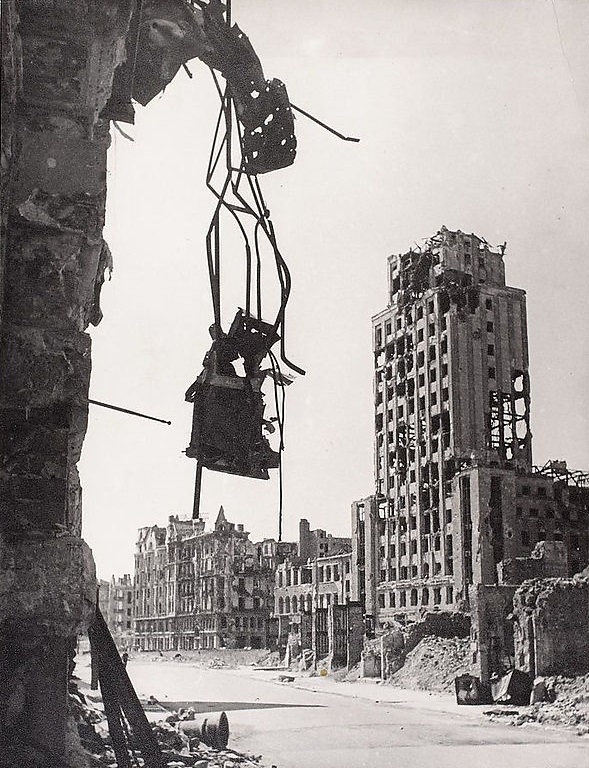
War does not only kill people; it also tears apart the systems that hold society together. By the end of World War II, 70% of European industrial infrastructure had been destroyed. In the Soviet Union, damage caused by the Axis invasion was estimated at 679 billion rubles. The destruction included complete or partial ruin of 1,710 cities and towns, 70,000 villages and hamlets, 31,850 industrial establishments, 40,000 miles of railroad, 4,100 railroad stations, 40,000 hospitals, 84,000 schools, and 43,000 public libraries.
Figures like these help explain why civilians pay such a high price. If hospitals are destroyed, ordinary illness becomes more deadly. If railroads are gone, food and medicine cannot move efficiently. If schools vanish, children lose education and stability. If libraries and public institutions disappear, a society loses part of its memory and capacity to recover.
This is one reason the effects of war can linger for years or decades after the shooting stops.
Civilians and atrocities
People living in conflict zones may also be exposed to war atrocities, including genocide. The physical danger is obvious, but the psychological effects are profound too. Survivors may live with the aftermath of witnessing destruction, displacement, and death.
Even those who are not physically injured can suffer lasting harm from the breakdown of safety, routine, and community. War lowers quality of life and worsens health outcomes. It can also force families to leave their homes on a large scale, turning survival into a daily struggle.
Why modern war can be especially brutal for non-combatants
War today is often associated not only with battles between states, but also with civil wars and insurgencies. Since 1945, civil wars have increased in absolute terms. That matters for civilians because these conflicts are frequently fought where people live rather than on isolated battlefields.
An insurgency is a rebellion against authority in which irregular forces take up arms to change an existing political order. A civil war is a war within a state rather than between different states. In such conflicts, civilians can be trapped between rival forces, subject to displacement, shortages, and violence over a prolonged period.
The article also describes total war, a type of warfare that is not restricted to purely legitimate military targets and can result in massive civilian suffering and casualties. The phrase points to one of the darkest possibilities in war: when limits break down, civilians can become exposed on a huge scale.
The hidden costs after the fighting
Even after a war ends, civilians often continue to pay. Economies may be shattered. Social spending can fall. Land may be damaged. Public services may be slow to return. Losing nations are sometimes required to pay war reparations, and territory may be ceded. Recovery can be uneven and painful.
For civilians, the end of combat does not automatically mean the end of hardship. Destroyed housing, disrupted healthcare, damaged schools, lost livelihoods, and contaminated or inaccessible water can shape daily life long after peace agreements are signed.
This helps explain why a war’s true cost is much larger than a battle death count. The suffering spreads outward through families, communities, and generations.
The core lesson
The biggest misconception about war may be that it mainly harms those doing the fighting. History shows otherwise. Civilians often endure the broadest and longest-lasting damage: death, hunger, disease, displacement, shattered infrastructure, and the collapse of ordinary life.
World War II made this brutally clear, with about 40 million civilian deaths out of roughly 60 million total. And even in smaller conflicts, measurable civilian harm appears quickly: shorter life expectancy, higher infant mortality, more malnutrition, and loss of access to drinking water.
War is not only fought on battlefields. For civilians, it reaches into kitchens, clinics, roads, schools, and wells. That is why the human cost of war is so often paid by those who were never meant to be its main targets.
Sources
Based on information from War.
More like this
See the bigger picture behind history’s hardest truths — download DeepSwipe and turn every swipe into insight.