Full article · 8 min read
Common Descent: Why All Life on Earth Is Part of One Family Story
The idea of common descent is one of the most powerful in all of biology: every living organism on Earth is related through ancestry. Humans, fungi, oak trees, bacteria, birds, and jellyfish are not separate creations with separate origins. They are branches of the same vast history of life.
At the deepest root of that history is the last universal common ancestor, often shortened to LUCA. This was not the first living thing ever to exist, but it was the ancient population from which all organisms alive today ultimately descend. It lived roughly 3.5 to 3.8 billion years ago.
That date is almost too large to picture. It means the shared ancestry linking modern life stretches back to a time when Earth itself was still very young. Yet scientists do not rely on one single clue to support this idea. Common descent is backed by multiple lines of evidence that point in the same direction.
What common descent actually means
Common descent means that present-day species are connected by ancestry. Over immense spans of time, populations changed, split, and diversified. New species formed, others disappeared, and the result is the extraordinary biodiversity seen today.
This does not mean every species alive today descended directly from another modern species. Instead, current species are like cousins on different branches of a family tree. They share ancestors in the past, some recent and some extremely ancient.
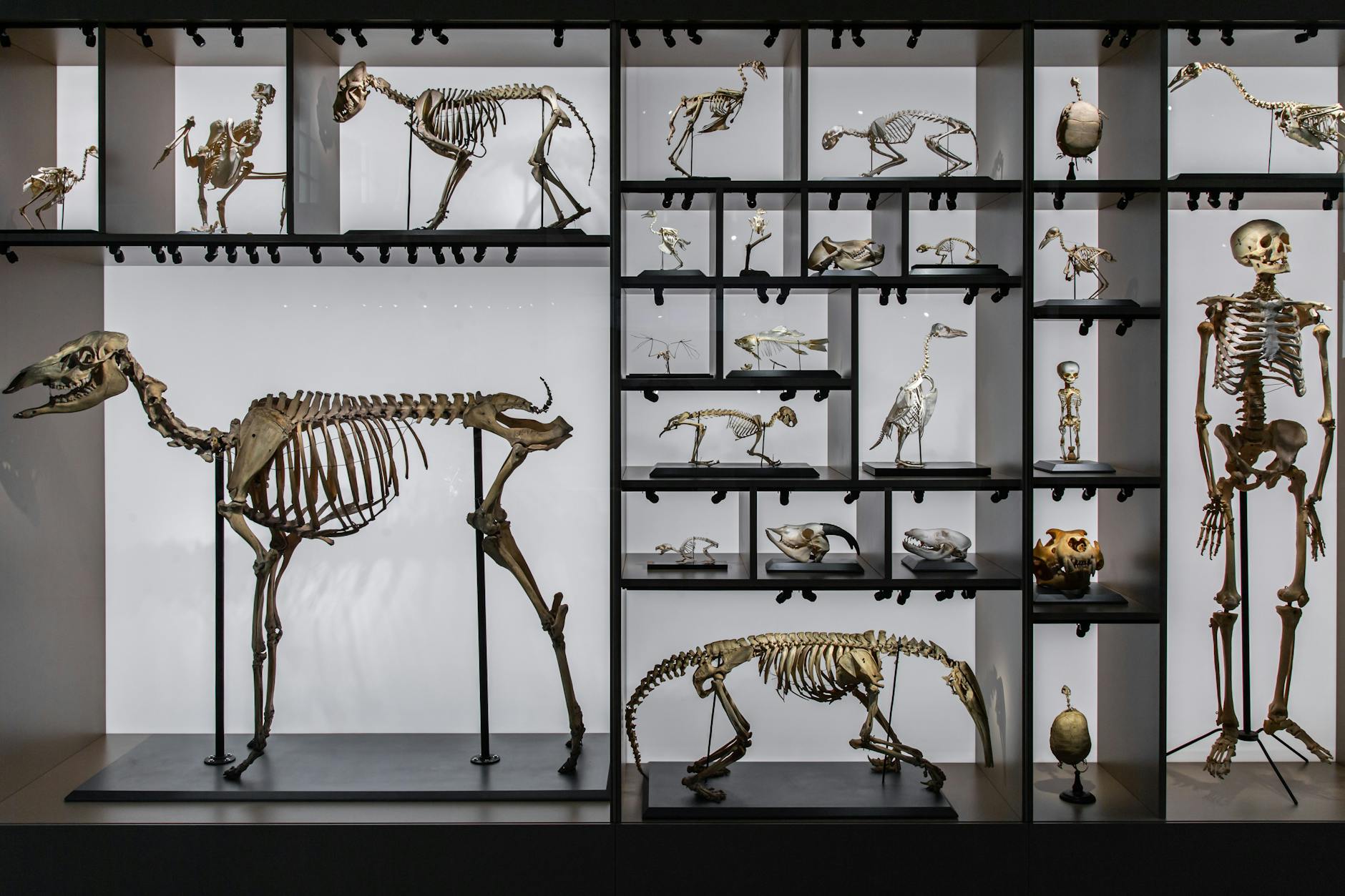
The concept helps explain why living things can be so different and yet still share deep similarities. Species are not a collection of completely unique designs. They differ, but they also show recurring patterns in anatomy, biochemistry, and genetics that make sense if they inherited those patterns from common ancestors.
LUCA: the deep root of life
All life on Earth, including humanity, shares a last universal common ancestor. Estimates place LUCA at about 3.5 to 3.8 billion years ago.
The early record of life reaches far back into Earth’s past. The earliest undisputed evidence of life dates to at least 3.5 billion years ago. Scientists have found microbial mat fossils in 3.48 billion-year-old sandstone in Western Australia. Other early physical evidence includes biogenic graphite in 3.7 billion-year-old rocks in Western Greenland, and remains of biotic life reported from 4.1 billion-year-old rocks in Western Australia.
This ancient timeline matters because it shows that life emerged early in Earth’s history and that the roots of common descent are incredibly deep. Modern species are the surviving tips of a lineage that extends back billions of years.
In 2016, scientists reported identifying a set of 355 genes from LUCA. That does not turn LUCA into a fully reconstructed organism, but it highlights an important point: the common ancestor of all modern life is not just an abstract idea. It can be investigated through the shared molecular features of living things.
The fossil record: a long historical trail
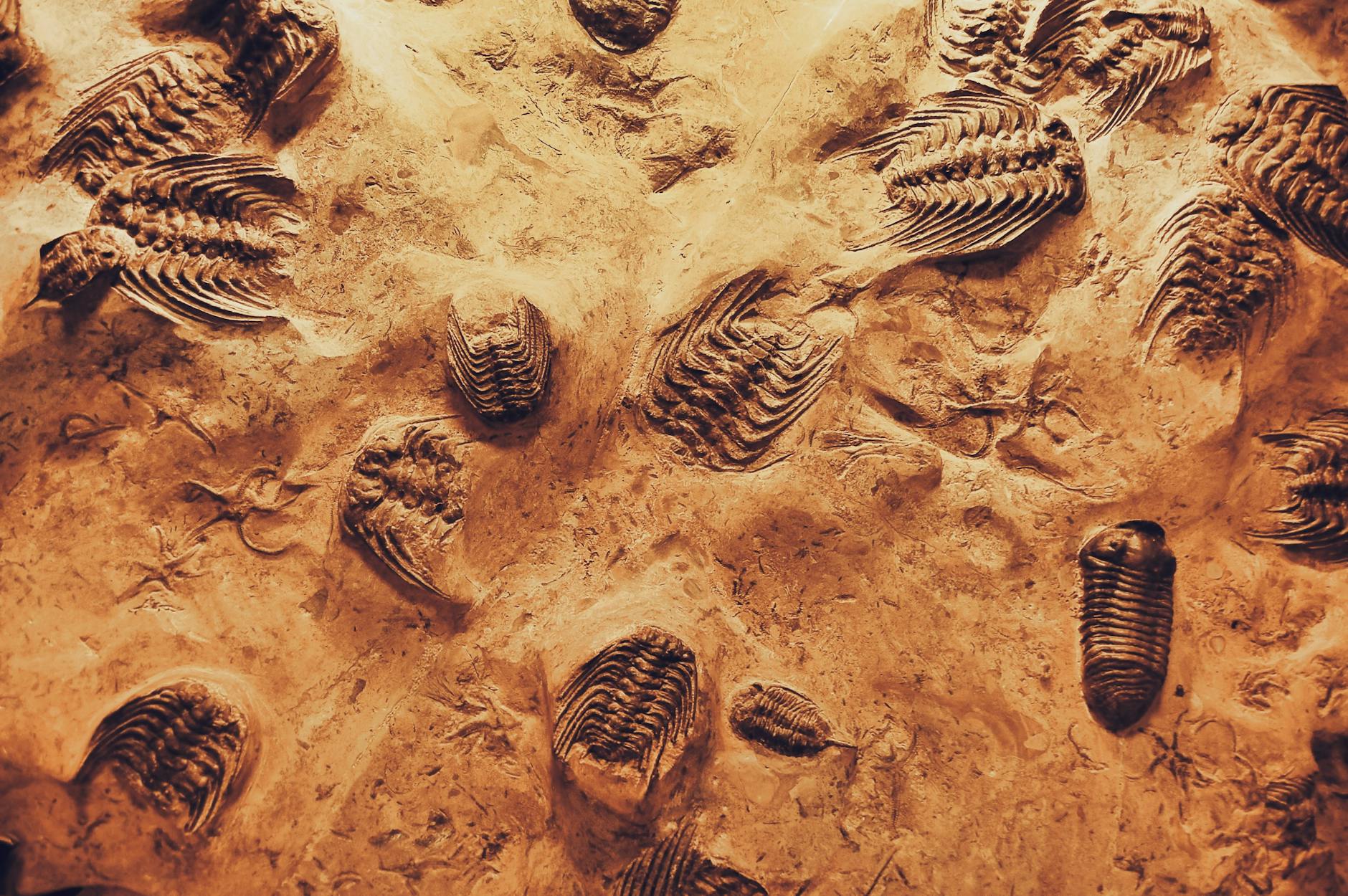
One major line of evidence for common descent comes from fossils. Fossils preserve parts of past life and allow scientists to trace broad patterns over time.
The record shows a progression from early signs of life to microbial mats and later multicellular organisms. It also reveals that life changed over Earth’s history rather than staying fixed. The article describes this history in broad stages: prokaryotes inhabited Earth around 3 to 4 billion years ago; eukaryotic cells emerged between about 1.6 and 2.7 billion years ago; multicellular organisms began to appear around 1.7 billion years ago; and around 538.8 million years ago the Cambrian explosion brought a remarkable surge of biological diversity.
A fossil is not just a relic. In this context, it is a data point in a historical sequence. By comparing extinct and living forms, palaeontologists infer lineages and relationships. This method works especially well for organisms with hard body parts like bones, shells, and teeth, because those structures fossilize more readily.
The fossil record also helped strengthen the case for evolution and ancestry in a dramatic way. Othniel C. Marsh uncovered fossil evidence tracing the ancestors of the modern horse. He also published discoveries of birds with teeth in North America, helping bridge the gap between dinosaurs and birds. These kinds of finds showed that major groups are connected by historical transitions rather than appearing as isolated forms.
Biochemical similarities: life uses the same basic toolkit
Another clue comes from biochemistry, the chemistry of living organisms. All living cells use the same basic set of nucleotides and amino acids.
Nucleotides are the molecular building blocks that make up DNA and RNA. Amino acids are the building blocks of proteins. The fact that all living cells use this same basic toolkit strongly supports the idea of common ancestry. If organisms had entirely separate origins, it would be harder to explain why their core chemistry is shared so broadly.
This kind of evidence is especially important because it reaches beneath outward appearance. A mushroom and a whale look nothing alike, but both are built and sustained by the same fundamental molecular language.
Genetics: ancestry written in DNA
The rise of molecular genetics transformed the study of common descent. DNA stores hereditary information, and because DNA is copied from generation to generation, it also preserves a historical record of ancestry.
By comparing genetic sequences, scientists can estimate how species are related and when lineages diverged. The article notes that direct comparison of genetic sequences is now more common than relying only on morphology, which means physical form and structure.
This is one reason common descent has become so compelling. DNA comparisons allow relationships to be tested in extraordinary detail. Similar sequences often indicate shared ancestry, especially when patterns line up across many genes.
The article also mentions the molecular clock produced by mutations. A mutation is a change in DNA sequence. Over time, mutations accumulate, and these differences can help estimate when species split from a common ancestor.
Humans and chimpanzees: a striking example
A famous example of genetic evidence for common descent is the relationship between humans and chimpanzees. DNA comparisons show that humans and chimpanzees share about 98% of their genomes.
A genome is the complete set of genetic material in an organism. So when scientists say humans and chimpanzees share about 98% of their genomes, they mean the vast majority of their DNA is similar.
That similarity does not mean humans descended from modern chimpanzees. Instead, it shows that humans and chimpanzees share a common ancestor. The small fraction of the genome that differs helps researchers study when that ancestor existed and how the two lineages diverged.
This is one of the clearest illustrations of common descent because it combines a broad principle with a concrete measurement. The relationship is not inferred from appearance alone. It is visible in the genetic record itself.
Why species can look different but still be related
One reason common descent can feel surprising is that life is so varied. Bacteria, redwoods, octopuses, and humans seem radically different. But evolution works through change over long spans of time, and that change can produce major differences from shared beginnings.
The article notes that species can be classified into nested groups, similar to a family tree. A nested hierarchy means that smaller groups sit inside larger ones: for example, species within genera, genera within families, and so on. This pattern is exactly what you would expect if life diversified by branching descent.
It also explains why organisms can share traits that seem odd or functionless today. Vestigial traits are features with little or no current function that resemble functional traits in ancestors. Their presence makes sense as an inheritance from earlier stages of a lineage.
The tree of life — and why it may be more complicated
Common descent is often pictured as a tree of life, with branches splitting over time. That image is useful, but the article notes that the full picture can be more complicated because of horizontal gene transfer.
Horizontal gene transfer is the movement of genetic material from one organism to another that is not its offspring. This is especially common among bacteria. Because genes can sometimes move across lineages in this way, the history of life is not always a perfectly simple branching tree.
To capture that complexity, some researchers prefer metaphors like a “Coral of life” or mathematical models. Even so, the basic principle remains the same: organisms are connected by shared ancestry. Horizontal gene transfer complicates the pattern, but it does not erase common descent.
A history still unfolding
More than 99% of all species that ever lived on Earth are estimated to be extinct. That means the living world around us is only a tiny surviving fraction of life’s total history. Common descent includes not just living organisms, but also the countless extinct branches that once filled the planet.
Today’s biodiversity has been shaped by speciation, which is the formation of new species, and extinction, which is the disappearance of species. The species alive now are one moment in a much larger evolutionary process.
That perspective changes how we see life. Every organism carries a history within it: ancient chemistry, inherited genes, and features modified through immense spans of time. Common descent is the idea that ties all of those threads together.
The big picture
The evidence for common descent comes from many directions at once. Fossils reveal a long historical progression. Biochemical similarities show that life uses the same basic molecular system. Genetic comparisons provide a direct record of relatedness, including the striking fact that humans and chimpanzees share about 98% of their genomes. And all of it points back to a shared ancestral root, the last universal common ancestor, living roughly 3.5 to 3.8 billion years ago.
Far from being a narrow detail of biology, common descent is what makes the living world intelligible as a connected whole. It explains why life is diverse, why organisms can be grouped into a family-like hierarchy, and why even the most different creatures still carry traces of a shared beginning.
Sources
Based on information from Evolution.
More like this
More about biology
More about science
Trace your own path through the tree of life — download DeepSwipe and evolve your knowledge one swipe at a time.