Full article · 7 min read
Human Evolution Was Not a Straight Line
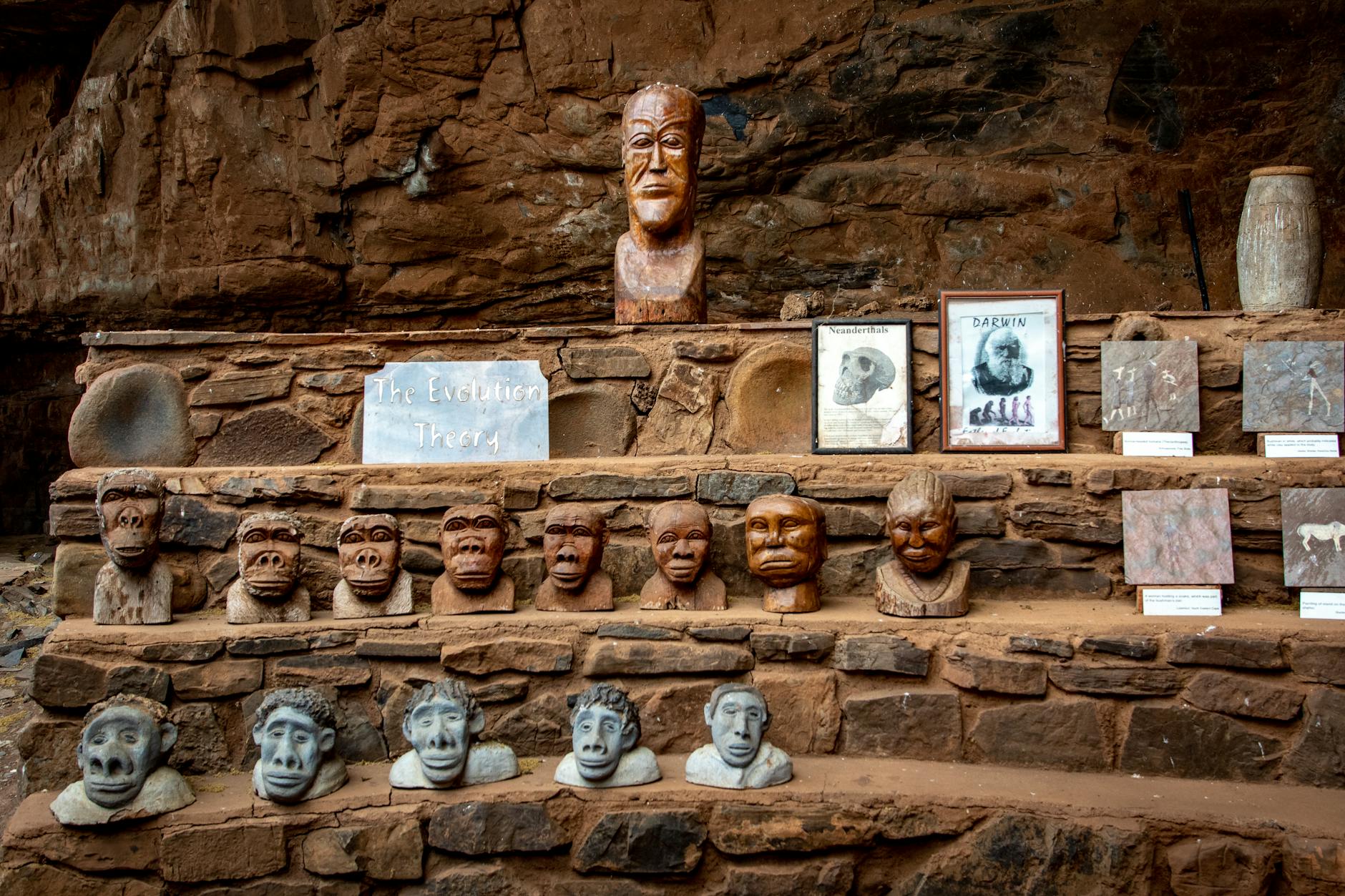
It is tempting to picture human evolution as a neat ladder: one species replacing another in a simple march toward modern humans. But the real story is far messier and far more interesting. Human evolution was braided.
Modern humans, Homo sapiens, emerged in Africa at least 300,000 years ago. But as they spread across the world, they did not simply erase every older human group they encountered. Genetic evidence shows that interbreeding between related human lineages was a common part of human evolution. Instead of a clean break between “us” and “them,” the human past includes repeated contact, mixing, and inheritance.
That means parts of our story were passed down not only from direct ancestors within Homo sapiens, but also from other archaic humans — extinct human relatives that lived before or alongside modern humans.
What “braided ancestry” means
A braided ancestry is the opposite of a single, straight ancestral line. Imagine several streams splitting apart and later reconnecting. That is closer to how human evolution unfolded.
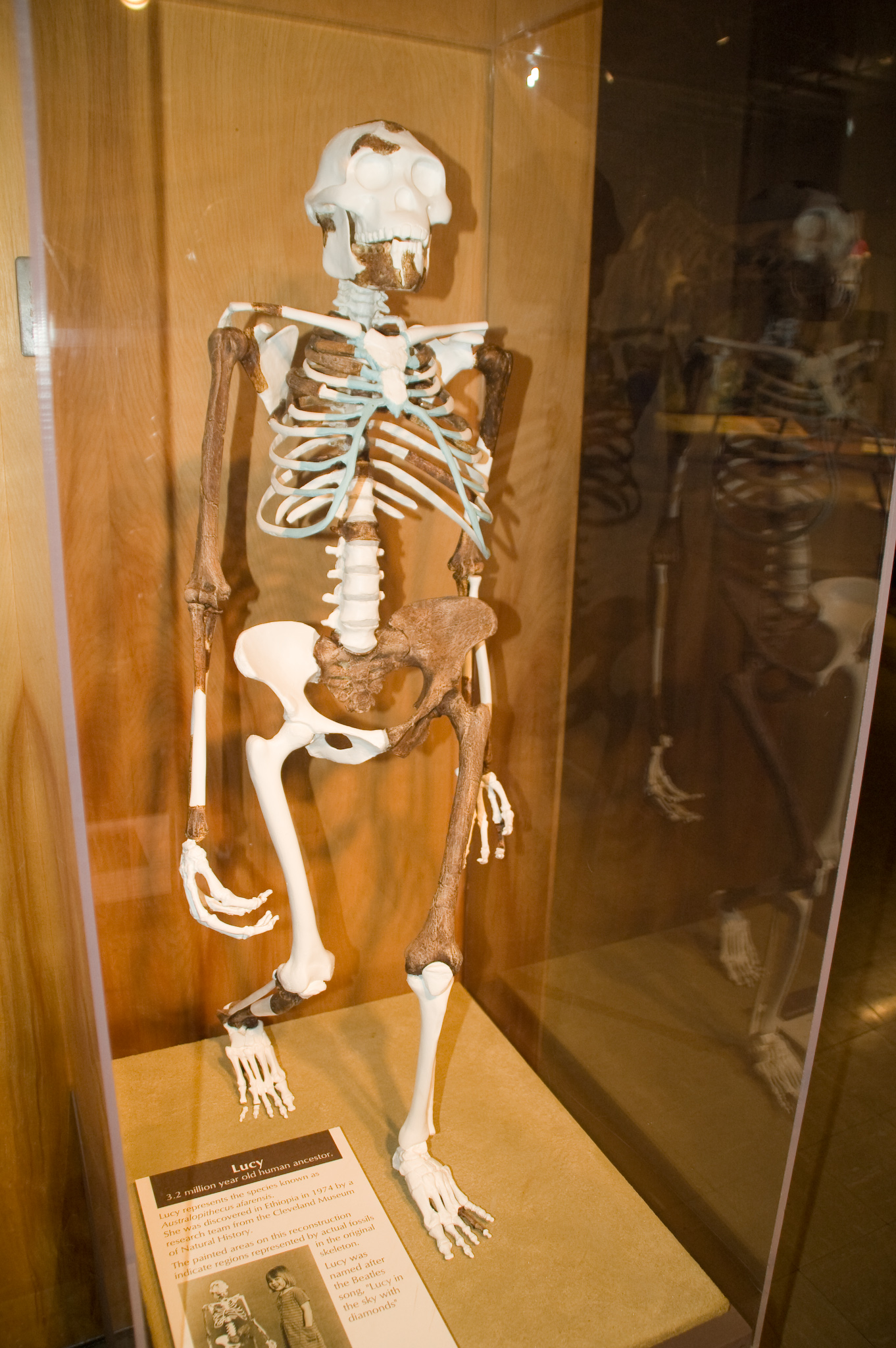
After the human lineage split from the chimpanzee–bonobo line around 8 to 4 million years ago, the hominins diversified into many species and at least two distinct genera. Later, the genus Homo emerged from Australopithecus. Over time, multiple human species appeared, spread, and disappeared.
Homo erectus evolved about 2 million years ago and was the first archaic human species to leave Africa and disperse across Eurasia. Much later, Homo sapiens emerged in Africa and migrated outward in at least two waves: one around 130,000 to 100,000 years ago, and another around 70,000 to 50,000 years ago. As these populations expanded, they encountered local archaic humans.
What happened next was not just replacement. It was also interbreeding.
Neanderthal and Denisovan DNA still echoes in living people
One of the biggest discoveries in the study of human origins is that extinct human relatives left genetic traces in living humans.
DNA evidence shows that several genes of Neanderthal origin are present among all non-sub-Saharan-African populations. Neanderthals were not simply a side branch with no legacy; some of their genetic material remains part of the inheritance of many living people.
Another archaic group, the Denisovans, also contributed to this picture. Denisovans are known from DNA evidence and limited fossil remains, and they are described as other hominins alongside Neanderthals. Together, Neanderthals and Denisovans may have contributed up to 6% of the genome in present-day non-sub-Saharan-African humans.
The genome is the complete set of DNA in an organism. So when scientists say archaic humans contributed to the modern human genome, they mean fragments of inherited genetic material were passed down through successful interbreeding and survived across many generations.
This finding changed the old idea that human species evolved in isolation from one another. Instead, even substantially diverged lineages could hybridize — that is, produce mixed offspring whose descendants continued into later populations.
Why Africa matters so much in human ancestry
Africa is central to the story of human origins in more than one way.
Anatomically modern humans emerged in Africa at least 300,000 years ago. Behavioral modernity also appeared in Africa roughly 160,000 to 70,000 years ago, and possibly earlier. Later, some populations migrated out of Africa and spread across the globe.
Genetic studies show that human populations native to the African continent are the most genetically diverse. More broadly, African populations harbor the highest number of private genetic variants.
A private variant is a genetic change found mostly in one population or region. These variants matter because they preserve deep pieces of population history. They help reveal how long populations have existed, how they mixed, and how much ancestry has been retained over time.
By contrast, genetic diversity generally decreases with migratory distance from Africa. This pattern may reflect population bottlenecks during migration. A bottleneck happens when a population is reduced to a smaller number of breeding individuals, limiting the amount of genetic variation carried forward.
So while people outside Africa often show clearer traces of Neanderthal and Denisovan ancestry, African populations contain the deepest reservoir of human genetic diversity overall.
The hidden archaic ancestry in West Africa
Perhaps the most intriguing part of this story is that not all archaic ancestry has a known label.
Recent studies found that populations in sub-Saharan Africa, especially West Africa, contain ancestral genetic variation that predates modern humans and has been lost in most non-African populations. Some of this ancestry is thought to come from admixture with an unknown archaic hominin.
Admixture means the mixing of previously separated populations through interbreeding. A hominin is a member of the human lineage after the split from the common ancestor shared with chimpanzees and bonobos. An archaic hominin, in this context, is an extinct human relative distinct from modern humans.
What makes this especially striking is the timing: this unknown archaic lineage is thought to have diverged before the split between Neanderthals and modern humans. In other words, some West African ancestry may preserve genetic echoes from a very old branch of the human family tree — one that is not yet clearly identified from fossils.
This is a reminder that the human past is still partly hidden. Bones and tools tell one part of the story, but DNA can reveal relationships that the fossil record alone does not fully capture.
Replacement and mixing happened together
Modern humans gradually replaced and interbred with local populations of archaic humans. These two processes are not mutually exclusive.
Earlier views often framed the spread of Homo sapiens as a complete replacement story. But the evidence shows a more nuanced picture. As modern humans dispersed into Eurasia and beyond, they became the only surviving human species, yet they also absorbed parts of other lineages along the way.
That is why the phrase “only extant species of the genus Homo” is true today, while still leaving room for genetic contributions from extinct relatives. Extant means currently living. Archaic humans are extinct, but some of their DNA persists in modern populations.
This also helps explain why human evolution is described as neither simple nor fully branching in a clean way. Branches split, yes — but they also sometimes rejoined.
What this says about being human
All living humans belong to Homo sapiens. Any two humans are at least 99% genetically similar, and humans are among the least genetically diverse primates. Yet within that shared humanity lies a remarkable record of migration, adaptation, and ancient contact.
Some of that record comes from genes inherited through lineages that no longer exist as separate peoples. Neanderthals, Denisovans, and perhaps an unknown archaic hominin all form part of the background of our species.
This does not make modern humans a patchwork of separate species in the present. Rather, it shows that our ancestry is historically connected. The human story includes divergence, movement, encounter, and mixture.
And that may be the best way to understand the past: not as a tidy procession of winners replacing losers, but as a long and tangled history in which different human groups met and, sometimes, became part of one another.
A more realistic human family tree
The classic “family tree” metaphor can be misleading if it suggests rigid branches that never touch again. A braid is better.
A braid captures separation and reunion. It allows for distinct lineages, but also for exchange. That is exactly what the genetic evidence points to in human evolution.
Modern humans arose in Africa, spread across the world, and interacted with other archaic humans. Non-sub-Saharan-African populations carry Neanderthal ancestry and, in some cases, Denisovan ancestry. African populations preserve the highest genetic diversity and many private variants. And some West African ancestry may come from an unknown archaic hominin whose branch reaches even deeper into the past.
Human evolution was not a straight road. It was a network of paths, crossings, and inheritances — a braided ancestry that still lives on in us.
Sources
Based on information from Human.
More like this
Your DNA story is wilder than a straight line — swipe into more mind-bending human history with DeepSwipe.