Full article · 8 min read
Human Mating: The Strange History of Kissing

Kissing can feel like one of the most natural expressions of romance. But its history is far stranger, and far less universal, than many people assume. Across human societies, kissing has served many different purposes: a sign of desire, a step in courtship, a form of foreplay, a private act between lovers, and in some places, something rude, dirty, or even criminal.
That makes kissing a fascinating window into human mating. It sits at the intersection of biology, attraction, custom, and taboo. A single kiss can be about pleasure, health, intimacy, and social rules all at once.
Was kissing always part of human romance?
Not necessarily. Friendly or familial kissing was common in different places throughout history, but romantic or sexual kissing was not universal. Evidence suggests that this kind of kissing appeared independently in several complex or stratified societies, including India, Mesopotamia, and Egypt during the early Bronze Age, some centuries after writing was invented.
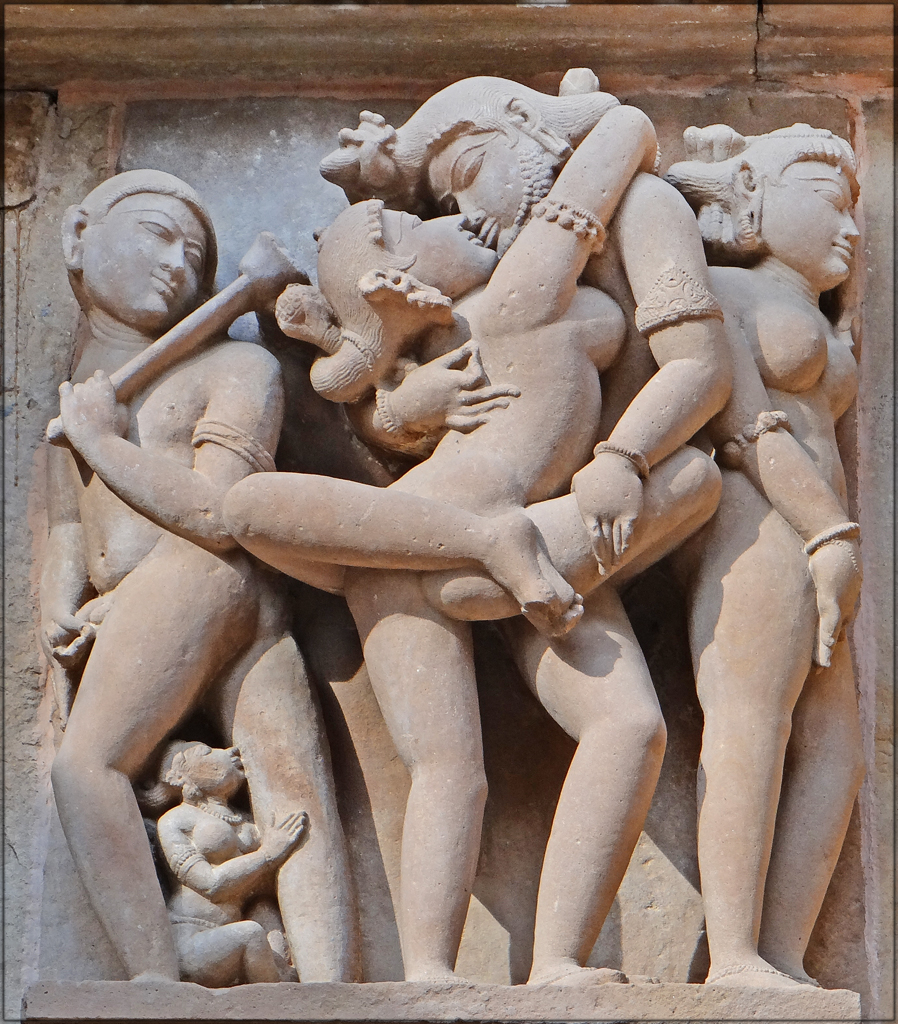
At the same time, kissing may be older than writing itself. Some prehistoric sculptures appear to depict romantic or sexual kissing, suggesting the behavior could predate written records. In other words, the written evidence is ancient, but the practice itself may be even more ancient.
As of 2024, the oldest known textual reference to romantic or sexual kissing comes from a clay tablet from the Sumerian city of Nippur in modern-day Iraq, dated to 2,400 B.C. It depicts the copulation of deities: Enlil, king of the gods, and the mother goddess Ninhursag. Another early description of kissing in a mating context comes from India in 1,500 B.C., when oral traditions in Vedic Sanskrit were being written down.
By the end of the fourth century B.C., kissing had spread across the Mediterranean after Greek and Macedonian soldiers returned from the campaign of Alexander III of Macedon in Northern India. Later, in the Roman Republic, different types of kissing were recognized, including open-mouth kissing with tongue-to-tongue contact, now commonly called French kissing.
So while kissing may seem timeless, its romantic meaning did not develop everywhere in the same way, or at the same pace.
Why do humans kiss at all?
One hypothesis is practical: humans may kiss partly to assess the health and suitability of a potential mate. Like other primates, humans may use close contact and smell-related cues to gather information about a partner. In simple terms, a kiss may help people unconsciously judge whether someone seems healthy or appealing.
This idea connects to a broader pattern in human mating: body odor matters. Smell plays a role in assessing suitability, and some olfactory receptors are linked to parts of the brain involved in reproductive behavior. That does not mean people consciously “analyze” a kiss like a medical test, but it does suggest that kissing may provide subtle information.
Another hypothesis is even more surprising. Romantic and sexual kissing may have evolved out of parental caregiving, especially premasticating and oral feeding. Premastication means chewing food before passing it to an infant. Under this view, intimate mouth contact may first have existed in a nurturing context, then later taken on a social and romantic function. Over time, it may have become a way to strengthen social ties and support pair-bonding.
Pair-bonding refers to the formation and maintenance of a close relationship between two people. In human mating, this matters because long-term bonds often involve courtship, attachment, and mate retention. Kissing may help reinforce that bond.
A behavior shaped by both biology and culture
Kissing is not just about instinct. Culture strongly shapes when, where, and whether it is acceptable.
In ancient Mesopotamia, romantic kissing may have been something lovers desired, but it could not be done outside marriage because it was treated as a crime as serious as adultery. In the Roman Empire, public kissing between lovers was considered indecent.
Health concerns also mattered. Kissing was known to spread cold sores, which are caused by the herpes simplex virus. That made public kissing not only improper in some settings, but also medically risky in ways people recognized.
In medieval Europe, kissing could happen on the cheeks or the mouth, and the meaning was often ambiguous. It might be a simple greeting, or it might signal romantic interest. But after the Black Death, kissing on the mouth as a greeting disappeared.
Even today, attitudes vary widely. In some cultures, such as Sudan, kissing on the mouth is considered rude or unsanitary. This is a powerful reminder that what feels “normal” in one society may feel offensive or unhygienic in another.
Climate may matter too. Kissing is more common in colder climates. The reasons are not fully spelled out here, but the pattern itself adds another layer to the puzzle: romantic behavior is influenced not only by personal desire, but by environment and social tradition as well.
Kissing as foreplay, signal, and social act
A kiss can serve many roles in human mating.
It is often part of foreplay, meaning activity that comes before sexual intercourse and may increase desire or emotional closeness. Mouth kissing can also be a sexual activity in itself. Yet that is not the only timing possible. In the Sumerian clay tablet from Nippur, kissing happens after intercourse rather than before it.
That detail matters because it shows kissing does not have one fixed meaning. It can initiate sex, accompany affection, or mark intimacy after the fact. It can be part of erotic behavior, but also part of emotional bonding.
This fits a wider pattern in human behavior. Humans do not engage in intimacy only for reproduction. People also seek affection, comfort, pleasure, and relationship validation. Kissing fits neatly into that broader human tendency: it can communicate desire, tenderness, or commitment without serving a strictly reproductive function.
Was kissing shared with other human species?
There is even a possible deep-history twist. It has been suggested that there may have been kissing between anatomically modern humans, Homo sapiens, and Neanderthals, with whom humans interbred. This may have happened as early as 100,000 years ago, based on the spread of the orally transmitted microorganism Methanobrevibacter oralis.
That does not prove exactly how or why kissing happened, but it offers a remarkable possibility: intimate mouth contact may have an extremely long history in the human story.
Kissing and the logic of mate choice
Kissing becomes even more interesting when viewed in the larger context of human mating strategies. Humans do not choose partners randomly. People assess one another for compatibility, attractiveness, values, and long-term potential. This process can involve courtship, flirting, dating, and many subtle forms of signaling.
A signal in this context is a trait or behavior that influences how another person responds. Some signals are thought to be reliable because they are hard to fake. Others are just cues, meaning they were not selected specifically to communicate something, but still provide useful information.
Kissing may combine both kinds of information. It can act as a direct social signal of interest, but it may also provide cues about health, smell, comfort, and compatibility. That helps explain why it can feel so meaningful. A kiss is not just symbolic. It can affect how people judge each other.
And because mate retention is important in long-term relationships, kissing may also help sustain attachment over time. Human pair bonds can be difficult to maintain in the presence of attractive alternatives. Behaviors that strengthen emotional closeness can therefore matter. Kissing may be one of those small but powerful acts that help maintain commitment.
Why kissing is not “just romance”
One reason kissing fascinates people is that it refuses to stay in a single category. It is biological, but not merely biological. It is cultural, but not purely cultural.
A kiss may help someone evaluate a partner through smell. It may stir desire during foreplay. It may strengthen pair-bonding. It may be a private sign of intimacy. It may also be restricted by law, religion, etiquette, disease concerns, or custom.
That combination makes kissing a perfect example of how human mating is shaped by both inherited tendencies and historical forces. People often imagine romance as deeply personal and spontaneous, yet even the most intimate acts are filtered through social rules and ancient patterns of behavior.
In one place, a kiss is expected. In another, it is taboo. In one era, it spreads across empires. In another, it disappears from public life after plague. In one relationship, it is foreplay. In another, it is reassurance, affection, or simply habit.
The strange truth behind a familiar gesture
Kissing feels simple because it is familiar. But familiarity can be misleading. Romantic kissing was not universal across all societies, may have emerged independently in different civilizations, may be older than writing, and may even have roots in caregiving or mate assessment.
That means every kiss carries a surprisingly dense history. Behind a gesture that lasts only seconds lies a story involving ancient cities, changing taboos, disease, courtship, smell, intimacy, and the long human search for connection.
So a kiss is more than romance. It is one of the clearest examples of biology and history meeting on the human face.
Sources
Based on information from Human mating strategies.
More like this
More about biology
More about culture
More about history
Pucker up for more mind-opening facts — download DeepSwipe and let your brain fall in love with learning.


