Full article · 7 min read
Human Mating: Why Partners Often Resemble Each Other

Have you ever noticed that many couples seem oddly well matched—not just in personality, but in age, education, beliefs, lifestyle, and sometimes even appearance? The old saying that “opposites attract” is catchy, but human pairings often follow a very different pattern. In many cases, people choose partners who are similar to themselves in ways both obvious and subtle.
This pattern is known as assortative mating: the tendency for people to pair up with others who share similar traits. In humans, mating is far from random. People often prefer partners with similar backgrounds, values, and characteristics, and those preferences can shape not only relationships, but families, social patterns, and even broader inequality.
Assortative mating: why similarity matters
Humans commonly prefer mates who are similar in traits such as age, race or ethnicity, religion, educational attainment, intelligence, cultural background, political orientation, moral values, and perceived personality. Similarity also appears in physical traits, including height, body-mass index, skin pigmentation, facial features, and physical attractiveness.
Even small clues can matter. People often evaluate a potential partner using signals such as grammar, self-confidence, and the quality of their teeth. These are not random details. Grammar can act as a proxy for educational level or socioeconomic status. Teeth can hint at health and age. Self-confidence may be read as a sign of psychological stability.
This helps explain why so many couples seem to “fit” in multiple ways at once. Similarity can reduce uncertainty about lifestyle choices, make partners more culturally compatible, and strengthen the bond between them. People who share religion, values, education, and expectations may have an easier time coordinating the practical details of life together.
Why some couples look alike
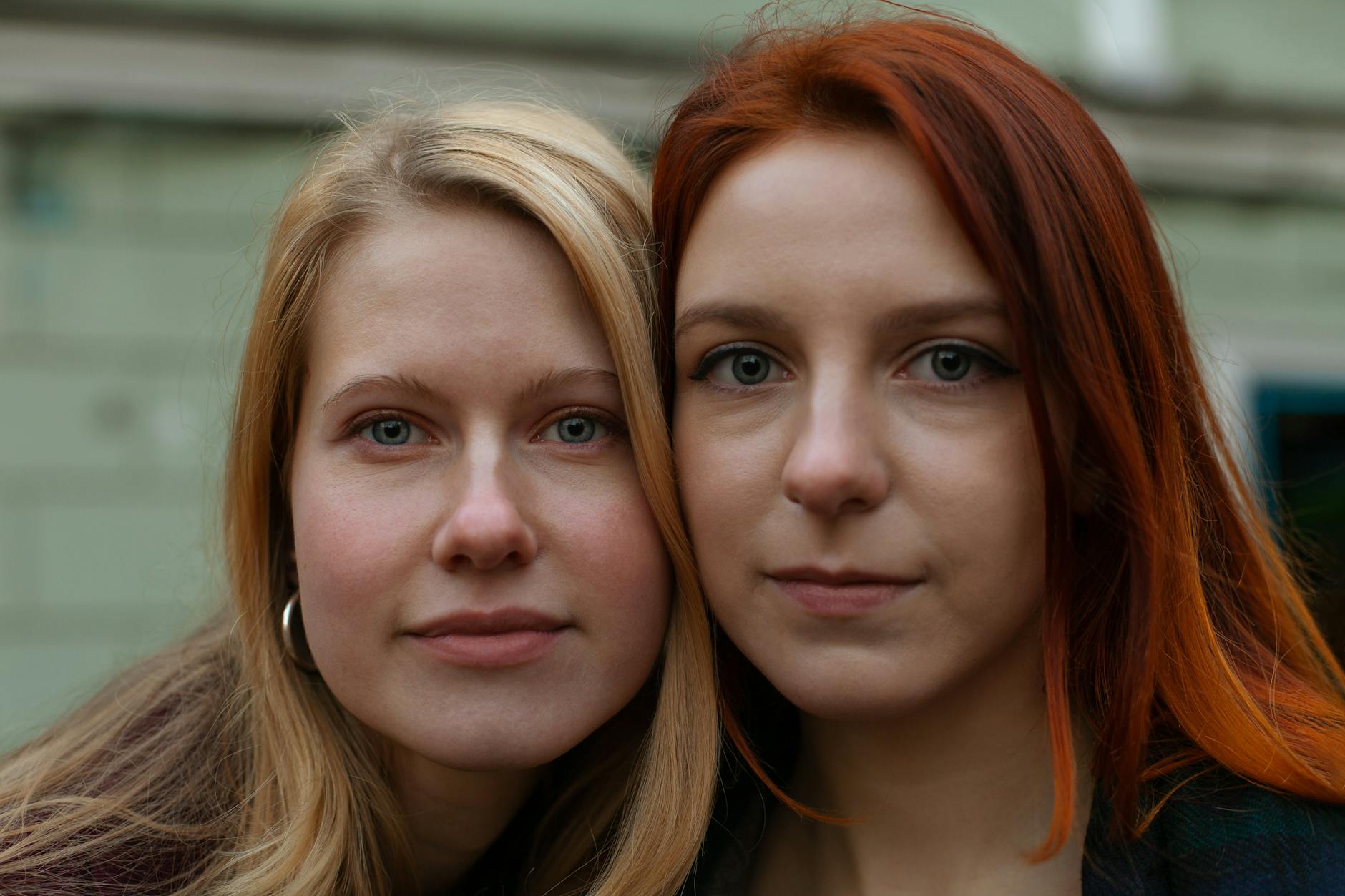
It is not unusual for couples to look surprisingly similar. Sometimes this is simply the visual side of assortative mating: people choosing partners with traits close to their own. But there may be more going on.
Some people are unconsciously attracted to faces that resemble their own, or to faces that simply feel familiar and easy for the brain to process. There is also evidence that people who are emotionally close to their opposite-sex parent may unknowingly choose partners who resemble that parent. This is called sexual imprinting, meaning that early close relationships can shape what a person later experiences as a desirable mate.
That can make some pairings seem almost uncanny. A couple may not just share values or education—they may have similar facial structure, coloring, or expressions, creating the impression that they are somehow related.
Similar, but not too similar
Humans often seem to balance two competing tendencies at once. On one hand, they prefer similarity. On the other, there is pressure to avoid pairing with someone who is too genetically close.
Children born to parents who are cousins face a higher risk of autosomal recessive genetic disorders. These disorders are more likely when a child receives the same harmful gene version from both parents. The risk is higher in populations that are already highly ethnically homogeneous. Children of more distantly related cousins have less risk than children of first cousins, though still more than the average population.
Overall, humans appear to maximize genetic similarity up to a point while avoiding excessive inbreeding or incest. In general, people seem to prefer mates roughly comparable to second or higher-parity cousins rather than very close kin. Genetic analyses in the United States found that the genomic correlation between spouses is comparable to that between second cousins.
That middle ground is striking: not complete difference, not extreme closeness. Human mate choice often appears to favor a familiar degree of similarity without crossing into the dangers associated with close relatives.
Why inbreeding avoidance is not the whole story
Avoiding close relatives may sound straightforward, but human societies do not all draw the line in the same place. The boundaries of incest prohibitions vary widely across cultures and time periods.
Marriage between biological siblings was accepted in Roman Egypt. France removed incest from its legal code during the Napoleonic era, although siblings still may not marry. In parts of the Middle East, marriage between cousins is common. In many parts of the United States, first-cousin marriage has been prohibited since the nineteenth century. There is no evidence that the actual prevalence of incest is determined by its legal status alone.
This wide variation shows that human mating patterns are influenced by more than genetic logic. Culture, law, religion, and social norms all shape who is seen as an acceptable partner.
The immune system twist: when difference becomes attractive
Although human assortative mating is usually positive, there is one especially interesting exception. In a region of the genome called the major histocompatibility complex, or MHC, humans tend to be more attracted to people who are genetically different from themselves.
The MHC is a group of genes on chromosome 6 involved in helping the body recognize pathogens. In studies of odor, people often find the scent of those with different MHC genes more appealing. This kind of negative assortative mating may help produce offspring with greater MHC diversity, which can make them more resistant to pathogens.
So human attraction contains a fascinating tension. People may prefer someone similar in education, values, religion, or appearance, yet be drawn toward difference in a part of the genome linked to immunity.
In simple terms: similar in life, different in immune defenses.
Similarity grows from social life too
Assortative mating is not just about attraction happening in isolation. It is also shaped by where people meet.
Religious people are more likely to encounter future partners in places of worship. Highly educated people often meet spouses in institutions of higher learning. Public secondary school is one of the last periods when people from many backgrounds are regularly mixed together. After that, social sorting becomes much stronger.
As people age, especially those marrying later, socioeconomic status becomes increasingly important. In societies with rising numbers of highly educated and career-minded women, competition for highly desirable men can intensify. Women in such contexts often do not choose men who are less educationally or occupationally accomplished than they are.
This helps explain why similarity in status and education has become so pronounced in the modern world. It is not just preference. It is also opportunity structure—who people actually meet, where they meet them, and which options remain realistic.
Why education and income now matter so much
In modern societies, educational and economic assortative mating has intensified. People increasingly seek bright, well-educated partners with high incomes, partly because this is seen as a path to well-educated, healthy, and successful children.
The result is that spouses often resemble one another strongly in educational attainment and intelligence. Among partner traits, the correlations are especially pronounced for age, race or ethnicity, religion, education, and intelligence.
This pattern has consequences beyond romance. In a knowledge-based economy, educational and socioeconomic assortative mating contributes to the growth of household income inequality. Higher-income, better-educated parents tend to invest more in their children, giving them advantages later in life. So the tendency to choose “someone like me” can ripple outward into larger social patterns.
Height, attraction, and matching
Height is one of the most heritable traits discussed in human pairing. Partners share 89% of the genetic variations affecting the preference for height. Even here, assortative mating shows up.
This does not mean all couples are identical in height, of course. But it does mean that partner choice is shaped in part by inherited preferences and by the tendency to choose someone who feels like a suitable match on visible traits.
The same broader pattern appears elsewhere. Humans often prefer similarity in appearance and background, but not total overlap. That is part of what makes real-world attraction more nuanced than the simple idea that either “likes attract likes” or “opposites attract.”
A balancing act at the heart of human pair-bonding
Human mate choice is full of trade-offs. People often want familiarity, shared values, and recognizable social cues. Similarity can make relationships easier to form and maintain. It can reinforce trust, reduce conflict over lifestyle, and deepen a sense of belonging.
At the same time, there are limits. Very close genetic similarity can carry health risks for offspring. And in at least one important genetic region tied to immunity, difference may be especially attractive.
That is what makes human mating so interesting. We are not simply drawn to sameness or difference alone. Instead, we often combine both: similar enough to feel compatible, different enough to avoid the costs of being too close.
The next time you notice a couple who seem alike in their looks, accent, values, education, or even their smile, you may be seeing assortative mating in action. And if they also happen to smell right to each other, the immune system may have had a say too.
Sources
Based on information from Human mating strategies.
More like this
More about biology
More about culture
More about psychology
Swipe into the science of attraction—download DeepSwipe and find out why your brain loves both similarity and surprise.


