Full article · 7 min read
Rosetta Stone and the Politics of Ptolemaic Egypt

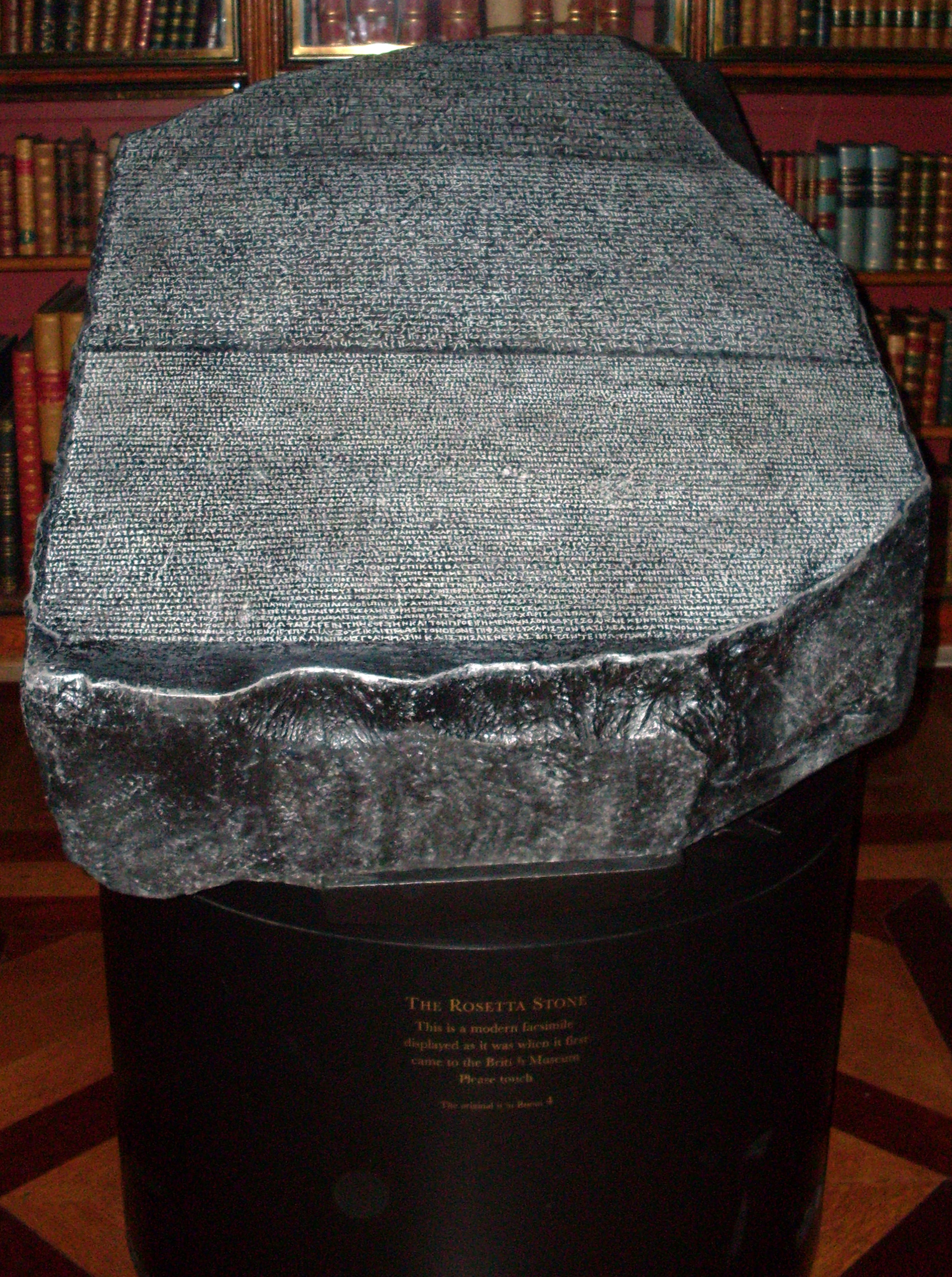
The Rosetta Stone is famous because it helped unlock ancient Egyptian writing. But before it became a scholarly breakthrough, it was something else: a political monument.
Its inscription records a decree issued in 196 BC on behalf of King Ptolemy V Epiphanes, during a dangerous and unstable period in Egypt. Far from being a neutral text, it was part of a larger effort to reinforce royal power, secure religious support, and present the young king as a legitimate ruler in a fractured kingdom.
A stone born in a crisis
The decree was set up after the coronation of Ptolemy V and established the divine cult of the new ruler. A divine cult means organized worship that treats a ruler as having sacred or godlike status. In the world of Ptolemaic Egypt, that was not just religious symbolism. It was also a way of strengthening authority.
Ptolemy V reigned from 204 to 181 BC, and he became ruler when he was only five years old. His father, Ptolemy IV Philopator, and his mother, Arsinoe, died suddenly in a conspiracy. According to contemporary sources, the conspiracy involved Ptolemy IV’s mistress Agathoclea. In the turmoil that followed, the conspirators ruled as the child king’s guardians until a revolt broke out two years later. Agathoclea and her family were then lynched by a mob in Alexandria.
That did not end the instability. Tlepolemus became guardian, and in 201 BC he was replaced by Aristomenes of Alyzia, who was chief minister when the Memphis decree was issued. So when the Rosetta Stone text speaks in praise of royal order, it reflects a kingdom that was still struggling to hold itself together.
Threats inside and outside Egypt
The young king’s problems were not limited to palace intrigue. Egypt was under pressure from foreign powers as well as internal rebellion.
Outside Egypt, Antiochus III the Great and Philip V of Macedon had made a pact to divide Egypt’s overseas possessions. Philip seized several islands and cities in Caria and Thrace. Antiochus gained ground too: after the Battle of Panium in 198 BC, Coele-Syria, including Judaea, passed from Ptolemaic to Seleucid control.
Inside Egypt, revolt had been simmering in the south since the reign of Ptolemy IV. The uprising was led first by Horwennefer and later by Ankhwennefer. This long-running internal revolt was still underway when Ptolemy V was officially crowned at Memphis at age 12, seven years after the formal start of his reign. The Memphis decree followed a little more than a year later.
This is what gives the Rosetta Stone its political force. The inscription was created in a moment when the king’s government needed every possible source of support.
Why Memphis mattered
The decree was issued by a congress of priests gathered at Memphis. That location mattered enormously.
Memphis was where the king was crowned, and its high priests were the highest religious authorities of the time. Their influence extended throughout the kingdom. In practical terms, securing the favor of the priesthood was essential for the Ptolemaic kings to maintain effective rule over the population.
This helps explain why the decree was issued at Memphis rather than Alexandria, the center of government under the Greek-speaking Ptolemaic rulers. The choice shows that the young king was eager to gain the active support of Egyptian religious elites.
The arrangement was politically useful for both sides. The decree records benefits granted by the king to the temples, including gifts of silver and grain. It also says that when the Nile flooded especially high in the eighth year of his reign, he had the excess waters dammed for the benefit of farmers. In return, the priesthood pledged honors for the king: his birthday and coronation days were to be celebrated every year, and the priests of Egypt would serve him alongside the other gods.
In other words, this was a formal exchange of favor, loyalty, and legitimacy.
A very unusual kind of royal message
Stelae like this were distinctive in Ptolemaic Egypt. A stele is a carved stone slab set up as a monument or public inscription. In earlier Pharaonic times, national decisions would normally have been proclaimed by the divine ruler himself. Under the Ptolemies, however, these honorary decrees were established on the initiative of temples rather than the king.
That difference reveals something important about the politics of the era. Instead of the ruler directly glorifying himself, representative groups such as priestly bodies publicly praised, honored, and deified him. This style had parallels in Greek civic culture, where communities could issue public honors.
So the Rosetta Stone reflects a hybrid political world: Egyptian religious authority, Greek-speaking government, and a monarchy trying to join them together.
Three scripts, one strategy
One of the most striking features of the Rosetta Stone is that the decree appears in three scripts: hieroglyphic, Demotic, and Ancient Greek.
The decree itself states that copies were to be placed in every temple and written in the “language of the gods,” the “language of documents,” and the “language of the Greeks.” These labels are revealing.
Hieroglyphs were associated with formal religious writing. On the Rosetta Stone, the hieroglyphic text is in Middle Egyptian, specifically a deliberately archaic form used in sacred contexts. Even by the time the stone was inscribed, this style was already centuries out of date in everyday life.
Demotic was much closer to the form of Egyptian spoken in Ptolemaic times. It was used for documents and administration.
Greek was the language of the Ptolemaic government. Ever since the conquests of Alexander the Great, the government of Egypt had been Greek-speaking.
Putting the same decree into all three scripts was not just practical. It was a political communication strategy. The text could function in religious space, connect with literate Egyptian priesthoods, and serve the Greek-speaking state at the same time.
Speaking to gods, priests, and government
The famous “three scripts” are often treated as a scholarly puzzle, but they were also a map of power.
The hieroglyphic version linked the decree to temple tradition and sacred authority. The Demotic version connected it to the Egyptian administrative and cultural world. The Greek version addressed the ruling machinery of the Ptolemaic state.
That made the decree broader than a simple royal announcement. It presented Ptolemy V as a ruler endorsed across the main institutional languages of his kingdom.
This was especially important because the Ptolemies were a Greek-speaking dynasty ruling Egypt. The inclusion of Egyptian texts helped show a connection to the wider population through the literate priesthood. The stone’s message was therefore not only that the king deserved honor, but that the kingdom’s major traditions could be brought into alignment around him.
The decree behind the legend
The Rosetta Stone itself is only a fragment of a larger stele, and the text on it is incomplete. Even so, its contents are clear enough to show the political purpose behind it.
The decree dates to 27 March 196 BC, though the inscription also includes another date corresponding to 27 November 197 BC, the official anniversary of Ptolemy’s coronation. There is some discrepancy between the versions of the text, especially in the Demotic version, but the overall context remains the same: the decree belongs to 196 BC and was designed to re-establish the rule of the Ptolemaic kings over Egypt.
The Rosetta Stone was probably originally displayed in a temple, possibly at Sais, before it was later moved and eventually reused as building material at Fort Julien near Rashid, known in European languages as Rosetta. Its later fame came from rediscovery and decipherment, but its original role was ceremonial and political.
More than a key to language
The Rosetta Stone became the essential clue that allowed scholars to decipher Egyptian scripts, and that achievement transformed the study of ancient Egypt. But the text carved on the stone had a more immediate purpose when it was created.
It was meant to stabilize a vulnerable monarchy. It honored a boy king whose rule had begun in conspiracy and unrest. It formalized support from powerful priests at Memphis. And it projected a single royal message across the three most important written forms in Ptolemaic Egypt.
That is why the Rosetta Stone matters not only as a linguistic breakthrough, but also as evidence of how power worked in a divided kingdom. It shows a government using religion, language, and public inscription to shore up legitimacy during a time of crisis.
Long before it became a symbol of decipherment, the Rosetta Stone was a carefully crafted act of political survival.
Sources
Based on information from Rosetta Stone.
More like this
More about culture
More about history
More about politics
Decode more than hieroglyphs — unlock daily knowledge with DeepSwipe.


