Full article · 9 min read
Mathematics: From Proof to Paradox
Mathematics is often imagined as a realm of certainty, where every statement is either right or wrong and every answer can, in principle, be nailed down forever. But that image took a long time to develop. For much of early history, people used mathematics as a practical toolkit for counting, measuring, building, surveying, and astronomy. Only later did mathematicians begin demanding something stricter: proof.
That shift changed everything. It turned mathematics from a collection of useful recipes into a discipline built on logic, axioms, and theorems. And even after that transformation, the story did not settle into perfect certainty. New discoveries, strange geometries, and deep paradoxes shook the foundations of the subject. In the 20th century, Kurt Gödel delivered an even more startling result: some mathematical truths cannot be proved within the very systems designed to capture them.
Before proof: useful rules and successful calculations
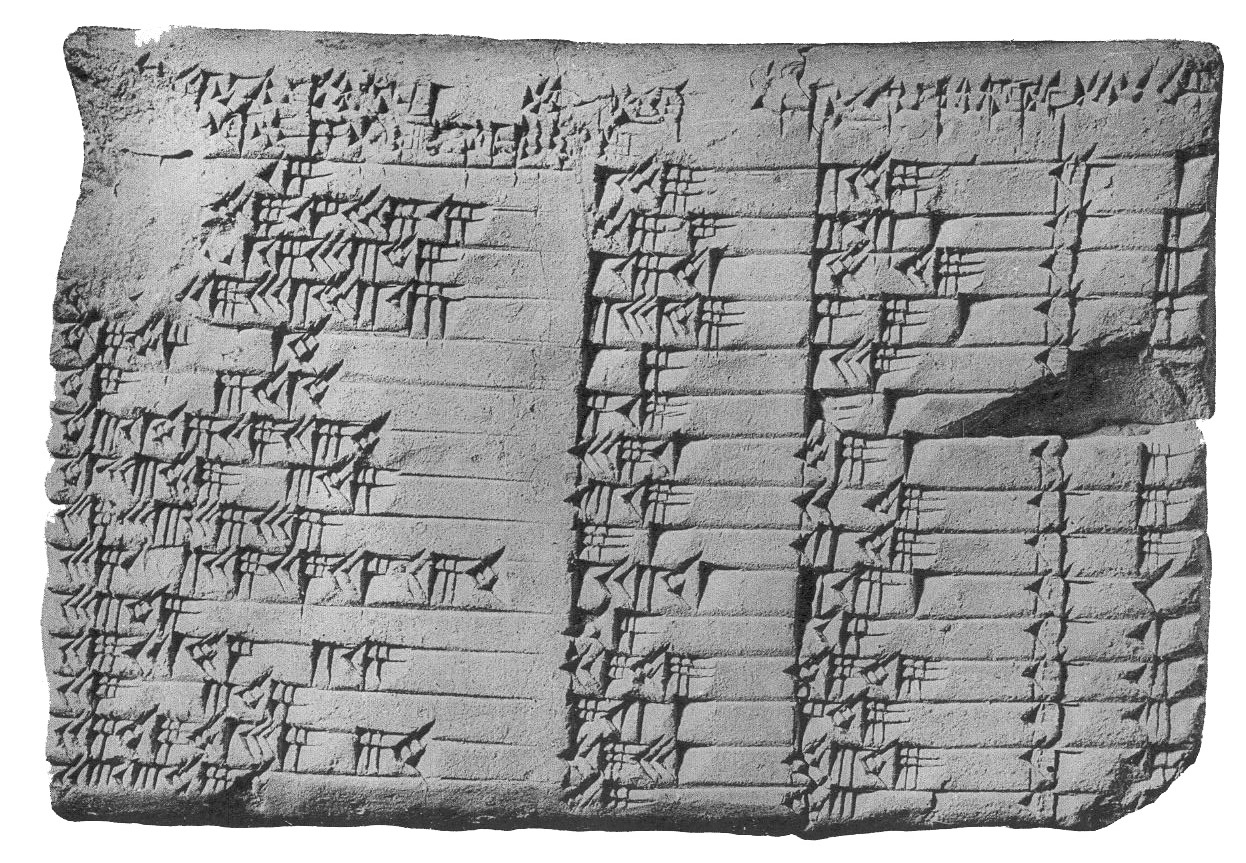
Long before mathematics became a rigorously deductive science, ancient civilizations were already doing sophisticated calculations. Around 3000 BC, Babylonians and Egyptians were using arithmetic, algebra, and geometry for taxation, finance, building, construction, and astronomy. Some of the oldest mathematical texts known come from Mesopotamia and Egypt, dating from 2000 to 1800 BC.
Babylonian mathematics included elementary arithmetic such as addition, subtraction, multiplication, and division. The Babylonians also used a place-value system and a sexagesimal numeral system, a base-60 system still echoed today in the way angles and time are measured. These were powerful practical achievements, but they were not yet built around the kind of formal proof later associated with Greek mathematics.
Early geometry also began as a set of empirical recipes concerning lines, angles, circles, and shapes. These methods were especially useful for surveying land and for architecture. In that world, checking a result by measurement could be good enough. If a rule worked reliably in practice, it had value.
The Greek revolution: why proof mattered
A major turning point came with the ancient Greeks. Greek mathematics emerged as a distinct discipline in the 6th century BC, and one of its most important innovations was the concept of proof.
A proof is a chain of reasoning showing that a statement must be true. Instead of relying on repeated measurements or examples, proof demands deduction from accepted starting points. In geometry, this meant that it was no longer enough to measure two lengths and observe that they seemed equal. Their equality had to be established by reasoning from basic principles.
This was a profound change. It introduced mathematical rigour, meaning a much stricter standard of justification than practical success alone. Mathematics increasingly became a discipline where certainty came not from experiment, but from logic.
The mathematician most closely associated with this transformation is Euclid. Around 300 BC, he organized mathematical knowledge in his book Elements. This work systematized geometry using definitions, postulates, axioms, theorems, and proofs. It is widely considered one of the most successful and influential textbooks ever written.
Axioms, definitions, and theorems
To understand how mathematical proof works, it helps to unpack the basic pieces.
A definition explains precisely what kind of object is being discussed. Mathematics depends on rigorous definitions because vague terms create confusion.
An axiom, or postulate, is a statement accepted without proof. These are the starting assumptions of a theory. They are not proved inside the theory; instead, proofs begin from them.
A theorem is a statement that has been proved true using deductive reasoning from definitions, axioms, and previously established results.
This structure is the backbone of classical mathematics. You begin with basic assumptions, apply rules of logic, and derive conclusions step by step. This is what gives mathematics its distinctive kind of certainty. As the subject developed, this method spread far beyond geometry and became foundational for mathematics as a whole.
Euclidean geometry and its long reign
The geometry that grew out of Euclid’s framework is now called Euclidean geometry. It studies shapes and arrangements constructed from lines, planes, and circles in the plane and in ordinary three-dimensional space.
For centuries, Euclidean geometry stood as the model of rigorous reasoning. It showed how an entire subject could be built from a compact set of starting points and a disciplined method of proof. This style of thinking became a standard for mathematical argument in general.
Even when geometry later changed dramatically, Euclid’s influence remained. The idea that mathematics should proceed from clearly stated assumptions through logically sound proofs endured and expanded into other branches such as algebra, number theory, and analysis.
When geometry cracked open
For a long time, Euclidean geometry looked like the obvious geometry of space itself. But in the 19th century, mathematicians discovered non-Euclidean geometries, geometries that do not obey Euclid’s parallel postulate.
The parallel postulate is one of the assumptions used in Euclidean geometry, concerning parallel lines. Once mathematicians began seriously exploring what happened when that assumption was changed, geometry stopped looking like a single inevitable structure and started looking like a family of possible systems.
This was philosophically explosive. If different geometries could be developed logically from different axioms, then the truth of those axioms was no longer a purely mathematical matter. Mathematics had to confront the possibility that its foundations were choices within formal systems, rather than self-evident truths about reality.
The discovery of non-Euclidean geometry became one of the factors that contributed to the foundational crisis of mathematics.
The foundational crisis
By the end of the 19th century, mathematicians faced a deeper problem than just alternative geometries. The basic concepts of mathematics themselves seemed not to be sharply defined enough to avoid contradiction. The emergence of paradoxes, including Russell’s paradox, showed that informal ideas about sets and mathematical objects could lead to trouble.
At the same time, the success of new mathematical fields made it harder to believe that intuition alone could keep the subject secure. Mathematicians needed a more systematic foundation.
This period became known as the foundational crisis of mathematics. The response was not to abandon rigor, but to intensify it.
The axiomatic method and formalized set theory
The mainstream solution was the systematic use of the axiomatic method within a formalized set theory.
The axiomatic method means building a theory from explicitly stated basic rules and then deriving consequences from them. While this idea had ancient roots in Greek mathematics, it was expanded and formalized in modern mathematics. The goal was clarity: every object should be defined precisely, every rule for inference stated clearly, and every proof reducible to valid logical steps.
Set theory became central because sets, collections of objects, were used to define mathematical objects in a uniform way. In this framework, many parts of mathematics could be rebuilt using a shared formal foundation.
This shift had enormous consequences. It helped trigger a dramatic increase in the number of mathematical areas and their applications. It also changed how mathematicians thought about truth in mathematics. Instead of asking whether an axiom was obviously true in some intuitive sense, they could study what follows if that axiom is adopted.
Logic becomes mathematics
Before the late 19th century, logic was mainly treated as part of philosophy. Set theory, too, had not yet been recognized as part of mathematics in the modern way. That changed during the foundational crisis.
Mathematical logic began treating things like proofs, theorems, formal systems, and rules of deduction as mathematical objects in their own right. This opened the door to new subfields such as proof theory, model theory, type theory, computability theory, and computational complexity theory.
This was a remarkable reversal. Mathematics, which had long used logic as a tool, now began studying logic mathematically.
Gödel’s incompleteness theorems
Then came one of the most famous shocks in the history of ideas.
In the early 20th century, Kurt Gödel published his incompleteness theorems. Roughly speaking, they show that in every consistent formal system containing the natural numbers, there are statements that are true but not provable inside that system.
This result struck at a dream many mathematicians had held: that a sufficiently well-designed formal system might capture all mathematical truth by mechanical deduction from axioms. Gödel showed that this hope has limits.
The key terms matter here:
A formal system is a framework with explicitly stated symbols, rules, axioms, and methods of deduction.
Consistent means that the system does not prove contradictions.
Arithmetic refers to the mathematics of natural numbers and basic operations on them.
Gödel’s point was not that mathematics collapses, or that proofs are useless. Quite the opposite: his theorems are among the deepest achievements of mathematical logic. What they show is that no single consistent formal system rich enough for arithmetic can prove every truth expressible within it.
That is the “shocking limit” at the heart of modern foundations.
True but unprovable
The phrase “true but unprovable” sounds almost contradictory at first. In ordinary life, we often treat truth and proof as nearly identical. In mathematics, however, Gödel forced a distinction between truth in a stronger sense and provability inside a particular formal system.
A statement may be valid about the natural numbers, yet not derivable from a given set of axioms using that system’s allowed rules of reasoning. To prove it, one may need a stronger system.
This was not a small technical quirk. It transformed how mathematicians and philosophers understood the limits of formal reasoning. It showed that rigor could take mathematics very far, but not all the way to a final, closed system containing every mathematical truth.
Proof after paradox
The story from Euclid to Gödel is not a tale of failure. It is a story of deepening understanding.
The Greeks introduced proof and transformed mathematics into a discipline of deductive certainty. Modern mathematicians sharpened that vision through axioms, formal systems, and set-theoretic foundations. Then Gödel revealed that even the most rigorous systems have built-in limits.
That combination is part of what makes mathematics so compelling. It is at once precise and surprising, disciplined and destabilizing. It begins with simple rules, but those rules can lead to entire universes of structure, and sometimes to truths that resist capture from within.
Mathematics did not lose its power when proof met paradox. It gained a more mature understanding of what proof can do, and what it cannot.
Sources
Based on information from Mathematics.
More like this
From Euclid to Gödel, math is full of plot twists — download DeepSwipe and prove to yourself that learning can be addictive.