Full article · 7 min read
Julius Caesar and the Crossing of the Rubicon
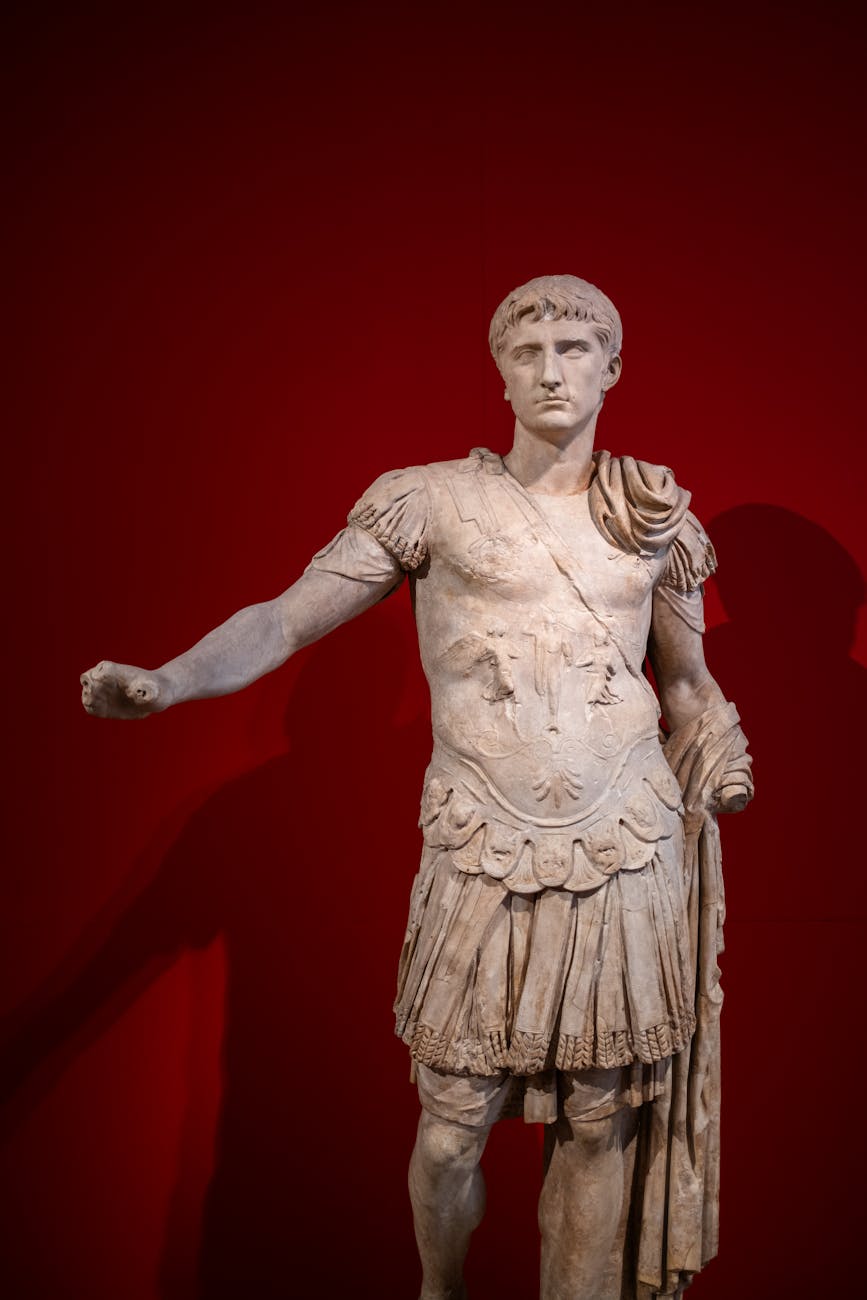
Few moments in ancient history have become as famous as Julius Caesar crossing the Rubicon. It was not just a military movement or a dramatic march south. It was the instant when a political crisis in Rome became open civil war.
That is why the phrase still carries so much weight. The Rubicon crossing came to symbolize a point of no return: a moment when hesitation ends, risk begins, and the old rules may never fully recover.
Why the Rubicon mattered
In early January 49 BC, Caesar crossed the Rubicon, the river that marked the northern boundary of Italy, with a single legion, the Legio XIII Gemina. By doing so, he openly defied the Senate and began Caesar's civil war.
This was explosive because Rome treated Italy differently from the provinces. Caesar had held military command outside Rome, but the Senate had ordered him to step down from that command and return. Instead of surrendering his army and political leverage, he advanced toward Rome at the head of troops.
The river itself became famous because it marked more than geography. It represented a legal and political line. Once Caesar crossed it with soldiers, compromise became far harder and armed conflict became the central fact of Roman politics.
The standoff before the march
The crossing did not come out of nowhere. Caesar had become one of the most powerful figures in the Roman Republic through his victories in the Gallic Wars, completed by 51 BC. Those campaigns greatly expanded Roman territory and built his reputation as a commander. They also gave him something just as important: the loyalty of veteran soldiers.
That success changed the balance of power in Rome. Earlier, Caesar, Pompey, and Crassus had formed the First Triumvirate, an informal political alliance that dominated Roman politics for years. But the alliance did not last. By 50 BC, Pompey had realigned himself with the Senate, and Caesar's achievements in Gaul increasingly threatened to eclipse Pompey's standing.
As Caesar's command neared its end, the Senate ordered him to step down from military command and return to Rome. The issue was no longer just procedure. It had become a direct contest over status, authority, and political survival.
In the months before war, fears of conflict rose steadily. Both Caesar and his opponents built up troops in southern Gaul and northern Italy. There were also efforts to avoid the final break. Cicero and others sought disarmament by both Caesar and Pompey, and a proposal to that effect won overwhelming support in the Senate on 1 December 50 BC. Even so, it was not passed.
At the start of 49 BC, Caesar made a renewed offer that he and Pompey should both disarm. The hardliners rejected it. On 7 January, the Senate declared Caesar an enemy and issued its final decree.
Why Caesar chose defiance
Historians have long debated exactly why Caesar marched on Rome. One major explanation is that he believed he was being forced into a choice between political ruin and civil war. If he surrendered his command without protection, he feared losing the standing and security attached to his office.
Another key goal was his desire for a second consulship and a triumph. A consulship was one of the highest elected offices in the Roman Republic. A triumph was a grand public celebration of military victory, one of the greatest honors a Roman commander could receive. Caesar feared his opponents would block both.
He also justified his actions politically. He claimed that Pompey and his allies were trying to suppress the freedom of the Roman people to elect him and honor his achievements. Whether that argument was sincere, strategic, or both, it became central to his case.
What is clear is that Caesar did not act by accident or in confusion. Crossing the Rubicon was a deliberate act of defiance.
“Let the die be cast”
Later ancient writers report that, when Caesar crossed the Rubicon, he quoted the Athenian playwright Menander in Greek: “let the die be cast.” Whether remembered exactly or not, the line captures the meaning of the moment.
A die is a gaming cube, like a modern dice. Once thrown, it cannot be called back. That image fits the event perfectly. Caesar was not simply moving troops. He was committing himself to a course that could end in total victory, total defeat, or his death.
This is one reason the crossing became such a powerful metaphor. It describes the instant when a dangerous decision stops being hypothetical and becomes real.
Why Pompey and the senators fled
One of the most surprising features of the crisis is that Caesar did not immediately meet a strong military barrier in Italy. Pompey and many senators fled south instead.
They believed Caesar was moving quickly for Rome, and Pompey withdrew to Brundisium. From there, he escaped to Greece, abandoning Italy in the face of Caesar's superior forces and avoiding capture.
That retreat was hugely important. It meant Caesar's gamble worked in the short term. Rather than being trapped and crushed as a rebel entering Italy, he seized momentum. He captured communication routes to Rome, paused briefly for negotiations, and then pressed south in an attempt to force Pompey into a settlement.
The talks failed amid mutual distrust. But by then Caesar had already achieved a major psychological and political victory. His enemies had not stopped him at the border. They had given ground.
From border crossing to full civil war
After Pompey escaped, the conflict widened across the Roman world. Caesar stayed near Rome only briefly and then moved against Pompey's forces in Spain, defeating Pompeian legates at the Battle of Ilerda before forcing surrender. He later returned to Rome, was appointed dictator to hold elections, won the consulship for 48 BC, and then sailed to Greece.
The war's decisive turning point came on 9 August 48 BC at the Battle of Pharsalus, where Caesar decisively defeated Pompey. Pompey fled to Egypt, where he was killed on arrival in Alexandria.
Even that did not end the fighting immediately. Caesar went on to wage further campaigns in Alexandria, Asia Minor, Africa, and Spain. At Munda in 45 BC, he narrowly won another bloody battle, and by then the war was effectively over.
So the Rubicon was not the whole war. But it was the moment that made the war unavoidable.
The crossing that helped break the Republic
The episode matters not just because Caesar won. It matters because of what followed for Rome itself.
After victory, Caesar accumulated extraordinary power. He was appointed dictator repeatedly and eventually proclaimed dictator for life in early 44 BC. The Senate granted him exceptional honors, including the placement of his portrait on coins, rights associated with royal dress, and other symbols that many Romans viewed with growing alarm.
At the same time, the normal machinery of the Republic was increasingly overshadowed by Caesar's personal authority. Decisions about justice, legislation, administration, and public works became concentrated in his hands. The traditional institutions still existed, but they mattered less and less.
That concentration of power helped produce the conspiracy against him. On 15 March 44 BC, the Ides of March, a group of senators led by figures including Brutus and Cassius assassinated Caesar during a Senate meeting in the Curia of Pompey.
Yet his death did not restore the old order. Instead, new civil wars followed, and the constitutional government of the Republic was never fully restored. Caesar's adoptive heir Octavian, later known as Augustus, eventually rose to sole power and transformed the Republic into the Roman Empire.
In that sense, the crossing of the Rubicon was not only a military gamble. It was one of the key steps in the collapse of the Roman Republic.
How the Rubicon became a lasting metaphor
The phrase “crossing the Rubicon” survives because this story is so stark. A commander is ordered to give up power. He refuses. He crosses a boundary with soldiers. Rivals flee. A republic breaks into civil war.
Very few historical episodes fit so neatly into a larger idea. The Rubicon became shorthand for the irreversible decision, the move after which there is no safe return to the old situation.
It is also memorable because Caesar himself was already one of history's most influential figures: a general, statesman, author, and historian whose own writings shaped how later generations understood his career. His life was full of dramatic moments, but the Rubicon stands above most of them because it combines politics, law, ambition, fear, and theater in a single image.
One river. One march. One decision that changed Rome forever.
Sources
Based on information from Julius Caesar.
More like this
More about history
More about politics
More about war
Ready to cross your own Rubicon into smarter scrolling? Download DeepSwipe and march into a daily stream of bite-sized knowledge.


