Full article · 7 min read
Anglo-Saxon England: How Roman Britain Became the Kingdom of England
After Rome, a New England Began
When Roman rule in Britain ended in the early 5th century, the political map of the island changed dramatically. Into this shifting world came Germanic groups collectively known as the Anglo-Saxons. These included Angles, Saxons, Jutes and Frisians, and their settlement is often treated as the starting point of England and the English people.
This was not a simple moment when one society vanished and another instantly appeared. The transition was long, uneven and still debated. What is clear is that the breakdown of Roman authority opened the way for new powers to rise in what is now England. Over time, Anglo-Saxon kingdoms became the dominant force across much of the region.
A key moment in establishing Anglo-Saxon rule came in 577 at the Battle of Deorham. From there, the newcomers and their descendants built political systems that gradually reshaped southern and eastern Britain.
Who Were the Anglo-Saxons?
The term Anglo-Saxon refers to several Germanic peoples rather than a single tribe. In present-day England, settlement was traditionally associated with seven major kingdoms, though smaller kingdoms also existed.
The best-known kingdoms were:
- Sussex, Kent and Essex in the southeast
- Mercia and East Anglia in the Midlands
- Northumbria in the north
- Wessex in the south and southwest
This landscape is often called the Heptarchy, though that term has fallen out of academic use. It survives because these seven kingdoms were the main powers in south Britain for long stretches of the period.
Power did not stay fixed. Northumbria dominated much of the 7th century. Mercia rose strongly in the 8th century, especially under Offa. Then Wessex emerged as the decisive power in the 9th century.
A New Language Took Hold
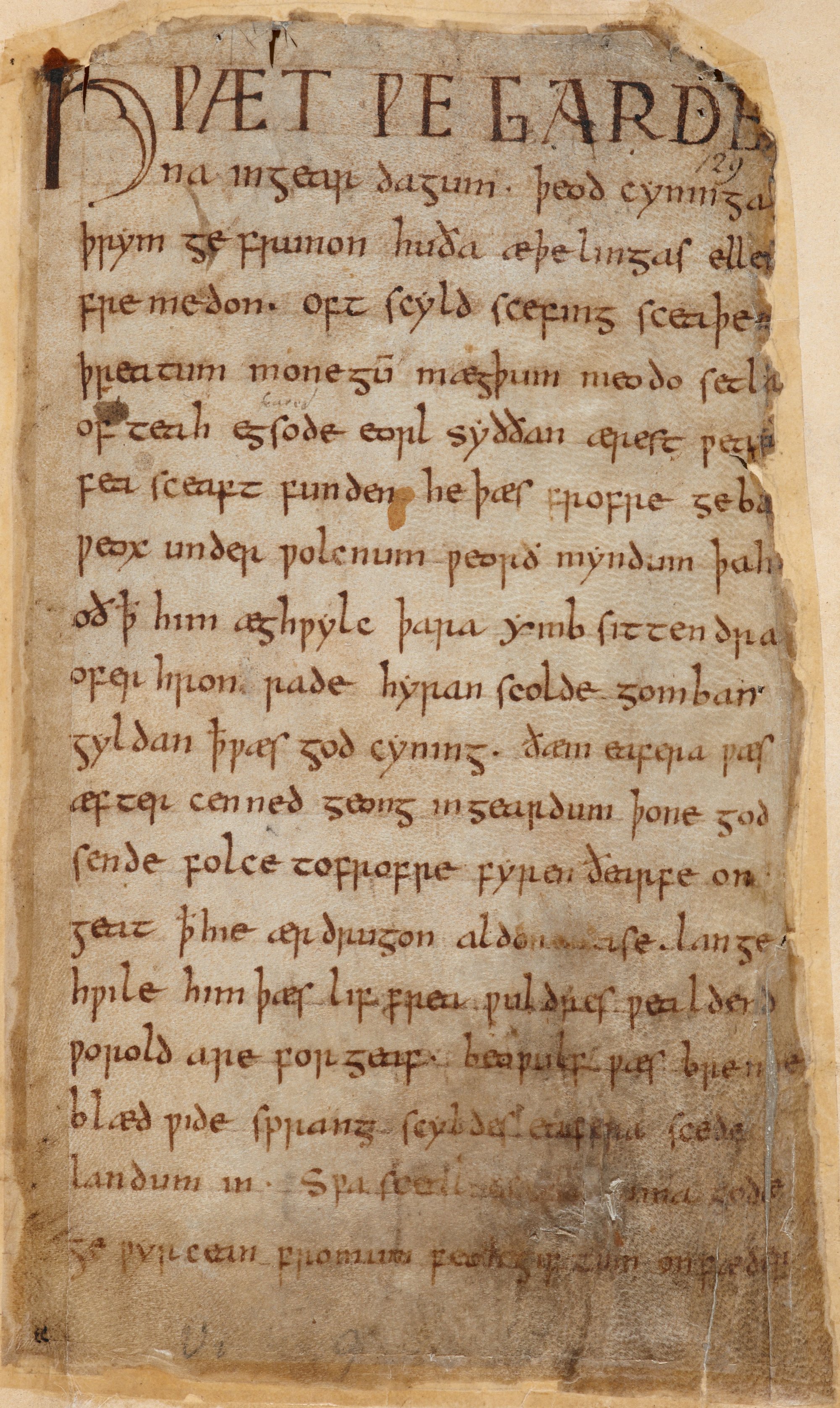
One of the deepest changes of the Anglo-Saxon period was linguistic. The Anglo-Saxons brought Old English, which largely displaced the earlier Brittonic language in much of what became England.
Old English was the early form of the English language. Brittonic, by contrast, was the Celtic language spoken by the Britons and was the ancestor of modern Brittonic languages. In simple terms, this was not just a political takeover. It was a cultural and linguistic transformation that changed how people named places, ruled communities and understood identity.
How exactly Old English spread remains debated. Historians, archaeologists and linguists do not all agree on whether the newcomers arrived in overwhelming numbers everywhere or whether, in some areas, smaller groups took power and gradually influenced the local population. One emerging view is that the process varied by region. In core settlement areas such as East Anglia and Lincolnshire, mass migration may best explain the evidence. In more peripheral regions, local people may have remained in place while incoming elites took control.
A study of place names in northeastern England and southern Scotland argued that Anglian settlers were especially numerous in river valleys such as those of the Tyne and Tweed, while Britons in the hill country became acculturated more gradually. In other words, the making of Anglo-Saxon England may have involved both migration and elite takeover depending on the area.
Kingdoms in Conflict
Anglo-Saxon England was not born as one nation. It began as a patchwork of rival kingdoms. These states fought each other, while also battling British successor states in western Britain and the Brittonic-speaking Old North, or Hen Ogledd.
Northumbria became especially powerful in the 7th century. It had itself been formed by joining two earlier kingdoms, Bernicia and Deira. At its height, Northumbria extended influence north into Scotland and west into Wales, and even subdued Mercia for a time. But its power faded after the defeat and death of King Aegfrith at the hands of the Picts in 685.
Mercia then rose to prominence. Under kings such as Penda and later Offa, Mercia became a major force. Offa, in particular, had influence over most of Anglo-Saxon England from 785. His authority was famous enough that Charlemagne regarded him as overlord of south Britain. Offa’s power is also reflected in his ability to summon the resources needed to build Offa’s Dyke.
Yet Mercian supremacy did not last. In the 9th century, Wessex took the lead.
Christianity Reshaped Anglo-Saxon Society
Another turning point was Christianisation. Anglo-Saxon England began converting to Christianity around AD 600. This change came from two directions: Celtic Christianity from the northwest and the Roman Catholic Church from the southeast.
Augustine, the first Archbishop of Canterbury, took office in 597. In 601, he baptised Æthelberht of Kent, the first Christian Anglo-Saxon king. Paganism faded only gradually. Penda of Mercia, the last pagan Anglo-Saxon king, died in 655. Arwald of the Isle of Wight, the last pagan Jutish king, was killed in 686.
Christianisation mattered politically as well as spiritually. Conversion linked kingdoms into wider religious networks and helped create shared institutions and ideas across different Anglo-Saxon realms. It also tied England more closely to continental Europe.
Vikings and the Crisis of the 9th Century
Just as the Anglo-Saxon kingdoms were developing, a new challenge arrived from across the sea. Viking raids became a major force in English history.
The first recorded Viking landing in England took place in 787 in Dorsetshire. The first major attack recorded in Britain was the raid on Lindisfarne monastery in 793. From there, the pressure intensified. The arrival of the Danish Great Heathen Army transformed the political geography of Britain and Ireland.
In 867, Northumbria fell to the Danes. East Anglia followed in 869. Wessex survived, but only just. After early fighting, Alfred of Wessex was pushed to the brink when his forces were overwhelmed in a surprise attack at Chippenham in 878.
This was the moment when Alfred emerged as one of the defining rulers of early English history.
Alfred the Great and the Survival of Wessex
With Wessex hanging by a thread, Alfred defeated the Danes at Edington in May 878. The victory was decisive. The Danish leader Guthrum accepted Christian baptism and withdrew from Mercia.
Alfred then did something equally important: he reorganised defence. He strengthened Wessex, built a new navy said to be 60 vessels strong, and created the conditions for peace and economic recovery in areas previously devastated by war.
Alfred did not create a united England by himself, but he made it possible. His reign ensured that an independent English power survived when other Anglo-Saxon kingdoms had fallen or been weakened.
From Wessex to the Kingdom of England
The work of unification continued under Alfred’s successors. His son Edward the Elder won major victories over the Danes in East Anglia in 910 and 911, followed by a crushing triumph at Tempsford in 917. These gains allowed him to absorb Mercia and East Anglia into his rule.
Edward’s son Æthelstan pushed even further. In 927 he conquered the Kingdom of York and led a land and naval invasion of Scotland. He was the first ruler to adopt the title "King of the English."
That title matters. It signals the shift from a collection of competing kingdoms to a broader political identity. But unification was not a straight line. Under Æthelstan’s successors, Edmund and Eadred, the English kings repeatedly lost and regained control of Northumbria. Only later, under Edgar, was the kingdom consolidated so that it remained united thereafter.
By the 10th century, a recognisable Kingdom of England had emerged.
Migration, Identity and the Making of the English
The story of Anglo-Saxon England is not just about battles and kings. It is also about identity. How did the English people come into being?
The evidence suggests a mixed answer. Genetic studies cited from burials in Cambridgeshire and Yorkshire concluded that the ancestry of the modern English population contains large contributions from both Anglo-Saxon migrants and Romano-British natives. That supports a picture of blending rather than total replacement.
So while the Anglo-Saxons gave England its dominant early language, many of its institutions, and much of its political framework, the population itself was shaped by multiple strands of ancestry and regional experience.
Why Anglo-Saxon England Still Matters
Anglo-Saxon England was the era in which several foundations of later English history were laid:
- the spread of Old English
- the rise and fall of regional kingdoms
- the conversion to Christianity
- the struggle against Viking invasions
- the eventual creation of a unified kingdom
It began in the ruins of Roman Britain and ended with a state strong enough to be recognised as England. The process was messy, violent and uncertain, but it produced one of the most important transformations in British history: the shift from post-Roman fragmentation to the Kingdom of England.
That is why the Anglo-Saxon era remains so compelling. It is the story of how a land of many kingdoms became one kingdom—and how the English began to emerge as a people.
Sources
Based on information from History of England.
More like this
More about culture
More about history
More about language
From Old English to big history shifts, train your brain like Alfred fortified Wessex — download DeepSwipe and conquer a new topic every day.