Full article · 6 min read
Maya Deities and the Equinox
The Maya world tied together gods, time, architecture, and the sky in a remarkably vivid way. Among the most striking examples is the reverence shown to Kukulkan, a supreme creator deity associated with reincarnation, water, fertility, and wind. The Maya did not treat religion as something separate from daily life. Their deities shaped ritual, community gatherings, and even the design of step pyramids.
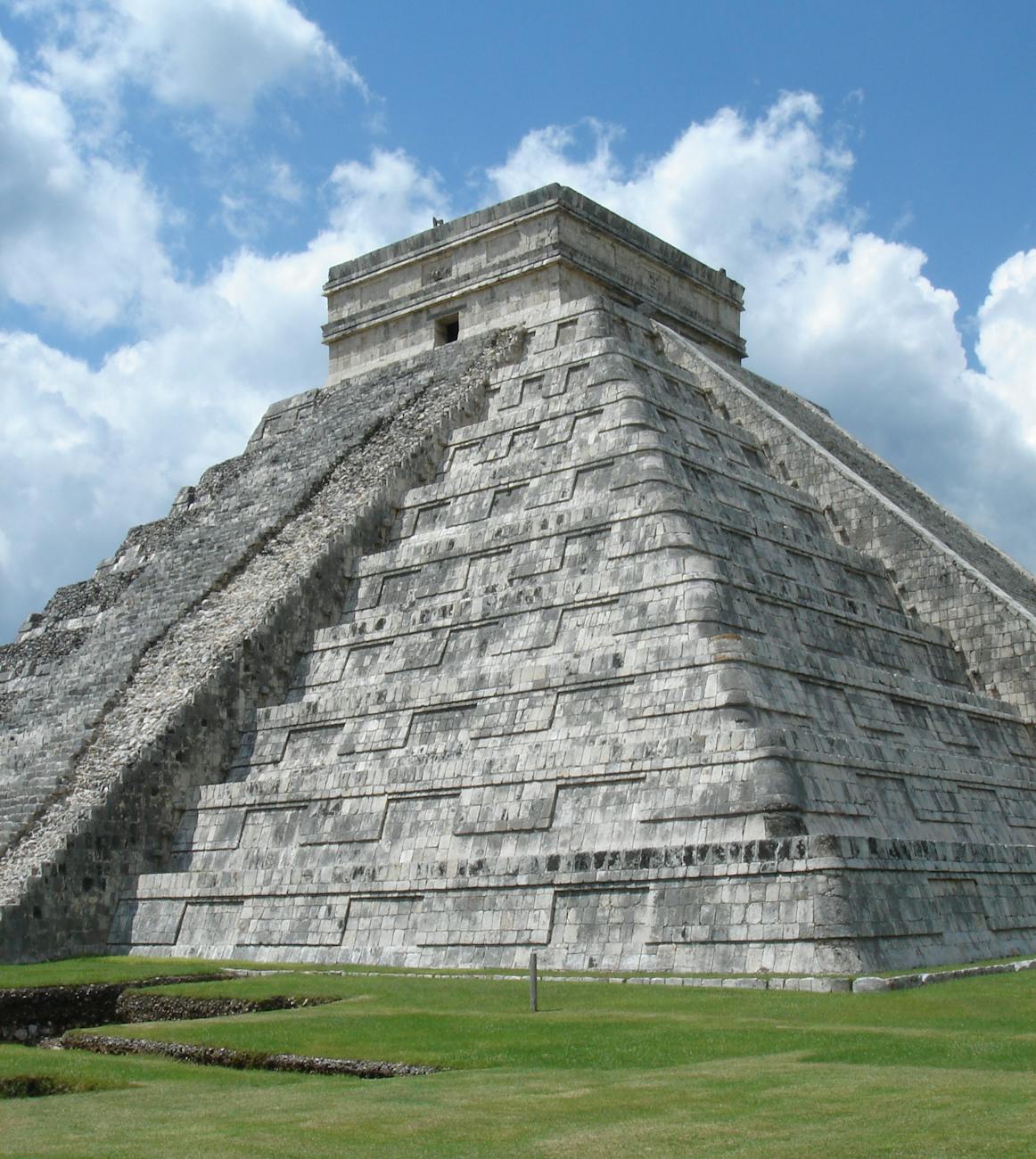
One of the most fascinating details is that Maya step pyramid temples built for Kukulkan were aligned to the Sun’s position on the spring equinox. The spring equinox is one of the two points in the year when day and night are about equal in length. That alignment reveals a culture deeply attentive to cycles in nature and the movement of heavenly bodies. These structures were not just monuments. They expressed a worldview in which divine power, seasonal change, and public ritual all met in one place.
Who was Kukulkan?
Kukulkan held an especially important place in Maya belief. He was revered as the supreme creator deity, but his role extended far beyond creation alone. He was also linked with reincarnation, water, fertility, and wind.
These associations tell us a lot about the kind of divine presence the Maya imagined. Fertility connects a deity to growth, crops, reproduction, and abundance. Water is equally vital, especially in agricultural societies where rainfall and water sources shape survival. Wind suggests movement, force, and invisible power. Reincarnation adds another layer, linking Kukulkan not just to nature, but to cycles of life, death, and renewal.
In Maya religion, these were not small or abstract ideas. They were forces that affected communities directly. A deity connected to creation, fertility, and water was a deity woven into the foundations of existence itself.
Pyramids designed for the sky
The Maya built step pyramid temples to honor Kukulkan, and these were aligned with the Sun’s position on the spring equinox. A step pyramid is a pyramid made in levels or terraces rather than with smooth sides. This shape gave Maya temples a dramatic, ascending form that emphasized elevation and sacred space.
The equinox alignment is one of the most compelling signs of Maya religious and astronomical attention. The spring equinox marked a balanced moment in the solar year, and aligning a major temple to that event suggests deliberate planning and symbolism. It shows that the sky was not merely observed but built into sacred architecture.
That kind of alignment also made ritual more powerful. A temple that visibly connected with the Sun on a significant day turned the building itself into part of the religious experience. The structure did not just house worship. It performed it.
A wider Maya pantheon
Kukulkan was not alone. Maya archaeological sites reveal other important deities, including Xib Chac and Ixchel.
Xib Chac is described as a benevolent male rain deity. Rain deities mattered enormously in societies where water determined harvests and prosperity. A benevolent rain god would have been tied to hopes for agricultural success and communal wellbeing.
Ixchel is described as a benevolent female earth, weaving, and pregnancy goddess. These are deeply human and practical domains. Earth ties her to land and life. Weaving connects her to skilled craft and domestic production. Pregnancy links her to birth, continuity, and family life. Together, these roles show how Maya deities were connected not only to cosmic forces but also to everyday needs and social experience.
This combination of divine roles made the pantheon feel alive and present. The gods were not remote abstractions. They were connected to rain, fertility, craftsmanship, reproduction, and seasonal order.
The calendar as a sacred system
The Maya calendar was more than a way to count days. It organized social and religious life. According to the record, the calendar had 18 months, each with 20 days, plus five unlucky days known as Uayeb.
That numerical structure alone is striking, but the religious dimension is even more interesting. Each month had a presiding deity. In other words, time itself was understood as being guided by divine powers. The passing of months was not neutral or empty. Each period came with a sacred identity.
These presiding deities inspired social rituals, special trading markets, and community festivals. That means the calendar worked as a shared framework for public life. Religion, economy, and celebration moved together. Rituals were timed not randomly, but according to a divine calendar. Markets could be linked with sacred observance. Festivals became moments when community life and the presence of the gods overlapped.
The meaning of the five unlucky days
The five days of Uayeb stood apart from the regular 18 months. They were regarded as unlucky. In simple terms, these were dangerous or unfavorable days.
That idea reflects an important feature of many sacred calendars: not all time is equal. Some times are blessed, ordered, and fit for ritual or exchange; others are unstable or risky. By identifying five unlucky days, the Maya calendar acknowledged that the flow of time included moments of uncertainty.
This also helps explain how seriously the Maya treated the calendar. It was not just a schedule. It was a map of cosmic conditions, with some periods seen as more favorable than others.
Why the equinox mattered
The spring equinox was a natural event, but in Maya sacred architecture it became something more. Because temples to Kukulkan were aligned to the Sun’s position on that day, the equinox can be seen as a moment when celestial order and human devotion were brought together.
For a society with deities tied to fertility, water, wind, and seasonal rhythms, the equinox was not merely astronomical. It was symbolically rich. Equal day and night mark balance, transition, and the turning of the year. When a temple is designed around that event, it suggests that the sky itself was part of the sacred drama.
This is one reason Maya religion remains so compelling. It joined observation and meaning. The Sun’s movement was both a physical phenomenon and part of a divine pattern.
Gods, markets, and everyday life
One especially revealing detail is that monthly deities inspired not just rituals and festivals, but also special trading markets. This shows how closely religion and ordinary life were linked.
Markets are practical places of exchange, but in the Maya setting they also fit into a sacred rhythm. That suggests a society where economic activity could unfold within divine time, rather than outside it. The calendar did not simply tell people what day it was. It helped shape when communities gathered, celebrated, traded, and observed ritual duties.
In that sense, the Maya pantheon was not only a set of supernatural beings. It was part of the structure of society itself.
A worldview built in stone and time
The Maya vision of the divine comes through with unusual clarity in three connected ideas: temples aligned with the equinox, a creator deity with powers over life-giving forces, and a calendar ruled by presiding gods. Together they show a culture that embedded religion into architecture, seasons, and communal life.
Kukulkan stood at the center of this world as a supreme creator associated with reincarnation, water, fertility, and wind. Around him were other benevolent deities such as Xib Chac and Ixchel, each tied to forces and experiences that shaped human existence. And surrounding them all was a calendar in which every month had divine oversight, while even the unlucky days carried religious meaning.
The result is a picture of the Maya not simply as temple-builders or calendar-makers, but as people who experienced time, nature, and society as charged with sacred presence. Their pyramids caught the Sun, their months belonged to gods, and their rituals moved with the heavens.
Sources
Based on information from Deity.
More like this
Catch your own knowledge equinox — download DeepSwipe and let fresh facts rise with the Sun.