Full article · 8 min read
Roman Roads and Itineraries: How the Romans Planned Journeys Across an Empire
Long before smartphones, printed atlases, or even widely used maps, the Romans developed a surprisingly practical way to navigate enormous distances: the itinerarium. Instead of relying on a full visual map, a traveler could use a structured list of roads, towns, and distances to move from place to place across one of the largest road networks of the ancient world.
This system made sense in a world where roads were the skeleton of imperial power. Roman roads linked cities, towns, military bases, rivers, and ports, allowing armies, officials, messages, and goods to move efficiently over land. At the height of Roman power, the empire was connected by 372 great roads, with more than 400,000 kilometres of roads in total, including over 80,500 kilometres of stone-paved roadway. In that setting, a route-planner was not just useful. It was essential.
Why Romans Needed Route Planners
The Roman road network was vast and dense. Major highways radiated from Rome, while regional roads spread through provinces in a web-like system. Roads reached Britain, ran along the Rhine, Danube, and Euphrates, and tied together the interior of the empire. With so many routes available, travelers needed a dependable way to know not just where to go, but how far it was to the next stop.
That is where itineraries came in.
An itinerarium was, at its simplest, a list of cities and towns along a road, along with the distances between them. It was a practical document rather than a scenic one. Instead of showing terrain in realistic proportions, it told you the information needed to travel: what comes next, and how far away it is.
This may sound basic, but in a road-based civilization, it was powerful. If you knew the sequence of stopping points and the mileage between them, you could plan food, lodging, animals, official business, and the pace of the journey.
A World of Roads, Not Road Maps
Combined topographical and road maps may have existed in some Roman libraries, but they were expensive, hard to copy, and not generally used. That tells us something important about Roman travel culture: most people did not need a modern-style map. They needed a tool for movement, not a bird’s-eye view of the landscape.
The itinerarium filled that need.
For someone traveling from one city to another, a list was often enough. Roman roads were built to be direct, and many long stretches were remarkably straight. Milestones marked distances with precision. Way stations offered structured stopping points. In that environment, navigation could be reduced to a sequence: leave this town, travel this many miles, reach the next place, repeat.
The result was a very Roman solution: organized, standardized, and focused on function.
From Simple Lists to Schematic Route-Planners
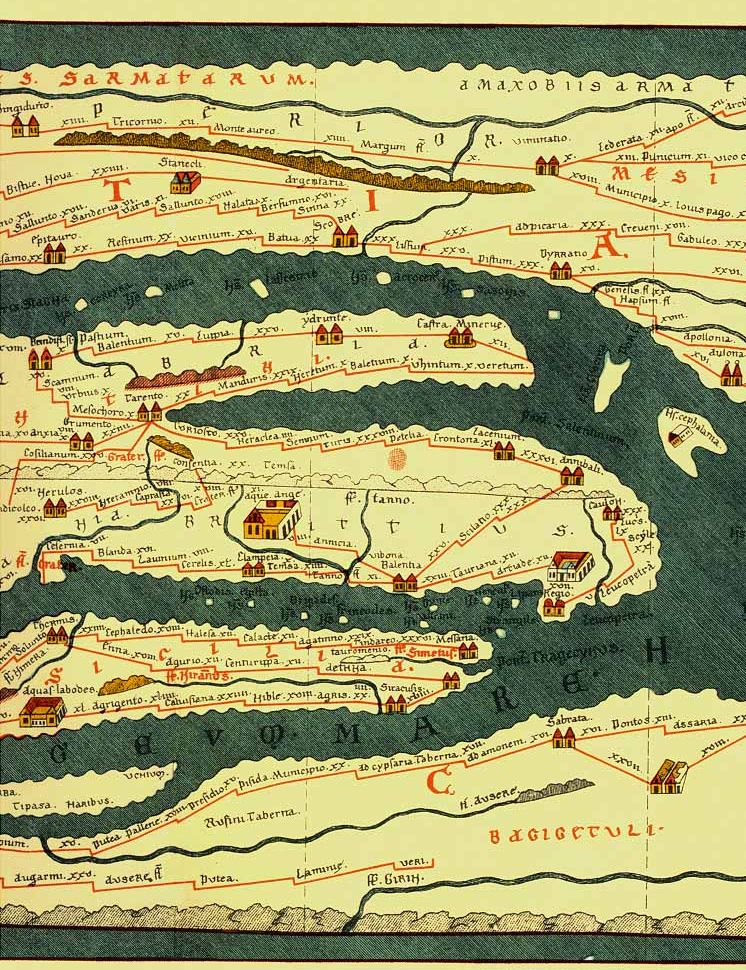
Once route lists existed, it was only a short step toward something more sophisticated: a master list of roads and branches arranged in a schematic form. In these route-planners, roads were shown more or less in parallel rather than drawn as geographically exact maps.
This is the world behind the Tabula Peutingeriana, a famous schematic road map associated with Roman road planning. Rather than trying to represent the empire in natural proportions, this kind of planner emphasized connectivity. It showed how routes linked up, where branches split, and how settlements lined up along the network.
That made it especially useful for long-distance travel. A traveler did not necessarily need to know the exact shape of a coastline or mountain range. What mattered was the chain of roads and stopping points that would carry them from one place to another.
Caesar, Mark Antony, and the Master Itinerary
One of the most striking episodes in Roman route planning came in 44 BC. Julius Caesar and Mark Antony commissioned the first known master road itinerary. To complete the task, three Greek geographers—Zenodoxus, Theodotus, and Polyclitus—were hired to survey the system and compile the information.
This was no quick administrative note. The project took more than 25 years. The final result was a master itinerary engraved in stone and set up near the Pantheon.
That detail captures the Roman approach perfectly. A road network was not merely used; it was documented, measured, organized, and publicly fixed in durable form. Stone engraving also suggests authority and permanence. This was not just travel advice. It was infrastructure turned into information.
Once such a master reference existed, travelers and itinerary sellers could make copies from it.
Travel Knowledge for Sale on the Street
Roman route information did not remain locked away in elite spaces. Copies or extracts could be produced from a master list and sold on the streets. That means travel knowledge itself became a kind of practical commodity.
This is a fascinating glimpse into everyday Roman mobility. Not everyone had access to rare library materials, but route extracts could circulate more widely. A person planning a journey did not need the whole empire in front of them. They might only need the section relevant to a specific road or region.
This also helps explain why itineraries were so effective. They were modular. A seller could copy just the useful segment. A traveler could carry a compact guide rather than a large, expensive map.
How Distances Were Kept So Precise
The usefulness of itineraries depended on reliable measurements. Roman roads were marked by milestones, and these were a major part of how travel information stayed consistent.
Milestones divided roads into numbered miles. The word mile itself comes from the Latin milia passuum, meaning “one thousand paces.” Roman milestones recorded the mile number relative to the road and often included information about the officials who built or repaired it.
These markers allowed distances and locations to be known and recorded exactly. Historians later even referred to events by the milestone where they occurred. For a route-planner, that precision was gold. An itinerary was only as useful as the trustworthiness of its distances, and Roman road culture put heavy emphasis on standardization.
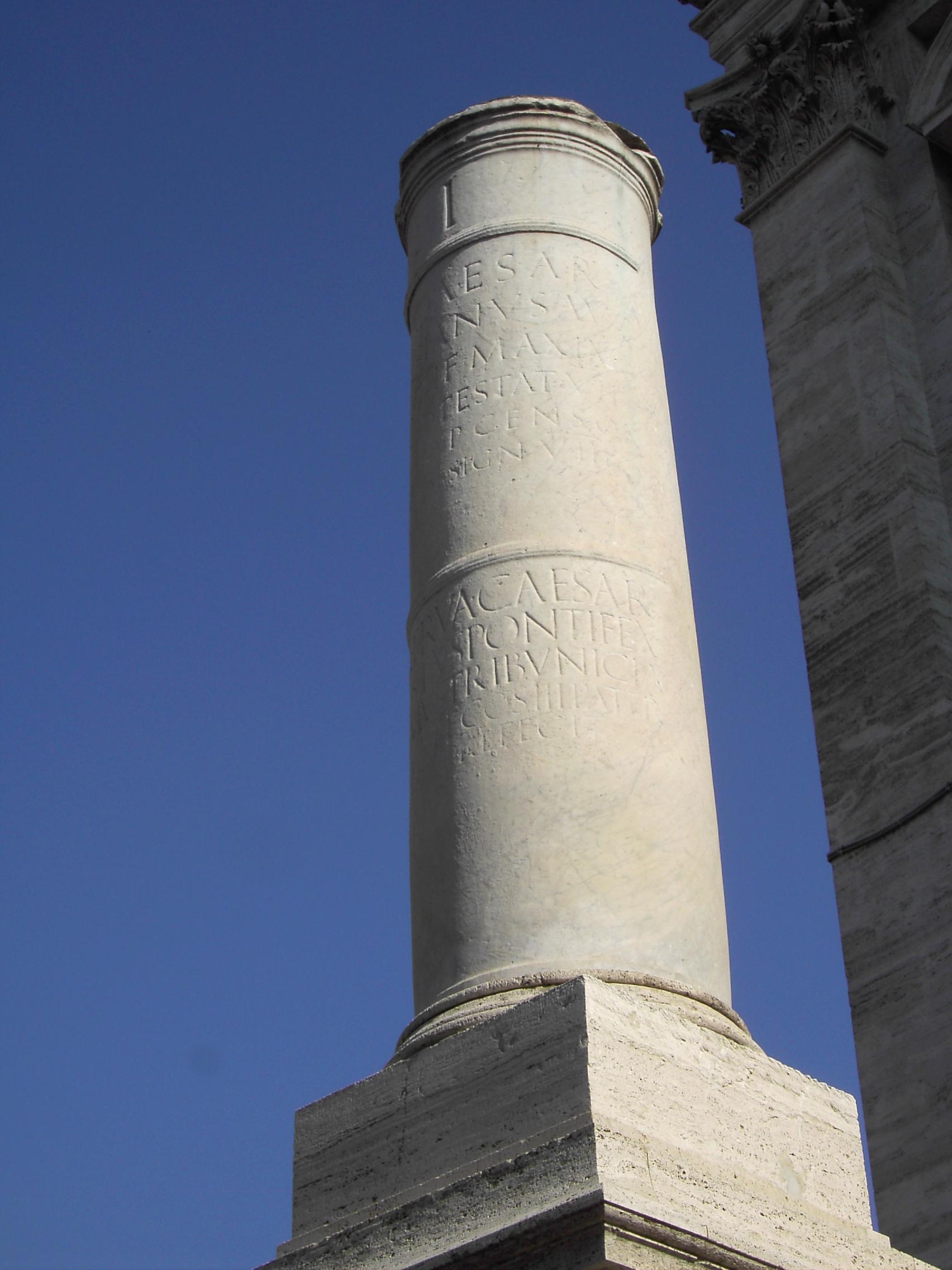
Augustus reinforced that standardizing impulse when, in 20 BC, he set up the miliarium aureum, or “golden milestone,” near the Temple of Saturn. All roads were considered to begin from this monument, which listed major cities in the empire and their distances.
Itineraries Worked Because the Roads Worked
Roman itineraries were effective not only because they were well organized, but because they described a system that was itself carefully built and maintained.
Roman roads were surveyed deliberately and often laid along accurate courses. Builders used instruments such as rods and a groma, a device used to obtain right angles. Surveyors laid out lines and grids for the road bed, aiming at directness wherever terrain allowed. Roads could be stone-paved, gravel-surfaced, or simply leveled earth, depending on their type and importance.
Major roads were often cambered, meaning slightly raised in the middle so water would drain away. They could include footpaths, bridleways, drainage ditches, bridges, causeways over marshes, and even cuts or tunnels through difficult terrain. Because the network was engineered for movement, written route guides could be much more dependable than they would have been in a looser, less structured road system.
What a Journey Looked Like in Practice
A Roman traveler using an itinerarium was not moving through empty space. The road system included regular support points.
For official travelers, the government maintained mansiones, or staying places, generally about 25 to 30 kilometres apart. These provided a complete villa for an official traveler’s use, though passports were required for identification. Another type of station, the mutationes, or changing stations, appeared every 20 to 30 kilometres and offered services for vehicles and animals, including wheelwrights, cartwrights, and veterinarians.
For non-official travelers, private inns called cauponae were often located near the mansiones. There were also tabernae, which developed into hostels of varying reputation and comfort.
An itinerary would have been especially valuable in planning stops between such places. Since horse-drawn carts could travel around 40 to 50 kilometres per day, while pedestrians managed about 20 to 25 kilometres, knowing the spacing of towns and stations mattered a great deal.
The Roman Genius for Turning Movement into System
Roman roads are often admired for their paving stones, bridges, and straight alignments. But the information system built around those roads deserves equal attention. The itinerarium transformed a giant transportation network into something legible and usable.
It reduced the empire to a sequence of actionable decisions: where to go next, how far it was, and what route connected one place to another. From simple lists to master itineraries engraved in stone, the Romans created a route-planning culture that matched the scale of their state.
In a civilization bound together by roads, the itinerary was more than a travel aid. It was a tool of administration, trade, communication, and control. And in its own stripped-down way, it was an ancestor of every modern route planner that tells you, step by step, how to get where you are going.
Sources
Based on information from Roman roads.
More like this
Plot your next knowledge journey like a Roman—download DeepSwipe and turn every swipe into an itinerary for your brain.