Full article · 7 min read
Bronze Age and Iron Age: how prehistory ended at different times
It is tempting to imagine that prehistory ended everywhere at once, as if humanity crossed a single finish line from silence into written history. But that is not how it happened. The shift out of prehistory was uneven, regional, and deeply tied to technology, trade, and the spread of writing.
Prehistory is the span of human time before a society leaves behind its own written records. Writing systems appeared about 5,200 years ago, but their adoption across the world was slow. That means one society could be keeping records while another, living at the same time, still belonged to prehistory. There is also an in-between condition often called protohistory: a culture has no writing system of its own, but is described by neighboring literate societies.
This makes the Bronze Age and Iron Age especially fascinating. They are not simply metal chapters in a universal story. In some places, the Bronze Age already belongs to history because writing had appeared. In others, even the Iron Age still falls within prehistory.
Why the Bronze Age is not the same everywhere
The Bronze Age is the earliest period in which some civilizations reached the end of prehistory by introducing written records. In these places, writing and bronze technology overlapped. Once people began creating texts, they could keep administrative records and preserve events in writing.
But this did not happen everywhere. The Bronze Age is only counted as part of prehistory in regions that had not yet developed a system of writing. So the same age can sit on opposite sides of the boundary between prehistory and history depending on the region.
This difference matters because prehistory is not defined only by dates. It is defined by evidence. Where there are no written records, scholars rely on archaeology, anthropology, dating methods such as radiocarbon dating, and scientific analysis of material remains. That is why prehistoric peoples are usually known through objects, sites, and modern labels rather than named individuals.
In the early Bronze Age, Sumer in Mesopotamia, the Indus Valley Civilization, and ancient Egypt were the first civilizations to develop their own scripts and keep historical records. Their neighbors often followed later. Much of the rest of the world reached the end of prehistory only during the Iron Age, and some regions later still.
Bronze: a metal that depended on connection
Bronze was not just a metal. It was a network.
The Bronze Age refers to a stage of cultural development when advanced metalworking included smelting copper and tin from ore and combining them to cast bronze. Smelting means extracting metal from rock by heating it. Casting means pouring molten metal into a shape. These were significant technical achievements.
Copper was relatively common, but tin was rare in the Old World. That scarcity shaped entire societies. Tin often had to be traded or carried long distances from a small number of mines. As a result, the Bronze Age encouraged the growth of extensive trade routes.
This helps explain why bronze could be powerful and prestigious without being equally available to everyone. In places as distant as China and England, the material was used for weapons, yet apparently for a long time was not widely available for agricultural tools. Large quantities seem to have been controlled by social elites and sometimes deposited in impressive hoards, including Chinese ritual bronzes, Indian copper hoards, and European hoards of unused axe-heads.
In other words, bronze was transformative, but it was also selective. A society needed access not only to metallurgical skill, but to supply chains.
Writing changed the meaning of an age
One reason the Bronze Age feels so different from region to region is that writing changed what survives from the past.
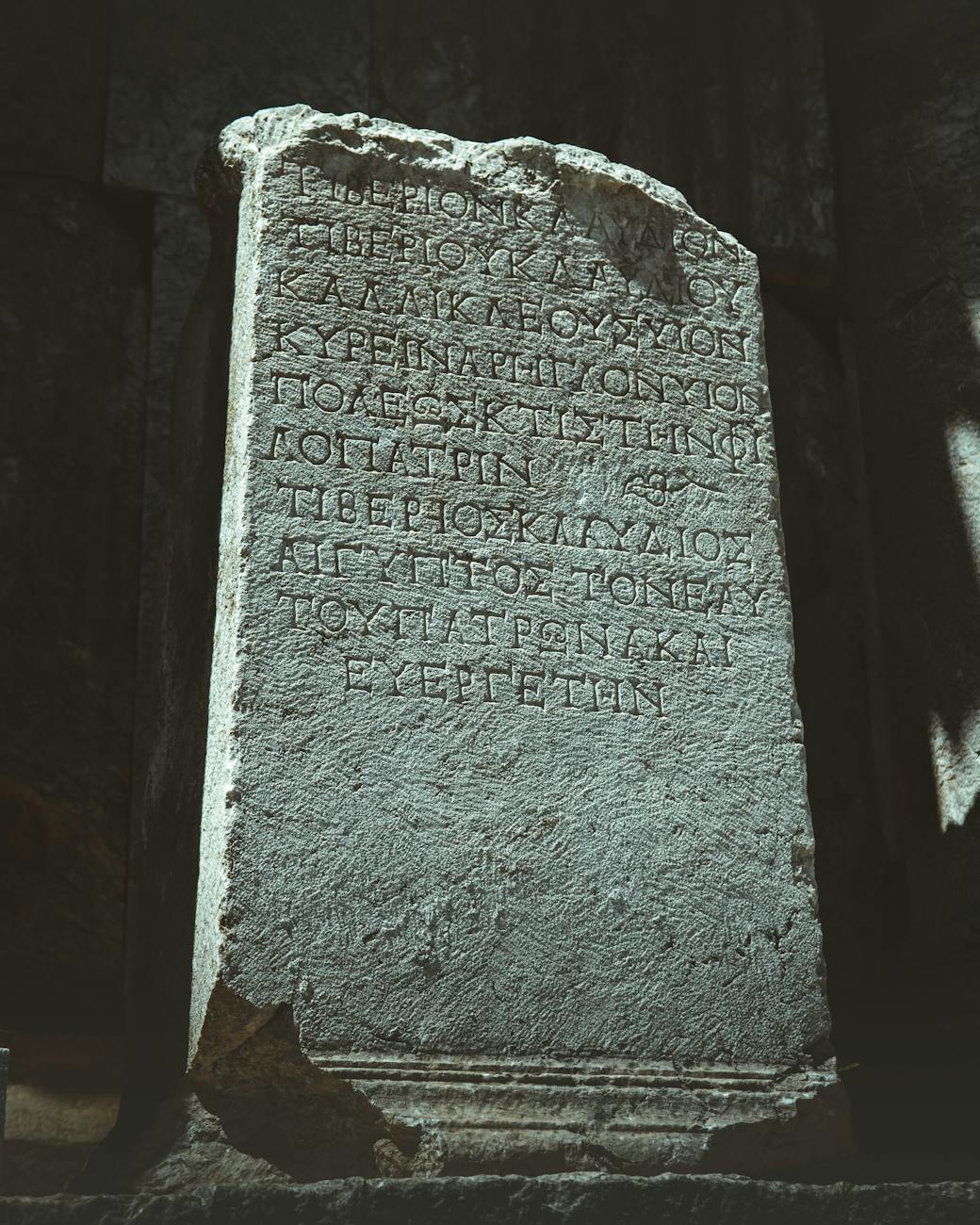
Before writing, human prehistory can only be reconstructed from archaeological and anthropological evidence: tools, structures, bones, art, and other material remains. Once writing appears, the past starts preserving names, transactions, and events in a different way.
That is why the arrival of writing marks the end of prehistory. It is not that people suddenly became more advanced. It is that the evidence changed. In some areas, the invention of writing coincides with the beginnings of the Bronze Age. In others, bronze-working societies continued without their own written records.
This uneven ending is visible in different parts of the world. In Egypt, prehistory is generally accepted to have ended around 3100 BCE. In Australia, by contrast, 1788 is usually taken as the end of prehistory. New Guinea’s prehistoric era is set much more recently than the ancient Near East as well. The timeline depends on when records become available and useful.
Iron was harder to master, but easier to spread
If bronze depended on rare ingredients, iron changed the equation.
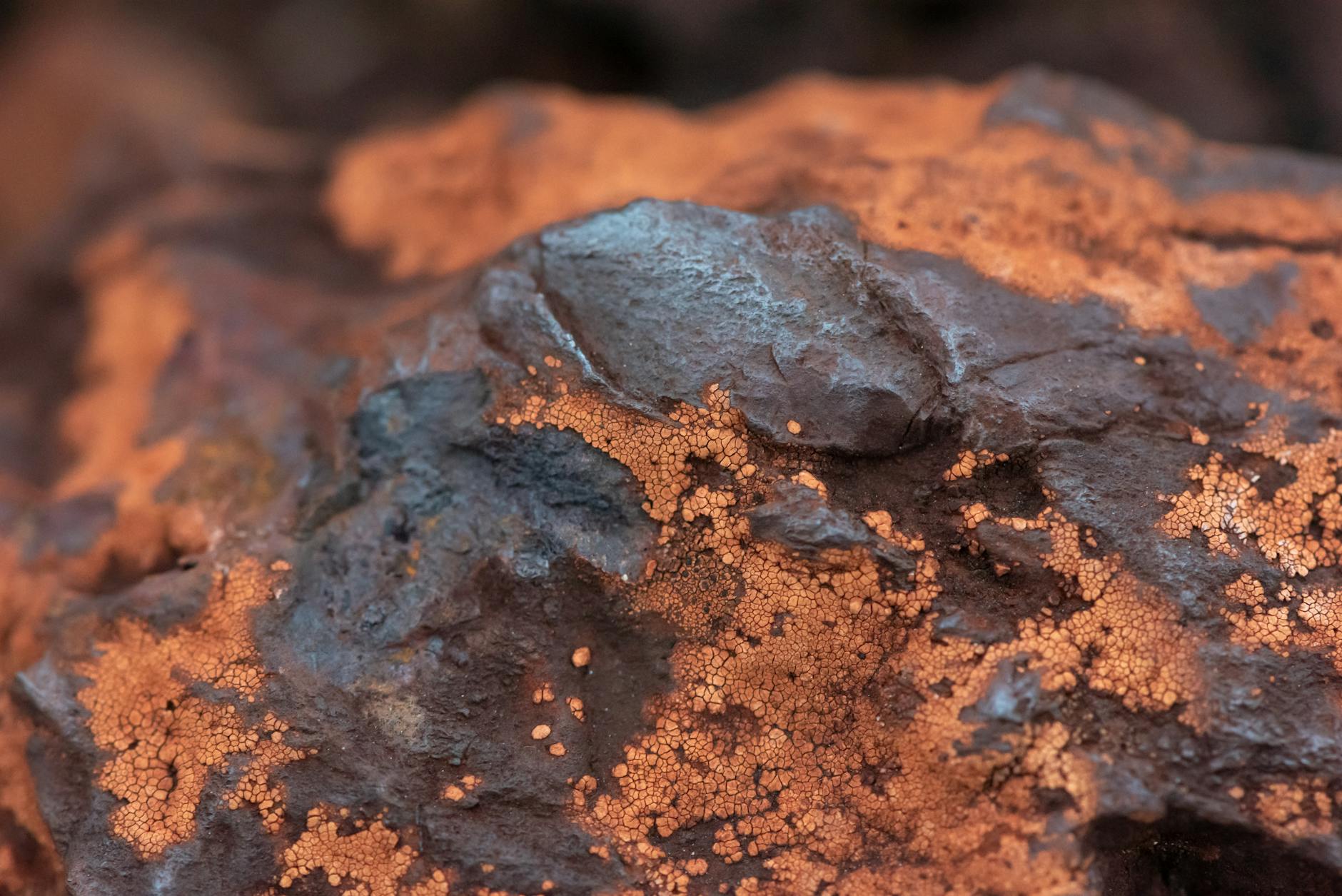
Iron ore is common, far more common than the combination of copper and rare tin needed for bronze. But there was a catch: the metalworking techniques required to use iron were different from those used earlier, and more heat was needed. That technical barrier delayed its widespread use.
Once the challenge was solved, iron replaced bronze in many places because of its abundance. This did not mean bronze disappeared instantly, but iron became the practical choice for wider use. Where bronze had depended on trade in scarce tin, iron offered a path toward broader access to metal.
That shift had major consequences. Because iron was more abundant, armies could be armed much more easily with iron weapons. This is one of the clearest ways technology affected the end of prehistory. Expanding states and empires spread power, contact, and often literacy. In many regions, remaining prehistoric societies entered protohistory or history through interaction with literate empires.
How empires helped bring prehistory to a close
By the end of the Bronze Age, large states had arisen in Egypt, China, Anatolia, and Mesopotamia. These were literate societies, and some imposed themselves on peoples with different cultures. During the Iron Age, empires continued to expand.
This expansion mattered historically in two ways. First, conquest could directly replace prehistoric periods with named historical ones. In much of Europe, for example, after Roman conquest the archaeological label “Iron Age” gives way to labels such as “Roman” or “Gallo-Roman.”
Second, even before conquest, some regions entered protohistory because they were being described by literate outsiders. Ireland is one example of a place with a protohistoric phase. This shows again that the end of prehistory did not require a society to invent writing itself immediately. Contact with writing cultures could begin changing how its past is recorded.
The three-age system and why it still matters
Historians often divide human prehistory in Eurasia into the Stone Age, Bronze Age, and Iron Age. This is called the three-age system, and it is based on predominant tool-making technologies. It remains useful across much of Eurasia and North Africa.
Still, it is not a perfect worldwide template. In some parts of the world, hard-metal working arrived abruptly through contact with Eurasian cultures. In others, the usual sequence from stone to bronze to iron does not fit neatly. That is one reason prehistory ends so differently from place to place.
Even within Eurasia, transitions were not identical. Between the Stone Age and Bronze Age there was in some regions a Chalcolithic, or Copper Age, when early copper metallurgy appeared alongside widespread stone tool use. This reminds us that technological ages are not clean switches. They overlap, blend, and vary.
Prehistory is about evidence, not just oldness
One of the most important ideas behind all this is that prehistory is not simply “the very ancient past.” It is a way of studying human life where there are no written records from the people being studied.
That is why archaeologists and anthropologists play such a central role. They excavate sites, survey landscapes, date finds, analyze materials, and compare evidence from many sciences. Radiocarbon dating is among the most common techniques, while chemical analysis and genetic analysis can reveal the use of materials, their origin, kinship, and physical characteristics.
This evidence-based approach also explains why prehistoric people are so often anonymous. Named rulers and dated battles belong mostly to written history. Prehistory deals more often with cultures, tools, settlements, and changing ways of life.
The big takeaway
The Bronze Age and Iron Age were not universal stages that meant the same thing everywhere. Bronze could mark the beginning of written history in one civilization and remain fully prehistoric in another. Iron was technically demanding, but because its ore was common, it eventually made it easier to equip larger armies and support expanding powers.
So when did prehistory end? There is no single answer. It ended wherever writing took root, or where literate neighbors began recording a culture, and sometimes where expanding empires carried those changes outward. In that sense, the end of prehistory was not one moment. It was many endings, unfolding across different places at different times.
Sources
Based on information from Prehistory.
More like this
More about history
More about technology
More about war
Trade up from bronze-level scrolling to iron-strong knowledge — download DeepSwipe and forge a smarter daily habit.