Full article · 7 min read
Human History: The Mongol Shockwave
When the steppe exploded onto the world stage
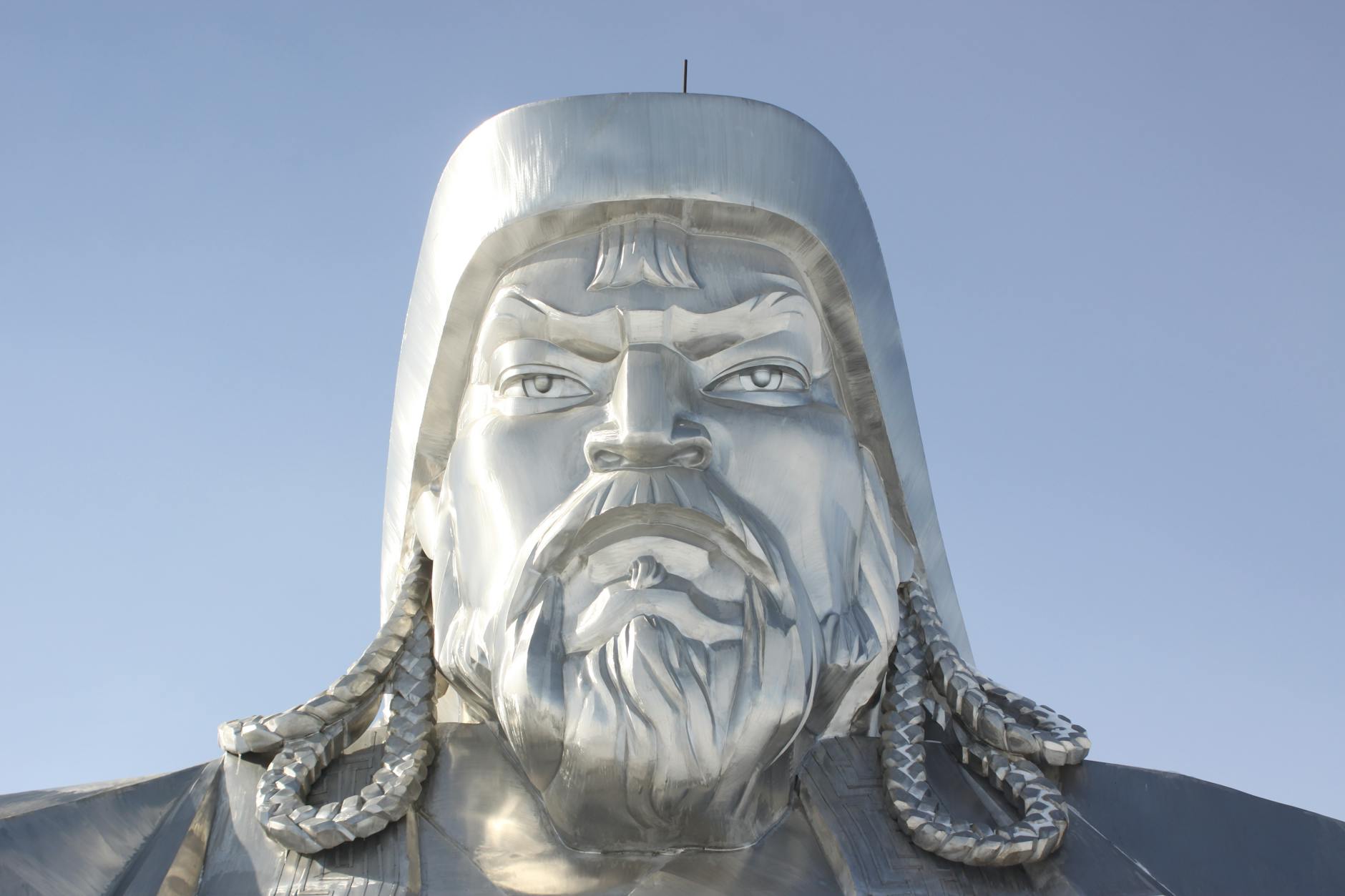
In 1206, Genghis Khan united various Mongol and Turkic tribes under one banner. That moment set off one of the most dramatic political transformations in human history. From the grasslands of Inner Asia, the Mongol Empire expanded across all of China and Central Asia, and then into large parts of Russia and the Middle East. At its height, it became the largest contiguous empire in history.
That scale alone makes the Mongol rise extraordinary. But the deeper story is not just about conquest. The Mongol shockwave changed how power moved across Eurasia, how settled societies defended themselves, and how regions from Eastern Europe to Iran were drawn into new political realities.
Why steppe empires were so dangerous
For centuries, steppe nomads from Central Asia posed a recurring threat to sedentary societies. “Sedentary” means settled agricultural civilizations, especially states built around cities, farming, tax collection, and bureaucracy. These societies often had wealth, large populations, and monumental architecture, but they were also vulnerable to highly mobile enemies.
The peoples of the steppe lived in vast grassland zones suited to animal herding rather than intensive farming. Their military advantage came from mobility. The article notes that horse-based nomads dominated a large part of Eurasia and that the use of horse archers made them a constant threat. A horse archer was a warrior who could fight effectively while mounted, combining speed with ranged attack. Against slower armies and rigid defensive systems, that kind of mobility could be devastating.
The stirrup also mattered in the broader history of mounted warfare. It spread widely across the world and helped riders stay stable while fighting on horseback. In a world where many states depended on infantry, walls, and slower logistical systems, mounted forces from the steppe could strike fast, retreat quickly, and return again.
Genghis Khan and the creation of a super-empire
The Mongol Empire did not begin as a unified state. Its power emerged when Genghis Khan brought competing tribes together in 1206. That unification mattered because it transformed scattered steppe power into an organized imperial force.
Once united, the Mongols expanded with astonishing reach. They came to control all of China and Central Asia, while also spreading into Russia and the Middle East. This meant that regions which had long developed as separate political worlds now found themselves connected by a single conquering power.
The effect on neighboring civilizations was enormous. China had already experienced repeated pressure from nomadic empires to the north. In Europe and western Asia, settled states likewise faced invasions from mounted peoples of the steppe. The Mongols were not just another raid or border conflict. They altered the balance of power across a huge portion of the known world.
The empire that didn’t stay whole
Even an empire of this size could not remain politically unified forever. After Möngke Khan died in 1259, the Mongol Empire was divided into four successor states. That split is crucial to understanding the “shockwave” effect.
Rather than simply disappearing, Mongol power continued in several major political centers at once:
- the Yuan Dynasty in China
- the Chagatai Khanate in Central Asia
- the Golden Horde in Eastern Europe and Russia
- the Ilkhanate in Iran
A khanate was a state ruled by a khan, a title used by steppe rulers. These successor states preserved Mongol political influence while adapting to the regions they controlled. So the Mongol impact did not end with one emperor’s death; it became embedded in multiple parts of Eurasia.
China under Mongol rule
One of the clearest examples of Mongol transformation came in China. Before Mongol unification, China had been ruled by successive dynasties and had repeatedly dealt with pressure from powerful northern neighbors. After the Tang dynasty splintered, the Song dynasty reunified much of China, but pressure from nomadic empires grew more intense. Northern China was lost to the Jurchens in the Jin–Song Wars, and the Mongols eventually conquered all of China in 1279.
That conquest placed the whole of China under the Yuan Dynasty, one of the four successor states of the Mongol Empire. This mattered not only because of the military feat involved, but also because China was one of the great centers of population, government, technology, and culture in world history. To conquer it was to control one of the core regions of Eurasian civilization.
The Yuan did not last forever. After about a century of Mongol rule, ethnic Chinese reasserted control with the founding of the Ming dynasty in 1368. But the Mongol conquest had already reshaped the political order and demonstrated that even the most powerful settled states could be overcome by steppe empires.
Eastern Europe and Russia under the Golden Horde
The Mongol impact was equally profound in Eastern Europe. The Mongols reached Europe in 1236 and conquered Kievan Rus', while also briefly invading Poland and Hungary. Kievan Rus' had earlier expanded from Kiev to become the largest state in Europe by the 10th century. Its conquest marked a major shift in the political history of the region.
The Golden Horde, the Mongol successor state in Eastern Europe and Russia, became one of the major post-imperial centers of Mongol rule. This is part of what it means to say that the Mongols remapped the world: they did not merely raid Europe’s edge and vanish. They established enduring political formations that changed the structure of power across the region.
The article also places the Mongol Empire within a larger pattern of Eurasian disruption and reorganization. The post-classical world was a time of expanding trade, religious change, and rising empires. Mongol conquests intensified that instability and helped create a new geopolitical landscape stretching from the steppe into the forests, cities, and river systems of Eastern Europe.
Iran, Central Asia, and the Middle East after conquest
In Central Asia, the Mongols succeeded a sequence of major regional powers, including the Samanid, Seljuk, and Khwarazmian Empires. Their arrival replaced older political systems with a new imperial order. The Chagatai Khanate in Central Asia and the Ilkhanate in Iran became major centers of rule after the empire split.
This had lasting consequences because Central Asia was not a remote backwater. It sat across major routes of exchange and linked China, the Middle East, and parts of Europe. The article notes the importance of trade routes such as the Silk Road and the Indian Ocean networks in connecting civilizations. By dominating Central Asia, the Mongols sat astride some of the key corridors of Eurasian contact.
In Iran and nearby regions, Mongol rule was followed by new formations. In 1370, Timur conquered most of Central Asia and founded the Timurid Empire. His descendants retained control of a core area in Central Asia and Iran and oversaw the Timurid Renaissance of art and architecture. That means the post-Mongol world was not simply a story of collapse. It was also a story of new states, new courts, and new cultural centers arising from the political rearrangements that Mongol conquest made possible.
Trade, contact, and a newly connected Eurasia
The Mongol era belongs to a larger period in which trade between societies intensified. The post-classical period saw increasing economic and cultural contact across Asia and Europe through routes such as the Silk Road. Mongol expansion did not create Eurasian exchange from nothing, but it reshaped the political space through which that exchange moved.
When one power or a cluster of related successor states dominates broad stretches of territory, the consequences are larger than battlefield results. Politics, trade, diplomacy, and cultural contact all get reorganized. That is why the Mongol story feels like a shockwave rather than a single event. Their rise reordered huge areas of Eurasia at once.
The effects were especially strong in regions that had already been contested borderlands between nomads and settled empires. China, Central Asia, Eastern Europe, and Iran all fit that pattern. Under Mongol and post-Mongol rule, these zones were tied into a new map of authority.
Why the Mongols matter in world history
The Mongol Empire stands out because it reveals a major theme of world history: settled civilizations were never isolated from the peoples beyond their frontiers. Agricultural states, empires, cities, and trade routes could be transformed by forces from the steppe.
The Mongols did not just conquer territory. They demonstrated how military mobility could overwhelm older political systems, and they created successor states that continued to shape China, Central Asia, Eastern Europe, and Iran long after the first wave of conquest. Their empire split, but its impact multiplied.
From 1206 onward, the Mongol shockwave redrew the map of Eurasia. It crushed old powers, created new ones, and left a political legacy that stretched far beyond the lifetime of any one khan.
Sources
Based on information from Human history.
More like this
Ride the knowledge shockwave — download DeepSwipe and conquer a new topic in minutes.