By 1945, Japan’s skies had become a battlefield it could no longer truly control. American bombers were striking city after city, and Japan’s defenses were too weak, too fragmented, and too strained to stop them in any meaningful way. The result was one of the most devastating air campaigns of the Second World War.
This was not only a story of powerful bombers. It was also a story of altitude, fuel, training, civil defense failures, and the grim reality that Japan’s cities were especially vulnerable to fire.
Watch the story on DeepSwipe
A defense system built for a different kind of war
Before the Pacific War, Japan’s strategy for protecting its home islands focused less on building a strong domestic shield and more on preventing enemies from getting close enough to attack at all. Japanese planners believed the best defense was to neutralize enemy air bases or hold the territories from which raids could be launched.
That approach left the home islands with weak air defenses when major bombing finally began. Early in the war, relatively few air units and anti-aircraft batteries were stationed in Japan itself. In early 1942, the forces assigned to defend the homeland included 100 Imperial Japanese Army Air Force fighters, 200 Imperial Japanese Navy fighters, and several hundred anti-aircraft guns. Many of these aircraft were obsolete, and many units were primarily training formations with limited combat ability.
Japan also suffered from fragmented command. The army and navy did not coordinate effectively, and they often failed to communicate well with each other. In air defense, this mattered enormously. If detection, interception, and anti-aircraft response are not synchronized, even brave defenders struggle to respond to fast-moving raids.

Why B-29 bombers were so hard to stop
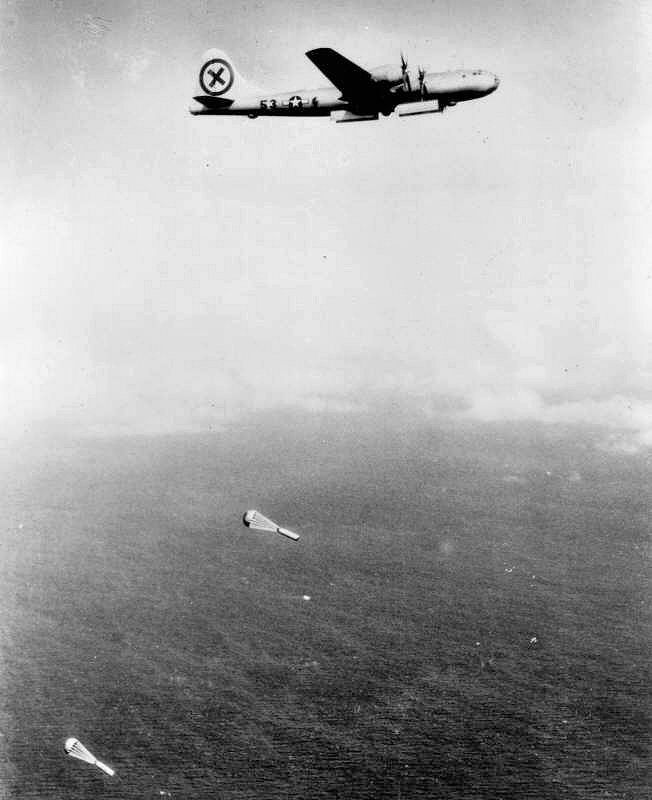
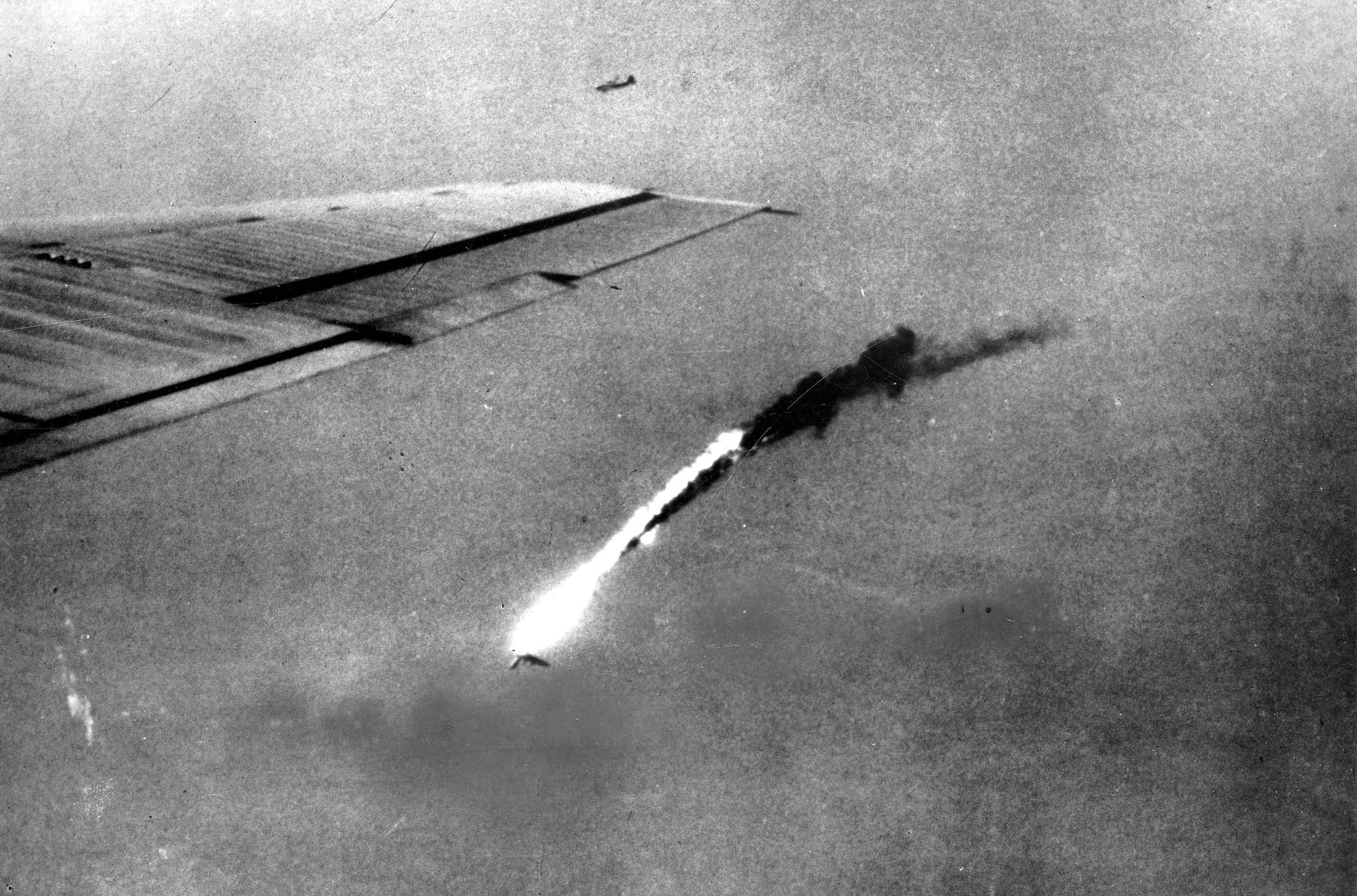
The Boeing B-29 Superfortress was central to the American air campaign. Once bases in the Mariana Islands became available in late 1944, these long-range heavy bombers could attack much of Japan and return without refueling.
A key problem for Japanese defenders was altitude. Many daytime B-29 raids were flown at around 30,000 feet, a height at which many Japanese fighters and anti-aircraft guns could not engage effectively. Fighters often had too little time to scramble, climb, and intercept before the bombers reached their targets.
Even when Japanese aircraft managed to get close, the B-29 was a tough target. It could absorb significant damage, and it often flew faster at high altitude than many defending fighters could comfortably handle.
Night raids created a different but equally severe challenge. Once the United States shifted toward low-altitude nighttime attacks in 1945, Japanese night-fighter capability and anti-aircraft effectiveness at night proved weak. A defense system that already struggled by day found itself even less able to cope in darkness.
Radar, warning time, and the problem of reaction
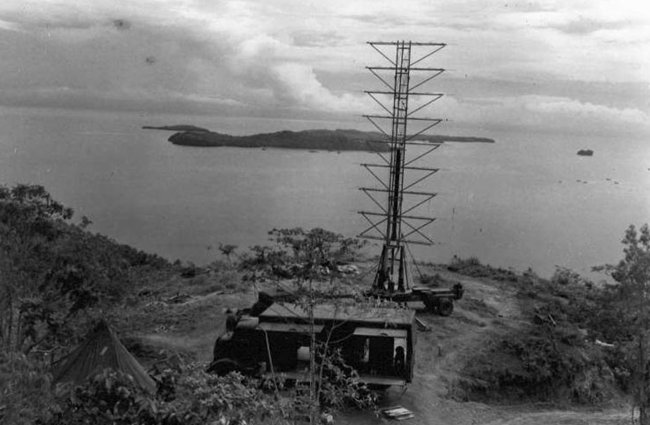
Japan did have observation posts and was building radar stations, but its warning system was limited. Land-based radar had short range, and Allied attacks on Japanese picket ships reduced early warning at sea. Typically, defenders had only about an hour to respond once incoming B-29s were detected.
That may sound like a lot, but in air combat it is not. Fighters had to be alerted, take off, climb to altitude, locate the bombers, and then attack them before the raid was over. Japanese signals intelligence sometimes provided longer warning by listening to bomber radio traffic, but it usually could not reveal the precise target in advance.
The result was a constant defensive disadvantage: too little time, too few aircraft in the right place, and too much uncertainty.
Fuel shortages and weak pilot training made everything worse
Even a well-designed defense can fail if it lacks fuel, experienced pilots, and functioning logistics. By 1945, Japan suffered acute fuel shortages. That meant less flying, less training, and fewer effective sorties against incoming bombers.
Pilot quality also declined. Training accidents and combat losses had weakened the fighter force, and the standard of many remaining pilots was poor. By April 1945, Japanese leaders decided to withdraw many remaining fighters from combat and hold them in reserve for the expected Allied invasion of the home islands.
This was a strategic choice born from weakness. Rather than continue losing aircraft in largely ineffective interceptions, Japan began conserving them for a final defensive battle that it expected would come on the ground and near its shores.
By June 1945, this shift was clear enough that Japan had effectively ceased contesting many raids. That left American bombers able to strike urban areas with near impunity while suffering relatively low losses.
Japan’s cities were dangerously vulnerable to fire
Air defense was only part of the problem. Japan’s cities themselves were unusually exposed to incendiary attack. Incendiary bombs are bombs designed to start fires rather than primarily destroy with blast. In Japan, they were especially devastating because many urban buildings were made of wood and paper, and cities were densely packed.
Industrial production was also spread through urban neighborhoods. Much of Japan’s military industry involved small workshops and private homes, not just large factories. That meant bombing cities could damage industrial output even when huge industrial plants were not precisely hit.
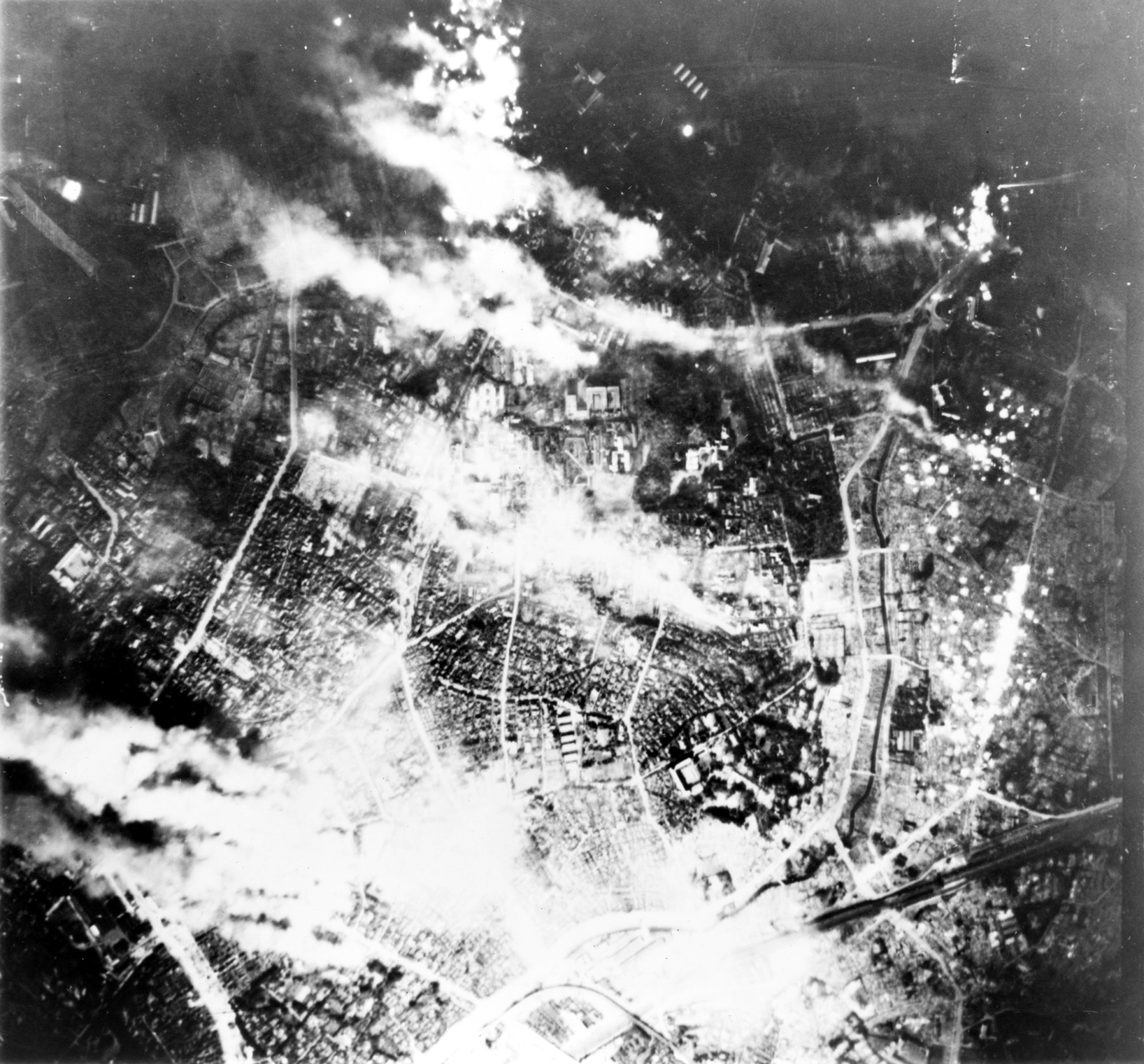
American planners recognized this vulnerability, and in early 1945 the bombing campaign shifted from high-altitude daylight precision bombing toward low-altitude nighttime firebombing. The change was catastrophic for Japanese cities.
The raid on Tokyo on the night of 9–10 March 1945 showed just how destructive this could be. It caused a massive conflagration, overwhelmed Tokyo’s civil defenses, and destroyed 16 square miles of buildings. Tokyo police and fire authorities estimated that 83,793 people were killed, 40,918 injured, and more than 1 million left homeless.
Civil defense was far too weak
Japan’s local and municipal firefighting services were not prepared for this scale of destruction. Many cities relied heavily on volunteers. Professional firefighting forces often lacked modern equipment and used outdated tactics.
The national government did take some steps before and during the war. Air raid drills were held in cities such as Tokyo and Osaka, civilians were given manuals, and authorities later organized community groups for firefighting and blackouts. Firebreaks were also created by demolishing buildings in major cities.
But these efforts were not enough.
Few civilian air-raid shelters had been built before the war, and shortages of concrete and steel limited later construction. Households in major cities were encouraged to build their own shelters, but these were often just trenches. Less than 2 percent of civilians had access to bombproof air-raid shelters, though some people used tunnels and natural caves.
For ordinary civilians, this meant there was often nowhere truly safe to go when firebombing began.
The collapse of effective resistance
As the bombing intensified, the imbalance became overwhelming. Japanese anti-aircraft guns faced ammunition shortages as the economy deteriorated. Many were concentrated around major industrial areas, leaving smaller cities lightly defended. Raids on those smaller cities were often almost unopposed.
Resistance fell sharply from April 1945. A unified command for air defense was finally established on 15 April, but this came late, after major losses, declining pilot quality, and shrinking operational capacity had already eroded Japan’s ability to respond.
By the final weeks of the war, American commanders believed flying over Japan was becoming extraordinarily safe compared with earlier phases of the campaign. The Japanese military still possessed aircraft, but increasingly chose to preserve them instead of expending them in unsuccessful attempts to stop the bombers.
A sky Japan could no longer defend
The inability to stop the raids was not caused by one weakness alone. It was the combination of inadequate air defenses, poor army-navy coordination, too few suitable fighters, anti-aircraft guns that struggled against high-altitude bombers, severe fuel shortages, weak pilot training, limited warning systems, and cities that were physically vulnerable to fire.
At the same time, civilian protection was deeply insufficient. Firefighting services lacked training and equipment, and bombproof shelter space was available to only a tiny fraction of the population.
By mid-1945, Japan was no longer really fighting for control of its skies. It was enduring bombardment while trying to save what strength remained for an invasion it feared was coming next. Sometimes military collapse is not a dramatic final battle. Sometimes it is the moment a nation realizes it can no longer defend its own sky.