The attack on Pearl Harbor on December 7, 1941, was not just a dramatic surprise raid. It was part of a much larger strategy. Japan’s leaders hoped that one devastating strike would cripple the United States Pacific Fleet long enough for Japan to seize key territories across Southeast Asia, secure vital resources, and force a peace settlement before American power could fully mobilize.
That idea helps explain both why the attack happened and why it ultimately failed to achieve its biggest goal.
Watch the story on DeepSwipe
Japan’s strategic problem: resources and time
By 1941, tensions between Japan and the United States had been building for years. Japan had expanded into China and later into French Indochina, while the United States responded with increasingly severe restrictions, including sanctions and eventually the end of oil exports to Japan in July 1941.
This was a serious problem for Japan. Japanese leaders believed modern war required economic self-sufficiency and access to strategically important materials such as oil and iron, resources that could not be extracted in sufficient quantities from the Japanese home islands. That made places like the Dutch East Indies especially important, because they were rich in the resources Japan believed it needed.
From Japan’s point of view, time was running short. The attack on Pearl Harbor was meant to buy that time.

The goal was not just destruction, but freedom to expand
Japan did not attack Pearl Harbor simply to damage American ships. The deeper objective was to prevent the Pacific Fleet from interfering with Japanese military operations in Southeast Asia.
Japanese planners wanted to strike the United States hard enough that Japan could move quickly into areas such as Malaya and the Dutch East Indies without facing immediate American naval resistance. Over the same seven-hour period as Pearl Harbor, Japan also launched coordinated attacks on the Philippines, Guam, Wake Island, and British territories including Malaya, Singapore, and Hong Kong.
This reveals the larger plan clearly: Pearl Harbor was one piece of a broad offensive designed to open the way for rapid territorial gains.
Admiral Isoroku Yamamoto, who planned the attack, hoped the blow would enable Japan to make those gains and then negotiate peace. In other words, the attack was supposed to create a brief but crucial strategic window.
Why Pearl Harbor looked like the right target
Pearl Harbor was home to the United States Pacific Fleet. Since 1940, that fleet had been based in Hawaii, a move intended in part to discourage Japanese aggression. To Japanese planners, this made Pearl Harbor an obvious obstacle.
The main targets were battleships, which at the time were still seen as the prestige ships of major navies. Japanese naval leaders were influenced by the idea of a “decisive battle,” meaning a single crushing naval engagement that could break an enemy’s strength. Destroying or disabling the American battleships at anchor seemed like a way to remove the greatest immediate threat.
There was also a psychological element. Japanese leaders hoped the attack would damage American morale so severely that the United States might abandon its demands and accept some kind of compromise peace.
So the attack had several aims at once:
- cripple important fleet units
- protect Japan’s advance into Southeast Asia
- buy time before American shipbuilding and industrial strength took full effect
- weaken American morale enough to encourage a negotiated settlement
How the attack was designed to work
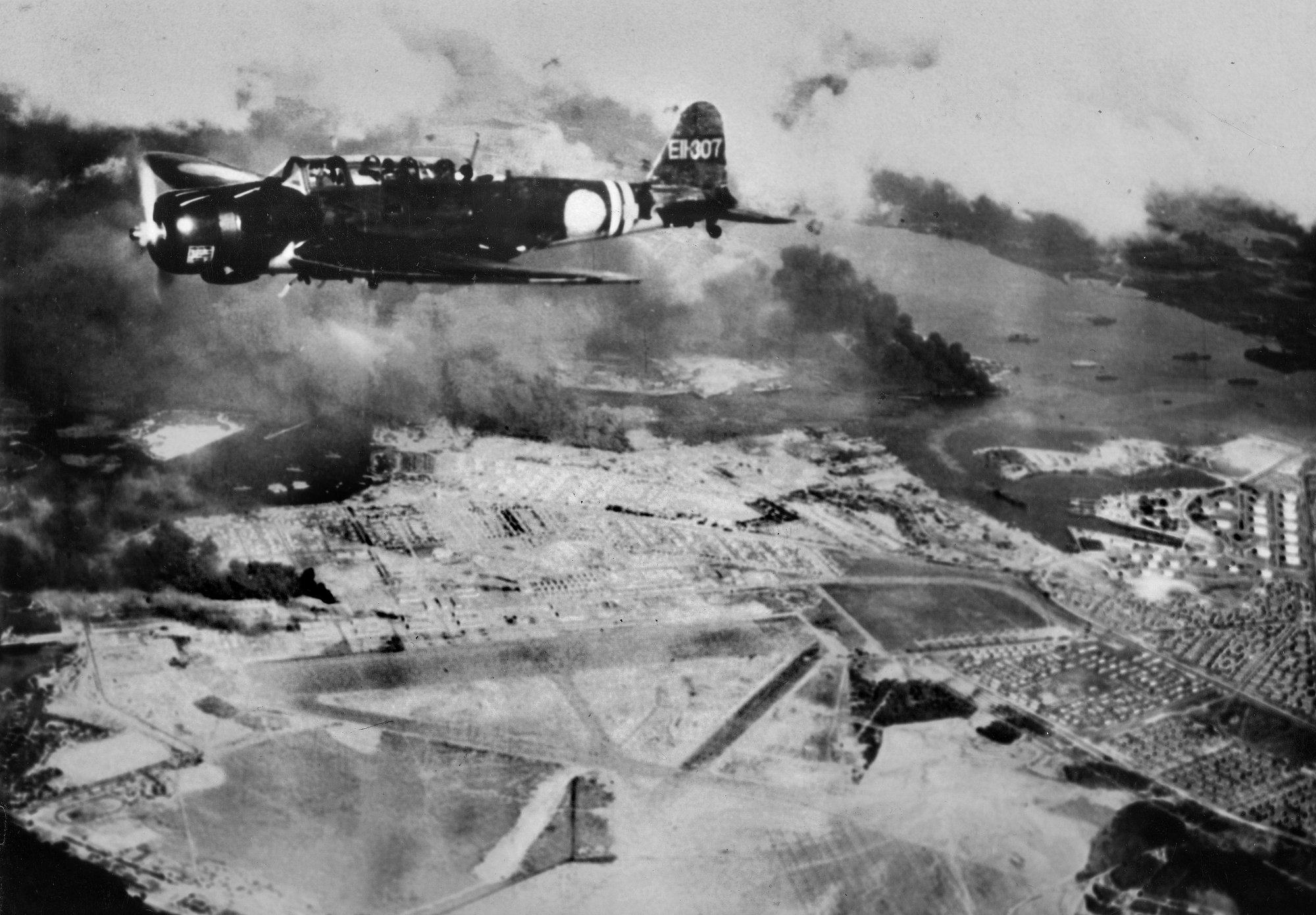
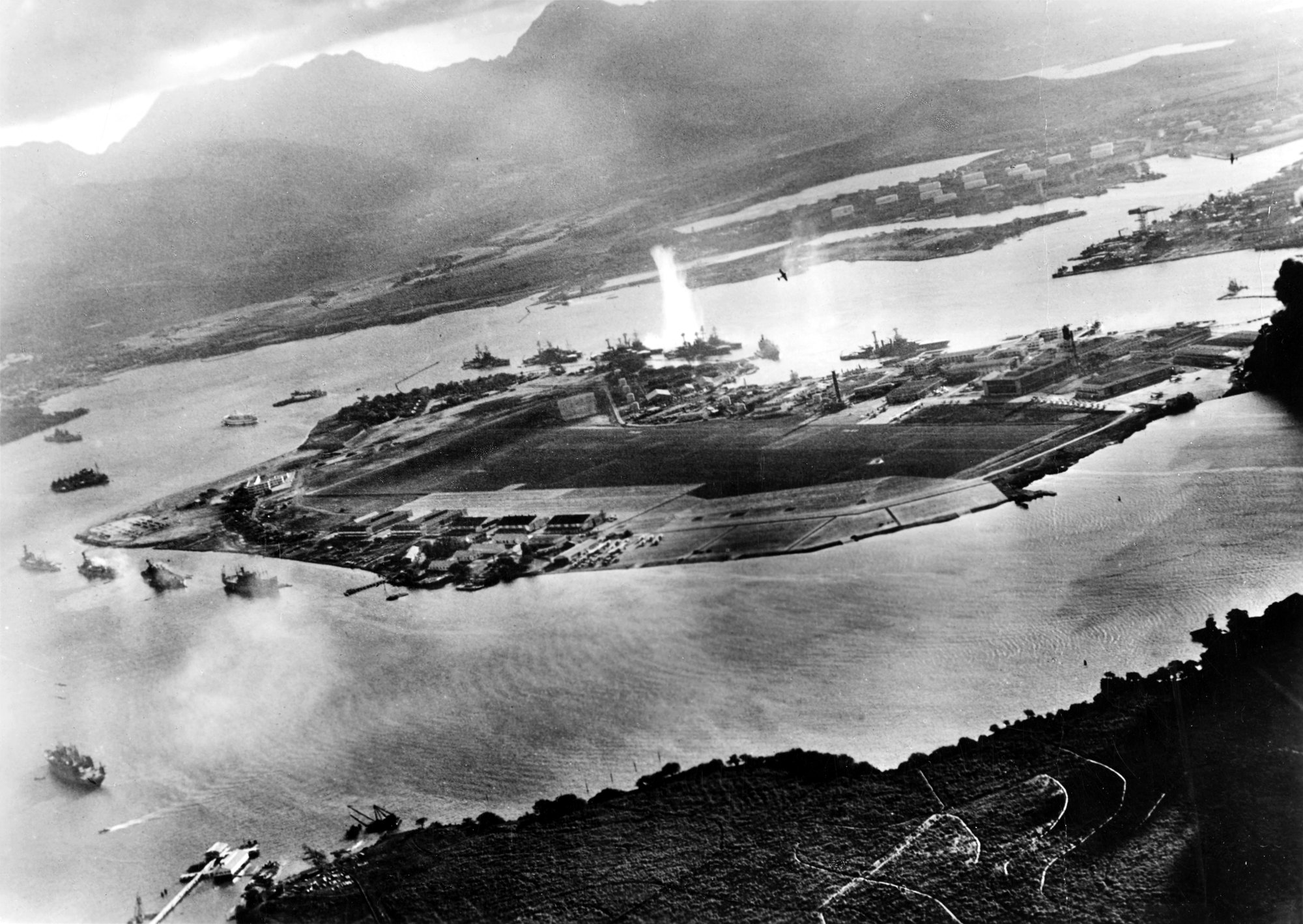
The Japanese striking force approached from the north of Hawaii and launched two waves of aircraft from six aircraft carriers. In total, 353 fighters, level bombers, dive bombers, and torpedo bombers struck Pearl Harbor.
A torpedo bomber is an aircraft designed to drop torpedoes, self-propelled underwater weapons used against ships. This was especially important at Pearl Harbor because battleships moored in the harbor were vulnerable if hit below the waterline. Japanese planners even adapted their torpedoes so they could work in Pearl Harbor’s shallow water.
The first wave focused heavily on battleships and airfields. The second wave also struck airfields and other targets. The idea was to destroy ships, wipe out aircraft on the ground, and reduce the Americans’ ability to respond.
In purely tactical terms, the attack was devastating. All eight American battleships present were damaged, four were sunk, more than 180 US aircraft were destroyed, and 2,403 Americans were killed.
The bigger plan: win fast before America’s power surged
One reason the attack seemed attractive to Japanese leaders was their belief that they had to win quickly. They did not expect to defeat the United States in a long industrial war. Instead, they hoped to secure a powerful defensive position, strengthen their empire, and then negotiate from an advantage.
This mattered because American industrial capacity was a looming threat. Japanese planners wanted time before new shipbuilding and mobilization erased any chance of success. Pearl Harbor, in that sense, was meant as a delaying blow.
The attack was therefore both military and strategic. It was not expected to win the whole war by itself. It was expected to create favorable conditions for Japan to expand rapidly and then settle the conflict on better terms.
The fatal weakness in the plan
Here is where the logic of Pearl Harbor began to break down.
Although the attack badly damaged the battleship force, several crucial American assets survived. The three US aircraft carriers assigned to Pearl Harbor were at sea. Just as important, major base installations, including oil storage and naval repair facilities, were not attacked.
That omission was enormous.
Repair yards are dock and workshop facilities where damaged ships can be fixed and returned to service. Fuel storage matters because fleets cannot operate without massive reserves of oil. A submarine base supports submarines, which can attack enemy shipping and warships. Pearl Harbor kept all of these.
The result was that the United States retained the ability to recover far faster than Japan had hoped.
Most of the damaged battleships, except Arizona and Utah, were eventually refloated, and six returned to service during the war. Even more importantly, the preserved repair shops, fuel depots, and submarine base helped sustain later American operations in the Pacific.
Military historians later suggested that damage to these shore facilities would have been more serious than the loss of battleships alone. Admiral Chester W. Nimitz even said that if they had been wiped out, serious American operations in the Pacific would have been postponed for more than a year.
Why the victory was tactical, not strategic
A tactical victory means success in a specific battle or attack. A strategic victory means achieving the broader war aims behind that battle.
Pearl Harbor was a tactical success. The Japanese surprise attack inflicted heavy losses, achieved shock, and temporarily disrupted the Pacific Fleet.
But strategically, the attack failed in several ways.
First, it did not destroy the American carriers. Second, it left the base infrastructure needed for recovery largely intact. Third, instead of breaking American will, it triggered the opposite reaction. The day after the raid, President Franklin D. Roosevelt delivered his “Day of Infamy” speech, and the United States declared war on Japan.
Japan had hoped to buy time and perhaps force compromise. Instead, it drew the United States fully into the war.
Rear Admiral Chūichi Hara later summed up the outcome with brutal clarity: Japan had won a great tactical victory at Pearl Harbor and thereby lost the war.
The lasting lesson of Pearl Harbor
The attack on Pearl Harbor is often remembered for its surprise and destruction, but its deeper significance lies in the gap between short-term success and long-term failure.
Japan struck to gain time, protect its expansion, and avoid a drawn-out struggle with a far more powerful industrial enemy. Yet the attack failed to eliminate the American capacity to fight back. The surviving carriers, repair yards, oil facilities, and submarine support meant the United States could recover and continue the war in the Pacific.
Pearl Harbor was therefore not just a famous attack. It was a case study in how a brilliantly executed military operation can still fail if it does not achieve the larger strategic goal behind it.