The B-29 Superfortress was built to do something revolutionary: fly long distances, hit strategic targets, and break an enemy’s ability to wage war. In theory, that meant bombing key factories and industrial plants in Japan until military production collapsed. In practice, the early campaign did not work that way.
The problem was not simply the aircraft, the crews, or the weather. A deeper issue shaped the entire campaign: much of Japan’s war industry was not concentrated inside a few giant factories. A significant share of early-stage military manufacturing was spread across small workshops and even private homes. That meant a bombing strategy designed to smash big industrial targets often missed the wider network actually keeping production alive.
This mismatch between bombing theory and industrial reality helps explain one of the most dramatic shifts of the Pacific War: the move from high-altitude daylight precision bombing to low-altitude nighttime firebombing of cities.
Watch the story on DeepSwipe
The promise of the B-29 and the idea of precision bombing
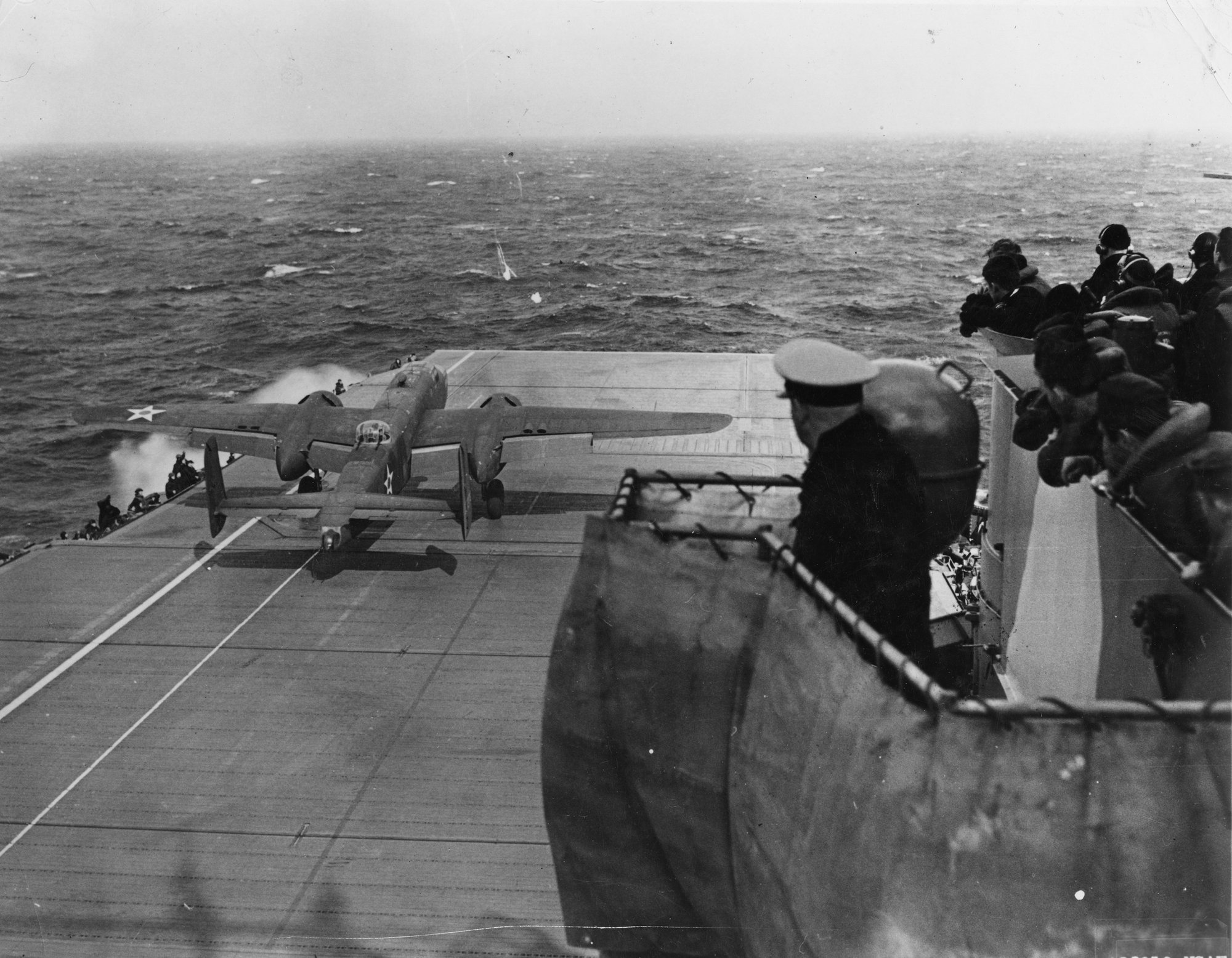
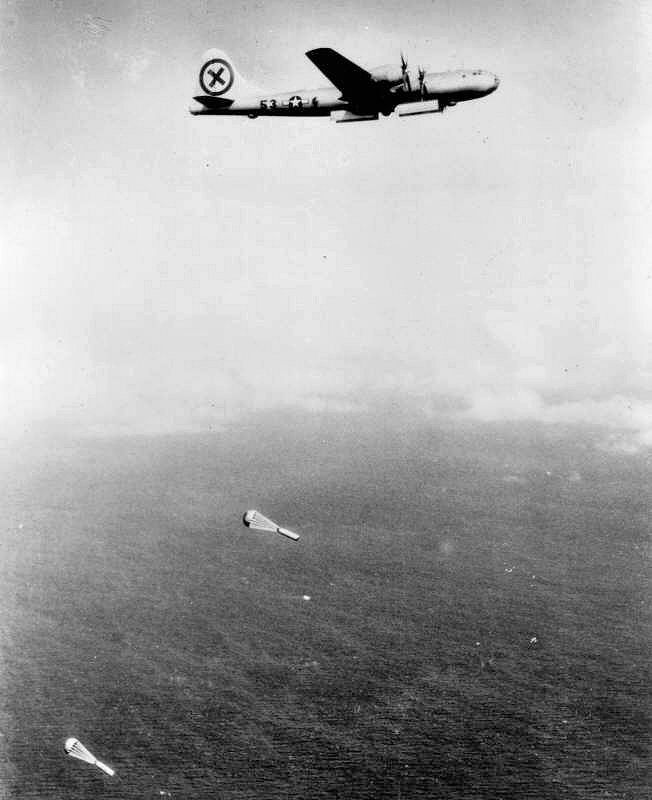
American planners had prepared for air attacks on Japan before the Pacific War, but those plans could not be fully carried out until the long-range B-29 was ready in large numbers. Once it entered the campaign in earnest in mid-1944, the aircraft gave the United States Army Air Forces the reach to strike the Japanese home islands.
The early strategy emphasized high-altitude daylight precision bombing. Precision bombing meant trying to hit specific industrial targets rather than attacking whole urban areas. The intended targets were things like aircraft plants, steel works, and engine factories, with the goal of weakening Japan’s war economy directly.
The first B-29 raids from bases in India, staged through airfields in China, began in June 1944 under Operation Matterhorn. But this effort produced disappointing results. Nine raids were carried out against Japan from China-based staging routes, and only one major success stood out: the destruction of the small aircraft factory at Ōmura. Overall, the campaign was judged ineffective.
There were several reasons. Supplying the bombers through India and China was difficult, technical problems affected the B-29s, crews lacked experience, and weather over Japan often made accurate bombing extremely hard. High winds and cloud cover regularly disrupted attacks. Even when bombers reached the target area, they often could not hit precisely.

Japan’s war industry was more scattered than it looked
One of the most important reasons precision bombing underperformed was the structure of Japanese industry itself.
Much of Japan’s military industry, especially its early-stage manufacturing process, was dispersed across many small locations. Instead of all production being concentrated in massive factory complexes, important work was carried out in geographically scattered workshops and in private homes. So even when large factories were targeted, that did not necessarily shut down the broader chain of production.
This mattered enormously. A strategic bombing campaign works best when the enemy’s industrial system depends on a limited number of vulnerable bottlenecks. In Japan’s case, many of those bottlenecks were harder to identify and much harder to destroy from the air. Bombing one prominent plant might damage a visible symbol of industrial power while leaving much of the supporting production network intact.
That is the key irony of the early raids: the bombers were aiming at factories, but the industrial system they were trying to destroy was embedded in neighborhoods, side streets, and homes.
Why Japanese cities were especially vulnerable
As American planners and commanders confronted the limits of precision bombing, another reality became impossible to ignore: Japanese cities were highly vulnerable to fire.
Urban areas were congested, and many buildings were made from highly flammable materials such as paper and wood. Industrial and military facilities were often surrounded by densely populated residential districts. Civil defense preparations were also weak. Few cities had enough professional firefighters, many relied heavily on volunteers, equipment was outdated, and few air-raid shelters had been built for civilians.
Even before the heaviest raids began, Japanese authorities had reason to worry. Large numbers of buildings were later demolished to create firebreaks, which are gaps intended to slow or stop a fire from spreading. But these efforts came late and could not solve the basic vulnerability of densely built urban areas.
This meant that bombing a city could do more than damage a factory. It could ignite a chain reaction across the entire urban environment.
The Mariana Islands changed everything
The bombing campaign expanded dramatically once airfields in the Mariana Islands became available after the battles of Guam, Saipan, and Tinian in 1944. These bases were much more effective than the earlier system in China because they could be supplied by sea and were close enough for B-29s to strike most of Japan without refueling.
From the Marianas, XXI Bomber Command began attacking Japan in late 1944. Initial efforts still focused on industrial targets, especially aircraft production. Raids on Tokyo and Nagoya tried to hit plants such as the Musashino aircraft plant and other aircraft works. Yet these early precision attacks again struggled to achieve decisive results. Weather, high winds, cloud cover, and maintenance problems all reduced effectiveness.
By early 1945, disappointment was growing. Despite the huge investment in the B-29 program, the results were not matching expectations. The campaign had not significantly degraded Japan’s war economy in the way planners had hoped.
The February 1945 shift: from factories to cities
In February 1945, the USAAF began shifting toward a different method: low-altitude nighttime firebombing against urban areas.
This was a major tactical and moral turning point. Instead of sending heavily armed bombers high above Japan in daylight to aim at individual industrial facilities, commanders moved to attacks at much lower altitude and at night, using incendiary bombs. Incendiaries are bombs designed to start fires rather than create mainly blast damage.
The logic was brutal but clear. If Japan’s military production was dispersed through workshops and homes, then burning urban districts could damage not only residential areas but also the hidden industrial web inside them. The target was no longer just the big factory. It was the city that sustained production.
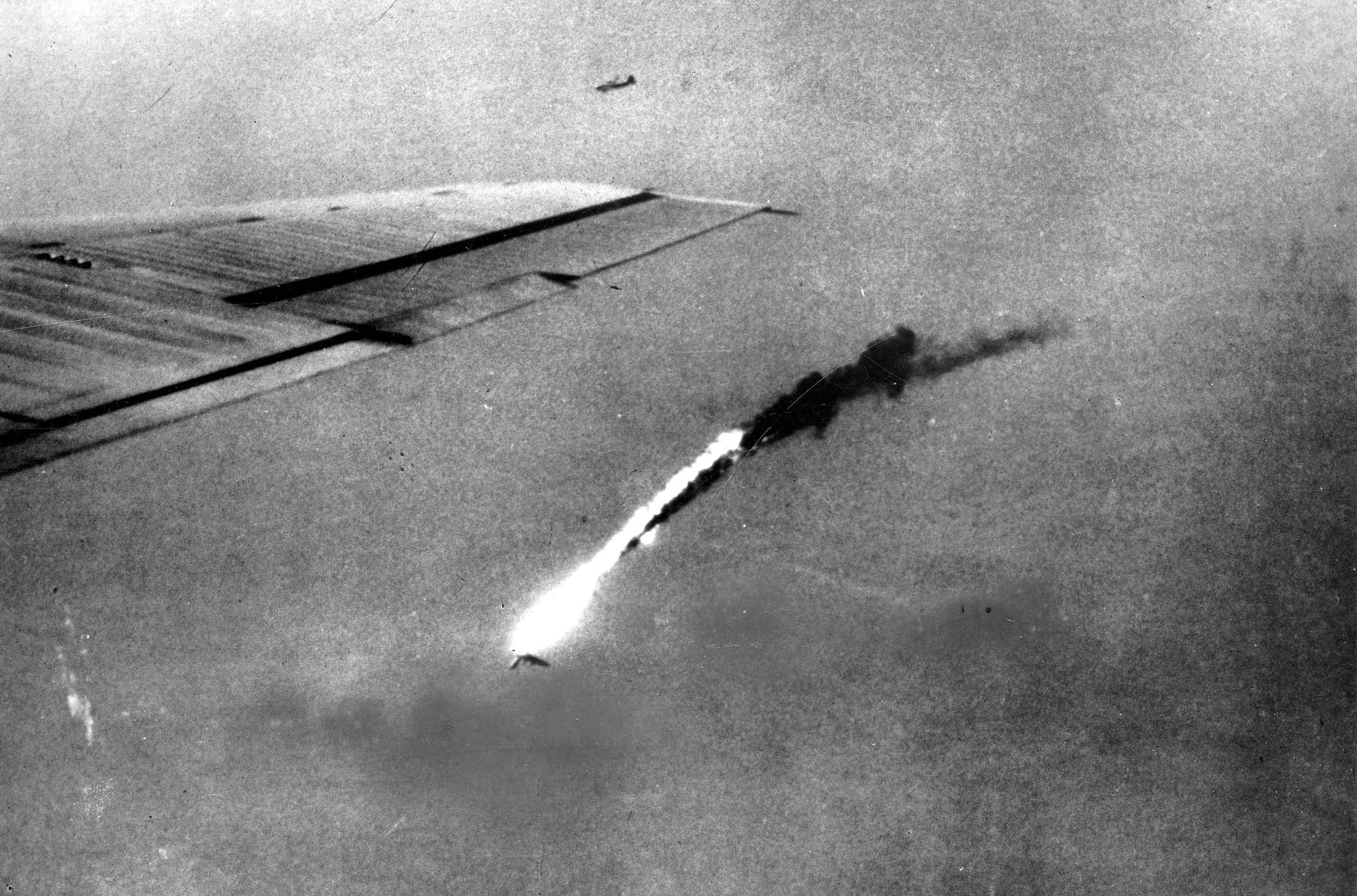
To make this strategy work, bombers flew at about 5,000 feet at night. Because Japanese night air defenses were weaker, many B-29s had defensive guns removed so they could carry larger bomb loads. This was a sharp departure from earlier doctrine and was unpopular with many aircrews, who believed high-altitude operations in heavily armed aircraft were safer.
Firebombing and the collapse of the line between factory and home
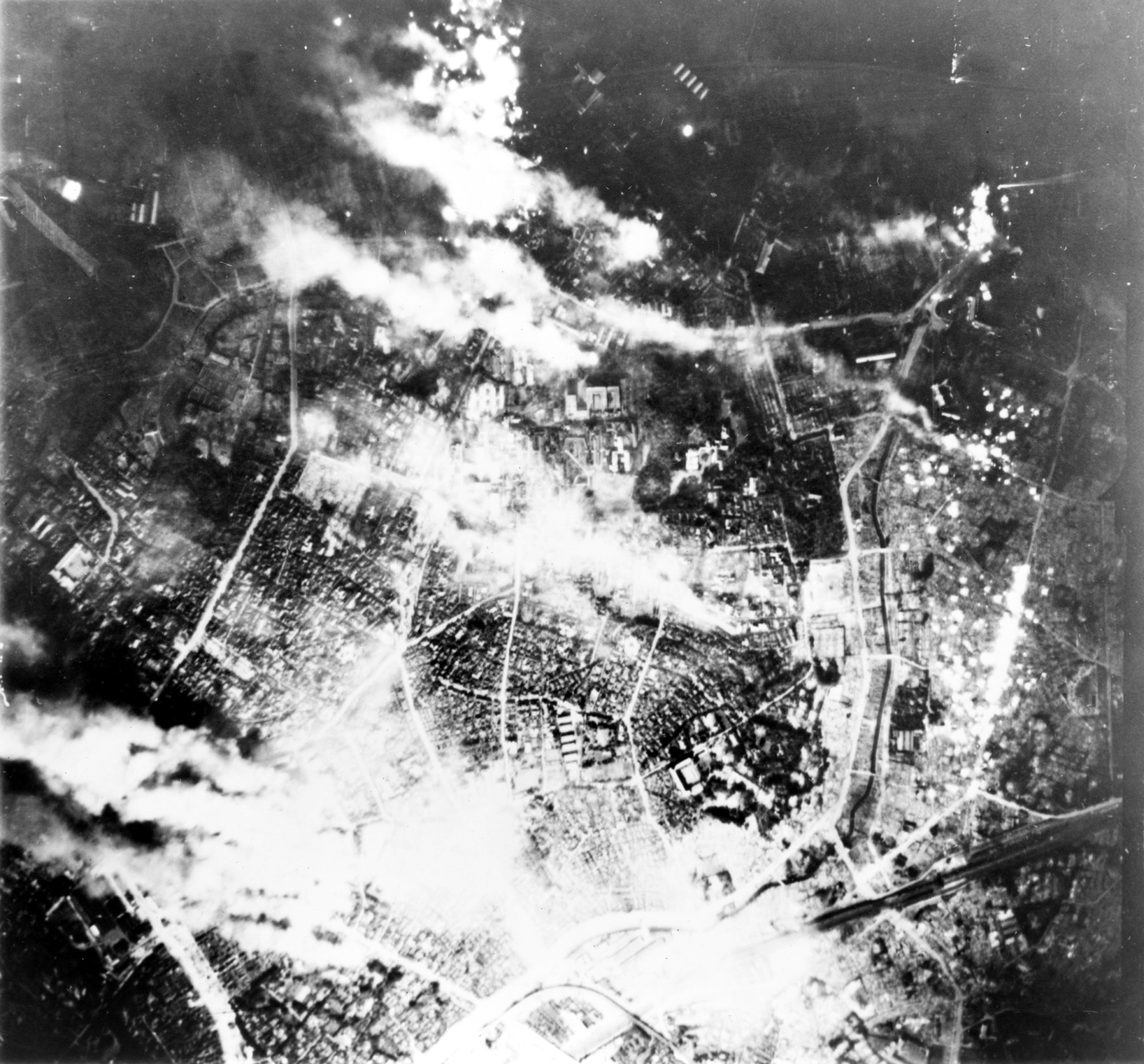
The results were devastating. The most destructive example came with the Tokyo raid of 9–10 March 1945, when 279 B-29s dropped 1,665 tons of bombs and a massive conflagration destroyed 16 square miles of the city, about seven percent of its urban area. Tokyo police and fire authorities estimated 83,793 people were killed, more than 40,000 were injured, and over 1 million lost their homes. Postwar estimates of the dead in that single raid range from 80,000 to 100,000.
Other major cities followed. Nagoya, Osaka, and Kobe were heavily attacked in March, and later raids devastated Yokohama and more of Tokyo. By the end of May, just over half of Tokyo had been destroyed. During May and June alone, much of Japan’s six largest cities was burned, killing between 112,000 and 126,762 people and leaving millions homeless.
These attacks badly damaged industrial output. They also exposed the grim reality behind the earlier failure of precision bombing: in Japan’s wartime economy, the distinction between military production and civilian life had become dangerously blurred. When workshops and private homes formed part of the production system, bombing industry increasingly meant bombing neighborhoods.
Why the early bombing failed—and why the consequences grew so severe
Precision bombing failed in early campaigns against Japan because it was aimed at a version of industrial warfare that did not fully match conditions on the ground. The strategy assumed that destroying major factories would cripple production. But Japan’s war economy was partly decentralized, with manufacturing work spread through smaller workshops and private homes. Add in bad weather, difficult flying conditions, supply problems, and technical limits, and the result was a campaign that often missed both literally and strategically.
The later firebombing campaign addressed that problem in the harshest possible way: by targeting the urban fabric that connected homes, labor, and production. It was far more destructive to Japan’s industrial capacity, but also far more catastrophic for civilians.
That is why this story remains so haunting. It is not only about bombers missing targets. It is about how modern war can erase the boundary between workplace and home, and how a failed attempt at precision can lead to a strategy of overwhelming destruction.