Full article · 6 min read
Ancient Music That Survived
Music is often thought of as something fleeting: a sound that exists for a moment and then vanishes. Yet a few astonishing pieces from antiquity escaped that fate. Thanks to musical notation, clay tablets, and durable inscriptions, some of the oldest known written music has crossed thousands of years to reach the present.
This surviving evidence gives a rare glimpse into how ancient societies treated music—not just as entertainment, but as education, ritual, and cultural memory.
The oldest surviving notated song
One of the most remarkable survivors from the ancient world is the Hurrian Hymn to Nikkal. It was found on clay tablets in the ancient Syrian city of Ugarit and dates to approximately 1400 BCE. It is identified as the oldest surviving notated work of music.
That phrase, notated work of music, simply means music that was written down in a system intended to preserve how it should be performed. This matters because most ancient music did not survive in a playable form. Instruments may remain in the archaeological record, and images may show musicians performing, but notation is what allows a composition itself to endure beyond the moment of performance.
The Hurrian Hymn is especially striking because it shows that people in the ancient Near East were not only making music, but also recording it in a durable medium. A clay tablet is a powerful time capsule. Unlike oral tradition alone, which depends on person-to-person transmission, writing can preserve a work across enormous spans of time.
Why ancient music rarely survives
Music has existed in human societies for a very long time, but survival is a different question from origin. Prehistoric music can only be theorized from archaeological finds, such as very early flutes. The article notes that the earliest widely accepted musical instruments are bone flutes from the Swabian Jura in Germany, dated to the Aurignacian period, with some from Geissenklösterle dated to about 43,150–39,370 BP.
But instruments are not the same as songs. A flute tells us that music was being made; it does not tell us exactly what was played. To know that, some form of notation or complete preservation is needed. That is why ancient written music is so rare and so important.
Many musical traditions were passed down orally or aurally. In oral tradition, songs are preserved through memory and repeated performance rather than through writing. This can keep music alive for generations, but it also means older forms may change over time or disappear entirely. When a composition is fixed in notation, it stands a better chance of reaching far-future listeners.
Ancient Greece and the seriousness of music
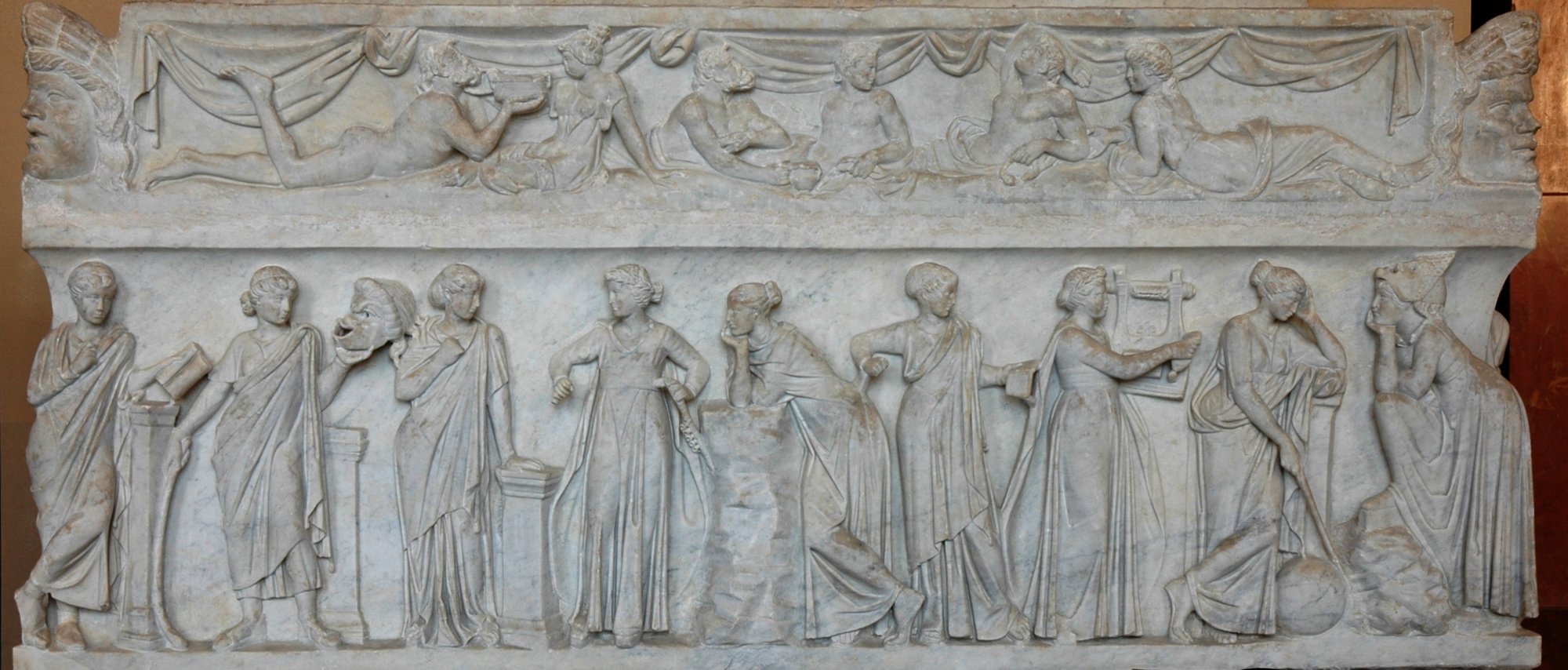
Ancient Greece treated music as much more than a pastime. It was an important part of social and cultural life and one of the main subjects taught to children. Musical education was believed to shape the soul, and people who received it were seen as noble and harmonious.
This idea reveals how central music was to Greek civilization. It was not confined to festivals or theater, though it certainly appeared there too. It belonged in education itself. Boys were taught music starting at age six, and musicians and singers held a prominent place in Greek theater.
The Greek understanding of music also went beyond performance. Greek musical literacy contributed to major musical development, and Greek music theory included musical modes that eventually became a basis for Western religious and classical music. In other words, ancient Greece did not only enjoy music—it studied it, taught it, and built theoretical systems around it.
Their instruments included the double-reed aulos and the lyre, especially a form called the kithara. Mixed gender choruses performed for celebration, entertainment, and spiritual ceremonies, showing how music moved between education, ritual, and public life.
The oldest complete composition with notation
If the Hurrian Hymn to Nikkal is the oldest surviving notated work of music, the Seikilos epitaph holds a different distinction. It is described as the oldest surviving example of a complete musical composition, including musical notation, from anywhere in the world.
That word complete is the key. A complete composition means a whole musical work has survived rather than only a fragment. This is why the Seikilos epitaph feels so vivid: it represents a full song crossing centuries intact.
For historians of music, that is extraordinary. Ancient musical culture is often known through scattered evidence—references in texts, depictions of instruments, or incomplete notations. A complete composition is far rarer. It offers a more direct connection to how music could be organized and remembered in the ancient world.
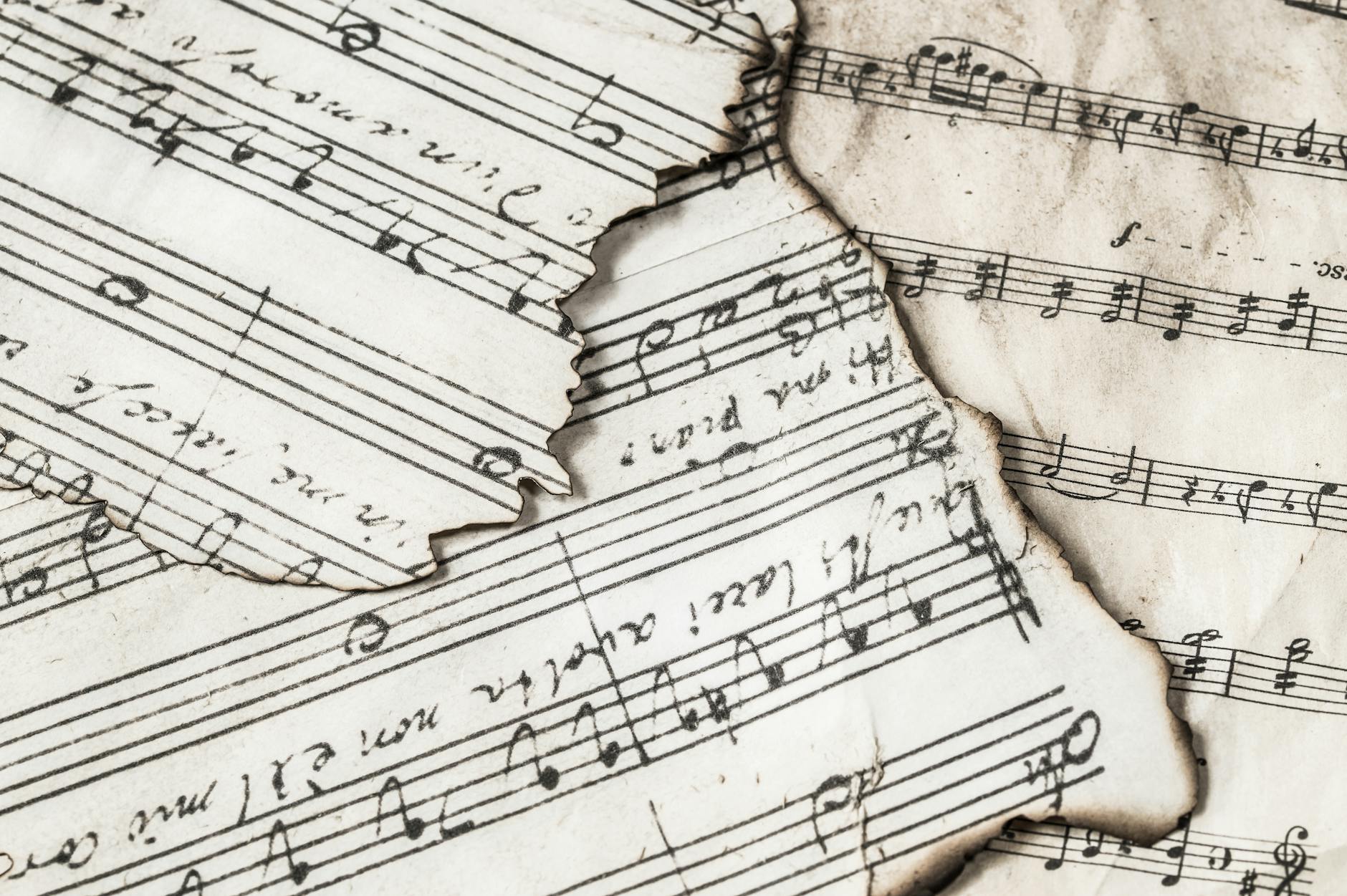
The survival of the Seikilos epitaph also highlights the value of notation itself. Music notation is the written expression of notes and rhythms using symbols. It allows pitches and rhythms to be recorded so that performers can recreate a melody long after its composer and original audience are gone. Without notation, a piece may live only as long as memory can carry it.
Music as education, ritual, and identity
The surviving examples from Syria and Greece fit into a broader truth: music played a major role in ancient societies. In Egypt, evidence of musical instruments dates back to the Predynastic period, and by the Old Kingdom people played harps, flutes, and double clarinets. Music accompanied dance, and Egyptian folk traditions are described as preserving features, rhythms, and instruments close to ancient Egyptian music.
In ancient Greece, music belonged to education and theater. In other places across the ancient world, traditions developed their own instruments, tuning systems, and performance practices. Indian classical music, for instance, is described as one of the oldest musical traditions in the world, while Chinese classical music has a history stretching back about 3,000 years.
This broad history helps explain why surviving ancient songs are so compelling. They are not isolated curiosities. They are rare surviving traces of something that mattered deeply in human life across civilizations.
What notation changed
Notation transformed music from an event into a record. Once music could be written down, it could be taught more consistently, transmitted across distance, and preserved through time. Later in Europe, notation helped the Catholic Church spread chant melodies across a wide area. But ancient examples show that the desire to preserve music in written form is much older.
Notation does not capture everything. Even when music is written relatively precisely, performers still make decisions about tempo, phrasing, and style. That process is called interpretation. Still, notation can preserve the framework of a melody or composition strongly enough for it to survive when almost everything else has vanished.
That is what makes the Hurrian Hymn and the Seikilos epitaph so powerful. They are not just old objects. They are preserved acts of human expression.
Why these ancient survivals still matter
The oldest surviving music reminds us that people thousands of years ago were doing something recognizably human: shaping sound into meaning. They wrote songs, taught children music, connected it to ceremony and learning, and in a few extraordinary cases, left enough behind for later ages to know that those sounds once existed.
The Hurrian Hymn to Nikkal shows that written music was already present in ancient Syria by around 1400 BCE. The Seikilos epitaph shows that a complete notated composition could survive from the ancient world. And ancient Greece shows how seriously a civilization could take musical education, placing music at the center of personal and cultural formation.
Most ancient performances are gone forever. These few survivors matter because they prove that music, even from the distant past, does not always disappear without a trace.
Sources
Based on information from Music.
More like this
Let ancient songs echo into your daily scroll — download DeepSwipe and discover knowledge that survives the ages.