Full article · 8 min read
Mount Vesuvius 79 AD: The terrifying power of the plume
In 79 AD, Mount Vesuvius produced one of history’s most devastating volcanic eruptions. The blast was so immense that the volcano hurled a towering cloud of super-heated tephra and gases up to 33 kilometers into the sky, while ejecting molten rock, pumice, and ash at a rate of 1.5 million tons per second. In thermal energy, the eruption has been estimated at 100,000 times the combined atomic bombings of Hiroshima and Nagasaki.
That staggering violence is the heart of what made Vesuvius so unforgettable. The eruption became the namesake for the Vesuvian type of eruption, known for immense columns of hot gas and ash that shoot into the stratosphere, the second major layer of Earth’s atmosphere above the lower air where weather happens. But the towering plume was only part of the disaster. The eruption also produced pyroclastic flows and surges: fast-moving, ground-hugging clouds of scorching gas, ash, and volcanic fragments that destroyed entire communities.
What the plume actually was
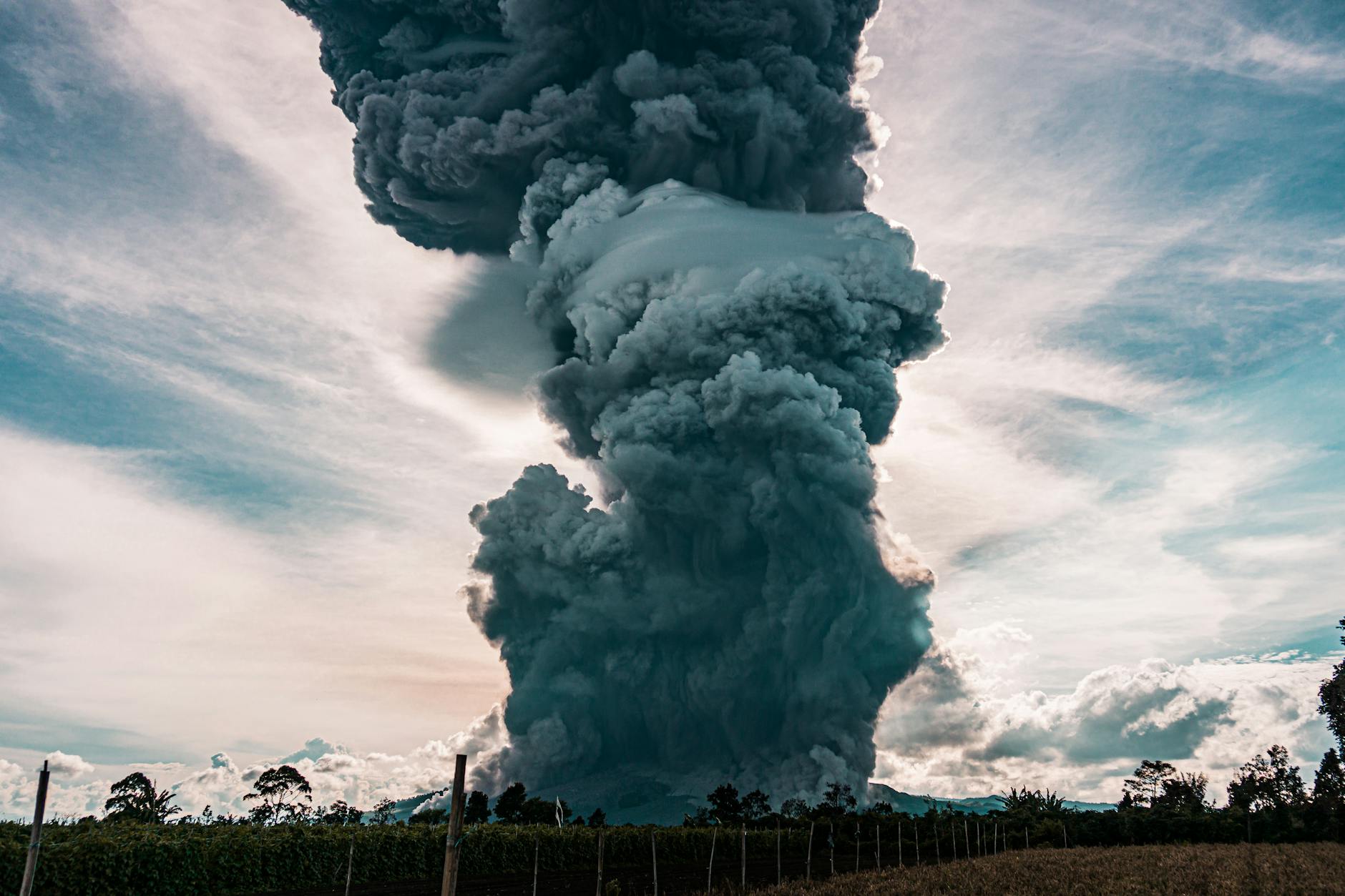
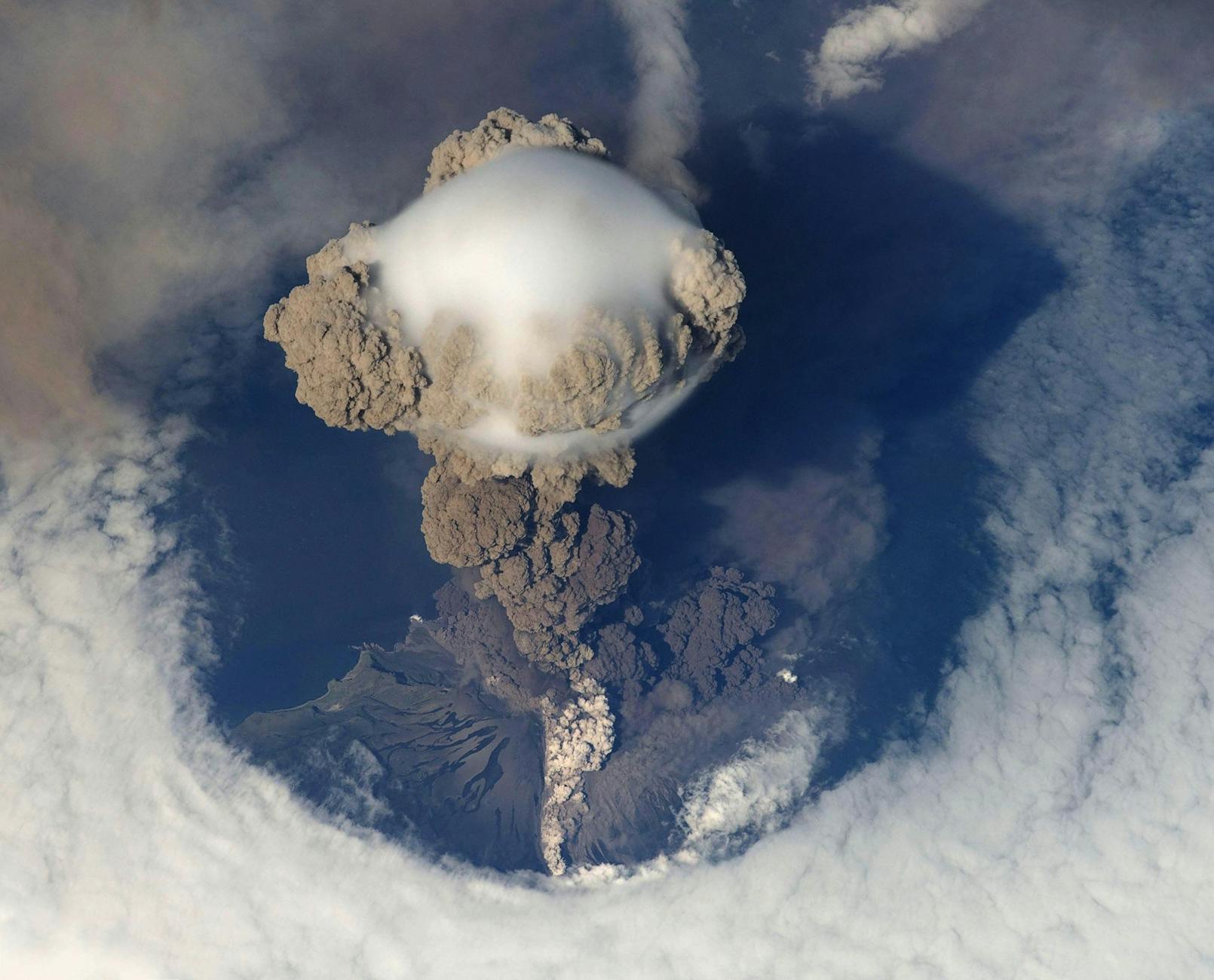
The famous eruption column was not just smoke. It was a violently rising tower of hot gases, ash, pumice, and rock fragments blasted out of the volcano with enormous force. Pliny the Younger, whose eyewitness letters are the only surviving firsthand written account of the disaster, described the cloud as resembling a pine tree: a tall trunk rising upward and then spreading at the top into branching forms.
That image helps explain the mechanics. The eruption column shot high into the atmosphere because the hot material was buoyant and forcefully expelled. During the first major phase, researchers concluded that the column of volcanic debris and gases rose between 15 and 30 kilometers into the stratosphere. Ash and pumice then fell back to the ground, especially toward Pompeii, where the deposits built up into thick layers.
This is why the plume itself was deadly even before the later surges arrived. Falling pumice and ash blanketed roofs, added crushing weight, and caused structures to collapse. For hours, the disaster unfolded not as one single blast, but as a sequence of escalating threats.
From sky-high ash to ground-hugging death
The eruption lasted for two days and changed character over time. Early on, ash and pumice rained down. Later, parts of the eruption column collapsed. When that happened, the material no longer stayed aloft. Instead, it surged outward across the landscape as pyroclastic density currents.
These currents included pyroclastic flows and surges. They were dense, rapid, and extremely hot. Some carried molten rock, hot gases, lava fragments, and pulverized pumice. In Pompeii and Herculaneum, they became the true city-killers.
A first phase spread pumice and ash. Then later Pelean phases generated pyroclastic surges that reached communities around the volcano. Two surges engulfed Pompeii with a layer about 1.8 meters deep, burning and asphyxiating those who had remained behind. Herculaneum, Pompeii, and Oplontis were buried beneath fine pyroclastic deposits, pumice, and lava fragments that in places reached depths up to 20 meters.
The most destructive surges are believed to have been the later ones, especially surges 4 and 5, which destroyed and buried Pompeii.
Why Pompeii was preserved so hauntingly well
One of the most haunting legacies of the eruption is the way it preserved human forms. In Pompeii, bodies were buried by ash and pyroclastic material. Over time, the soft tissue decayed, leaving cavities in the hardened deposits. Later, Giuseppe Fiorelli developed a method of pouring plaster into those voids. The resulting casts captured the shapes and final postures of the dead with eerie precision.
These plaster casts are so powerful because they do more than show that people died. They preserve moments: a body curled inward, limbs tense, forms caught as if time stopped. That visual record helped transform Pompeii into one of the world’s most famous archaeological sites.
Excavations in Pompeii and Herculaneum have revealed not only buildings and streets but also intimate details of Roman daily life. Because of this extraordinary preservation, the area became part of Vesuvius National Park and is recognized as a UNESCO World Heritage Site, meaning it is protected for its outstanding cultural value.
The science of heat inside the city
Modern studies have added an even more chilling layer to the story. Researchers examined the magnetic properties of rock fragments, roof tiles, and plaster from volcanic deposits in and around Pompeii to estimate the temperatures reached by the pyroclastic currents.
This work relied on how heated materials can lose and then regain magnetic signatures as they cool. Different minerals respond at different temperatures, allowing scientists to estimate how hot the deposits were when they settled.
Their findings suggest that Pompeii sat inside a much hotter volcanic field, but that the city’s buildings affected the local temperatures. On the first day, white pumice fell for several hours and heated roof tiles to around 120–140 °C. That may have been the last realistic window for escape.
Then came more pumice, followed by the collapse of the eruption column and the arrival of pyroclastic density currents. Early in the second morning, two major surges struck Pompeii. For the first surge, emplacement temperatures were estimated at roughly 180–220 °C, while the second may have reached around 220–260 °C. In some locations associated with the flow, estimates ranged as high as 300–360 °C.
Inside parts of the city, especially beneath collapsed roofs, some temperatures may have been lower, around 100 °C. Even so, these were still lethal conditions. The urban layout, walls, and collapsed structures may have disrupted parts of the flow, creating cooler pockets, but not safety.
How people died
The eruption destroyed several Roman towns and settlements. Pompeii and Herculaneum are the most famous, but the total death toll remains unknown. The combined population of the two cities was over 20,000. More than 1,500 remains have been found at Pompeii and Herculaneum, though the actual number of victims was certainly higher.
By 2003, around 1,044 casts had been recovered from body impressions in and around Pompeii, along with the scattered bones of about 100 more people. At Herculaneum, about 332 bodies had been found, including around 300 in arched vaults discovered in 1980.
At Pompeii, about 38% of the bodies were found in ash-fall deposits, mostly inside buildings. That suggests many people sheltered indoors during the pumice fall and were overcome there. The other 62% were found in pyroclastic surge deposits, indicating that the surges killed a large share of the victims.
For a long time, some believed the people of Pompeii may not have died mainly from extreme heat. Later studies changed that view. During the fourth pyroclastic surge, temperatures may have reached 300 °C, hot enough to kill in a fraction of a second. The twisted postures seen in many victims were not signs of prolonged suffering, but likely the result of cadaveric spasm caused by heat shock.
Herculaneum suffered differently. Because of wind direction, it was spared the heavy early tephra fall, but that offered little real protection. The town was buried under 23 meters of material left by pyroclastic surges. Evidence from skeletons and carbonized wood indicates very high temperatures. Many victims clustered in waterfront vaults, probably boathouses, where they were caught by the first surge and died of thermal shock.
The eyewitnesses: the two Plinys
The only surviving firsthand written testimony comes from two letters by Pliny the Younger, written to the historian Tacitus about 25 years after the event. Pliny the Younger was 17 at the time and was at Misenum, across the Bay of Naples, about 29 kilometers from the volcano.
He observed the strange cloud, the darkness, the falling ash, and the panic as people fled. He described blackness deeper than night, interrupted by flames and flashes. Ash fell heavily enough that he had to shake it off periodically to avoid being buried.
His uncle, Pliny the Elder, was in command of the Roman fleet at Misenum. When a messenger arrived from his friend Rectina near the volcano, asking for rescue by sea, he launched ships to help evacuate people along the coast. He also sailed toward the danger himself.
Crossing the bay, he encountered showers of hot cinders, pumice, and rock. Refusing to turn back, he continued to Stabiae, where Pomponianus had been trying to flee. After spending the night there amid violent shaking, Pliny the Elder and the others moved into the open with pillows tied to their heads for protection against falling debris. At the shore, the wind still prevented escape.
Pliny the Elder collapsed and died there. His nephew suggested poisonous gas as a possible cause, but later discussion has raised other possibilities, since his companions were apparently not overcome in the same way. His body was found the next day with no apparent injuries.
A disaster that froze a world in time
The eruption of Vesuvius did more than annihilate cities. It preserved them. Streets, buildings, bodies, and traces of ordinary Roman life survived beneath ash and pyroclastic deposits for centuries. That is why Pompeii and Herculaneum remain so compelling today: they are both scenes of destruction and archives of daily life.
The power of the plume was not only in its height, though rising into the stratosphere was extraordinary. Its real terror lay in what followed: ash fall that crushed roofs, darkness that triggered panic, and collapsing volcanic clouds that transformed into searing surges racing through entire towns.
Few natural events have combined such immense force with such intimate preservation. Vesuvius erased cities, yet also left behind one of the clearest windows into the ancient world.
Sources
Based on information from Eruption of Mount Vesuvius in 79 AD.
More like this
Get swept into stories as powerful as Vesuvius’s plume — download DeepSwipe and let your daily knowledge eruption begin.