Full article · 8 min read
Roman roads: how Rome engineered through cliffs, swamps, and rivers
Roman roads are often remembered as straight, durable highways, but some of their most striking achievements appeared where the landscape seemed to say “stop.” In difficult terrain, Roman engineers did not always go around obstacles. Again and again, they forced routes through them.
That determination can be seen in cliff roads cut into rock, causeways raised above marshes, and bridges thrown across rivers using wood, stone, and concrete. These were not isolated stunts. They were part of a wider road system that helped maintain and develop the Roman state, giving armies, officials, civilians, communications, and trade goods an efficient way to move overland.
At the height of Roman expansion, the network was immense: 29 great military highways radiated from Rome, 113 provinces were linked by 372 major roads, and the total system exceeded 400,000 kilometres, with more than 80,500 kilometres stone-paved. Some routes survived for millennia, and many were later overlaid by modern roads.
Rome’s mindset: engineer the obstacle
Roman roads were carefully surveyed and often laid out as straight as practical. In many places, that meant impressive directness. Some stretches ran for as much as 55 miles in ruler-straight lines. The Roman preference for straight roads often produced steep slopes that were not ideal for commercial traffic, but it also reveals something important about Roman engineering culture: the solution to a problem was often construction, not detour.
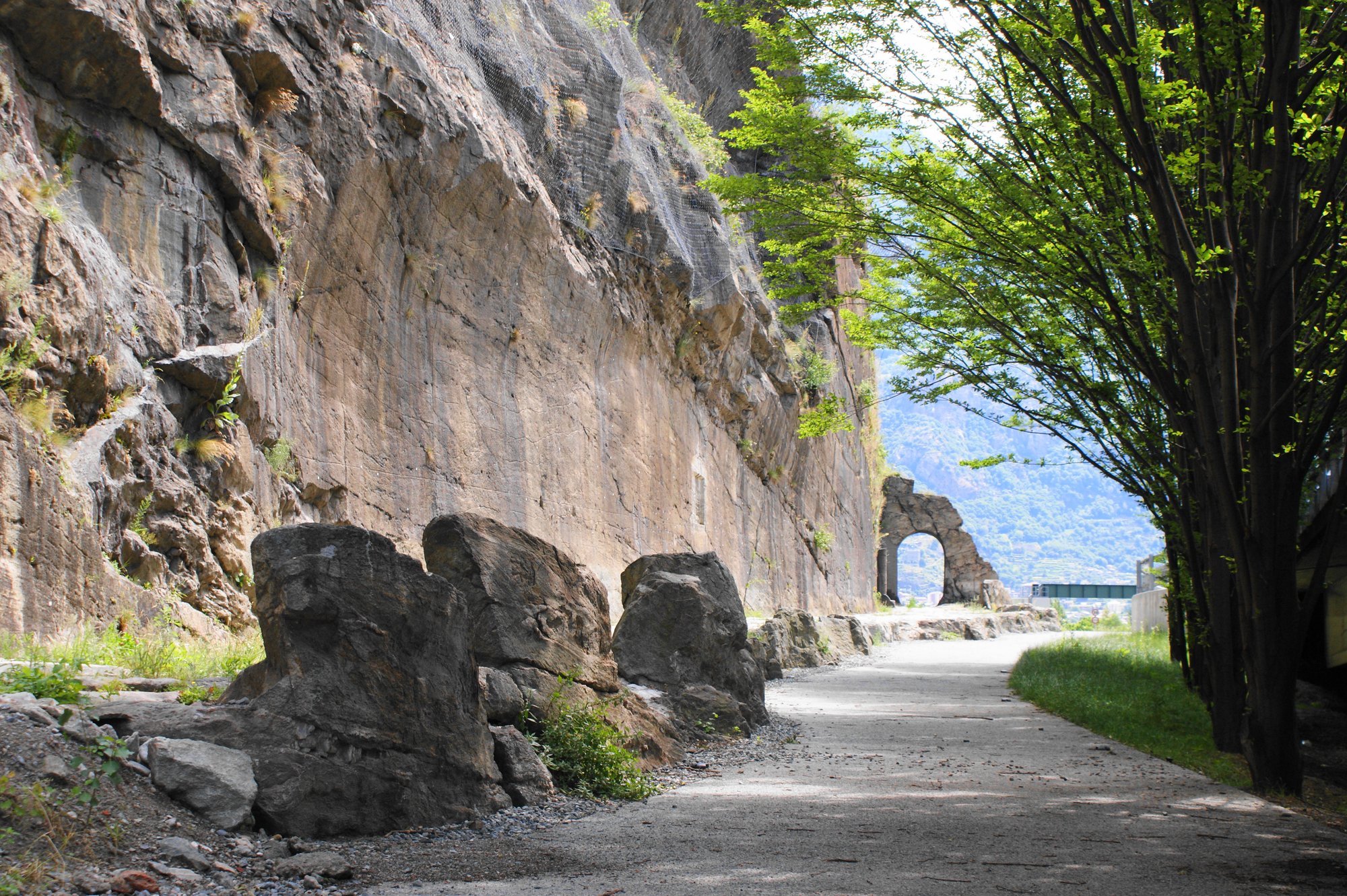
In hilly or mountainous country, roads were commonly cut through hills rather than winding around them in a serpentine pattern of switchbacks. Where ravines, outcrops, marshes, and rivers stood in the way, Roman builders turned to cuts, tunnels, causeways, pilings, bridgework, and projecting timber structures. Their roads were also designed to resist rain, freezing, and flooding, with cambered surfaces and drainage features helping keep them serviceable.
This “engineer, don’t detour” approach is what makes the most dramatic Roman road sites so memorable.
The Iron Gates: a road carved into a cliff
One of the most extraordinary examples stood near the Iron Gates, the narrow Danube gorge on the modern Serbia–Romania border. There, a Roman road from Căzănești was made half by carving into solid rock and half by building a wooden structure that projected out over the river from the cliff face.
The carved section was about 5 to 5 feet 9 inches wide, while the outer portion was supported in timber above the Danube. This was not just a scenic ledge path. It functioned as a towpath, a path used to pull boats, helping make the Danube navigable along this difficult stretch.
The engineering logic is striking. Rather than abandoning the gorge as impassable, Roman builders turned the cliff itself into part of the roadway and then extended that roadway outward with wooden supports. It was a hybrid solution: part rock-cut road, part suspended timber works.
Most of that road has now vanished beneath the water, but one famous remnant survives: the Tabula Traiana in Serbia, a commemorative plaque linked to Trajan’s Danube works. It stands as a hard, physical reminder of a route that once clung to the gorge wall.
What a towpath actually was
The term towpath can sound obscure today. In simple terms, it was a path running alongside navigable water where animals or people could pull boats. On a challenging river such as the Danube, especially through a gorge, that kind of route could be essential.
In the Iron Gates case, the Roman road’s role was not only terrestrial transport. It also supported movement on the river itself. That helps explain why Roman road engineering could become so ambitious in places where the terrain was extreme: the route could be serving multiple strategic purposes at once.
Across the swamp: causeways over marshland
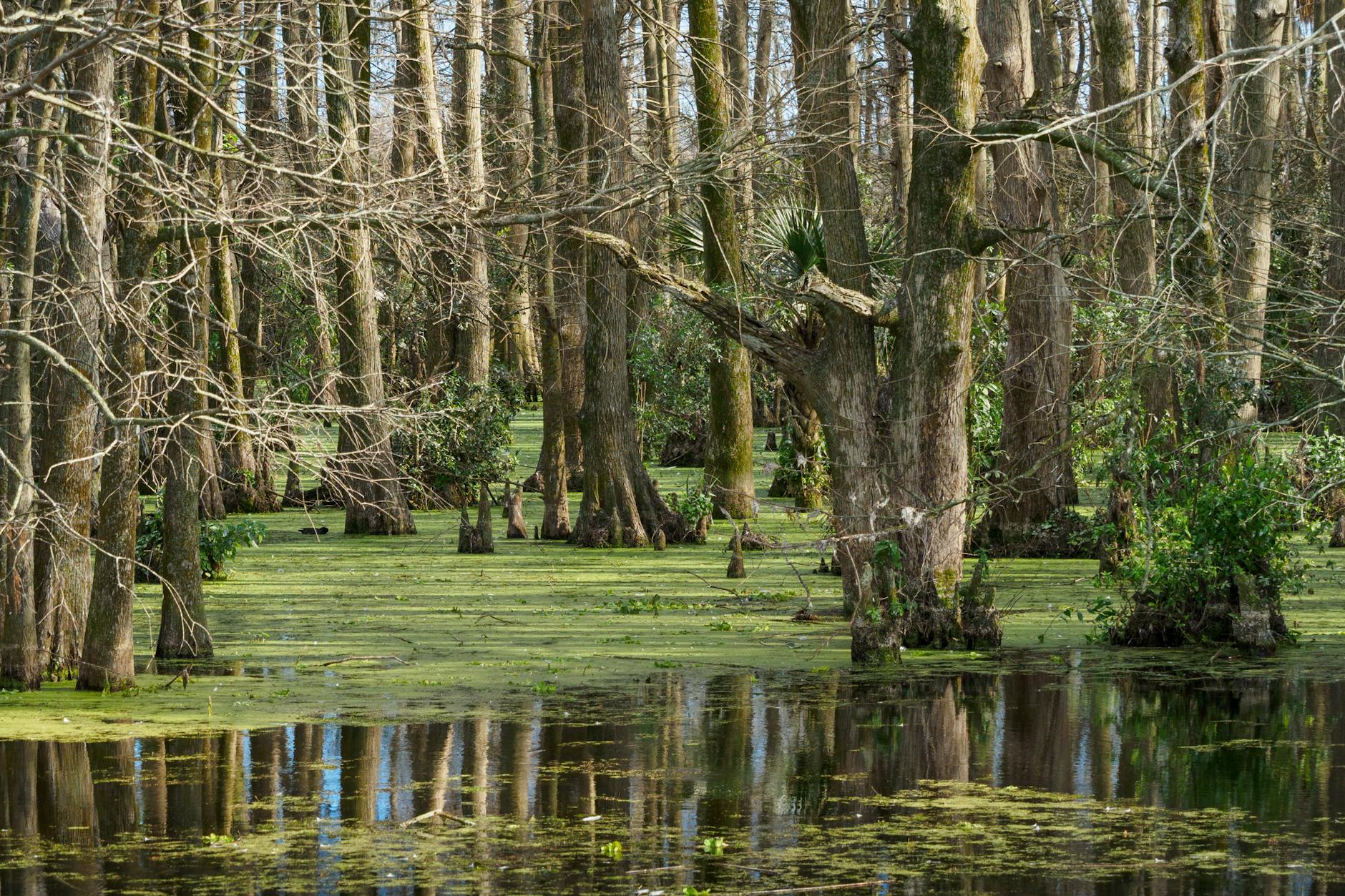
Marshes created a different kind of problem. Instead of hard rock and steep drops, engineers faced soft, waterlogged ground that could swallow roads and turn them into mud. Roman builders answered with causeways.
A causeway is a raised road carried across wet ground. On marshy terrain, the Romans first marked the route with pilings. Pilings are strong vertical posts driven into the ground to create support in unstable soil. Between these pilings, they sank large quantities of stone, gradually raising the roadbed until the causeway stood more than 5 feet above the marsh.
That extra height mattered. It helped keep the route usable above the wet ground and reduced the risk that water and mud would destroy the surface.
In the provinces, Roman builders did not always go to the trouble of creating a full stone causeway. In some places they used log roads instead, known as pontes longi, or “long bridges.” These were timber-built routes laid across wetlands, a practical adaptation where conditions or available resources made stone construction less attractive.
Whether built with stone or logs, these wetland roads show Roman flexibility. The overall system aimed at durability and regularity, but local conditions could change the exact solution.
Why Roman roads lasted
The dramatic engineering grabs attention, but Roman roads also endured because of how they were built from the ground up. Road construction could involve excavating a fossa, or ditch-like roadbed, down to bedrock or at least the firmest available ground. Builders then filled that space with layers of rubble, gravel, and stone.
For the best built roads, the structure could include a statumen, a foundation of flat stones set in cement, followed by a coarse concrete layer called the rudus and a finer concrete layer called the nucleus. On top came the summa crusta, the final course of paving stones, often polygonal or square blocks. The surface was crowned, meaning slightly raised in the middle, so water would drain away toward the sides.
That drainage was essential. Water is one of the great enemies of roads. Roman builders understood that a road had to stay dry if it was to stay solid. Even where roads were not fully paved, the use of tamped rubble, gravel surfacing, and cambered forms helped reduce mud and damage.
This layered approach helps explain why so many Roman roads survived in some form for centuries and why portions of their courses still shape transport routes today.
Bridges: spanning rivers with wood, stone, and concrete
Rivers presented another test, and Roman bridge building became one of the great achievements of ancient engineering. Crossings could be made with bridges of wood, stone, or a combination of both. Wooden bridges might stand on pilings sunk into the river or on stone piers. For larger or more permanent crossings, Romans used stone arch bridges.
Concrete was especially important. Roman bridges are noted as some of the first large and lasting bridges ever created, and the Romans were the first to use concrete for bridges. Many were so well made that some remain in use today.
That durability was not accidental. Roman public roads were vital infrastructure, and crossings could not be weak points. A broken bridge could disrupt military movement, official travel, communication, and trade. So river crossings received the same practical seriousness as the roads leading to them.
A network built for movement
These feats of construction were not vanity projects. Roman roads served clear purposes. They allowed the overland movement of armies, officials, civilians, official communications, and trade goods. The public road system was thoroughly military in aim and spirit, designed to unite and consolidate Roman conquests.
A legion on the march even carried its own baggage train and built its camp each evening beside the road. That military need helps explain both the scale of the system and the willingness to undertake difficult engineering works in forbidding landscapes.
The network also supported travel in more ordinary ways. Milestones marked distances with precision. Mansiones, official stopping places about 25 to 30 kilometres apart, served authorized travelers. Mutationes, or changing stations, allowed animals and vehicles to be serviced every 20 to 30 kilometres. Inns and hostels grew up along busy routes as well.
In other words, Roman roads were not merely strips of paving. They were part of a complete transport system.
The surviving traces
Although many Roman engineering works have been damaged, buried, repurposed, or submerged, traces remain across the former empire. Some roads survive in their courses, some in paving, some in bridges, and some in inscriptions.
At the Iron Gates, the cliff road itself has largely disappeared beneath the river, but the Tabula Traiana survives. Elsewhere, old causeways, bridge remains, and reused road alignments still reveal how Roman builders confronted hard terrain.
That is part of the lasting fascination of Roman roads. They were not only long-distance highways linking cities and provinces. In their most dramatic moments, they were acts of stubborn problem-solving: a road cut into a gorge wall, a raised line through marshland, a bridge where a river seemed to block the way.
Rome’s roads were built to move people and power. But in the toughest landscapes, they also became monuments to an ancient engineering instinct: if the land resists, build anyway.
Sources
Based on information from Roman roads.
More like this
Take the hard road to smarter scrolling—download DeepSwipe and bridge the gap between boredom and brilliant facts.