Full article · 7 min read
Roman roads: How they built arrow-straight highways
Roman roads were not just routes from one town to another. They were engineered corridors designed for durability, speed, and control, and their straightness became one of their most famous features. In many places, Roman surveyors laid out stretches so direct that some links ran for as much as 55 miles in a nearly ruler-straight line.
That kind of precision was not an accident. Roman roads were planned infrastructure, built to move armies, officials, messages, and goods across a vast territory. The great roads of the Roman world connected cities, towns, and military bases, and they were carefully prepared to stay usable in bad weather and difficult terrain.
How Roman surveyors created such straight roads
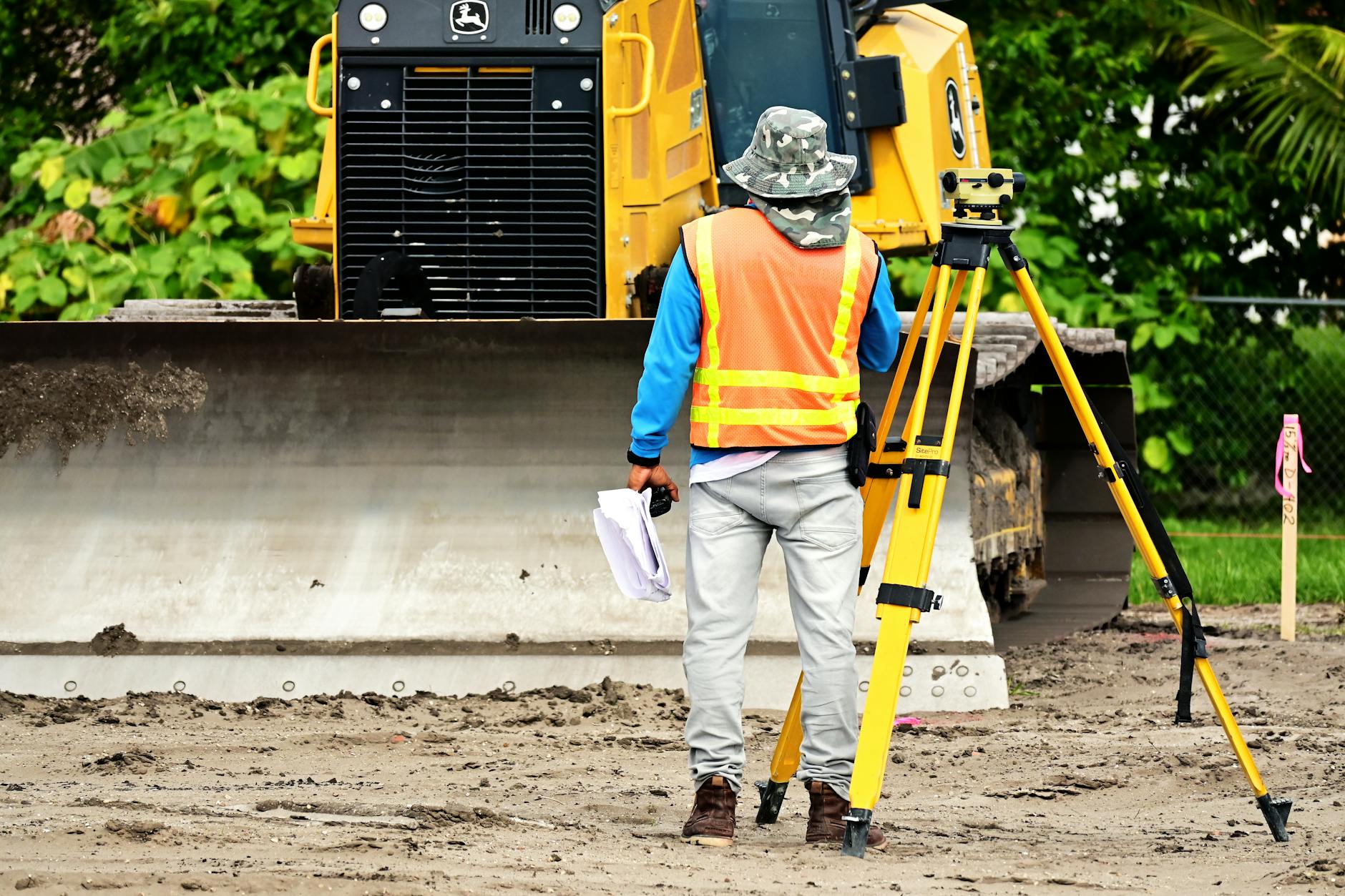
The secret began with surveying. After an engineer examined the route and decided roughly where the road should go, specialist surveyors called agrimensores laid out the road bed. They used rods and an instrument called a groma.
The groma was a Roman surveying tool used to establish straight lines and right angles. With it, surveyors could align the course of a road with surprising accuracy. The line they set out was called the rigor, essentially the straight guiding line of the future highway.
The survey team worked visually, placing rods ahead and adjusting them until the alignment was correct. If the endpoint was too far away to see clearly, a signal fire might be lit there to help guide the line. Using the groma, they could also set out a grid for the planned road.
This helps explain why Roman roads often look so uncompromising on a map. Roman builders strongly preferred directional straightness. In hilly country, that did not usually mean winding switchbacks around slopes. Instead, the road often cut directly through the landscape. The result was a route that was efficient and short, even if it was sometimes steep.
Dig first: the fossa and the road bed
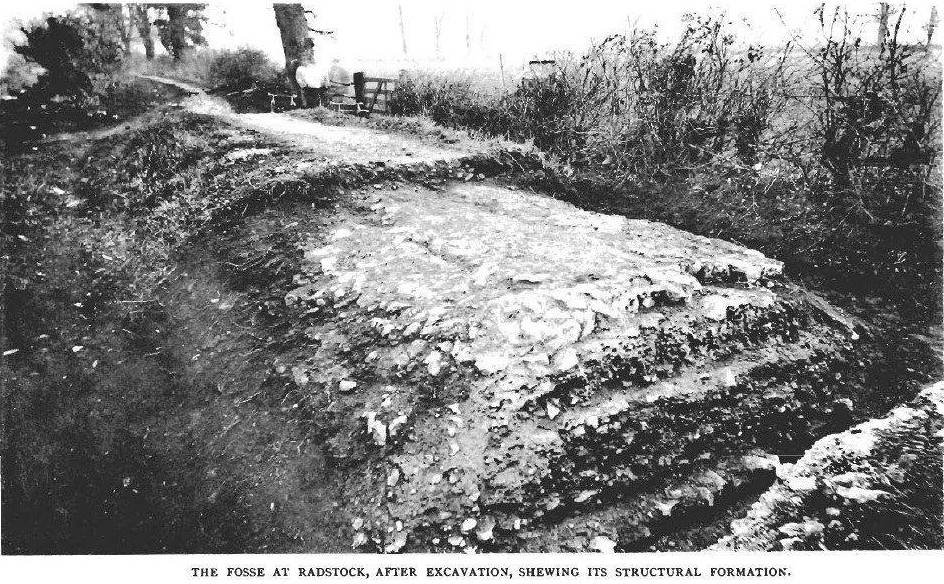
Once the line had been surveyed, the next step was excavation. Workers dug a trench called the fossa, the Latin word for ditch. The depth depended on the local terrain, but the goal was to get down to bedrock or at least to the firmest ground available.
This trench formed the skeleton of the road. Rather than simply throwing paving stones onto the earth, Roman builders created a structured road bed. That layered construction is one reason so many Roman roads endured for centuries and, in some cases, for millennia.
The fossa was then filled with available materials such as rubble, gravel, and stone. In some places, sand was also added if it could be obtained locally. These materials were not dumped loosely. They were packed and compacted to create a stable base.
Inside the road: the famous Roman layers
The internal structure of a Roman road is one of the most fascinating parts of its design. Different materials were laid in sequence to create a surface that could stay firm, drain water, and resist turning into mud.
A key stage was the pavimentum. This was the compacted base surface created after the fill had been tamped down. Tamping means packing material tightly by pounding it so that it settles into a dense, stable layer.
Above that, builders could add further layers:
Statumen
The statumen was the foundation layer, typically made of flat stones. It acted as a stable support for the road above.
Rudus
The rudus was a coarser layer, made from material such as crushed stone mixed with lime-based mortar. Mortar is the binding paste that helps hold particles together.
Nucleus
Above the rudus came the nucleus, a finer concrete-like bedding layer. This created a more even surface for the paving stones.
Summa crusta
The visible top layer was the summa crusta, the paved surface itself. This consisted of fitted stone blocks, often polygonal or square. Crucially, the surface was crowned, meaning it was slightly higher in the middle than at the edges. That shape encouraged water to run off rather than pool on the road.
This layered structure was not just impressive engineering for its own sake. It was a practical answer to the biggest enemy of roads: water.
Built to shrug off weather
Roman roads were designed to resist rain, freezing, and floods. Their builders wanted them to need as little repair as possible. That goal shaped almost every part of their construction.
Prepared roadbeds helped keep the structure dry. Water could drain away through or around the materials instead of collecting and mixing with clay soils to form mud. Many major roads were also cambered for drainage and flanked by ditches. In other words, the road was shaped to shed water and surrounded by features that helped carry it away.
To a modern eye, surviving Roman paving can look rough and uneven. But that is often because the original surface materials around the stones have worn away. The roads were intended to provide a much flatter running surface than their ruins suggest today.
When straight gets steep
Roman straightness came with a trade-off: slope.
In ordinary terrain, gradients of 10 to 12 percent are known. In mountainous country, roads could reach 15 to 20 percent. A gradient is simply the steepness of a climb or descent. So a 10 percent gradient means a rise of 10 units vertically for every 100 units horizontally.
That steepness made some roads difficult for commercial traffic, especially heavily loaded vehicles. Over time, the Romans recognized this problem and sometimes built longer, more manageable alternatives to existing routes.
This is one of the most interesting features of Roman road building. Their ideal was straightness, but they were not blindly committed to it forever. Experience taught them when a direct line became too punishing, and in some places they adapted.
They engineered obstacles instead of avoiding them
Roman road building was bold. Rather than detouring around every natural obstacle, builders often attacked the problem directly.
Hills could be cut through. Ravines and rivers could be crossed with bridges. Marshy ground could be stabilized with causeways, rafted foundations, pilings, or even log roads in some provinces.
This approach fits perfectly with the image of the arrow-straight Roman highway. Straight lines were easier to preserve when engineers were willing to reshape the terrain itself.
Roman bridges were especially important to this system. River crossings could be made with wood, stone, or both, and larger or more permanent crossings often used stone arch bridges. Causeways over marshland raised the road above wet ground, sometimes more than 5 feet above the marsh.
Width, standards, and a taste for order
Roman builders aimed at regulation and standardization wherever possible. Early law required a public road to be 8 Roman feet wide where straight and twice that where curved. In later rural practice, widths around 12 Roman feet were common for public roads, enough to let two standard carts pass.
Actual widths varied, and surviving roads have been measured from as little as 3.6 feet to more than 23 feet. Even so, the Roman preference for standards is obvious. They wanted roads that could be measured, governed, maintained, and used predictably.
That same taste for order showed up in milestones. These stone markers recorded distances by the mile, from the Latin milia passuum, meaning one thousand paces. They allowed travelers and officials to know exactly where they were and how far remained.
Why the construction mattered so much
Roman roads were vital to the maintenance and development of the Roman state. They supported the overland movement of armies, officials, civilians, communications, and trade goods. At the peak of Rome’s development, the system included more than 400,000 kilometres of roads, with over 80,500 kilometres stone-paved.
The major highways were not casual tracks. They were public works of high importance, supervised by officials and repaired through organized systems of contracts and funding. The care of roads was treated as a major responsibility of government.
That helps explain why Roman builders invested so much effort in surveying, layering, drainage, and surface design. A road that stayed firm in rain, resisted freezing, and remained passable across long distances was not just convenient. It was a tool of administration, military movement, and imperial cohesion.
The legacy of the straight Roman road
Many Roman roads survived for extraordinarily long periods, and some are overlain by modern roads even now. Their endurance came from more than stone paving alone. It came from a whole construction philosophy: survey carefully, dig deep, layer intelligently, drain water, and build for the long term.
That is why the image of the Roman road remains so powerful. These were highways drawn with a surveyor’s eye and built with a mason’s patience. Beneath the paving lay a deliberately engineered structure, and behind the straight line lay a practical ambition: get there directly, make it last, and keep it usable in all weather.
For an ancient world without modern machinery, that is an astonishing achievement.
Sources
Based on information from Roman roads.
More like this
Take the straight road to smarter scrolling — download DeepSwipe and pave your day with bite-sized knowledge.