A Bizarre Success Story
By 1949, Idaho officials had decided: the beaver parachute program had worked. The animals had established themselves in the Chamberlain Basin, and the experiment could have faded into obscure field reports.
Instead, its sheer oddity gave it a second life.
That same year, Popular Mechanics told the story to a national audience, dubbing the animals “Parabeavers.” The blend of technical ingenuity and comic imagery—rodents under parachutes—fit perfectly with a public fascinated by postwar aviation and gadgets.
Lost Film, Found Legend
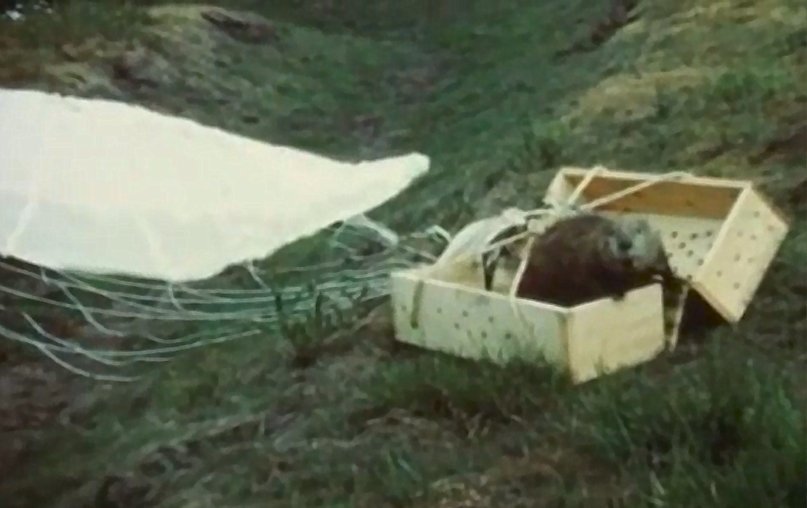
A film crew had captured the drops on camera in 1948. For decades, though, the footage was mishandled and misclassified in archives, effectively disappearing from view.
Then, in 2015, fish and game historian Sharon Clark stumbled upon the film. The Idaho State Historical Society digitized it and uploaded it to YouTube. Suddenly, grainy images of wooden crates drifting down over Idaho meadows were circulating worldwide.
Time magazine declared that the uploaded video had made beavers “the Internet’s latest favorite animal.” A long‑forgotten management tactic had become click‑worthy content in a digital age hungry for strange, true stories.

From News Stories to Merchandise
Local media joined in. In 2023, East Idaho News described the operation as an Idaho icon, noting its influence on locally made clothing adorned with parachuting beaver logos and even a children’s book that retold the animals’ journey.
Private businesses embraced the image, too. In 2022, the New Colony Beer Company of Boise changed its logo to a parachuting beaver, turning a mid‑century wildlife scheme into modern branding.
By 2025, the Boise Hawks baseball team announced a temporary rebrand as the “Boise Battle Beavers,” explicitly commemorating the old relocation project.
Memory vs. Practice
Despite its fame, the technique itself faded. By 2015, Idaho officials noted that the state still trapped and relocated beavers, but that it had been 50 years since any were moved by air. One manager suggested the simple reason: the program had accomplished what it set out to do, and there was no need to continue.
Yet in the public imagination, parachuting beavers never really landed. They live on in archived footage, retro magazine pages, beer cans, team jerseys, and social media shares.
Takeaway
The Beaver Drop began as a practical solution to a local problem. Over time, its delightful absurdity transformed it into folklore—a reminder that even the most serious work of managing nature can leave behind stories that are almost too strange to believe.