From War Gear to Wildlife Rescue
In 1948, Idaho’s conservation officials faced a puzzle: how do you drop a live, nervous beaver from an airplane and have it walk away unharmed?
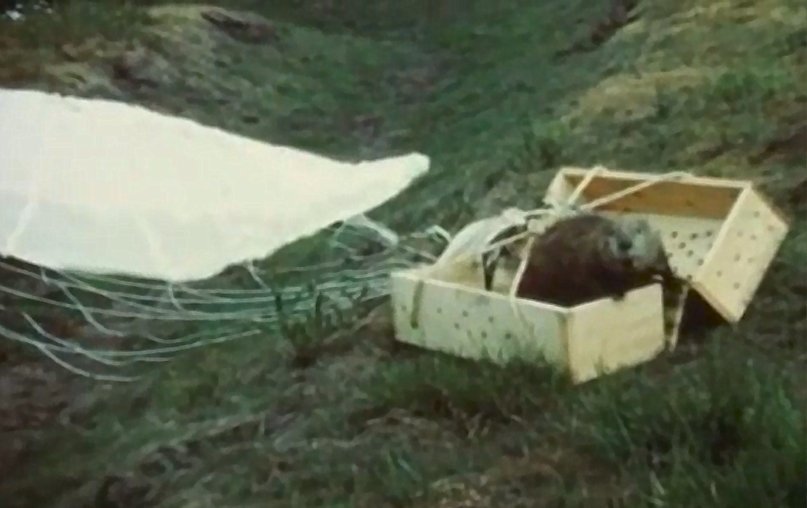
The answer came from an unexpected source—the leftovers of World War II. Idaho Department of Fish and Game employee Elmo W. Heter proposed using surplus military parachutes to fly beavers into the mountains, then lower them gently into their new homes.
But parachutes alone weren’t enough. The animals needed containers that would both restrain and protect them in midair, then let them go the instant they reached the ground.
The Spring-Loaded Beaver Box
Heter and his colleagues designed a wooden box that worked like a self-opening suitcase. Two halves, each with breathing holes, were hinged together. Once closed, they formed a compact crate that could cradle two beavers.
On the bottom, workers attached heavy 2‑inch elastic bands and stretched them 3 inches up the sides. These bands formed double springs that stored tension while the box was closed. Upon landing, that tension snapped the box open.
Ropes held the crate tightly shut while it fell. When the box hit the ground, impact released the ropes, the springs did their work, and the sides flipped open—freeing the animals without any human on hand.
The boxes were dropped from between 500 and 800 feet above the release sites, suspended under the repurposed parachutes.

Testing with “Geronimo”
No one wanted to learn from a midair disaster with a whole plane full of beavers. So the team tested their design on a single animal, a beaver nicknamed Geronimo.
Geronimo rode crate after crate down to earth as designers adjusted and refined the system. Each time, the box had to protect him from impact, avoid injury, and open properly so he could escape. Only when he proved the design reliable did they move ahead with mass relocation.
Packing the Passengers
Each finished box measured about 30 by 12 by 8 inches and carried two beavers. Conservation officials had learned from experience that younger animals adapted better, and that the ideal colony starter was a group of four: one male and three females.
Loaded into a twin‑engine Beechcraft alongside a pilot and conservation officer, the crates became airborne pioneers in a new kind of wildlife management.
Takeaway
Behind the whimsical image of parachuting beavers lay serious engineering: hinges, elastic springs, impact triggers, and careful animal handling. It was a tiny, custom-built delivery system—designed not for cargo or soldiers, but for some of Idaho’s most industrious rodents.