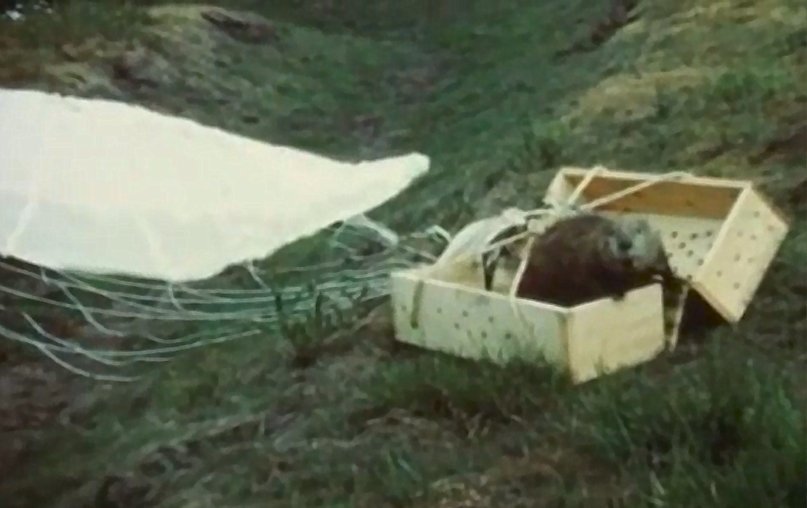
The Beaver Drop recounts Idaho’s astonishing 1948 experiment in wildlife management, when state officials solved a beaver–human conflict by flying 76 beavers into remote wilderness and dropping them by parachute, blending postwar improvisation, ecology, and enduring local legend.
6 topics
As Idaho’s people moved to the countryside after World War II, they collided with an old neighbor: the beaver, suddenly recast from wetland engineer to backyard menace.
Idaho officials crunched the numbers and discovered that a single beaver’s lifetime of dam-building was worth far more than the cost of moving it.
Before parachutes, beaver relocation meant exhausting journeys by truck and pack animal that often ended in stress, heat, and death for the animals.
Idaho’s wildlife officers turned leftover WWII parachutes and custom spring-loaded boxes into one of the strangest animal transport systems ever devised.
Over several August days in 1948, a twin-engine Beechcraft carried crate after crate of beavers into Idaho’s backcountry and dropped them toward a new life.
What began as a quirky field operation became a local legend, a viral video, and even a brewery logo, keeping Idaho’s parachuting beavers alive in popular culture.
DeepSwipe Stories About Beaver drop
Summarize another article
Enjoy bite-sized learning? Try DeepSwipe.