Takeoff Over McCall
On August 14, 1948, a twin‑engine Beechcraft lifted off from west‑central Idaho with an unusual payload. Instead of mail or passengers, the plane carried eight wooden crates, each packed with live beavers.
Beside the pilot sat a conservation officer, responsible for choosing drop points and watching the releases. Below them lay a patchwork of lakes, forests, and meadows stretching from the town of McCall and Payette Lake toward the remote Chamberlain Basin in central Idaho.
Their mission: relocate beavers that had worn out their welcome near people and give them a new start in country where their talents would be prized.
Target: Chamberlain Basin
Officials had chosen the Chamberlain Basin area in the Sawtooth Mountain Range as prime habitat. Broad meadows, flowing streams, and sparse human presence made it ideal for new colonies.
Conservation officers worked with the Idaho State Fur Supervisor to select exact drop sites. From the air, they looked for places where the animals would land near water and resources, yet far from hazards.

Choosing the Right Colonists
Experience had already taught them that not all beavers were equal candidates for relocation. Younger animals adjusted better to new surroundings, so they were favored.
Social structure mattered, too. Teams settled on moving animals in groups of four: one male and three females. This balance increased the odds that a stable, reproducing colony would form quickly after release.
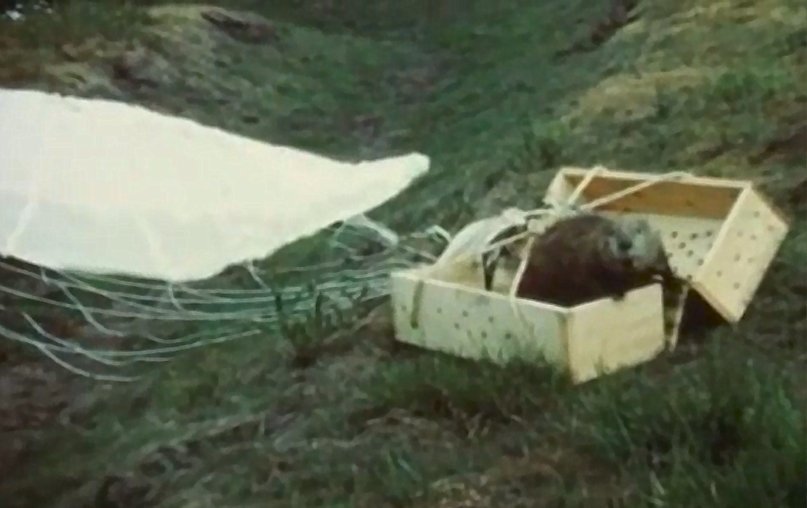
Two beavers went into each spring‑loaded box. Stacked in the plane, they waited while the aircraft climbed to drop altitude.
The Drop
From 500 to 800 feet above the ground, the crew shoved each crate out into the slipstream. Parachutes snapped open, and the boxes drifted down toward the chosen meadows.
Upon impact, the ropes gave way, elastic bands sprang, and the boxes burst open. Startled but alive, the beavers scrambled out into their new surroundings—far from the yards and shorelines that had triggered complaints.
Over the following days, the team repeated the flights until a total of 76 beavers had been delivered by air.
Survival and a Single Loss
The results were remarkable: 75 of the 76 beavers survived the operation. The lone casualty forced its way out of its box while still in the air and fell to its death.
A year later, in 1949, officials returned to check on their airborne emigrants. They found what they had hoped for: the beavers had built homes and settled into their new territories.
Takeaway
What sounds like a tall tale—a plane full of beavers dropping into mountain meadows—was, in 1948 Idaho, a carefully planned field operation. It succeeded well enough that beavers were soon shaping the high‑country waterways as if they had always been there.