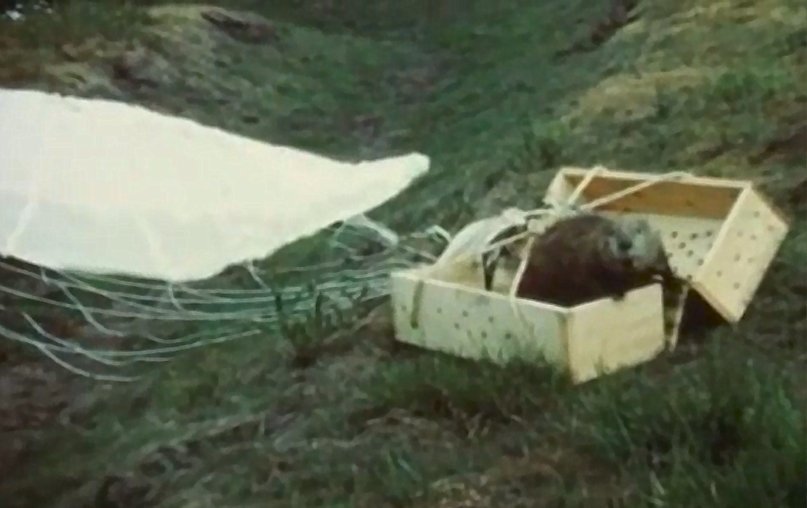
A Grueling Journey for an Unwilling Passenger
Long before anyone thought to strap a parachute to a beaver, wildlife officers in Idaho tried to move them the hard way—over land. The process was slow, complicated, and brutal on the animals.
It began with trapping. Trappers caught beavers around farms, towns, and lakes where complaints were piling up. The captured animals were then loaded onto trucks and driven to conservation officers. From there, they were trucked again, this time toward more remote release sites.
That was only the beginning.
Trucks, Mules, and Mountain Heat
Idaho’s best remaining beaver habitat lay in mountainous country that trucks couldn’t easily reach. So the final leg of the journey often fell to horses and mules.
Beavers, boxed or bound, were strapped to the pack animals and led up steep trails into the backcountry. Under sun and dust, with little shade or water, the animals overheated. They had no idea what was happening or why.
By the time they reached their new homes, many were already in poor condition.

Stress, Starvation, and High Mortality
The Idaho Department of Fish and Game later described this method as “arduous, prolonged, expensive, and [resulting] in high mortality.” Stress overwhelmed the animals. Many stopped eating. The longer the trip, the worse their chances.
This wasn’t just a welfare problem; it was a practical failure. If a large share of moved beavers died soon after arrival, the state was wasting money, time, and precious animals from an already diminished population.
A Problem in Search of a Better Idea
The landscape was working against them. To reach prime, unoccupied meadows and streams in central Idaho, people needed to cross rugged terrain that defied roads. The very isolation that made these areas ideal for beaver colonies made it nearly impossible to move beavers there safely by traditional means.
For Idaho’s wildlife managers, the dilemma was clear: they needed a way to relocate animals into remote high country without cooking or terrorizing them on the way. What they came up with next would be as unlikely as it was effective.
Takeaway
The sight of parachuting beavers is comical in hindsight, but it grew out of a serious problem. On the ground, traditional relocation was killing too many animals. The skies, strangely enough, offered them a better chance at survival.