Full article · 6 min read
Mutation and New Genes: How Evolution Gets New Raw Material
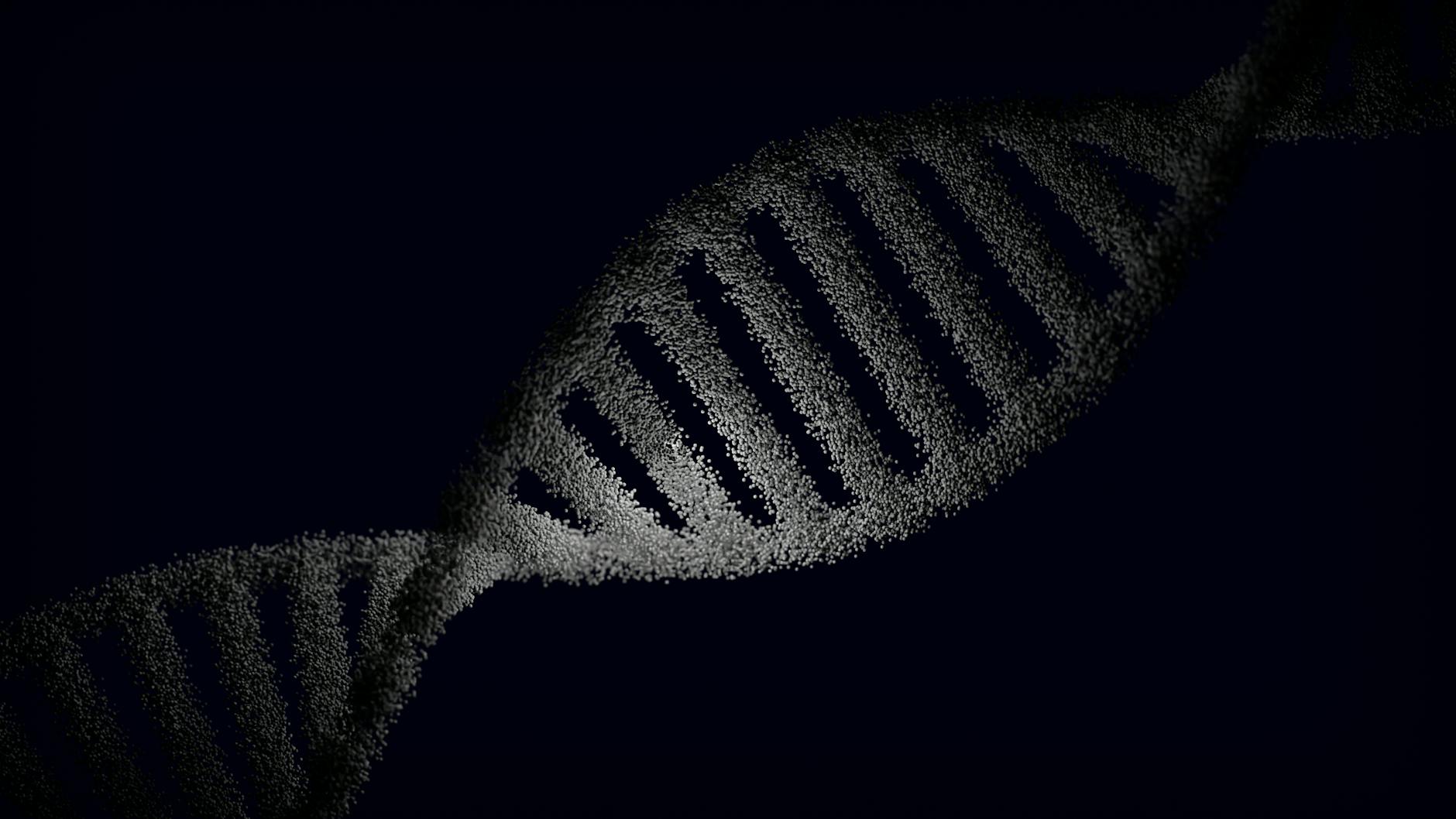
Mutation is one of the most important engines of evolutionary change. In the simplest terms, a mutation is a change in DNA, the molecule that carries genetic information. These changes matter because evolution can only work with variation. If every organism in a population were genetically identical, there would be nothing for natural selection, genetic drift, or other evolutionary processes to act on.
That is why mutations are often described as the raw material of evolution. They introduce new genetic differences into populations, and over generations those differences can become more common, disappear, or combine in surprising ways.
What a mutation actually changes
DNA stores information in sequences of bases, somewhat like letters in a sentence. Portions of DNA that specify a functional unit are called genes, and different versions of a gene are known as alleles. When a mutation changes a DNA sequence, it may create a new allele.
That change can have several different outcomes. A mutation may alter the product of a gene, prevent the gene from functioning, or have no noticeable effect at all. This helps explain why mutations are not automatic upgrades. They are simply changes. Whether a change is useful, harmful, or neutral depends on what it does and on the environment in which the organism lives.
In protein-coding regions of genes, about half of mutations are deleterious, while the other half are neutral. Only a small percentage in those regions provide a fitness benefit. In other parts of the genome, some mutations are harmful, but the vast majority are neutral, with only a few being beneficial.
Why most mutations are not “superpowers”
Popular culture often treats mutation like a shortcut to dramatic improvement. Real evolution is much less cinematic. Most mutations do not create amazing new abilities. Many do nothing noticeable, and many are harmful.
That makes sense when you consider that living organisms are already built from systems that function well enough to survive and reproduce. Randomly changing those systems is more likely to break something, or make no difference, than to improve it. Still, the rare beneficial mutations matter enormously over long spans of time. Evolution does not need every mutation to help. It only needs occasional useful variation for evolutionary forces to shape.
Gene duplication: when evolution gets a spare copy
One of the most powerful ways mutation contributes to novelty is through duplication. Sometimes large sections of a chromosome become duplicated, often through genetic recombination. This can create an extra copy of a gene.
That extra copy is important because it gives evolution breathing room. One copy can continue doing the original job, while the duplicate is freer to accumulate changes. If those later mutations give the duplicate a useful new function, a new gene can evolve without losing the old one.
This process helps explain where gene families come from. New genes often evolve within families of related genes that share common ancestors. A striking example is found in the human eye, which uses four genes to make light-sensing structures: three for colour vision and one for night vision. All four are descended from a single ancestral gene.
This is a key idea in evolutionary biology: novelty often does not appear from nowhere. Instead, evolution frequently modifies existing components, copies them, and gradually turns them into something different.
New genes from old genes — and even from noncoding DNA
A duplicate gene can change enough over time to acquire a new function. This route is especially plausible because the original copy still performs the old role, reducing the risk of losing something essential.
But duplication is not the only path. New genes can also arise from DNA that was previously noncoding, meaning DNA that did not previously specify proteins. This process is called de novo gene birth. It shows that the genome is not just a static library of old instructions. Under some circumstances, entirely new functional genes can emerge from sequences that were not formerly used that way.
This idea can seem surprising, but it fits the broader evolutionary picture: genomes change over time, and mutation can generate genuinely new possibilities, not just small edits to existing ones.
Evolution can also build new genes from reusable parts
Another route to novelty is exon shuffling. In this process, small parts of different genes are duplicated and recombined into new combinations. The result can be a gene with a new function assembled from pieces that previously existed elsewhere.
This works because some parts of proteins function a bit like modules. These domains can carry out relatively simple, somewhat independent tasks, and when they are rearranged into new combinations, they can produce proteins with new and more complex roles.
A vivid example is polyketide synthases, large enzymes that make antibiotics. They can contain up to 100 independent domains, each catalysing one step in the overall process, almost like stations on an assembly line. This modular structure shows how evolution can generate complexity by rearranging and combining parts that already work.
Small genetic changes can have big visible effects
Even when most of a species’ genome is very similar across individuals, small genetic differences can still have dramatic effects on appearance or function. Evolutionary developmental biology has shown that relatively small differences in genotype can lead to major differences in phenotype, the observable traits of an organism.
A simple example of mutation affecting visible traits comes from wild boar piglets. They normally have camouflage colouring with dark and light longitudinal stripes. Mutations in the melanocortin 1 receptor, or MC1R, can disrupt this pattern. Many pig breeds carry MC1R mutations that disrupt the wild-type colour, and different mutations can produce dominant black colouring.
This illustrates an important point: mutations are often tiny changes at the DNA level, but their effects on the organism can sometimes be very noticeable.
Mutation is only the beginning
Mutation creates variation, but it does not decide the final outcome on its own. Once new alleles exist, other evolutionary forces affect what happens next.
Natural selection tends to make traits associated with higher survival and reproduction more common over generations. Genetic drift can change allele frequencies by chance alone, especially in smaller populations. Gene flow can bring genetic variants in from other populations. Sexual reproduction and recombination can reshuffle alleles into new combinations.
So mutation supplies possibilities, but evolution is the larger process that sorts, spreads, combines, or removes those possibilities over time.
Why new genes matter so much
New genes expand what organisms can do. They can contribute to new structures, new biochemical pathways, new sensory abilities, or new ways of interacting with the environment. Evolutionary change is not just about tweaking old traits; it can also involve the origin of genuinely new functions.
This is why duplicated genes, de novo gene birth, and shuffled gene fragments are so significant. They help explain how biological innovation can arise while still following ordinary genetic mechanisms.
The broader history of life shows this repeatedly. Evolution does not usually invent from scratch in one dramatic leap. It modifies, copies, repurposes, and recombines. Over many generations, that process can produce the enormous diversity of life.
The big takeaway
Mutation is the starting point for genetic novelty. Most mutations are neutral or harmful, and only a small number are beneficial. But those rare useful changes, together with gene duplication and the rearranging of existing genetic parts, provide the raw material for new traits and even entirely new genes.
In other words, evolution’s creativity is not magic. It comes from changes in DNA, filtered and shaped over time.
Sources
Based on information from Evolution.
More like this
More about biology
More about science
Ready to mutate your mind in a good way? Download DeepSwipe and evolve your knowledge one swipe at a time.