Full article · 10 min read
Dutch East India Company: How the Richest Company Fell
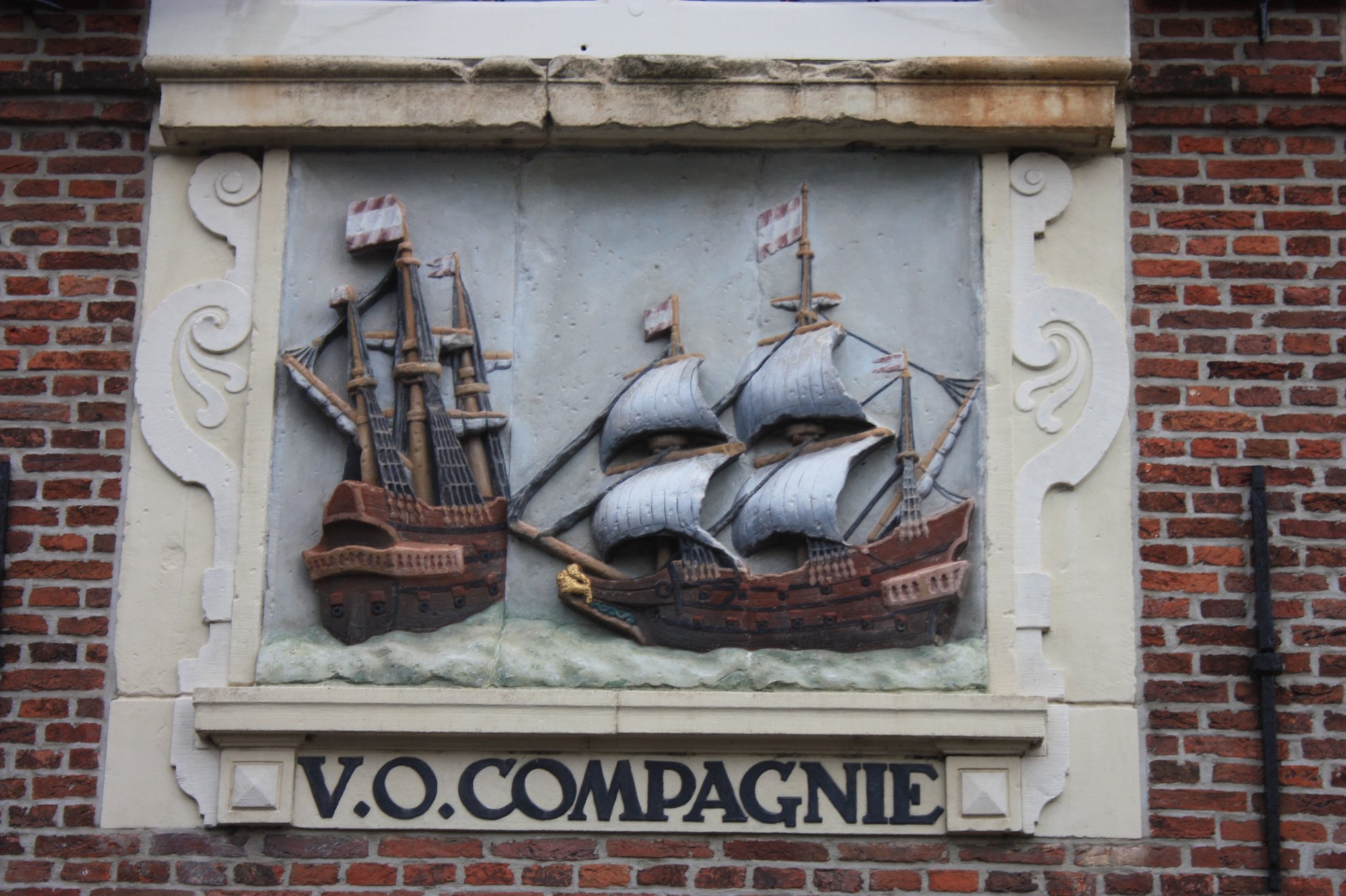
The Dutch East India Company, better known as the VOC, was once described as the richest private company the world had ever seen. At its height in 1669, it had more than 150 merchant ships, 40 warships, 50,000 employees, and a private army of 10,000 soldiers. That was not just a successful trading business. It was a corporate empire with military force, political power, and a reach that stretched across Asia and beyond.
Its rise was astonishing. Its fall was slower, messier, and in some ways more revealing. The VOC did not collapse because of one bad year or one unlucky war. It was gradually weakened by corruption, rising costs, military overreach, shrinking profitability, and a dangerous habit of acting stronger on paper than it really was.
A company that looked like a state
Founded in 1602, the VOC was created when the States General of the Netherlands merged existing trading ventures into a single chartered company. It received a 21-year monopoly on Dutch trade in Asia. A monopoly means it had the exclusive legal right to carry out that trade, shutting out domestic rivals.
What made the VOC unusual was not just its size, but its powers. It could wage war, negotiate treaties, strike its own coins, imprison and execute convicts, and establish colonies. In practice, that meant it operated like a hybrid of corporation and government.
It also became one of the first joint-stock companies in the world. Ordinary citizens of the Dutch Republic could buy shares, and those shares could later be sold in secondary markets, including the market that became the Amsterdam Stock Exchange. This helped make the VOC a powerful machine for pooling capital from many investors.
Why it became so wealthy
The company was built to profit from the spice trade, especially nutmeg, mace, and cloves. In the seventeenth century, the VOC was able for a time to monopolise these spices and sell them at prices far above what it paid in Indonesia. The profits were enormous.
Between 1602 and 1796, the VOC sent nearly a million Europeans to work in the Asia trade on 4,785 ships. It carried more than 2.5 million tonnes of Asian trade goods and slaves. Compared with its closest major rival, the English, later British, East India Company, the VOC handled far more traffic.
The company’s success was not limited to shipping spices directly to Europe. Under Governor-General Jan Pieterszoon Coen, the VOC developed an intra-Asiatic trade system, meaning it traded goods within Asia itself. This was crucial because European merchants often had little that Asian buyers wanted, apart from silver and gold. By trading across Asian markets, the VOC could generate profits inside the region and use those gains to support its spice trade with Europe.
From Batavia, the company traded widely. Silver and copper from Japan were exchanged with Mughal India and Qing China for silk, cotton, porcelain, and textiles. It gained control of key ports and outposts, including Batavia, Galle in Ceylon, and the Cape resupply station in southern Africa. It also maintained a trade post on Dejima, an artificial island off Nagasaki, which for more than two centuries was the only place where Europeans were permitted to trade with Japan.
That combination of monopoly power, long-distance logistics, military force, and investor capital made the VOC look unstoppable.
The dividend machine
Part of the VOC’s legend came from its payouts to shareholders. For almost 200 years, it paid annual dividends averaging about 18% of capital. A dividend is money paid to investors from a company’s profits or surplus.
That kind of payout helped create the impression that the VOC was a permanent wealth engine. Investors saw a company with ships, colonies, forts, armies, and global markets. It seemed too large and too entrenched to fail.
For a long time, the numbers supported the image. During its earlier “Golden Age” from 1630 to 1670, long-term average annual profit was around 2.1 million guilders, with just under half distributed as dividends and the rest reinvested. Investors remained confident for decades, and the share price stayed strong.
But a generous dividend can hide a problem as easily as it can signal strength.
The first cracks: changing trade and costly power
Around 1670, the VOC’s momentum began to stall. Two big pressures emerged.
First, its highly profitable trade with Japan started to decline. The loss of Formosa after Koxinga’s forces defeated the Dutch, along with turmoil in China, damaged the silk trade. Japanese restrictions on exports of silver and gold made the VOC’s position even weaker. By 1685, Japan was no longer the central pillar of the company’s intra-Asiatic trade.
Second, conflict with England disrupted business. The Third Anglo-Dutch War interrupted VOC trade with Europe and intensified competition in pepper. The English East India Company pushed hard into the market, triggering fierce rivalry. Although the VOC had deeper financial resources and could outlast some competitors, the broader trend was bad news: more European companies were now challenging Dutch dominance.
The company responded by trying to protect or expand monopolies through military means. That came at a price. Forts had to be maintained. Garrisons had to be supplied. Fleets had to be armed. Warships and armies do not generate profit on their own; they consume it.
The VOC had once thrived in a world where concentrated control over a few very profitable commodities could justify heavy force. But as the importance of those traditional commodities declined, the military spending increasingly looked like an expensive way to defend fading advantages.
Profitless growth
By the late seventeenth and early eighteenth centuries, the VOC began shifting into other goods such as tea, coffee, cotton, textiles, and sugar. This looked like adaptation, and in one sense it was. But these products brought lower profit margins than the classic spice monopoly.
A profit margin is the share of revenue left after costs. Lower margins mean a company must sell a lot more just to earn the same total profit.
The company expanded its fleet and financed much larger purchases of Asian goods for the European market. The size of the operation grew dramatically. Returning ship tonnage rose by 125% in one period of expansion. But revenues from goods sold in Europe rose by only 78%.
That mismatch tells the story. The VOC was moving more goods, but making less money on each unit. It was becoming bigger without becoming more profitable.
Historians of the company describe this era as one of “profitless growth.” Overheads such as military establishments and fleet maintenance remained high. Labour productivity did not rise enough to offset the pressure. Gross margins fell. The result was a decline in the return on invested capital.
In simpler terms, the VOC was still huge, but its size was becoming a burden rather than a shield.
Corruption, smuggling, and weak governance
The company’s internal culture made things worse. Corruption and smuggling steadily eroded performance. The VOC was plagued by what was described as venality among personnel, meaning corruption and failure to properly perform duties. Low salaries encouraged private trading, even though private-account trade was officially forbidden.
That private trade diverted opportunity away from the company itself. Employees could use company positions for personal enrichment, while the business carried the risks and costs.
Governance problems had appeared much earlier. In 1609, Isaac Le Maire, one of the earliest major shareholders, complained about poor corporate governance and petitioned for liquidation of the company according to standard business practice. In 1622, VOC investors staged what is considered the first recorded shareholder revolt, demanding proper financial auditing and accusing management of secrecy and self-enrichment.
These episodes show something important: the VOC was not just an early global giant. It was also an early example of the tensions between managers and shareholders in a public company.
The deadly human cost behind the numbers
The company’s decline cannot be understood purely as a balance-sheet story. The VOC also faced extremely high mortality and morbidity among employees. Morbidity means the rate of illness. Shipwrecks, scurvy, dysentery, clashes with pirates, and conflicts with rival trading companies took a devastating toll.
About one million seamen and craftsmen departed from Holland between 1602 and 1795, but only 340,000 returned. The company effectively consumed thousands of lives each year.
The VOC’s history also included exploitation, slave trade, colonial violence, and harsh monopoly enforcement. In the Banda Islands, Dutch actions tied to the nutmeg monopoly devastated Bandanese society. The company also relied on slave labour in parts of its empire, including at the Cape. These actions formed part of the structure that built VOC wealth, even as they exposed the brutality behind its commercial system.
The dividend illusion
One of the most damaging habits in the VOC’s later years was continuing to pay investors too much.
After 1730, profits declined sharply. Yet the company did not reduce dividends enough to match reality. In many decades, the dividends paid out exceeded earnings. To keep the system going, resources in Asia were drawn down and liquid capital in Europe was reduced. The company increasingly relied on short-term financing backed by expected revenues from returning fleets.
This is the kind of financial behaviour that can make a business look stable long after its foundations have weakened. Investors still see payouts. Managers avoid panic. But the company is no longer funding dividends from strength. It is funding them by consuming its own resilience.
That made the VOC more fragile just as geopolitical shocks were becoming more dangerous.
The war that broke it
In 1780, the Fourth Anglo-Dutch War began. British attacks on Dutch shipping and the VOC badly damaged the company’s fleet, cutting it by half and severely weakening its position in Asia.
The financial hit was catastrophic. The VOC suffered damages of up to 43 million guilders. Loans taken out to keep the company functioning reduced its net assets to zero.
This war did not create every weakness inside the VOC. Smuggling, corruption, high costs, administrative inefficiency, declining margins, and overpaid dividends were already there. But the war turned a weakened giant into a broken one.
After the war ended in 1783, financial problems deepened. Reorganisation attempts failed. In 1796, the old board of directors was removed and management was handed to a committee for East India trade and possessions. The broader political upheaval in Europe then sealed the company’s fate. After the fall of the Dutch Republic and the rise of the Batavian Republic, continued conflict with Britain brought more losses.
The VOC’s charter was ultimately allowed to expire on 31 December 1799. Its debts and possessions were taken over by the state.
Why the fall still matters
The VOC is often remembered for how rich it became. But its ending may be even more important than its peak.
This was a company with a monopoly, military power, global trade networks, famous branding, public shareholders, and vast administrative reach. It could wage war and build colonies. It looked invincible. Yet it was worn down over time by a pattern that feels strangely familiar: expansion into lower-margin business, rising fixed costs, weak oversight, corruption, financial engineering through unsustainable payouts, and the assumption that scale alone could guarantee survival.
The VOC did not disappear in one dramatic instant. It decayed from the inside and then was shattered by external conflict. That is what makes its story so compelling. One of history’s mightiest companies fell not because it stopped being large, but because largeness stopped meaning strength.
Sources
Based on information from Dutch East India Company.
More like this
More about business
More about history
More about war
Empires can crumble, but your curiosity doesn’t have to — download DeepSwipe and trade a few swipes for a world of knowledge.


