Full article · 9 min read
Dutch East India Company: When a Business Ruled Like a State
A trading company with the powers of a government
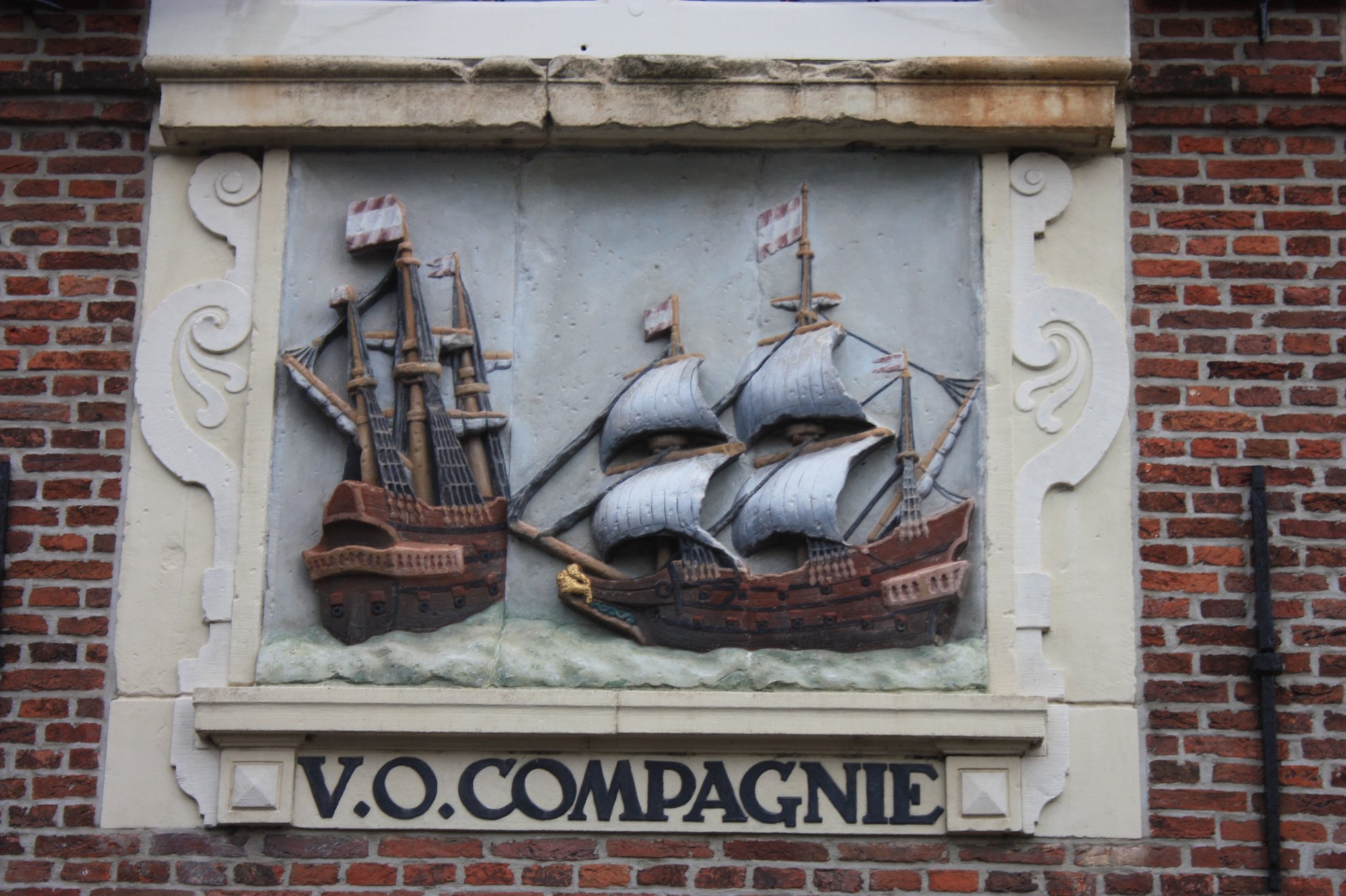
The Dutch East India Company, better known as the VOC, was one of the strangest and most powerful business organizations in history. Founded in 1602, it was created as a chartered trading company, but it did far more than buy and sell goods. It received a 21-year monopoly to conduct Dutch trade in Asia, and it was granted powers that normally belong to states.
The company could wage war, negotiate treaties, build forts, strike its own coins, establish colonies, and even imprison and execute convicts. That meant the VOC operated as both a business and a political force. In practice, it could behave like a private empire.
This combination is what makes the VOC so fascinating. On one hand, it helped shape modern finance and long-distance trade. On the other, it showed how dangerous a company can become when profit, military power, and colonial rule are fused together.
One of the first joint-stock companies
A key reason the VOC became so powerful was its structure. It was one of the first joint-stock companies in the world. A joint-stock company is a business owned by many investors who buy shares, or small ownership stakes. Instead of relying on one merchant or one family to fund a voyage, the VOC pooled money from many people.
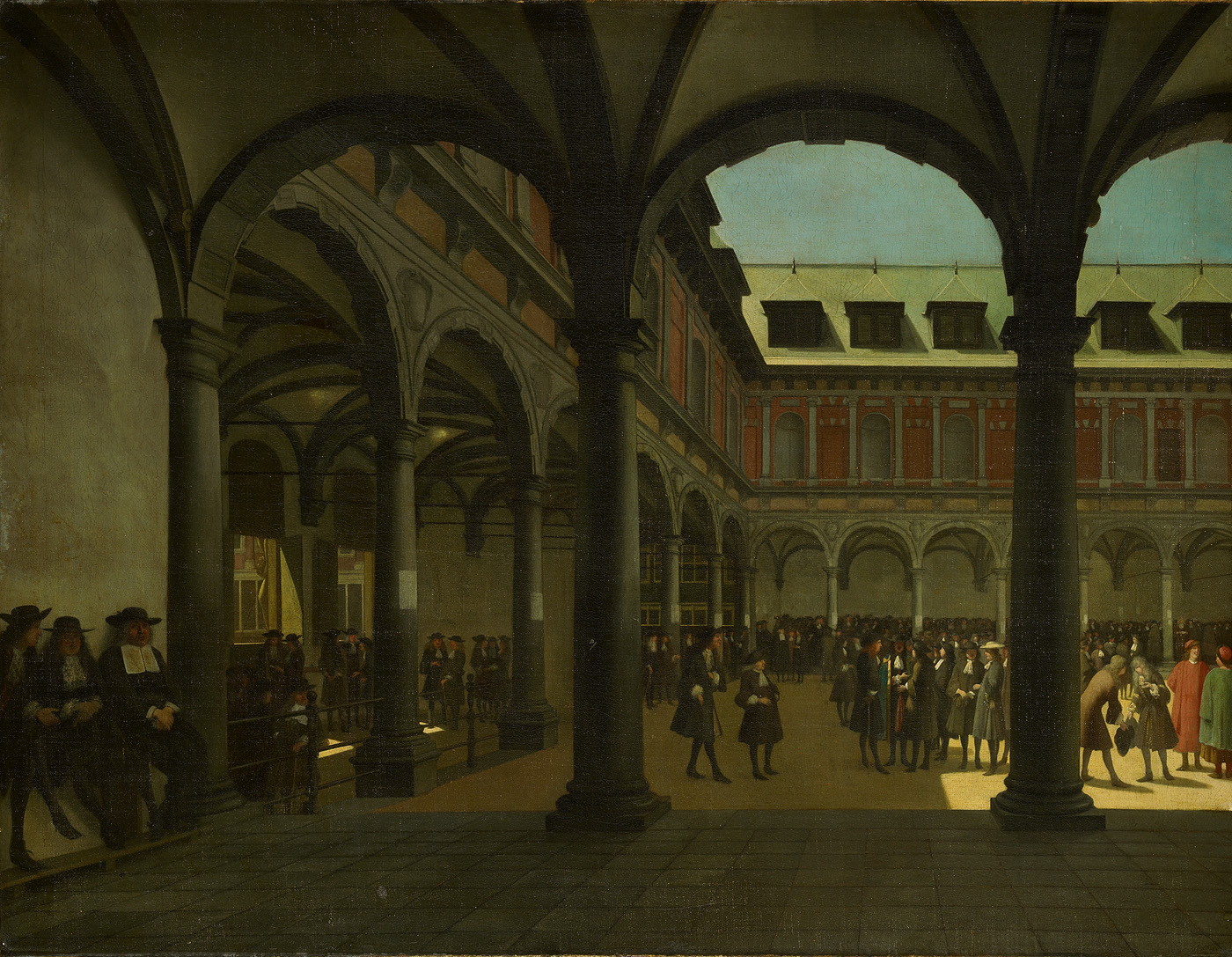
Any citizen of the Dutch Republic could purchase shares, and those shares could be bought and sold in open-air secondary markets. One of those markets developed into the Amsterdam Stock Exchange. That made the VOC important not just in imperial history, but in the history of capitalism, investing, and financial markets.
The company also had a relatively modern-looking legal structure. Investors who wanted to cash out did not force the company to shut down. They could simply sell their shares to someone else. This permanent capital helped the VOC fund forts, armies, ships, warehouses, and trading posts across vast distances.
The scale of its fundraising was enormous for the time. Its starting capital was 6,440,200 guilders. The company was organized into six chambers based in Dutch port cities including Amsterdam, Delft, Rotterdam, Enkhuizen, Middelburg, and Hoorn. Above them sat the Heeren XVII, or Gentlemen Seventeen, a governing body of major shareholders and directors.
Built for risk, profit, and monopoly
Before the VOC, many trading ventures were financed voyage by voyage. That was risky, because piracy, disease, shipwreck, and fluctuating spice prices could wipe out profits. The VOC offered a different model: one large, semi-permanent company that could spread risk across many voyages and use monopoly power to control prices.
Its earliest goal was the spice trade, especially in the Maluku Islands, also known as the Moluccas or the Spice Islands. The company became especially powerful in nutmeg, mace, and cloves. In the seventeenth century, it was able for a time to monopolize these goods and sell them at prices far above what it paid in Indonesia.
That brought huge profits. For much of the 1600s, the VOC enjoyed the rewards of its spice monopoly. It also paid annual dividends that averaged about 18% of capital over almost two centuries, a remarkable figure that helps explain why investors remained interested.
But monopoly did not simply mean smart business strategy. It often meant coercion. The VOC forced prices paid to local producers down to low levels, and its efforts to preserve control over supply could be brutal.
Batavia: the company’s imperial headquarters
The VOC gradually transformed itself from a trading operation into a territorial power. In 1619, Jan Pieterszoon Coen led a force of nineteen ships against Jayakarta. After driving out opposing forces, he established Batavia on the site. Batavia, now Jakarta, became the company’s headquarters in Asia.
From there, the VOC coordinated a network stretching from Africa to India, Southeast Asia, China, and Japan. Batavia was not just a port. It was an administrative center from which the company gathered information, directed military action, and controlled trade routes.
The company also appointed a governor-general to oversee its Asian operations, supported by a Council of the Indies. This made the VOC look even more like a state. It had administrators, military forces, strategic ports, and long-term plans for controlling territory and commerce.
Bigger than its rivals
The numbers behind the VOC are staggering. Between 1602 and 1796, it sent nearly a million Europeans to work in the Asia trade on 4,785 ships. It carried more than 2.5 million tonnes of Asian trade goods and enslaved people.
Compared with the rest of Europe, the VOC was enormous. Between 1500 and 1795, all the other European powers combined sent fewer people to Asia than the VOC alone did in its own period of activity. Even its nearest major competitor, the English later British East India Company, lagged far behind in total ship traffic and tonnage.
By 1669, the VOC was described as the richest private company the world had ever seen. It had more than 150 merchant ships, 40 warships, 50,000 employees, and a private army of 10,000 soldiers. That is a striking reminder that this was not a normal firm. It had the workforce, fleet, and armed muscle of a major political power.
Trade backed by force
The VOC’s leaders openly linked commerce and violence. The company’s rights to fight wars and build forts were not accidental extras. They were central to the business model.
In some places, the company used alliances and treaties. In others, it used sieges, conquest, and punitive expeditions. It seized Portuguese ships, fought with rival European powers, and battled Asian states and local rulers.
Its record includes repeated warfare: conflicts with the Portuguese, clashes with the English in the spice trade, defeats at the hands of Chinese forces over the Penghu islands and later at Liaoluo Bay, military setbacks against the Vietnamese Nguyen lords, and defeat by Travancore at the Battle of Colachel in 1741.
This matters because it reveals the real mechanism of VOC success. Trade was not just protected by force from time to time. Force was built into the system. A private company used military power to defend monopolies, secure ports, and impose commercial terms.
The Banda Islands and the dark side of monopoly
Nowhere is the violent side of the VOC more visible than in the Banda Islands. These islands were central to the nutmeg trade, and the company was determined to control it.
Between 1609 and 1621, after resistance to the VOC’s nutmeg monopoly, Dutch campaigns devastated Bandanese society. During the invasion of Lontor in 1621, 2,800 Bandanese were killed, mostly from famine, and 1,700 were enslaved. Before the conquest, the population of the islands was estimated at 15,000. It is estimated that around 14,000 people were killed, enslaved, or fled, leaving only about 1,000 Bandanese on the islands.
Those who remained were spread through nutmeg groves as forced labourers. Slaves were then imported to sustain production. This was monopoly not as an abstract market concept, but as a system enforced through killing, expulsion, enslavement, and demographic destruction.
The company also used tactics such as burning spice trees to reduce supply and force local populations to grow different crops. That let the VOC artificially manage the spice market to protect profits.
A multinational corporation before the modern age
The VOC is often described as the world’s first multinational corporation, and it is easy to see why. It operated across many regions, employed people from different continents, and coordinated a complex web of shipping, warehousing, administration, and trade.
Its workers included not only people from the Netherlands, but also many from Germany and other parts of Europe, as well as Asian and Eurasian employees. In Asia, personnel could include sailors, soldiers, carpenters, smiths, writers, and unskilled laborers. At its height, the company had 25,000 employees working in Asia and 11,000 more en route.
It also built a system of intra-Asian trade. Rather than only carrying spices back to Europe, the VOC moved silver, copper, silk, cotton, textiles, porcelain, tea, coffee, and sugar around Asian markets and into Europe. This broad commercial network helped it operate on a truly international scale.
Early capitalism, early shareholders, early corporate conflict
The VOC was also a landmark in the history of investing. Its shares were publicly tradable, and disputes among investors helped create some of the earliest known examples of shareholder activism.
Isaac Le Maire, a major shareholder, complained in 1609 about poor corporate governance. Corporate governance means the way a company is directed and controlled: who makes decisions, how transparent management is, and whether executives act in the interests of investors. Le Maire petitioned for liquidation of the company and accused its leadership of misusing money.
In 1622, another shareholder revolt demanded a proper financial audit. Investors complained about secrecy and self-enrichment by management. These episodes show that some very modern business problems were already visible centuries ago: conflicts of interest, lack of transparency, and concern over how executives use shareholder capital.
Enormous wealth, then decline
For a long time, the VOC looked unstoppable. But after 1730, its fortunes began to decline. Several factors weakened the company: shrinking intra-Asian trade, inefficient organization centered on Batavia, corruption among employees, high mortality and illness, and a dividend policy that became financially damaging.
Its personnel were plagued by corruption and low salaries. Mortality was extraordinarily high due to shipwrecks, illnesses such as scurvy and dysentery, and violent clashes. About one million seamen and craftsmen departed from Holland between 1602 and 1795, but only 340,000 returned.
The company also struggled to adapt as the trade in spices became less dominant and competition increased. It diversified into tea, coffee, cotton, textiles, and sugar, but those markets had lower profit margins and more competition. The VOC was growing in scale, but not with the same level of profitability.
The final blow came in the late eighteenth century. The Fourth Anglo-Dutch War badly damaged the company, reducing its fleet by half and worsening its finances. British attacks hit its shipping and colonies hard. Though the VOC still had immense assets in 1780, loans and wartime losses eventually hollowed it out.
After failed efforts to reorganize it, the company’s management was taken over in 1796. Its charter was finally allowed to expire on 31 December 1799, and its possessions and debts were taken over by the Dutch Batavian Republic.
Why the VOC still matters
The Dutch East India Company remains one of history’s clearest examples of how modern-looking business tools can combine with old-fashioned coercion. It pioneered share trading, permanent capital, and multinational operations. It helped shape stock markets and corporate organization.
But it also showed the dangers of giving a profit-seeking enterprise the powers of a state. The VOC’s story includes monopoly, colonial rule, forced labour, slave trading, war, massacre, and exploitation on a massive scale.
That is why the VOC feels so modern and so unsettling at the same time. It looked like capitalism in one of its earliest large-scale forms, yet it also ruled territory, commanded soldiers, and reshaped societies through violence. It was not merely a business that traded around the world. For long stretches of its history, it behaved like a sovereign power with shareholders.
Sources
Based on information from Dutch East India Company.
More like this
More about business
More about history
More about war
Swipe through the rise and fall of empires without boarding a VOC warship — download DeepSwipe and conquer a new idea every day.


