Full article · 8 min read
From Local Gods to Global Deities
Religious history is full of surprising expansions. A deity might begin with a small geographic sphere, tied to one landscape, one people, or one ritual tradition, and later become known far beyond its original home. Over time, local gods can be adopted, blended with other divine figures, and elevated into wider regional or even universal importance.
This pattern helps explain how ancient religions changed as cultures traded, migrated, fought wars, and built empires. It also shows that the story of a god is not always fixed from the beginning. Sometimes a deity starts small and ends up everywhere.
What is a local deity?
A local deity is a god whose influence is originally connected to a specific place. That place might be a city, a valley, a mountain, or a broader region. In many ancient cultures, divine power was not imagined as evenly distributed across the whole world. Instead, particular gods were linked to particular communities and landscapes.
A deity, in general, is a supernatural being considered to have authority over some aspect of the universe or life. Different religions imagine deities in very different ways. Some traditions focus on one god, others on many. Some see deities as immortal rulers, while others describe them as beings who can die, be reborn, or change status. Because of this variety, the movement from local to universal can happen in more than one way.
In practice, a god’s rise often depends less on abstract theology and more on human history: politics, trade, conquest, cultural mixing, and worship habits.
Pan: a classic case of a god spreading outward
One of the clearest examples is Pan in the ancient Greek world. Pan began as a local Arcadian deity. Arcadia was a region of ancient Greece, and Pan’s earliest sphere was tied to that setting rather than all of Greece at once.
Pan is described as a local deity whose influence spread. That simple fact captures an important religious process. A god does not need to be born universal. Influence can travel. A deity associated with one place can become known in many places if stories, rituals, and worship move with people.
The Greek world was especially fertile ground for this kind of spread. Greek religion was polytheistic, meaning it involved the worship of many gods and goddesses. It had no centralized church and no single sacred text controlling every local tradition. That allowed regional variation to survive while also letting certain deities become widely shared.
The Greeks worshipped major panhellenic deities, meaning gods recognized across the Greek world, but they also honored local figures. Pan belonged to that second category at first. His expansion shows how a deity could move from regional devotion into wider recognition without losing traces of local identity.
How gods travel: adoption and syncretism
A major engine behind the spread of deities is syncretism. Syncretism means blending different gods, symbols, or religious traditions into new combinations. This often happens when cultures come into close contact.
Ancient empires were especially powerful machines of syncretism. When rulers governed many peoples with different languages and customs, they often adopted foreign deities, identified them with familiar gods, or allowed multiple traditions to coexist. This did more than keep the peace. It could reshape the divine map of the world.
The Roman Empire is one of the strongest examples.
Rome’s remix of the divine world
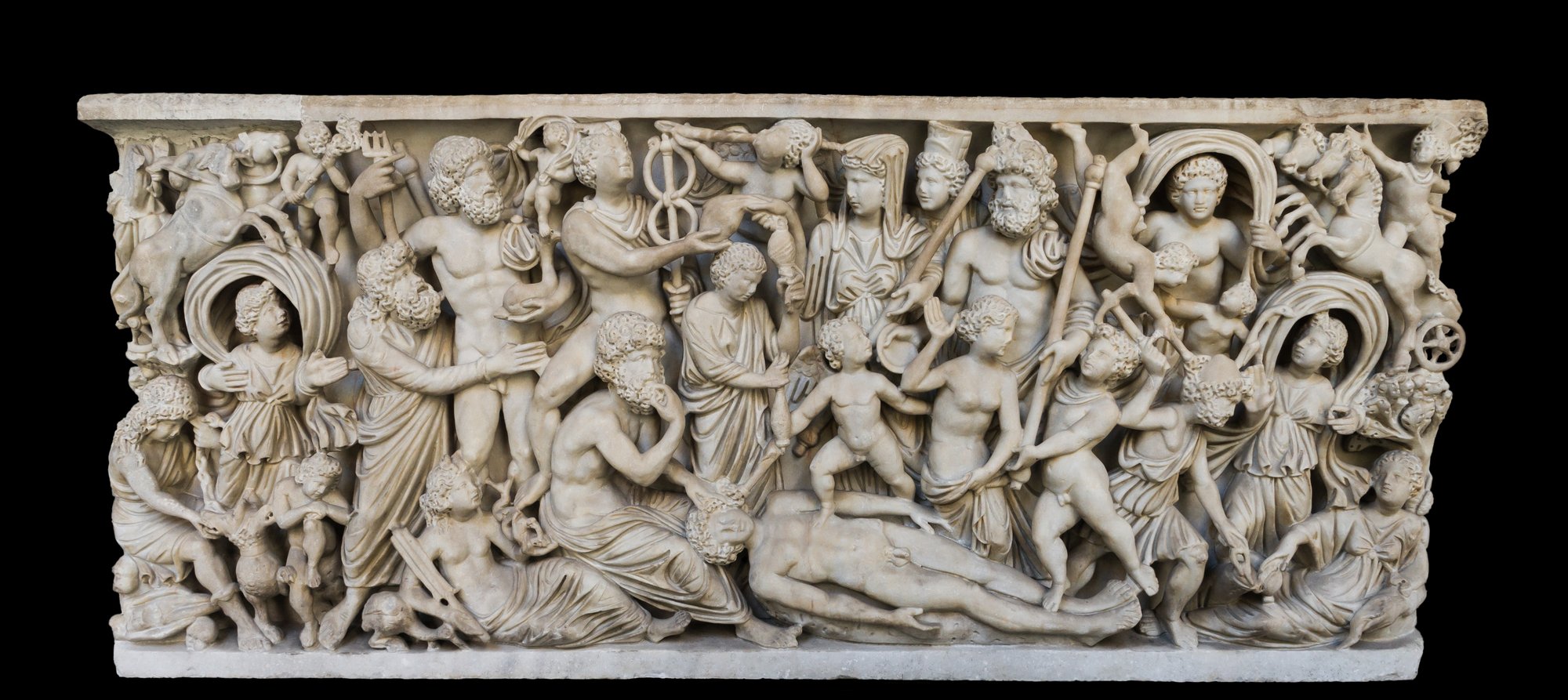
The Romans adopted many regional deities from places such as Greece, Asia, and Egypt while building a multi-ethnic polity. A polity is an organized political community, especially one made up of many peoples under a shared system of rule.
This adoption was not random collecting. It was part of how Roman religion and Roman power worked. Roman religion included numerous deities, both Greek and non-Greek. Some were inherited, some were reshaped, and some were borrowed for political reasons from neighboring trade centers or powerful cultures.
Among the regional deities associated with Roman adoption were Apollo from Greece, Cybele and Mithras from Asia, and Isis and Serapis from Egypt. Roman authorities did not simply import names. They also syncretised features of these deities, blending traditions and helping foreign gods fit into Roman religious life.
That matters because once a deity entered the Roman world, its reach could increase dramatically. Rome connected vast territories. Roads, military camps, ports, cities, and festivals gave religious ideas room to spread. A god that had once belonged mainly to one region could now appear in many provinces.
This is what makes the Roman case so fascinating: empire did not just conquer land, it reorganized sacred geography.
Why empires helped local gods go global
When an empire rules over many ethnic groups, it faces a challenge: how do you govern people who worship differently? One answer is suppression, but another is incorporation. Incorporation means taking local traditions seriously enough to include them within a larger imperial framework.
The Roman world shows this clearly. By adopting and spreading non-Roman deities, Roman authorities and communities helped turn regional cults into wider religious forces. A cult, in this context, means an organized pattern of worship devoted to a particular deity.
This process did not erase local identity overnight. A deity might still retain older traits, symbols, myths, or sacred sites. But the scale changed. A once-local god could now be worshipped far from its original homeland.
In some cases, adoption also transformed the god itself. New worshippers brought new expectations. Priests, poets, rulers, and ordinary devotees all helped reinterpret who the deity was and what kind of power it held.
From tribal god to supreme god
One of the most dramatic examples of divine expansion is Yahweh.
Roman authorities eventually favored Yahweh, who was first associated with a mountain in northwestern Arabia before becoming a tribal deity of the peripatetic Hebrews and eventually the supreme god of Christianity.
That timeline is striking because it shows multiple stages of religious growth. First comes a geographically linked origin. Then comes association with a particular people. Finally comes elevation into a universal role within a major monotheistic religion.
A tribal deity is a god specially associated with one people or community. The Hebrews are described here as peripatetic, meaning mobile or moving from place to place rather than permanently settled in one location. In that setting, a deity’s identity can become closely tied to collective memory, migration, survival, and group identity.
Later, that same deity can be reinterpreted on a much larger scale. In Christianity, which is monotheistic, God is understood as the one deity. Mainstream Christian belief accepts the Holy Trinity, composed of God the Father, God the Son, and the Holy Spirit, while maintaining monotheism. Within that broad religious world, Yahweh becomes identified with the supreme god of Christianity.
This is an enormous leap in scope: from place, to people, to universal supremacy.
Not every god is universal in the same way
It is tempting to imagine a straight ladder from “small local god” to “global god,” but religious history is usually messier. Some local deities spread widely but remain one god among many. Others merge with similar divine figures. Others are absorbed into systems where they lose independent status.
The ancient Levant gives a useful glimpse into this complexity. The Canaanites were polytheists who worshipped a pantheon, with El as chief god. Over time, El became syncretized with Yahweh, and Yahweh took over El’s role as head of the pantheon. In the later history of Judah, monolatry took shape, meaning that many deities were considered to exist, but only one was viewed as fit for worship. Eventually, some Judahites taught that other deities did not exist at all.
This shows that “becoming supreme” can involve rivalry, reclassification, and theological consolidation. It is not just popularity. It is also a reordering of what counts as divine reality.
Universal gods and cultural memory
Even when a deity becomes universal, traces of local origin often remain. Sacred mountains, old titles, inherited symbols, and older myths can survive inside newer religions. Religious expansion often layers new meanings on top of older traditions rather than wiping them away completely.
The Roman case again illustrates this. The empire spread worship, adopted deities, and blended traditions, but those gods still carried marks of Greece, Asia, Egypt, and other regions. In that sense, a “global” deity can still preserve a memory of its homeland.
This layered history is one reason the study of deities is so compelling. Gods are not only theological ideas. They are also records of human contact. They reflect migration, empire, borrowing, reinterpretation, and the constant reshaping of identity.
The big picture
From Pan in Arcadia to the Roman adoption of Apollo, Cybele, Mithras, Isis, and Serapis, and from the rise of Yahweh from regional association to supreme status in Christianity, the story is clear: deities can travel very far from where they began.
Some spread through cultural admiration. Some through trade. Some through conquest. Some through syncretism. Some through the transformation of an ethnic or tribal god into the sole deity of a monotheistic faith.
What starts as local does not always stay local. In religious history, small gods can end up with astonishing reach.
Sources
Based on information from Deity.
More like this
From Arcadia to empire, gods traveled far — take your curiosity on the same journey with DeepSwipe.