
Full article · 7 min read
Communication: The Hidden Power of Non-Verbal Signals
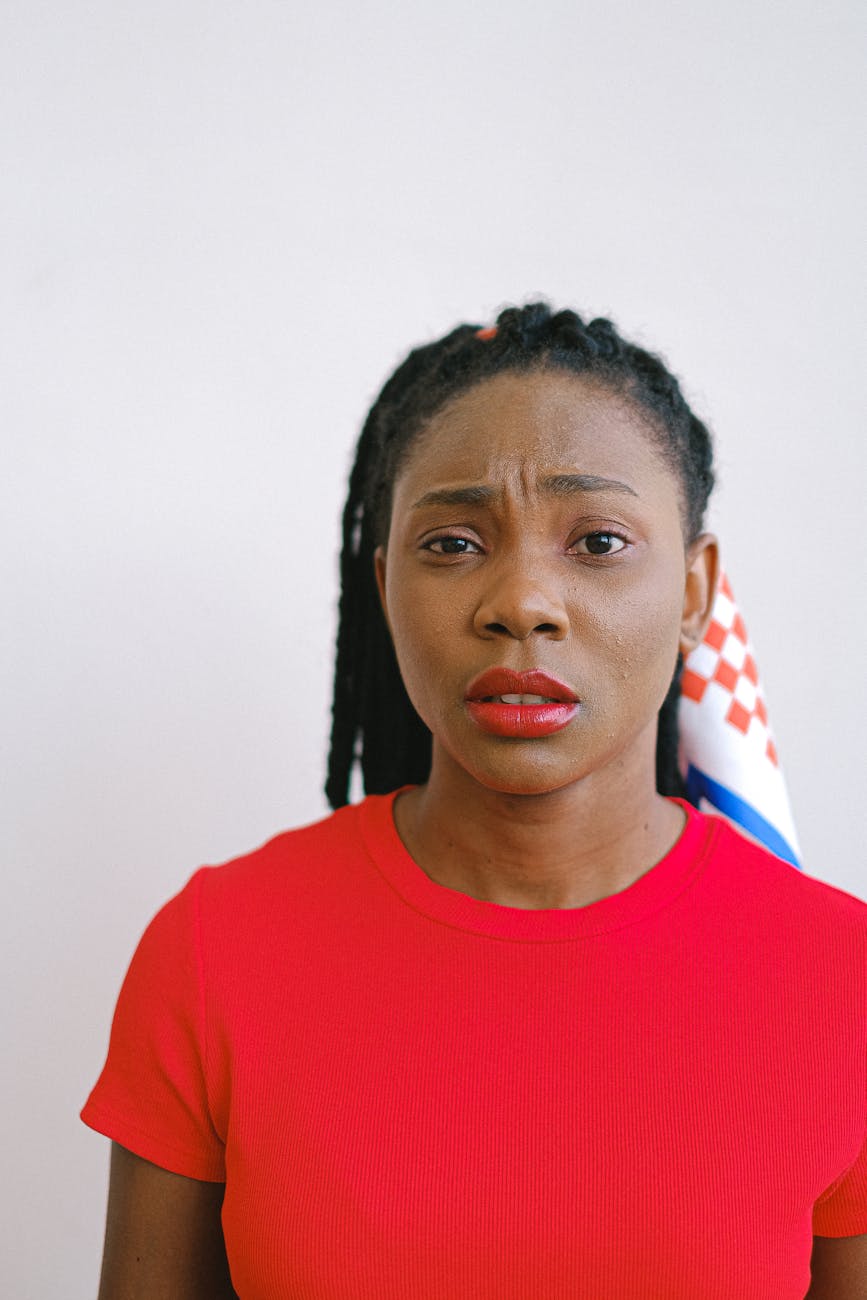
When people think about communication, they usually think about words. But in everyday life, words are only part of the picture. Human communication includes both verbal communication, which uses language, and non-verbal communication, which works without a linguistic system. That means a message can be carried not only by speech, writing, or sign language, but also by facial expressions, gestures, posture, touch, timing, and even physical appearance.
This helps explain why a conversation can feel warm, cold, tense, awkward, honest, or fake before much is even said. Non-verbal communication often gives information about emotions, attitudes, personality, interpersonal relations, and private thoughts. It can support what someone says, but it can also quietly undermine it.
Why non-verbal communication matters so much
Non-verbal communication is the exchange of information through non-linguistic modes. Common examples include facial expressions, gestures, and postures. But not every non-verbal behavior automatically counts as communication. Some theorists argue that it depends on whether there is a socially shared coding system that lets other people interpret the behavior.
What makes non-verbal communication so powerful is how often it happens without conscious effort. People may sweat, blush, shift their posture, or change their gaze without intending to send a message. Even so, others often read these signals and form impressions from them. At the same time, non-verbal communication can also be deliberate, as when someone shakes hands, raises a thumb, or uses touch to express care or affection.
Much of the time, non-verbal communication happens simultaneously with verbal communication. A person may speak while also smiling, frowning, leaning away, avoiding eye contact, or changing their tone of voice. These extra signals help optimize communication by emphasizing a point, illustrating it, or adding more information.
When the body agrees with the mouth—and when it does not
One reason non-verbal signals are so important is that they can clarify the intent behind words. If someone says “I’m glad to see you” with an open posture, friendly expression, and warm tone, the overall message feels clear and consistent. Using multiple modes in this way can make communication more effective.
But consistency is not guaranteed. Different channels can send conflicting messages. Someone may verbally agree while pressing their lips together, signaling disagreement non-verbally. This is one reason conversations can feel confusing: the spoken message points one way, while the non-verbal message points another.
In face-to-face communication, this layered signaling happens constantly. A listener may not interrupt with words, yet still give feedback through posture and facial expression while the other person is talking. This kind of feedback is one reason some models of communication moved beyond one-way transmission and treated communication as a more interactive or transactional process.
The many forms of non-verbal communication
Non-verbal communication is much broader than facial expressions alone. Researchers describe many forms, including kinesics, proxemics, haptics, paralanguage, chronemics, and physical appearance.
Kinesics: body language in motion
Kinesics studies bodily behavior in communication. It is often called body language, though it is not literally a language in the same sense as English or Japanese. It includes gestures, postures, walking styles, and dance.
Facial expressions are a major part of kinesics. Laughing, smiling, and frowning are all expressive and flexible forms of communication. Another part of kinesics is oculesics, which concerns the eyes. It includes eye contact, gaze, blink rate, and pupil dilation.
Some kinesic patterns are inborn and involuntary, such as blinking. Others are learned and voluntary, such as giving a military salute. This mix of automatic and intentional behavior is part of what makes non-verbal communication so rich and sometimes hard to control.
Proxemics: what personal space says
Proxemics is the study of how personal space is used in communication. The distance between people can reflect how familiar or intimate they are with each other, as well as their social status.
Standing close may suggest warmth, trust, or closeness. Keeping more distance may indicate formality or unfamiliarity. Because these signals can be read quickly, space itself becomes part of the message.
Haptics: communication through touch
Haptics examines how touch conveys information. This includes handshakes, holding hands, kissing, or slapping. Touch can communicate care, concern, anger, violence, equality, fairness, affection, or erotic closeness.
A handshake, for example, is often seen as a symbol of equality and fairness. Refusing to shake hands can signal aggressiveness. Touch is simple on the surface, but socially loaded in practice.
Paralanguage: not what you say, but how you say it
Paralanguage, also called vocalics, includes the non-verbal elements in speech. It is about how words are expressed rather than which words are used. This includes articulation, lip control, rhythm, intensity, pitch, fluency, and loudness.
The same sentence can mean very different things depending on whether it is whispered or said loudly in a high pitch. Paralanguage often communicates feelings and emotions that the speaker does not explicitly put into words.
It also extends beyond spoken language in some cases, including features of written language such as colors, fonts, and spatial arrangement in paragraphs and tables.
Chronemics: the meaning of time
Chronemics concerns the use of time in communication. Being on time or late for a meeting can send a message. Timing is easy to overlook because it does not feel like a signal in the same way as a smile or a wave, yet it can shape how others interpret respect, urgency, or commitment.
Physical appearance and first impressions
Physical appearance also carries information. Height, weight, hair, skin color, gender, clothing, tattooing, and piercing can all influence how someone is perceived. Appearance is especially important in first impressions.
At the same time, appearance is more limited as a mode of communication because it is less changeable than gestures, expressions, or tone of voice. Even so, it remains part of the information people use when they judge others quickly.
Why first impressions feel so immediate
Non-verbal communication became a bigger focus of research in the 1950s, when scholars increasingly emphasized its influence. One reason is simple: judgments about other people are often based heavily on non-verbal cues. In almost every communicative act, something non-verbal is happening alongside the words.
Some theorists went so far as to argue that the majority of ideas and information is conveyed non-verbally. Others suggested that human communication is fundamentally non-verbal, with words acquiring meaning only because of non-verbal communication.
Whether or not one accepts these strongest claims, the basic insight is hard to miss. People do not wait for a full transcript before forming an impression. They respond to expression, posture, gaze, timing, touch, and tone almost immediately.
Non-verbal communication starts early
Non-verbal communication is not some advanced social extra added onto language. Some of the earliest forms of human communication are non-verbal, such as crying and babbling. Some basic forms of communication even occur before birth between mother and embryo and include information about nutrition and emotions.
This early role may help explain why non-verbal cues feel so immediate and powerful. They are deeply woven into how humans relate to one another.
Why mixed messages create confusion
Effective communication depends on more than sending a message. It also depends on whether the receiver can understand it. Barriers to effective communication can distort meaning and create failed communication. In the case of non-verbal signals, one challenge is ambiguity: a gesture, expression, or silence may be interpreted in more than one way.
Cultural background also matters. Social and cultural context shapes what counts as appropriate behavior and how messages are interpreted. Significant cultural differences can make misinterpretation more likely. That means a signal that seems obvious in one context may be unclear or misleading in another.
This is one reason communicative competence matters. Communicative competence is the ability to communicate effectively and appropriately in a given situation. It includes knowing what to say, when to say it, and how to say it, as well as understanding incoming messages. In practice, that means being sensitive not just to words, but to the social meaning carried by tone, gesture, space, and timing.
The hidden layer in every conversation
Communication is often described as the transmission of information from a sender to a receiver. But in real life, communication is rarely just a stream of words. In face-to-face interaction, people often send and receive messages through multiple channels at once. The auditory channel may carry speech, while the visual channel carries posture, gaze, and facial expression.
That hidden layer is why conversations can feel smooth or strained even when the words seem ordinary. It is why someone can appear confident, anxious, distant, affectionate, sincere, or evasive before their exact wording has had much time to register.
Words matter. But words are not the whole message. The body keeps talking, timing keeps talking, tone keeps talking, and other people are listening to all of it.
Sources
Based on information from Communication.
More like this
Read the room like a pro — download DeepSwipe and catch more hidden signals in the stories behind everyday life.


