Full article · 7 min read
Humans: Engineered for Endurance
Humans are not the fastest animals on Earth, and they were never built to win a short sprint against the natural world’s speed specialists. What makes humans remarkable is something different: endurance. Among apes, humans stand out for a body built to keep moving, keep cooling, and keep performing over long distances.
That unusual endurance is tied to several distinctive traits. Humans are characterized by hairlessness, obligate bipedality, manual dexterity, and high intelligence. In plain terms, that means we have much less visible body hair than other apes, we are adapted to walking on two legs as our normal way of moving, our hands are especially skilled at gripping and manipulating objects, and our brains support complex planning and adaptation. Taken together, these features helped humans thrive across a huge variety of environments.
Why the human body stays cool
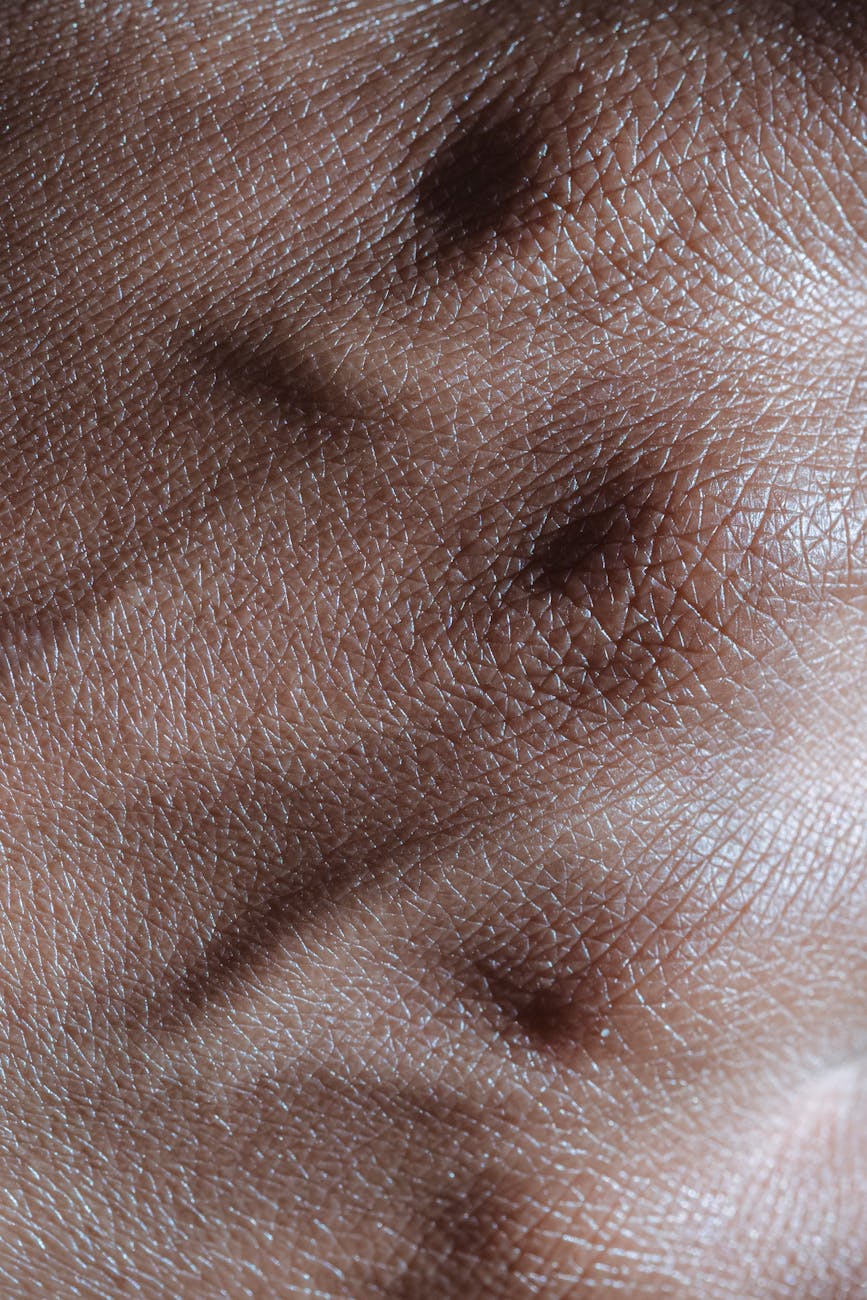
One of the clearest clues to human endurance is temperature control. Humans have a density of hair follicles comparable to other apes, but most human body hair is vellus hair — very short, fine, wispy hair that is often nearly invisible. So although humans are not literally hairless, we appear far less hairy than our ape relatives.
That matters because humans also have about 2 million sweat glands spread across the body, far more than chimpanzees, whose sweat glands are relatively scarce and concentrated mainly on the palms and soles. This gives humans a powerful cooling system. When body temperature rises, sweating helps release heat, making it easier to keep moving without overheating.
This cooling ability is especially important during prolonged activity. Humans’ thinner body hair and more productive sweat glands help them avoid heat exhaustion while running long distances. Heat exhaustion is a dangerous condition caused by the body overheating, often during intense exertion or exposure to high temperatures. A body that can shed heat efficiently has a major advantage when movement needs to continue for a long time.
Endurance over raw speed
Humans are among the best long-distance runners in the animal kingdom, but they are slower over short distances. That contrast captures a key truth about the species: human movement is optimized less for explosive speed and more for sustained effort.
The human body also differs from other apes in ways that support this pattern. Humans have a more barrel-shaped chest rather than the funnel-shaped chest seen in other apes, an adaptation connected to bipedal respiration. Bipedalism means moving habitually on two legs, and it is one of the defining features of the human body plan. Walking and running upright changed the way humans travel, breathe, and manage energy.
Compared with other apes, humans also have a heart that produces greater stroke volume and cardiac output, and the aorta is proportionately larger. Stroke volume is the amount of blood pushed out by the heart with each beat. Cardiac output is the total amount of blood the heart pumps over time. These are crucial for endurance because active muscles need a continuous supply of oxygen and nutrients. A circulatory system that supports sustained exertion helps explain why humans can keep going long after many bursts of speed would have faded.
A body shaped for motion
Human endurance is part of a bigger evolutionary story. The article describes humans as great apes with a characteristically human body plan that emerged in earlier members of the genus Homo. Over time, human evolution involved major changes including hairlessness, obligate bipedalism, increased brain size, and decreased sexual dimorphism.
Sexual dimorphism refers to physical differences between males and females of a species. In humans, males are generally taller and heavier on average, but the article notes that compared with many other species, human evolution involved a decrease in this dimorphism. That suggests endurance and survival were not just about brute force, but about a broader package of traits including mobility, cooperation, and adaptability.
Humans are also highly adaptable. With tools, clothing, and technology, people have extended their tolerance to a wide range of temperatures, humidity levels, and altitudes. Humans now live in tropical rainforests, deserts, heavily polluted cities, and extremely cold arctic regions. That global spread reflects more than intelligence alone. It also reflects a body capable of functioning across demanding conditions.
The throwing advantage
Endurance is only part of the human edge. Humans also throw far faster and more accurately than other animals. That may sound like a fun trivia fact, but it points to something much deeper: humans are not just built to move through the environment, but also to interact with it in unusually precise ways.
Throwing combines strength, coordination, timing, and fine motor control. It links the human body to another key human trait named in the article: manual dexterity. This is the ability to make skillful hand movements, especially with the help of opposable thumbs and a precision grip. A precision grip allows the fingers and thumb to hold and manipulate objects with great control, whether that means shaping a tool or launching a projectile accurately.
This combination of endurance and precision would have made humans especially versatile. The same species that can travel long distances can also use sophisticated tools and manipulate the world with exceptional control.
Humans as apex predators
Humans are described as apex predators, meaning they are rarely preyed upon by other species and occupy the top of the food web. A food web is the network of feeding relationships in an ecosystem, and an apex predator sits at its highest level.
That status is not because humans are the strongest animals in a direct physical contest. Instead, it reflects a blend of traits: intelligence, cooperation, tool use, adaptability, endurance, and precision. Humans are omnivorous, capable of consuming a wide variety of plant and animal material, and they have used fire and other forms of heat to prepare and cook food since the time of Homo erectus. The use of fire, toolmaking, and social coordination all strengthened the human position in the natural world.
Humans also live in layered social groups, from families to states, and these networks help organize knowledge, labor, and shared survival. Social life matters because endurance is not only an individual trait. In humans, it is supported by cooperation, learning, and culture.
More than muscle: the brain behind endurance
The human story is not just about sweat and stride. Humans have large brains relative to body size, with especially large amounts of white matter and gray matter in the prefrontal cortex compared with other primates. The prefrontal cortex is associated with higher-order executive functions — mental abilities such as planning, decision-making, and controlling behavior.
For endurance, that matters. Long effort often depends on pacing, anticipation, and responding to changing conditions. Humans are highly curious and highly social, and they build knowledge systems that help them understand and influence the world. A body that can keep going is powerful; a body guided by foresight, communication, and problem-solving is even more formidable.
This may be one reason humans have had such a dramatic effect on the planet. They have altered habitats through urban planning, irrigation, construction, deforestation, and desertification. They have explored Antarctica, the deep sea, outer space, and the Moon. Their habitation in such extreme places is often temporary and expensive, but it shows how far the human combination of endurance, intelligence, and technology can go.
Endurance as a human signature
The image of humans as “engineered for endurance” captures something real, even if evolution did the engineering slowly over immense spans of time. Humans are unusual apes with thin visible body hair, around 2 million sweat glands, strong long-distance running ability, and an unmatched capacity to throw with speed and accuracy. They are upright walkers and runners, highly adaptable omnivores, skilled tool users, and apex predators.
In other words, humans were not shaped to dominate through speed alone. They were shaped to persist. To travel. To endure heat. To coordinate body and brain. To keep going when going gets hard.
That may be one of the most human traits of all.
Sources
Based on information from Human.
More like this
Go the distance with your curiosity — download DeepSwipe and train your brain for daily knowledge endurance.