Full article · 7 min read
Jewish–Roman Wars: How Rome Destroyed Judea but Transformed Judaism
The Jewish–Roman wars were among the most consequential turning points in the history of Israel and the Jewish people. Between 66 and 135 CE, a series of major uprisings against Roman rule devastated Judea, shattered existing political life, and permanently changed the religious center of Judaism.
What began as revolts aimed at restoring Jewish independence ended in mass death, destruction, expulsion, and the loss of Jewish self-rule. Yet the story does not end with defeat. Out of catastrophe emerged a new religious structure centered not on a single Temple in Jerusalem, but on prayer, Torah study, and communal life in synagogues. That shift helped Judaism survive across regions and generations.
What were the Jewish–Roman wars?
The Jewish–Roman wars were large-scale revolts by Jewish subjects against the Roman Empire. The term mainly refers to the First Jewish–Roman War of 66–73 CE and the Bar Kokhba revolt of 132–136 CE. Some accounts also include the Diaspora Revolt of 115–117 CE, a wider ethno-religious conflict fought across the eastern Mediterranean that included the Kitos War in Judaea.
These conflicts were nationalist rebellions, meaning they were driven by the goal of restoring Jewish independence in Judea. Roman control had already replaced earlier Jewish self-rule under the Hasmoneans, and over time resentment had deepened under imperial administration.
Why tensions with Rome became explosive
In 63 BCE, the Roman Republic conquered Judaea, ending Jewish independence under the Hasmonean dynasty. Pompey intervened in a dynastic civil war, captured Jerusalem, and reinstated Hyrcanus II as high priest without restoring the title of king. Rome later installed the Herodian dynasty as a loyal replacement.
By 6 CE, Judaea had become a Roman province governed directly by Rome after emperor Augustus deposed Herod Archelaus and appointed a Roman governor. That same year, a census triggered a small uprising by Judas of Galilee, who rejected foreign rule and recognized only God as king.
Over the following decades, several pressures intensified anger in the province. Some governors ruled brutally and disregarded Jewish religious sensitivities. Poor governance, corruption, and growing economic inequality added to the unrest. So did rising ethnic, religious, and territorial tensions between Jews and neighboring populations. At the same time, memories of the Maccabean revolt and the earlier period of Hasmonean independence continued to inspire hopes for liberation from Roman rule.
The destruction of Jerusalem and the Second Temple
The First Jewish–Roman War ended in disaster. Jerusalem and many other towns and villages in Judaea were destroyed, with enormous loss of life. A substantial part of the population was uprooted or displaced, and those who remained lost all political autonomy.
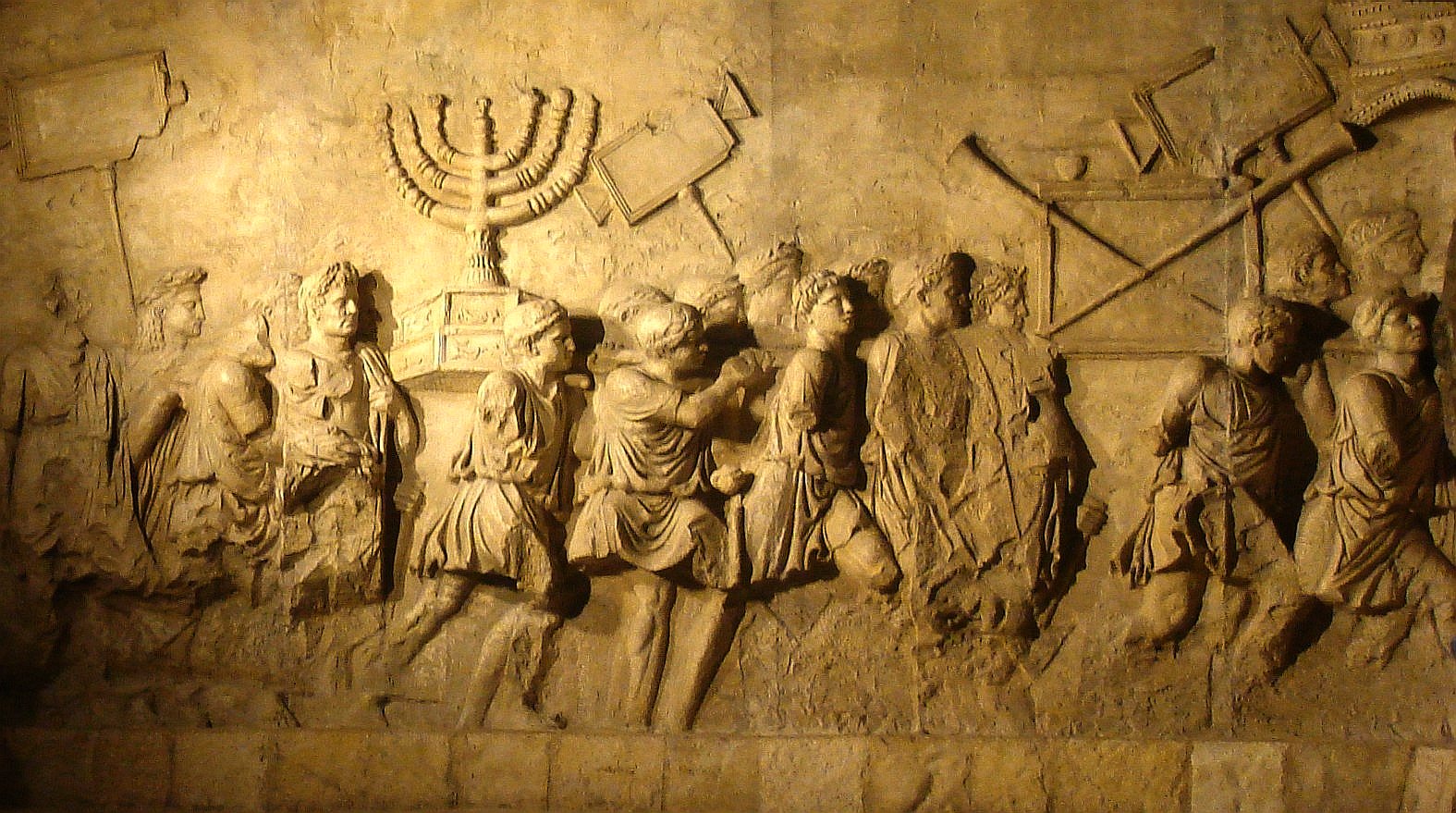
The defining moment came in 70 CE, when Titus's troops destroyed the Second Temple in Jerusalem. The Temple had been the central worship site of Second Temple Judaism. Its destruction was not just the loss of a building. It was the destruction of the focal point of religious life.
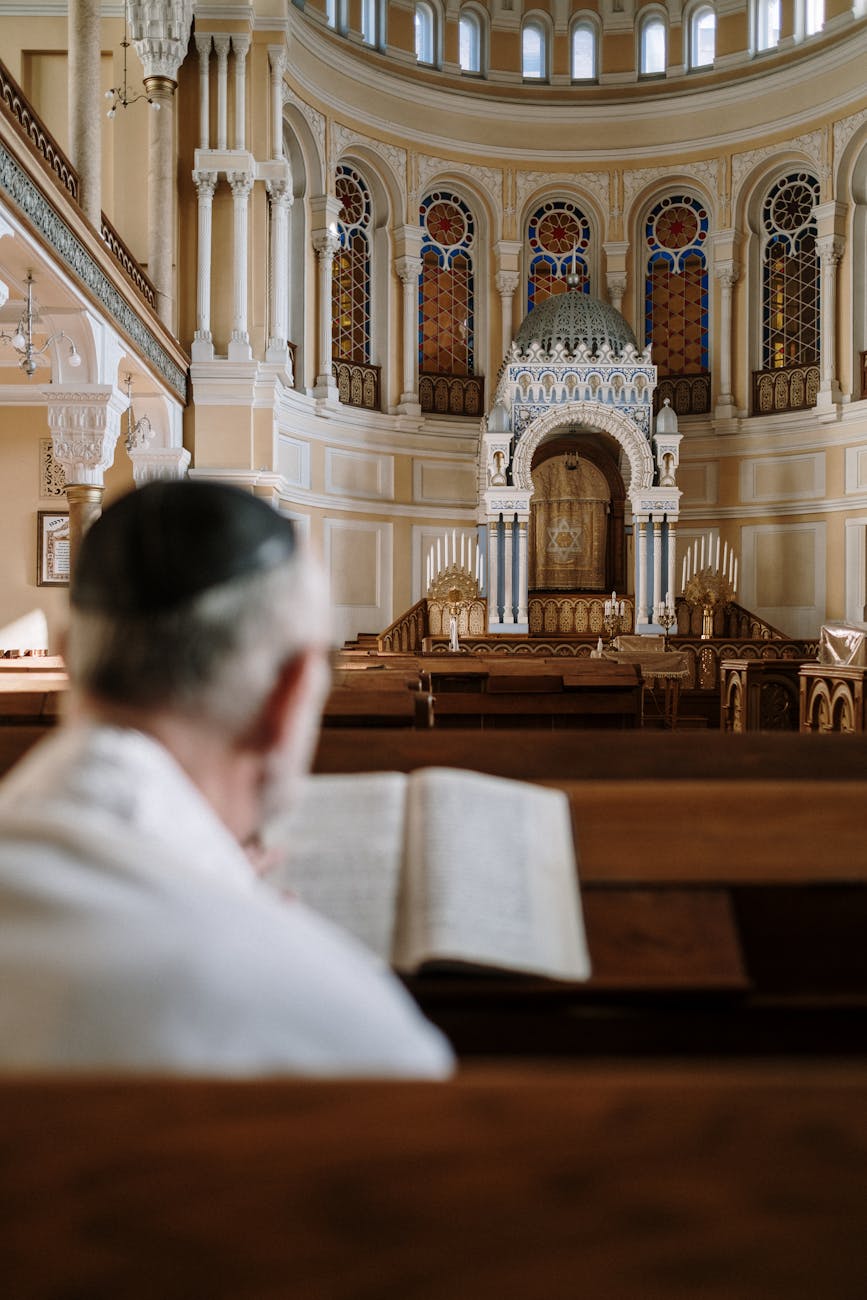
That event forced a profound transformation. With the Temple gone, Jewish religious practice increasingly emphasized prayer, Torah study, and communal gatherings in synagogues. A synagogue is a place where a Jewish community gathers for worship, study, and assembly. Torah study refers to the study of Jewish sacred teaching and law. This religious reorientation laid the foundation for Rabbinic Judaism, the form of Judaism centered on teachers, legal tradition, prayer, and community life that became dominant from late antiquity onward.
The Bar Kokhba revolt and Rome’s harsher response
If the first war broke Judea, the suppression of the Bar Kokhba revolt made the rupture even deeper. The Roman response was brutal. Many Jews were killed, expelled, or sold into slavery, and Judea experienced major depopulation.
The consequences were lasting. Efforts to reestablish a Jewish state came to an end for the modern era. Jews were banned from living in the vicinity of Jerusalem. The city itself was rebuilt by the Romans as a pagan colony called Aelia Capitolina. A pagan colony was a Roman city organized around the religious and civic traditions of the Roman world rather than Jewish worship.
Rome also renamed the province. Judaea became Syria Palaestina. This was more than an administrative change. It marked the end of Jewish political autonomy in the land under Roman rule.
A people scattered, but not erased
The Jewish–Roman wars transformed the Jews from a major population in the eastern Mediterranean into a dispersed and persecuted minority. The conflicts greatly expanded the role of the Jewish diaspora, meaning Jewish communities living outside their original homeland.
After the revolts, the Jewish demographic and cultural center shifted away from devastated Judea. It moved first to Galilee and eventually to Babylonia, while smaller communities continued across the Mediterranean and the Middle East.
This relocation mattered enormously. Instead of being tied mainly to one sacred city and one Temple, Jewish life became organized through communities spread across different regions. That made continuity possible even after the loss of sovereignty and the destruction of Jerusalem’s central sanctuary.
Why Galilee became so important
After the disastrous effects of the Bar Kokhba revolt, Jewish presence in the region significantly dwindled. Over the next centuries, many Jews left for diaspora communities, especially the rapidly growing Jewish communities in Babylonia and Arabia. But Jewish life in the land did not disappear.
The spiritual and demographic center shifted from depopulated Judea to Galilee. Jewish presence also continued in the southern Hebron Hills, in Ein Gedi, and on the coastal plain. In Galilee, major works of Jewish learning were compiled. The Mishnah and the Jerusalem Talmud, vast collections of rabbinical discussions, were compiled during the 2nd to 4th centuries CE in Tiberias and Jerusalem.
The Romans allowed a hereditary Rabbinical Patriarch from the House of Hillel, called the Nasi, to represent the Jews in dealings with Roman authorities. One especially important figure was Judah ha-Nasi, who is credited with compiling the final version of the Mishnah, a major collection of Jewish oral traditions.
Jewish seminaries in places such as Shefaram and Bet Shearim continued to produce scholars. The Sanhedrin, a major Jewish legal and scholarly body, was first located at Sepphoris and later at Tiberias. Many synagogues from this period have been found in the Galilee, and the burial site of the Sanhedrin leaders was discovered in Beit She'arim. All of this shows that while Roman power crushed Jewish statehood, Jewish intellectual and religious life reorganized rather than vanished.
How the loss of the Temple changed Judaism
Before 70 CE, the Second Temple stood at the center of Jewish religious life. After its destruction, Judaism had to function without its central sacrificial site. The result was a major shift in religious emphasis.
Prayer took on greater importance. Torah study became a central act of devotion and continuity. Synagogues became key spaces for worship and community gathering. Over time, this helped shape Rabbinic Judaism, which ultimately became the dominant form of Judaism.
This transformation was one of history’s great ironies. Rome sought to crush rebellion by destroying the political and religious heart of Judea. But by doing so, it accelerated the development of a form of Judaism that was less dependent on one place. That made Jewish continuity possible across exile, migration, and centuries of political upheaval.
The long shadow of the wars
The legacy of the Jewish–Roman wars reached far beyond antiquity. The destruction of Jerusalem, the loss of self-rule, the renaming of Judaea to Syria Palaestina, and the spread of Jewish life into Galilee and Babylonia all became defining elements in Jewish historical memory.
The wars were devastating in human terms: mass casualties, displacement, slavery, and persecution. They also reshaped the geography of Jewish life. Yet the same period also saw the rise of institutions, texts, and practices that allowed Judaism to endure.
That is the central twist of the Jewish–Roman wars in the history of Israel: Rome destroyed a homeland’s political center and its holiest shrine, but the disaster helped produce a religious tradition capable of surviving far beyond one city, one province, or one empire.
Sources
Based on information from History of Israel.
More like this
More about culture
More about history
More about war
From Jerusalem to Galilee to the wider world, history takes wild turns — download DeepSwipe and keep swiping through the stories that changed everything.