A Planet with Many Divine Faces
Long before anyone knew its size or composition, Jupiter was already a powerful idea. Its stately course across the night sky made it a natural symbol of authority, wisdom, and cosmic order.
King of the Babylonian and Roman Gods
To the Babylonians, Jupiter was the celestial manifestation of Marduk, the chief god who rose to supremacy during the Hammurabi period. Its 12‑year orbit helped define their zodiac, tying human affairs to cycles of the heavens.
The Romans saw in the same bright planet their own highest deity: Jupiter, god of thunder, lightning, and storms, the guardian of law and of the state. They sometimes called the planet Iuppiter Stella—the “star of Jupiter”—sacred to its divine namesake.
The name ultimately traces back to the Proto‑Indo‑European compound Dyēu-pəter, meaning “Father Sky-God” or “Father Day-God,” a linguistic ancestor it shares with other Indo‑European sky deities.

Zeus, Dias, and the Shining One
The Greeks associated the planet with Zeus, also called Dias in a planetary context. Earlier, they had known it as Phaethon, meaning “shining one” or “blazing star.”
Greek myths of Zeus show striking parallels to Near Eastern gods like El, Baal, Enlil, and Marduk—reflecting cultural exchanges that likely guided the identification of the planet with the supreme sky god.
By the 4th century BC, the link between the planet and Zeus was firmly established, noted in works like Plato’s Epinomis.
Jupiter in Asia: Teacher and Wood Star
In Vedic astrology, the planet is associated with Brihaspati, the priest and teacher of the gods, and is commonly called Guru, meaning “Teacher.” Jupiter’s slow, steady motion thus became a symbol of guidance and wisdom.
In Central Asian Turkic myths, Jupiter appears as Erendiz or Erentüz, combining the word yultuz (“star”) with a more mysterious eren. The Turks estimated its orbital period at 11 years and 300 days, and connected social and natural events to its changing position.
In East Asia, Jupiter is the “wood star” (木星, mùxīng) in the Chinese Five Elements system—a cosmic embodiment of the wood phase. It is also the “year star” (歲星, suìxīng), because Chinese astronomers noted that it moved roughly one zodiac sign each year, and some ancient texts even named years in correlation with its position.
How Jupiter Shaped Our Words
The Latin genitive Iovis (of Jupiter) gave rise to the English poetic name Jove. From this came the adjective Jovian, meaning “of or relating to Jupiter.”
An older form, jovial, once used in astrology to describe those born under Jupiter’s supposed influence, has drifted into common language as “cheerful” or “merry.” The optimistic, expansive qualities associated with the god and planet became personality traits in our vocabulary.
The Greek name Zeus left its mark too: it is the root of zeno-, used in some Jupiter-related terms like zenography.
A World that Lives in Myth and Speech
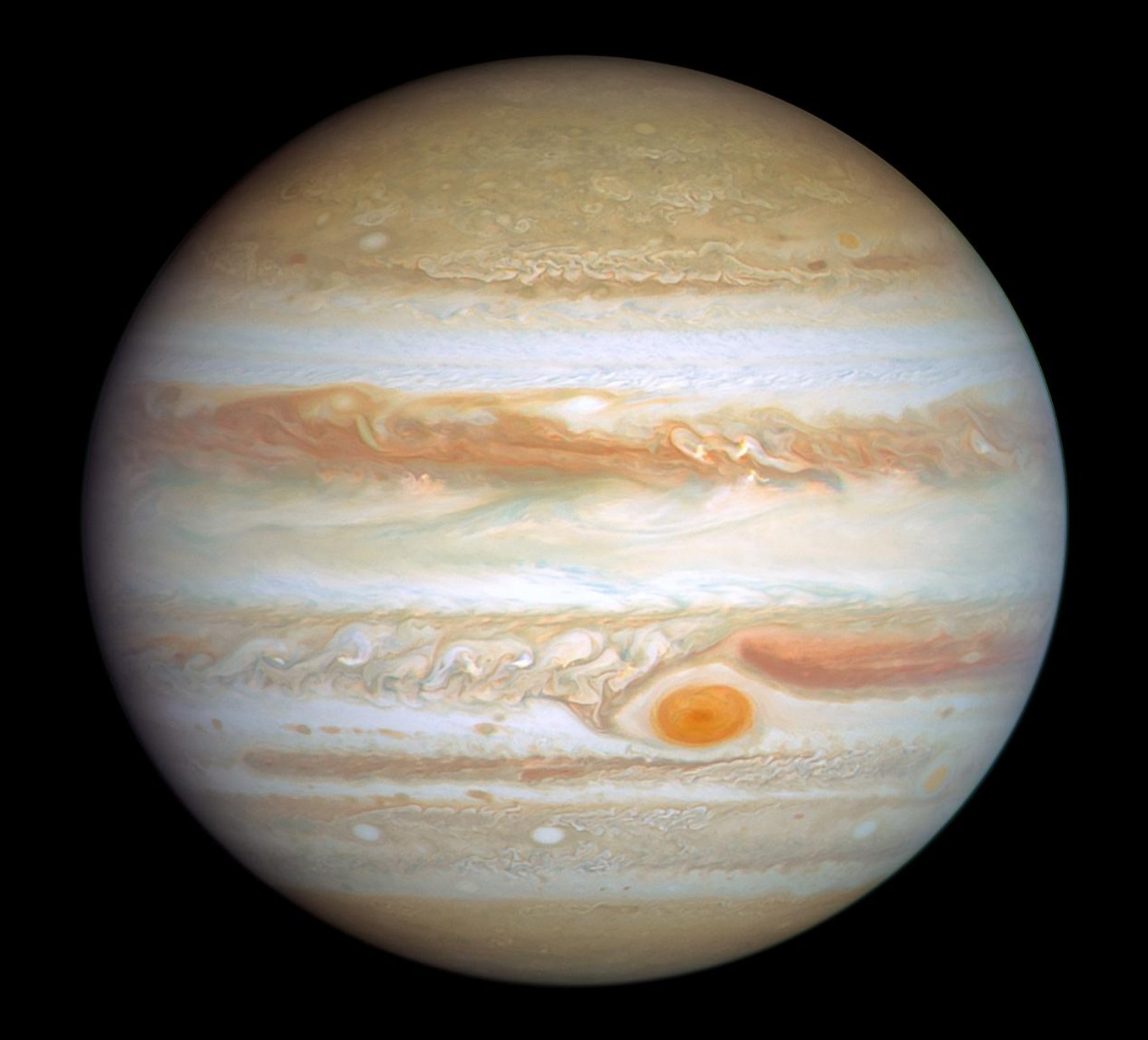
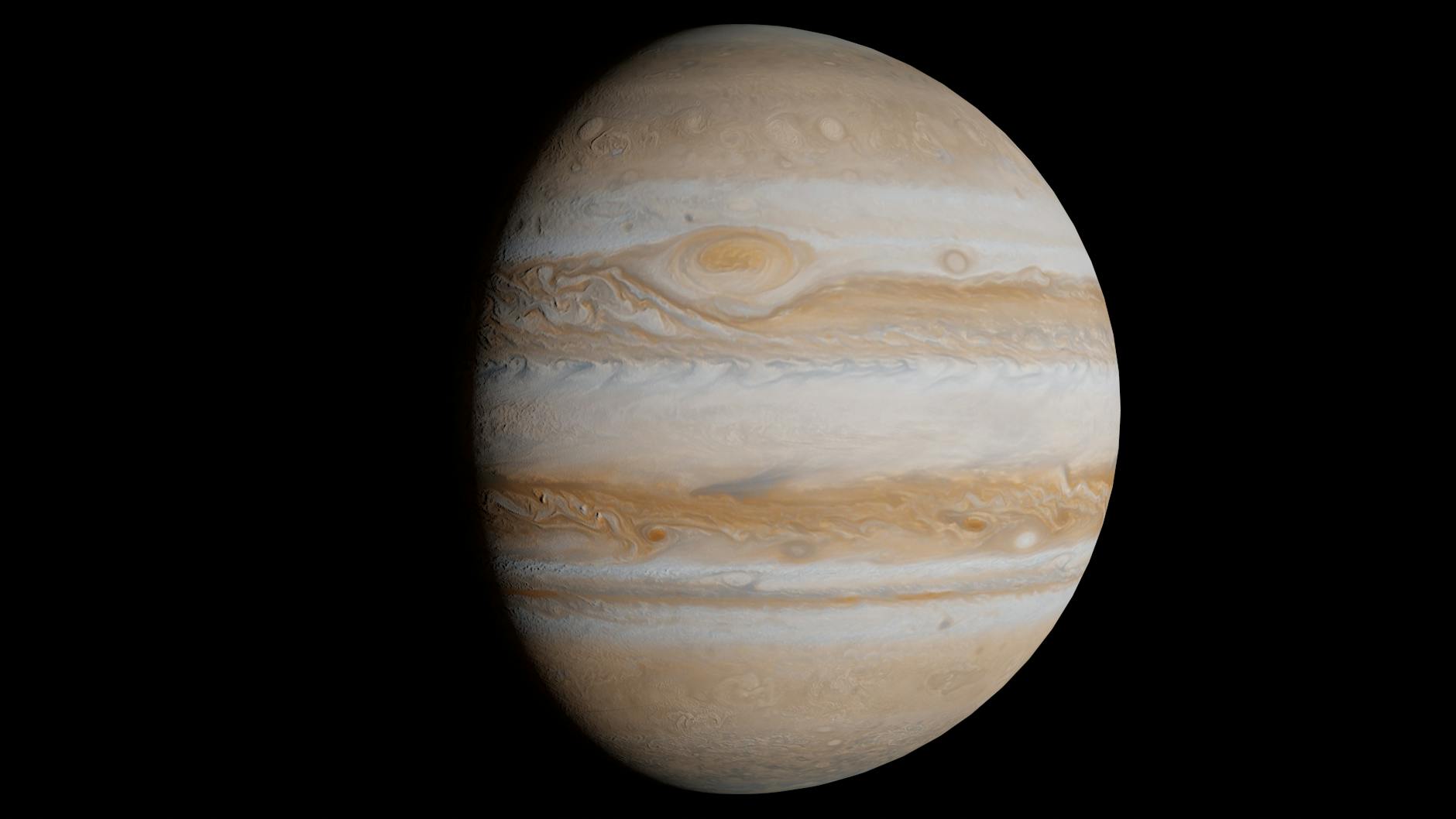
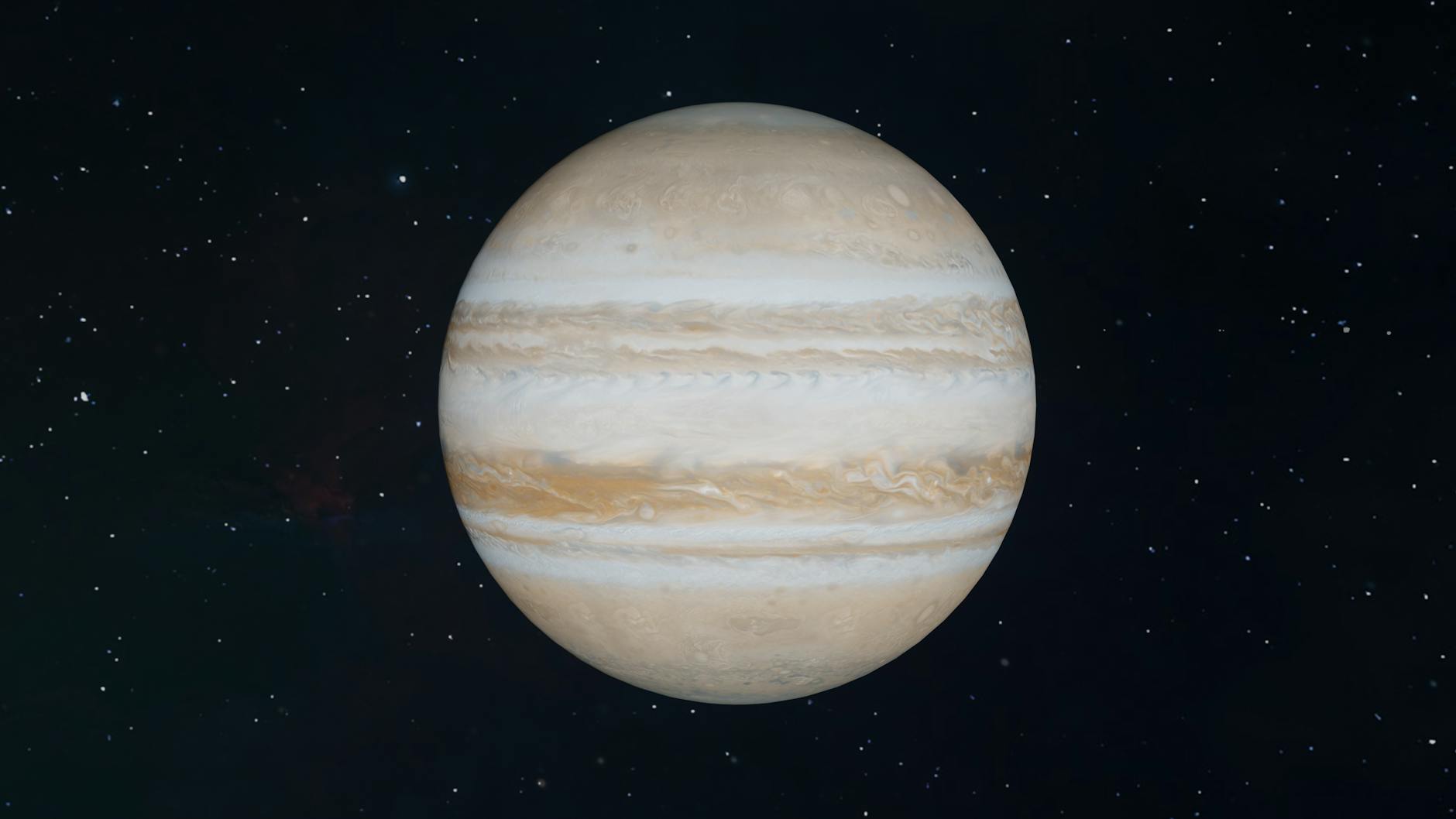
Though we now know Jupiter as a gas giant of hydrogen, helium, and metallic storms, its cultural identity lingers in our languages and symbols.
From Guru and suìxīng to Jupiter and Zeus, the planet has long been a canvas for human hopes and fears—reminding us that the night sky is as much a story we tell about ourselves as a map of distant worlds.