First Encounters with a Giant
In 1973, Pioneer 10 became the first spacecraft to venture close to Jupiter. Its flyby delivered humanity’s first intimate look at the planet’s swirling atmosphere and large moons—and revealed that the surrounding radiation belts were far harsher than expected.
Pioneer 11 followed, helping refine measurements of Jupiter’s mass, shape, and magnetic environment.
Voyager’s Grand Tour
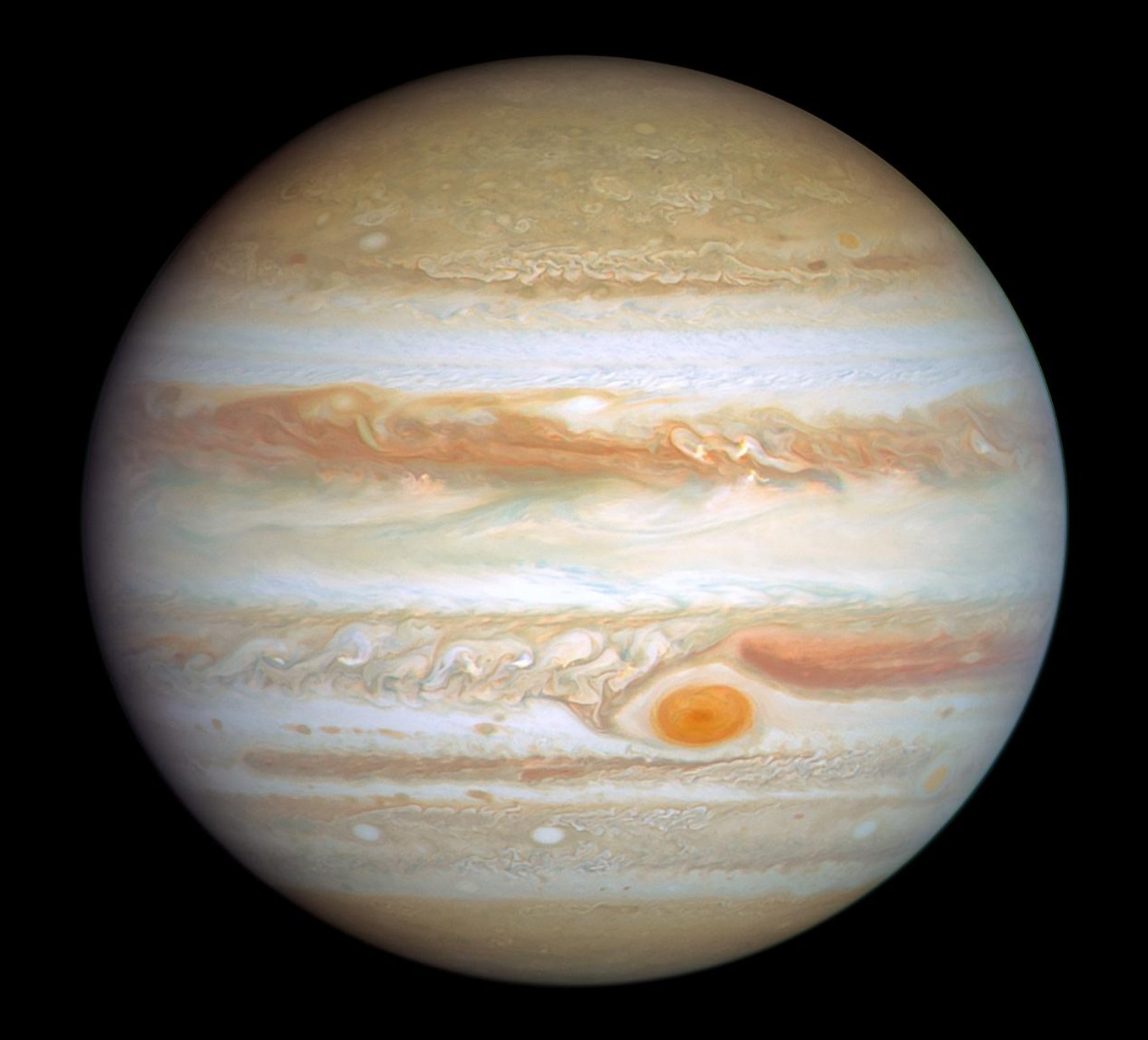
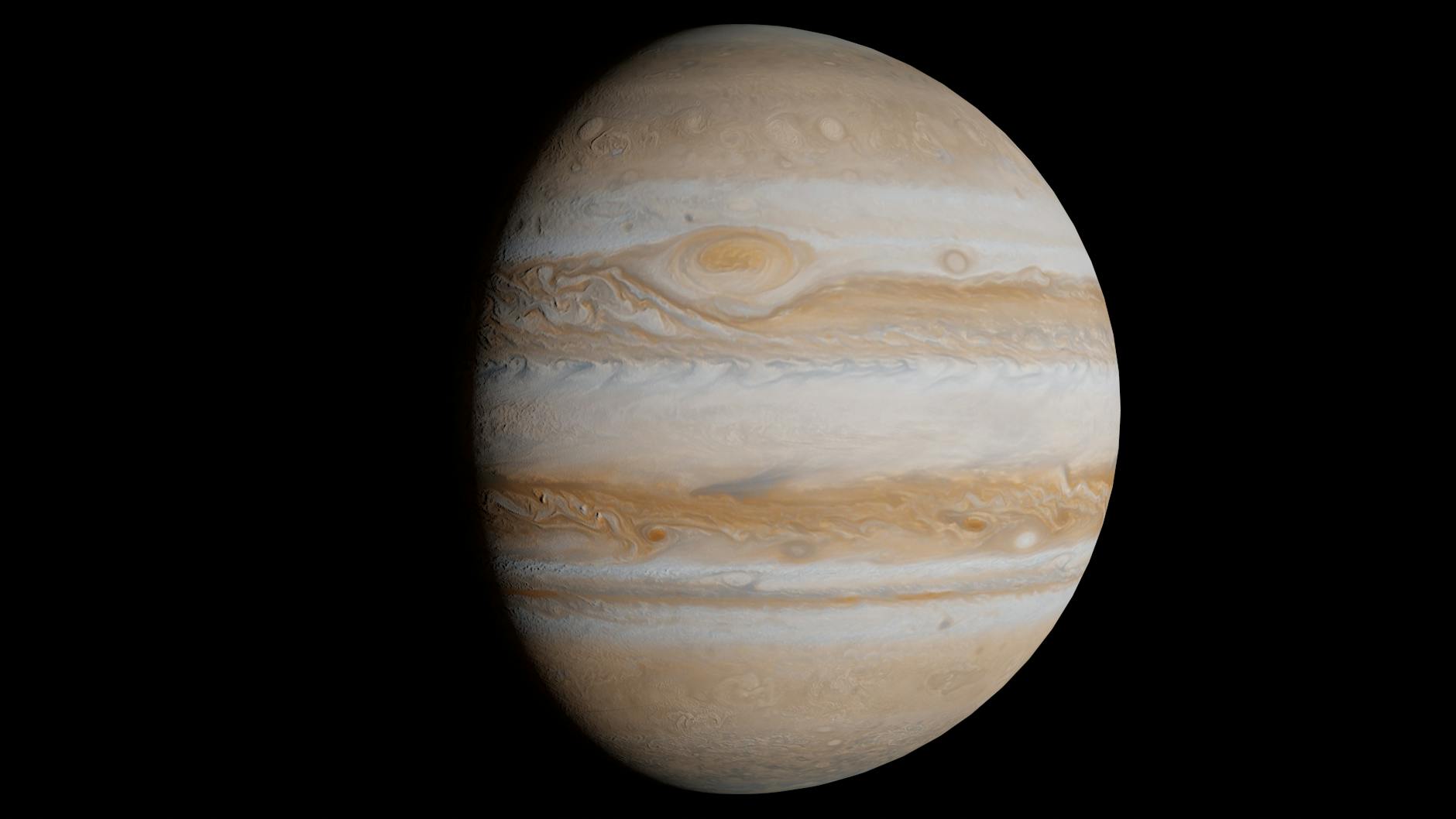
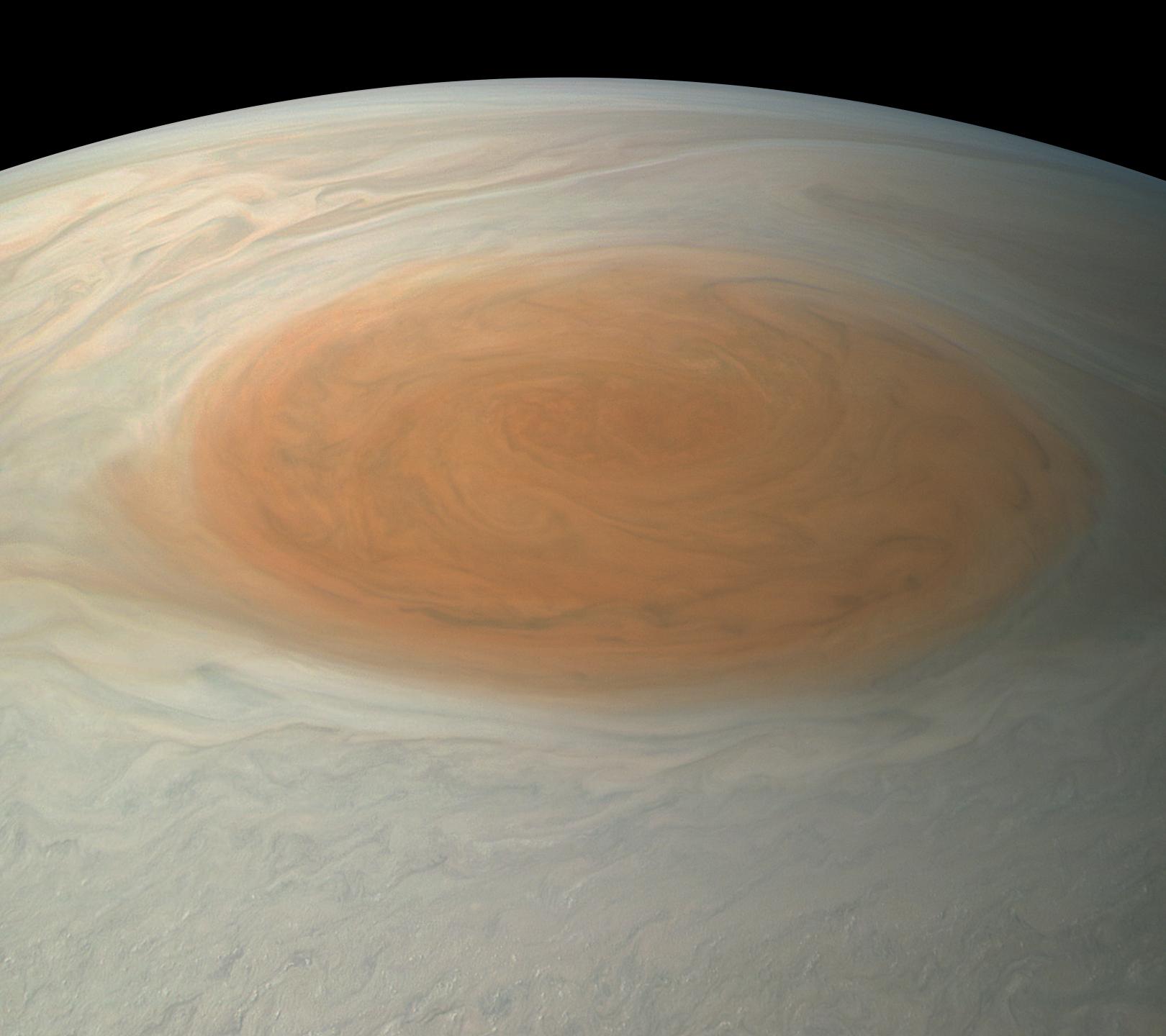
Six years later, Voyager 1 and 2 swept past Jupiter. Their cameras transformed fuzzy disks into vivid worlds. They discovered Jupiter’s faint ring system, mapped its cloud belts in detail, and confirmed that the Great Red Spot was an anticyclonic storm.
Voyager’s instruments also detected a bright torus of ionized atoms along Io’s orbit, tracing back to erupting volcanoes on that moon’s surface. As the probes slipped behind Jupiter, they observed spectacular lightning flashes on the planet’s night side.

Ulysses, Cassini, and New Horizons
In 1992, the Ulysses solar probe used Jupiter’s gravity not to study the planet itself, but to slingshot into a polar orbit around the Sun. Even without cameras, it gathered key data about Jupiter’s magnetosphere. It passed again six years later at a greater distance.
The Cassini spacecraft, en route to Saturn in 2000, flew by Jupiter and returned high-resolution images of the planet and its storms.
In 2007, New Horizons skimmed past for a gravity assist toward Pluto. Along the way, it observed all four Galilean moons in detail and studied the plasma ejected from Io’s volcanoes.
Galileo: A Long-Term Resident
Launched in 1989, Galileo became the first spacecraft to orbit Jupiter in 1995. Over more than seven years, it performed repeated flybys of the Galilean moons and Amalthea, witnessing the Shoemaker–Levy 9 impact from a front-row seat.
In 1995, Galileo released a 340‑kg atmospheric probe that plunged into Jupiter’s clouds at over 2,500 km/h. It survived for 57.6 minutes, measuring temperatures above 300 °C and winds over 644 km/h before being crushed and vaporized.
To avoid any risk of contaminating potentially habitable moons like Europa, the Galileo orbiter itself was deliberately steered into Jupiter’s atmosphere in 2003 and destroyed.
Juno: Peering Beneath the Clouds
Arriving on July 4, 2016, Juno entered a polar orbit designed to probe Jupiter’s interior, gravity field, and magnetic environment. Its elongated path kept it away from the worst radiation while it dove close over the poles.
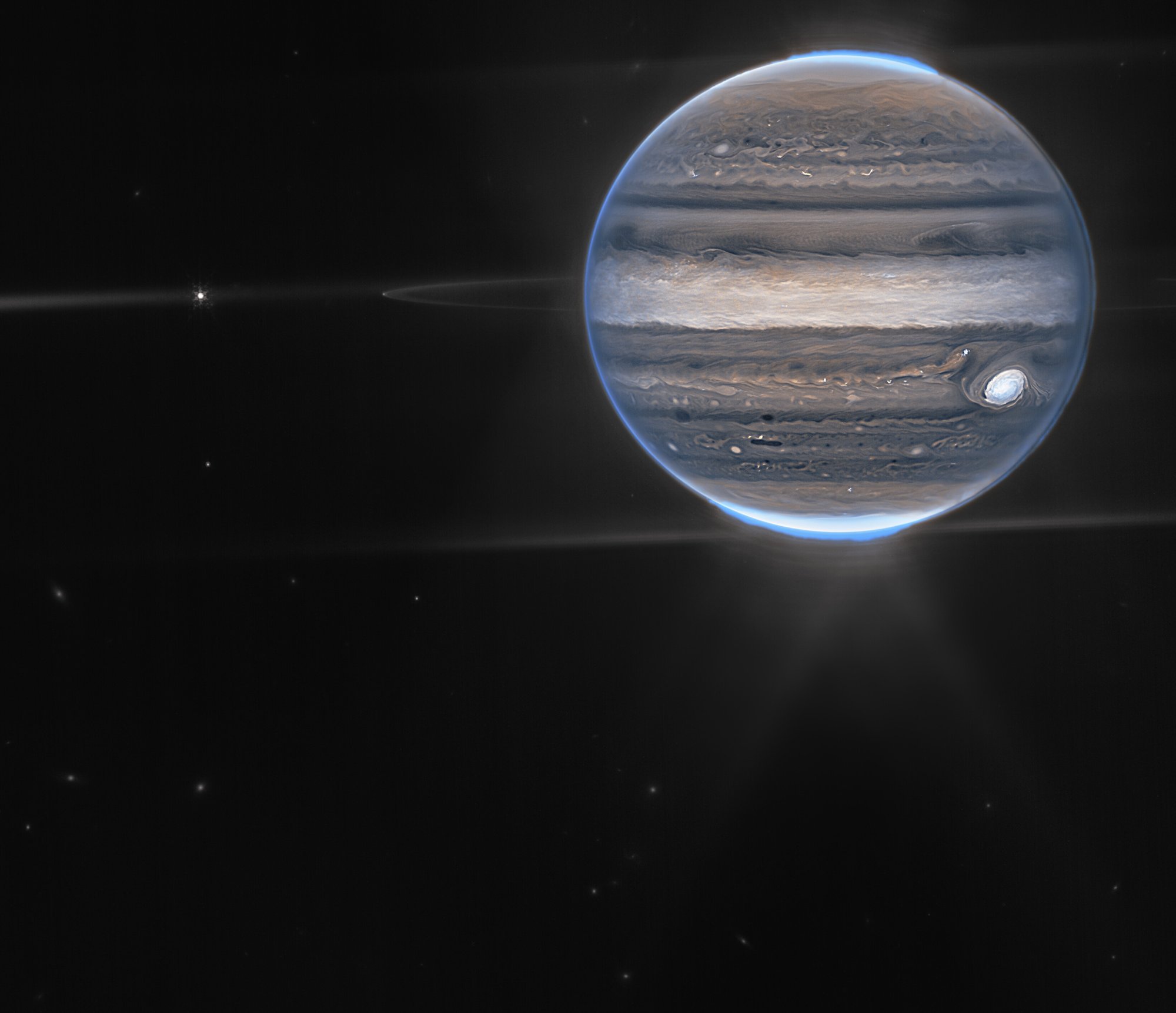
Juno has revealed a diffuse, extended core, mapped complex polar cyclones, and sent back the first ever images of Jupiter’s north pole. Originally slated for about 20 months and 37 orbits, the mission has been extended to at least 2025, including flybys of Ganymede, Europa, and Io.
Like Galileo, Juno will eventually be commanded to deorbit and burn up in Jupiter’s atmosphere, safeguarding the icy moons from contamination.
The Next Wave: JUICE, Europa Clipper, and Beyond
Ambitious new missions are now on their way. The European Space Agency’s Jupiter Icy Moon Explorer (JUICE) launched in 2023, targeting detailed studies of Ganymede and the broader Jovian system.
NASA’s Europa Clipper, launched in 2024, will perform multiple close flybys of Europa to investigate its suspected subsurface ocean and potential habitability.
Further ahead, Chinese and international concepts—like Tianwen‑4, Interstellar Express, and NASA’s proposed Interstellar Probe—plan to use Jupiter’s gravity as a launchpad into the outermost reaches of the heliosphere.
From brief flybys to long-lived orbiters and atmospheric dives, each mission has pulled Jupiter a little closer to us—while reminding us that this giant world remains a challenging, radiation-blasted frontier.