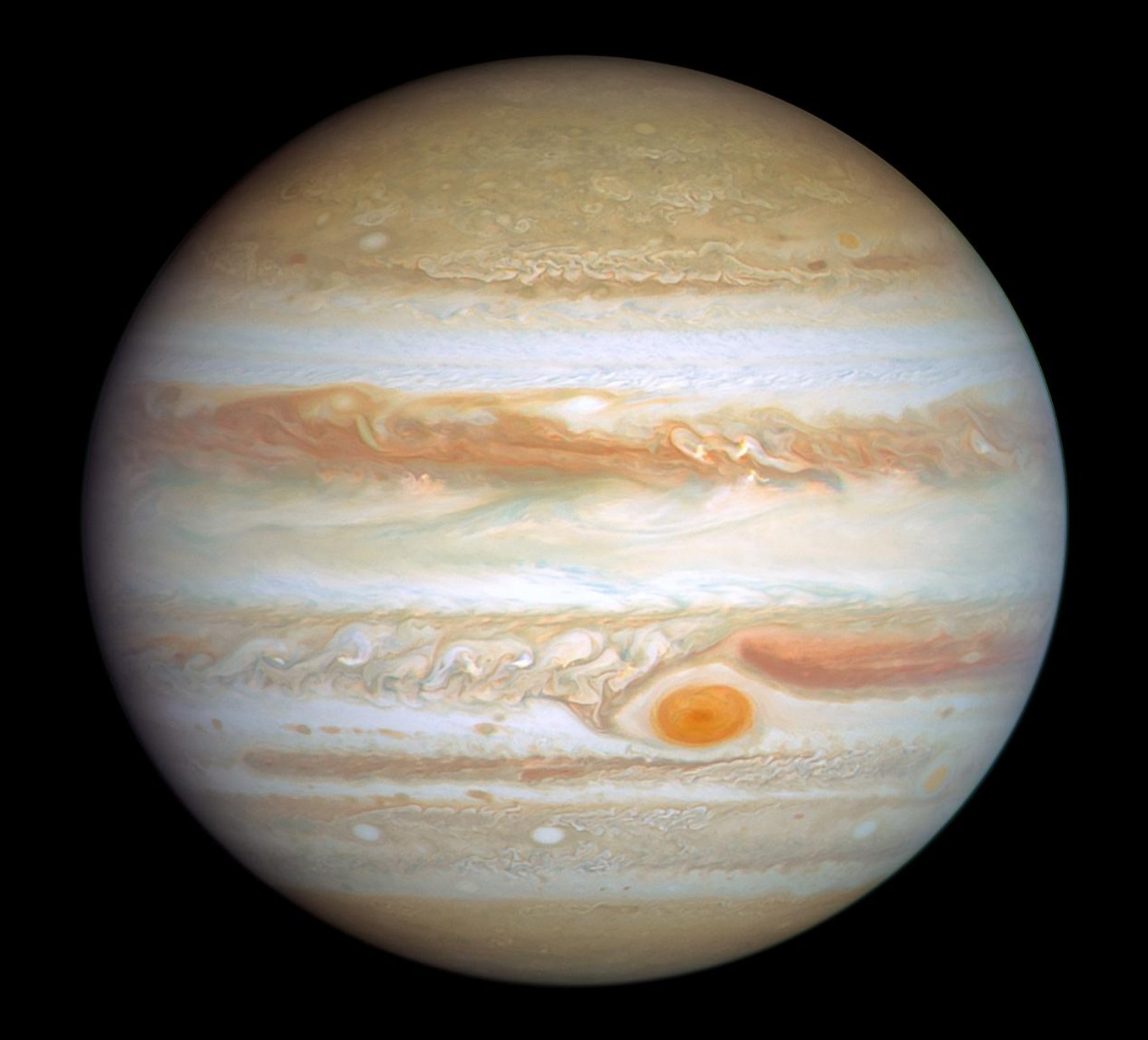
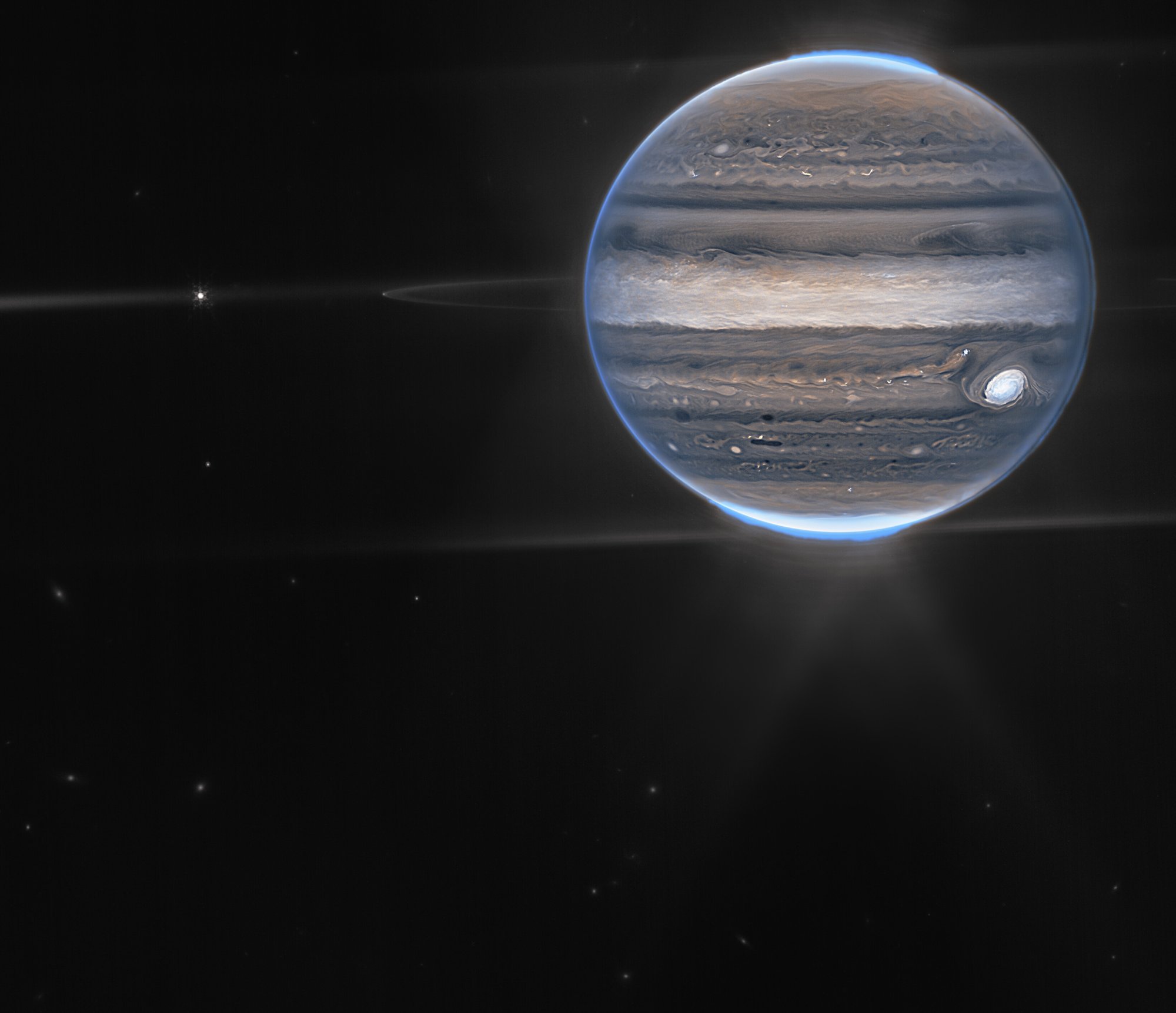
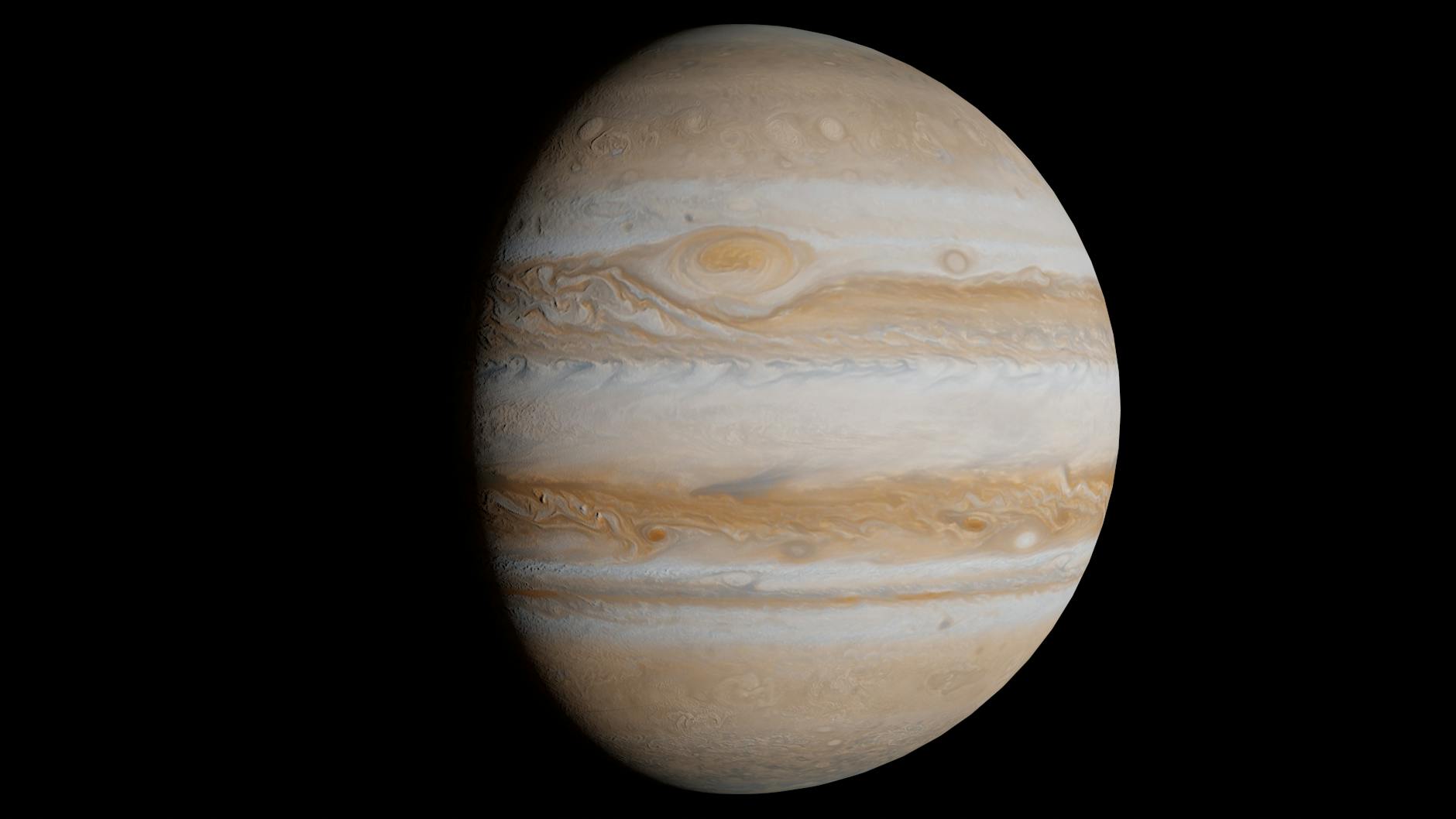
Beneath the Clouds
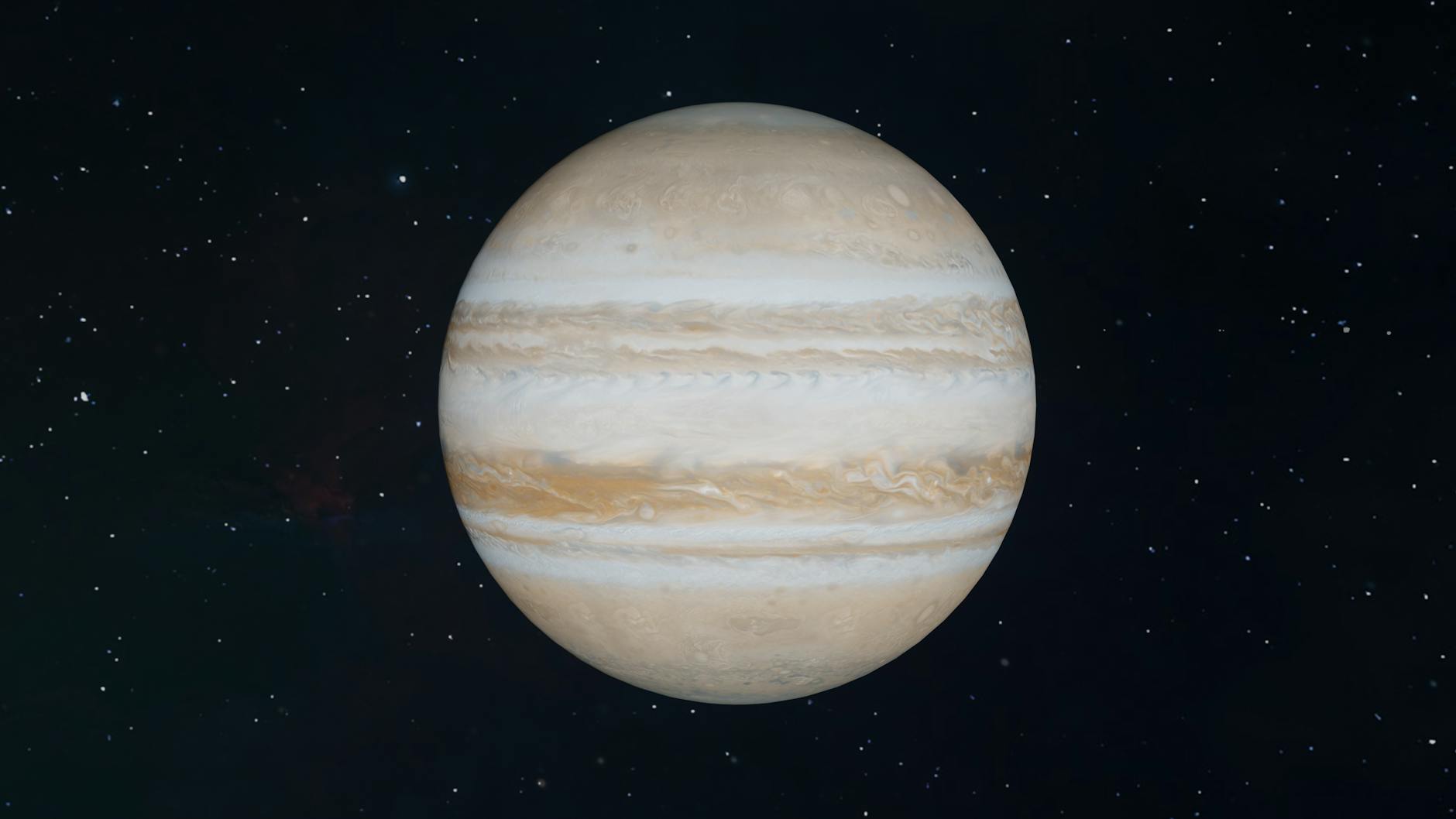
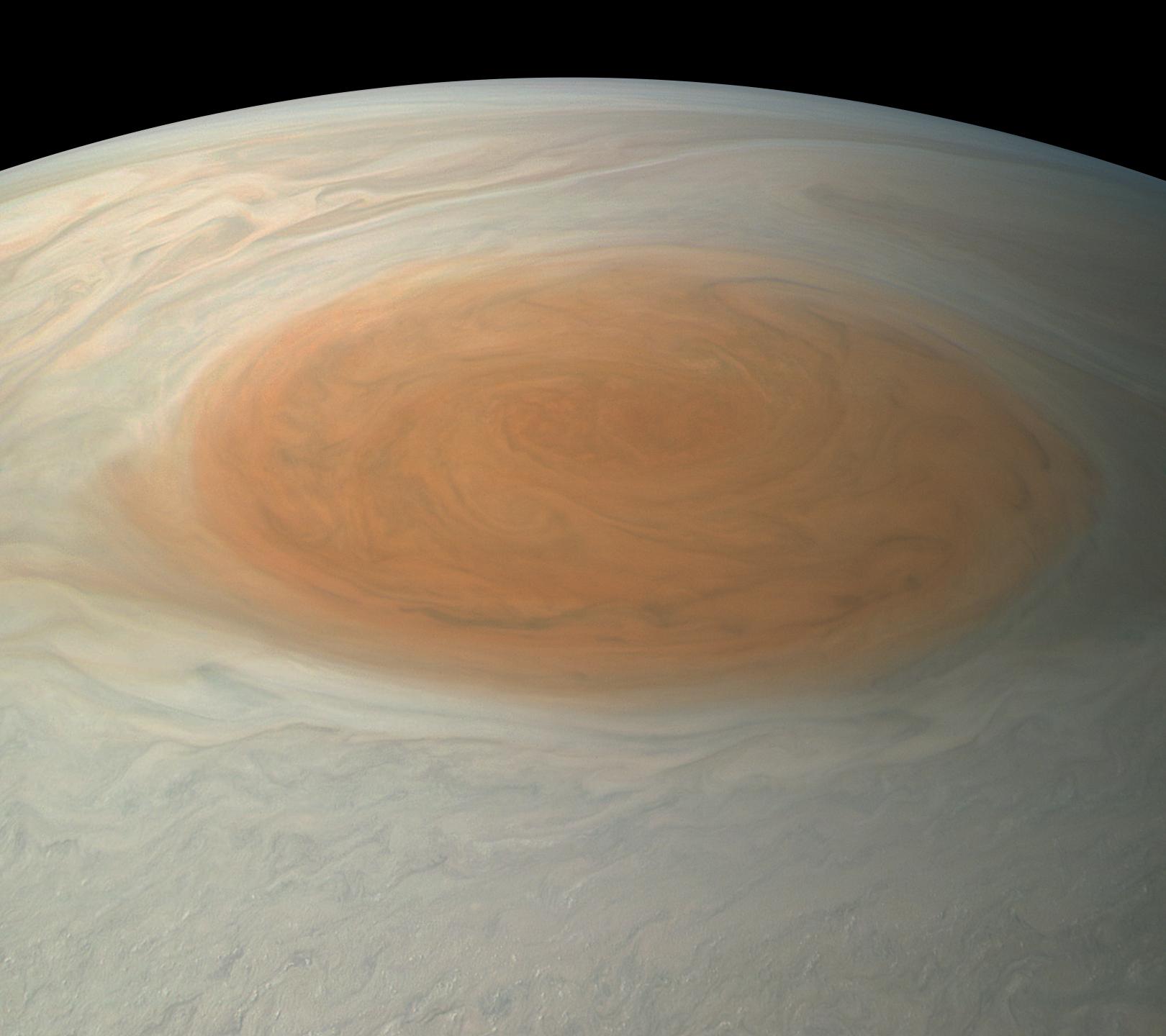
The stripes and storms of Jupiter are only a thin skin. Plunge below the clouds, and the familiar idea of “surface” disappears, replaced by crushing pressure, superheated fluids, and exotic forms of matter.
From Gas to Supercritical Sea
Jupiter is mostly hydrogen and helium. High in the atmosphere, these behave like ordinary gases. But as you descend, pressure and temperature soar. Soon, hydrogen passes its critical point, the threshold beyond which there is no clear boundary between liquid and gas.
In this supercritical state, Jupiter’s hydrogen forms something like an ocean that is neither purely liquid nor gas. Temperatures already climb above −100 °C near the 1‑bar level—about Earth’s sea-level pressure—and only increase as you go deeper.

The Metallic Hydrogen Mantle
Continue inward and the pressure reaches tens to hundreds of gigapascals, with temperatures of 5,000–8,400 K. Here, hydrogen is squeezed so tightly that its electrons can move freely, turning it into metallic hydrogen—a strange fluid that conducts electricity as a metal would.
This vast mantle of metallic hydrogen, laced with helium, likely reaches out to about 80% of the planet’s radius. Electrical currents swirling through it generate Jupiter’s colossal magnetic field, the strongest of any planet.
A Blurred, Diluted Heart
For years, scientists debated whether Jupiter had a dense, compact core or none at all. Data from NASA’s Juno mission pointed to a new picture: a diffuse core, mixing into the surrounding mantle and extending 30–50% of Jupiter’s radius.
This region may contain 7–25 Earth masses’ worth of heavy elements. It might have formed that way as the young planet swallowed rock and ice, or been stirred and spread out by a titanic collision with a planet roughly ten times Earth’s mass in the system’s youth.
At the deepest levels, pressures reach around 4,000 GPa and temperatures near 20,000 K—hotter than the surface of many stars.
Helium Showers and Diamond Storms
Deep below the visible clouds, helium and neon can rain out of the atmosphere. As they separate from metallic hydrogen, they form droplets that fall like heavy rain through lower layers, depleting the upper atmosphere of these elements before merging again deeper down.
Some calculations go further, suggesting that under the right conditions, carbon could crystallize into diamond rain, as on Saturn, Uranus, and Neptune. Diamonds, born in crushing darkness, may fall like gemstones through Jupiter’s hidden depths.
A Planet Still Shrinking
Jupiter still radiates more heat than it receives from the Sun. The leftover energy from its formation escapes slowly through convection, and the whole planet is shrinking by about a millimetre per year as it contracts under its own gravity.
The enduring message from Jupiter’s interior is simple and unsettling: beneath those colourful clouds lies not a solid world, but a deep, alien ocean of metallic storms, blurred cores, and rains made of elements we know only as symbols on a periodic table.