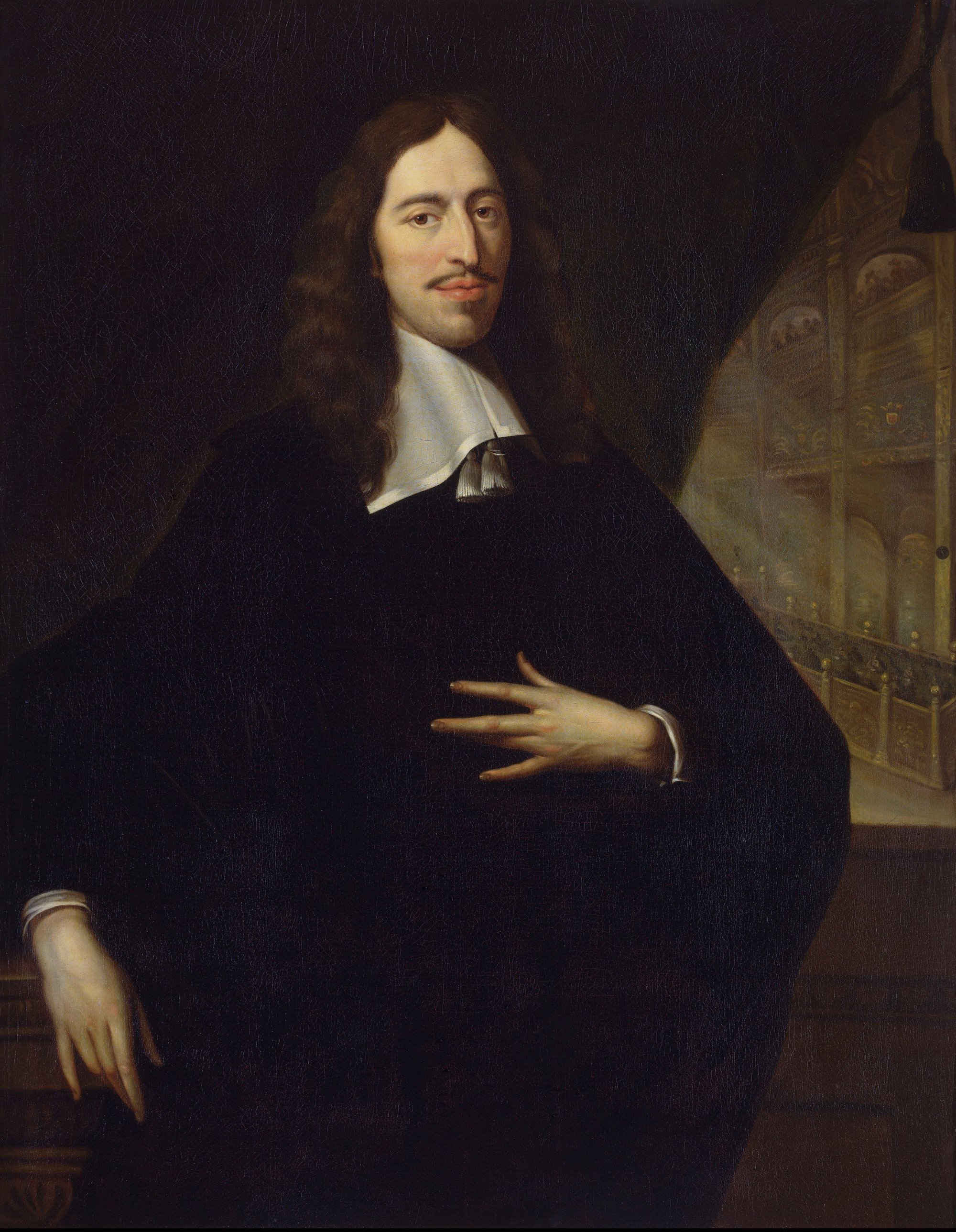
Power as a Family Business
In the Dutch Golden Age, politics was not just fought in assemblies and at sea; it was woven at the dinner table, in marriage contracts and in carefully arranged alliances between patrician families. Few illustrate this better than Johan de Witt.
His ascent to the top of the Dutch Republic was inseparable from the web of kinship that bound him to some of the most powerful regent clans of the era.
Roots in Dordrecht and Beyond
Johan de Witt was born into an established patrician family. His father, Jacob de Witt, was an influential regent in Dordrecht, then one of Holland’s leading cities. His uncle Andries de Witt had already served as Grand Pensionary of Holland between 1619 and 1621, showing that the path to the Republic’s highest office ran through his own household.
His mother, Anna van den Corput, tied him to another line of influence: she was the niece of Johannes Corputius, a noted military leader and cartographer. Other family connections linked the De Witts to the famed naval commanders Maarten Tromp and his son Cornelis Tromp.
Even the House of Orange was not entirely separate. Through the marriage of an uncle to Margaretha of Nassau, Johan was a distant relative of William of Orange-Nassau.

The Amsterdam Connection
If Dordrecht gave De Witt his start, Amsterdam gave him reach. In 1655, he married Wendela Bicker, a member of one of Amsterdam’s most powerful oligarchic families.
Through Wendela, Johan became related to a cluster of ruling patrician houses: the Bickers, De Graeffs, Hoofts, Witsens, Boelens Loens and Reynsts. His new brothers-in-law included:
- Pieter de Graeff, both cousin and political ally,
- Gerard Bicker van Swieten, a high official,
- Arms dealer Jacob Trip, and
- Banker and financier Jean Deutz, who would later help finance the Republic’s wars.
His uncle-in-law was Frans Banninck Cocq, the captain immortalized at the center of Rembrandt’s The Night Watch. Another cousin-in-law, Joachim Irgens von Westervick, briefly owned a vast private estate covering a huge part of Northern Norway.
These were not just social ties; they were the arteries through which political support, credit and information flowed.
The De Witt–De Graeff Axis
At the heart of this network stood the partnership between Johan and his uncle, Amsterdam burgomaster Cornelis de Graeff. During the First Stadtholderless Period, political power in Holland was effectively split between two Republican family groups: the De Graeffs in Amsterdam and the De Witts in The Hague.
De Witt depended on Amsterdam’s backing, and he knew it. He recognized De Graeff’s influence and did his best to accommodate the city’s wishes. In return, De Graeff offered him advice, support in the States of Holland, and access to the city’s formidable resources.
Their correspondence reveals a relationship of mutual respect and candid counsel, mixing politics with family matters. Another Amsterdam burgomaster remarked that “without the Lord of Zuid-Polsbroek [De Graeff] nothing could be done anywhere” — a telling comment on how essential this alliance was.
After the Fall
Even in tragedy, family ties mattered. After Johan’s lynching, his children did not vanish into obscurity. Pieter de Graeff, husband of Wendela’s younger sister Jacoba Bicker, became their guardian, ensuring that the next generation remained within the protective circle of the regent class.
In the story of Johan de Witt, the rise and fall of a statesman is also the story of how power in a commercial republic flowed along bloodlines as much as along trade routes.