Full article · 7 min read
Johan de Witt: The Dutch Leader Eaten by a Mob
In 1672, one of the most horrifying political killings in European history unfolded in The Hague. Johan de Witt, one of the most powerful figures in the Dutch Republic, and his brother Cornelis were murdered by a mob. According to witnesses, parts of their bodies were roasted and eaten.
That grotesque ending did not come out of nowhere. It grew out of war, political rivalry, public panic, and a struggle over who should control the Dutch Republic. To understand why the killing became so savage, it helps to look at the world Johan de Witt ruled, the enemies he made, and the chaos of the year the Dutch called the Rampjaar, or “Disaster Year.”
Who was Johan de Witt?
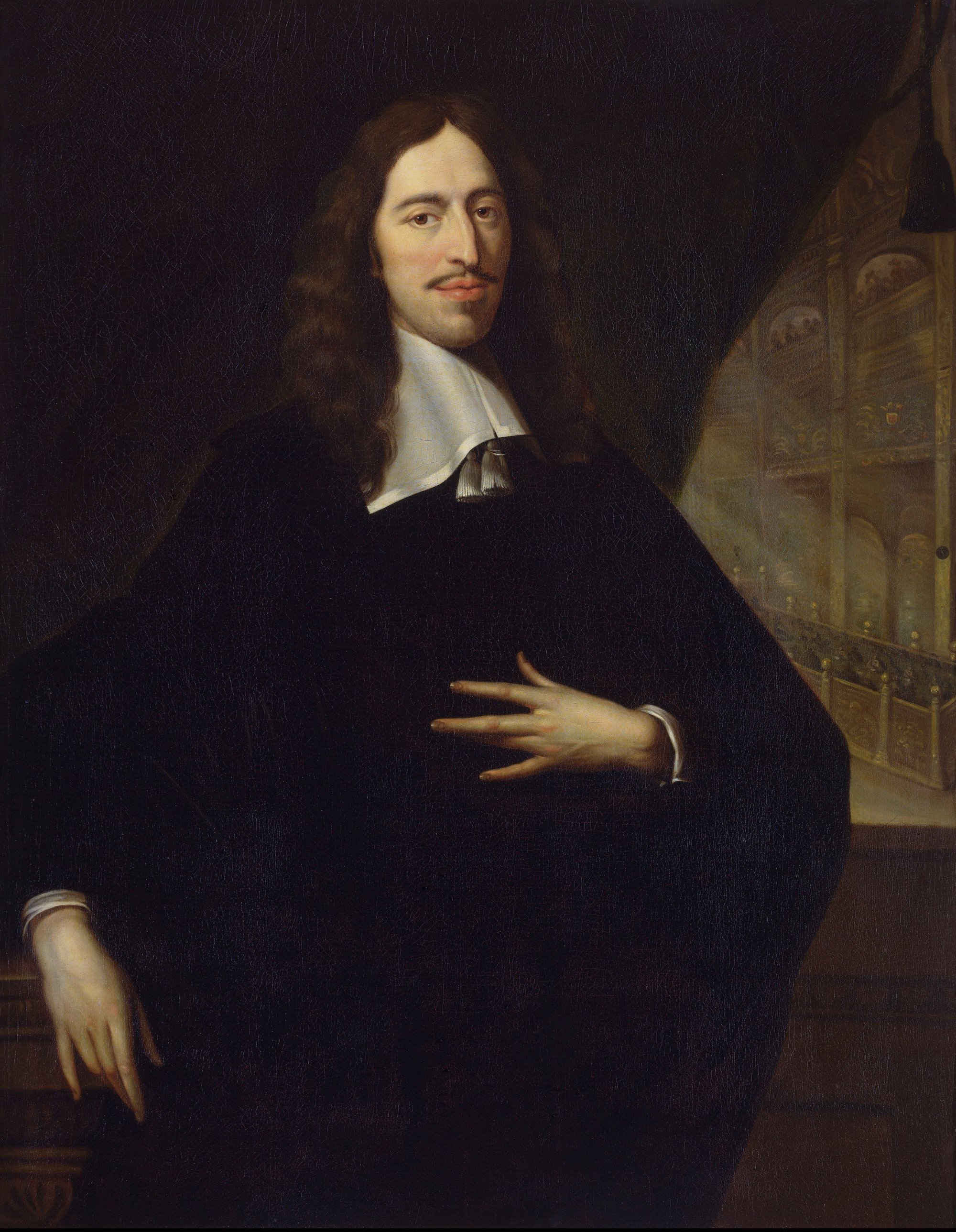
Johan de Witt was born in 1625 into an influential Dutch regent family. The regenten were the patrician ruling class of the Dutch cities: wealthy, educated urban elites who dominated government. He grew up in a privileged environment and received an elite education, studying at Leiden University and excelling in mathematics and law before earning a doctorate from the University of Angers in 1645.
In politics, De Witt rose fast. In 1653, he became Grand Pensionary of Holland. That title can be confusing today. He was not a modern prime minister in the formal sense, but because Holland was the most powerful province in the Dutch Republic, the office made him effectively the republic’s leading political figure during a time when there was no stadholder in most provinces.
A stadholder was a powerful provincial office often associated with the House of Orange. During the First Stadtholderless Period, that post was left unfilled in key areas, and men like De Witt took the lead. He represented the interests of Holland, especially shipping and trade, and he worked closely with powerful Amsterdam regents, above all his uncle Cornelis de Graeff.
The political split behind the hatred
De Witt belonged to the republican, state-oriented side of Dutch politics. He opposed the House of Orange-Nassau and the Orangists, who supported Orange influence and wanted stronger leadership centered on that dynasty.
His power base came from wealthy merchants and patrician families. This political camp favored Protestant moderation and a practical foreign policy aimed at protecting commerce. The Orange faction, by contrast, drew much of its support from the middle classes and preferred a strong Orange leader as a counterweight to the regent elite.
This was not just an abstract constitutional debate. It touched religion, class, and power. De Witt tried to reduce Orange influence and even supported efforts to prevent members of the House of Orange from regaining the highest offices. In 1667, with allies including Gaspar Fagel, Gillis Valckenier, and Andries de Graeff, he issued the Perpetual Edict, which abolished the governorship and declared the office of stadholder incompatible with the post of Captain General.
Moves like that made him deeply hated by Orange supporters, especially among the common people.
Why 1672 became the “Disaster Year”
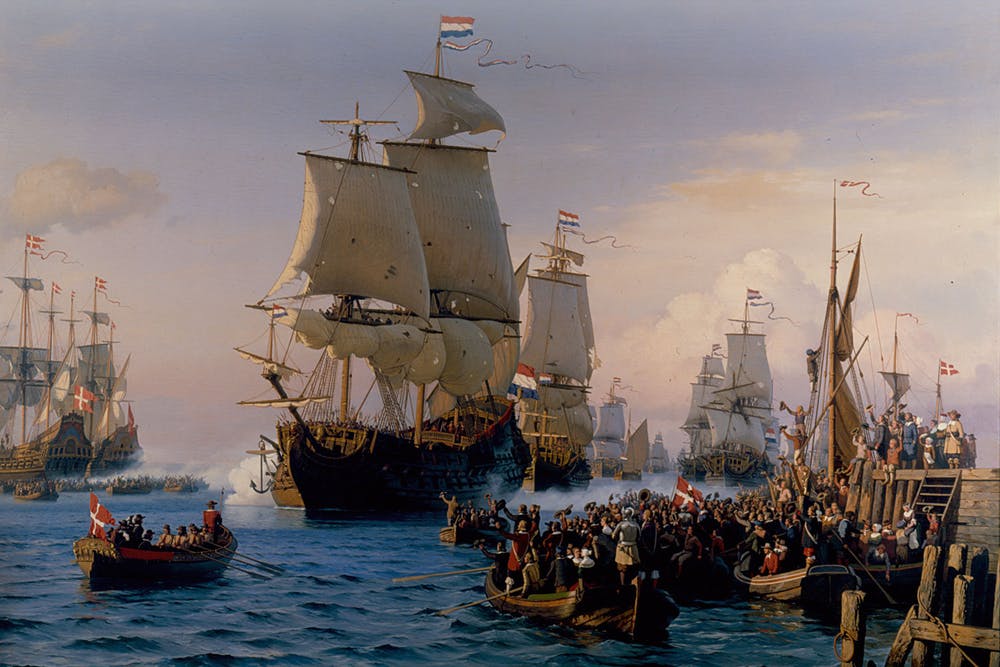
The Dutch Republic had flourished during De Witt’s era. Trade expanded, the republic grew in wealth and influence, and De Witt pursued policies designed to protect commercial interests. He had helped make peace with England in 1654 through the Treaty of Westminster. Later, after the Second Anglo-Dutch War, he was involved in the Peace of Breda in 1667. He also strengthened the Dutch navy, appointing Lieutenant Admiral Jacob van Wassenaer Obdam as commander and later backing Michiel de Ruyter.
But military success at sea did not mean safety on land.
As the States General focused on rivalry with England, the Dutch States Army was greatly neglected. At the same time, France under Louis XIV posed a growing danger. De Witt tried to protect the republic through diplomacy, including the Triple Alliance of 1668 with England and Sweden. Yet international politics turned against the Dutch.
In 1672, England and France declared war on the Dutch Republic, while several German states were also involved in the broader assault. The country suffered early defeats. Fear exploded into hysteria. In moments like this, frightened societies often look for someone to blame, and Johan de Witt became the obvious target.
Cornelis de Witt and the trap at the prison
Johan’s brother Cornelis de Witt was already especially hated by Orangists. He was arrested on false charges of treason. Under Roman-Dutch law, torture was commonly used because a confession was required before conviction was possible. Cornelis was tortured but refused to confess. Even so, he was sentenced to exile.
Johan, who had already been severely wounded by a knife attack on 21 June 1672 and had resigned as Grand Pensionary on 4 August, went to the prison to help his brother begin that exile.
That prison was near the Gevangenpoort in The Hague. A crowd gathered there, along with members of the city’s civic militia. A civic militia was an armed town force made up of local citizens. Instead of protecting the brothers, the situation turned into a death trap.
The brothers were attacked, shot, and handed over to the mob.
The lynching and cannibalism
What followed was not merely murder. Contemporary accounts describe a scene of prolonged public brutality.
Johan and Cornelis de Witt were shot and left to the crowd near the Gevangenpoort. Their naked, mutilated bodies were hung from a public gibbet, a wooden frame used to display the bodies of the executed. The mob reportedly roasted and ate parts of their bodies, including their livers.
This is why the killing remains so shocking even centuries later. Political mobs have killed rivals before. But here the violence became grotesquely physical and symbolic. The mutilation, the public display, and the cannibalism transformed the murders into a spectacle of hatred.
Even more chilling, contemporary observers reportedly noted that the crowd behaved with a kind of discipline. That detail has long raised doubts that the event was entirely spontaneous.
Was it organized?
The full truth remains unresolved. Some historians have claimed that William of Orange may have incited the killers. What is known is deeply suspicious.
William did not prosecute several well-known ringleaders, including Johan van Banchem, Cornelis Tromp, and Johan Kievit. Some even advanced in their careers afterward. It was also noted that a federal cavalry detachment that might have prevented the lynching had been withdrawn.
Whether that proves direct involvement is another matter, and the question remains unanswered. But the silence after the killings was politically meaningful. Almost nobody paid a price for one of the most savage acts of public political violence in Dutch history.
Why the murders mattered politically
De Witt had effectively ruled the republic for nearly twenty years. His death did not simply remove one statesman. It marked the collapse of his regime.
The lynching gave new momentum to mob action. Soon after, William was empowered to purge city councils in the name of restoring public order. Large Orangist demonstrations followed, demanding restoration of older civic and guild privileges, more influence for Calvinist preachers, and less toleration for Catholics and other dissenting religious groups.
So the murder of the De Witt brothers was not only a gruesome outburst. It was part of a transfer of power. Panic over foreign invasion helped destroy the republican order De Witt had defended and opened the way for an entrenched Orangist regime.
A horrifying end to a complex life
Johan de Witt is often remembered for the brutality of his death, but his life was larger than that ending. He was a central political architect of the Dutch Republic during a period of great wealth and trade. He was also a mathematician whose work on analytic geometry and life annuities earned lasting attention.
Yet history tends to remember the final image: a statesman blamed for national disaster, a prison visit turned into an ambush, a public gibbet, and a crowd so consumed by fury that it crossed into cannibalism.
The real horror was not only that two brothers were lynched. It was that in a moment of national fear, political rage became ritualized violence, and the system that followed had little interest in punishing it.
Sources
Based on information from Johan de Witt.
Related articles
More about history
More about politics
History gets wild fast — download DeepSwipe and take a bite out of the strangest true stories every day.