On 11 March 2011, the Tōhoku earthquake struck off the coast of Japan with a magnitude of 9.0–9.1, making it the most powerful earthquake ever recorded in Japan and one of the strongest ever measured anywhere since modern seismography began in 1900. It lasted about six minutes. The destruction it caused on land is widely remembered, but one of the most astonishing parts of the event is how much it changed the planet itself.
This was not just a disaster that toppled buildings and triggered a tsunami. It physically shifted Japan, altered Earth’s rotation, nudged the planet’s axis, and sent effects rippling as far as Norway, Antarctica, and even into orbit.
Watch the story on DeepSwipe
Japan’s main island was shoved eastward
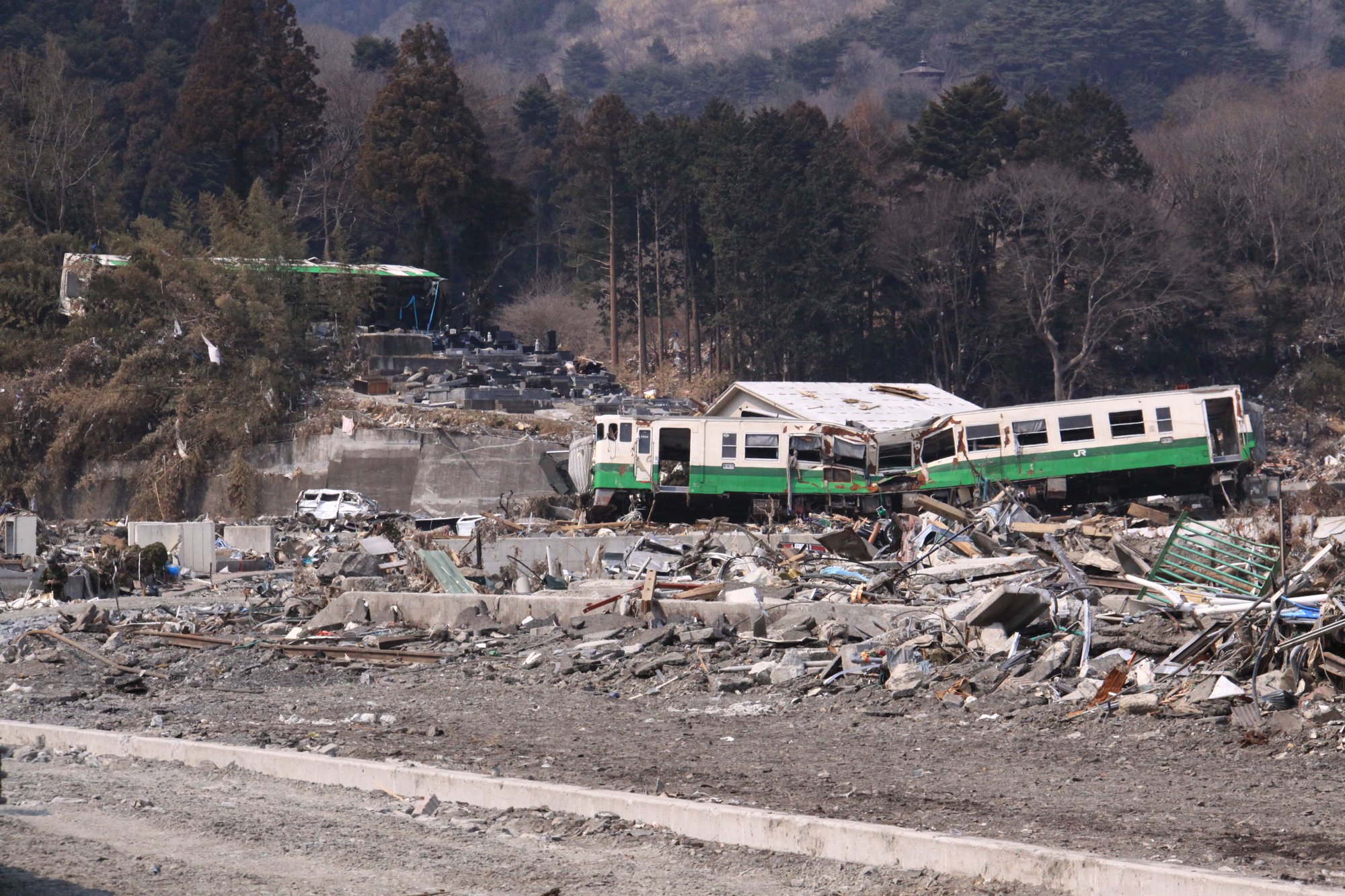
One of the clearest signs of the quake’s power was the movement of Honshu, Japan’s largest island. The earthquake moved it 2.4 meters east. GPS stations near the epicenter recorded dramatic shifts, with the station nearest the rupture moving almost 4 meters.
The biggest changes happened closest to the source of the earthquake, which lay about 72 kilometers east of the Oshika Peninsula in the Tōhoku region. Sendai, the nearest major city, was 130 kilometers from the epicenter.
The coastline changed too. A 400-kilometer stretch of Japan’s coast dropped vertically by about 0.6 meters, and some parts of Honshu’s Pacific coast initially sank by roughly a meter. That drop mattered because lower coastal land allowed the tsunami to travel farther and faster inland. In later years, some of the coast rose again and eventually exceeded its original height.
Land subsidence, meaning the sinking of the ground surface, was measured in many places. The Oshika Peninsula subsided by 1.2 meters, while cities and towns such as Ishinomaki, Kesennuma, Rikuzentakata, and Kamaishi also dropped by substantial amounts. Scientists said this subsidence was permanent, leaving those communities more vulnerable to future flooding during high tides.

What happened under the sea
The earthquake occurred where the Pacific plate is being forced beneath the plate under northern Honshu. This process is called subduction. As the Pacific plate moves at about 8 to 9 centimeters per year, stress builds up over long periods. Eventually that stress is released suddenly in a slip-rupture event, producing a huge earthquake.
In this case, the break was enormous. The Japan Meteorological Agency said the fault zone may have ruptured from offshore Iwate Prefecture to offshore Ibaraki Prefecture, over a length of 500 kilometers and a width of 200 kilometers.
Near the Japan Trench, the seabed underwent especially dramatic motion. A report published later concluded that the seafloor between the epicenter and the trench moved 50 meters east-southeast and rose about 7 meters. Earlier reports from the Japanese coast guard also said the seabed near the epicenter shifted by 24 meters, and the seabed off Miyagi Prefecture was elevated by 3 meters.
This sudden upward movement of the seafloor displaced a huge volume of water and helped generate the catastrophic tsunami. The upthrust along a broad section of seabed off Tōhoku was one of the main reasons the tsunami became so destructive.
The quake changed Earth’s rotation
One of the most remarkable geophysical effects was that the earthquake changed how Earth spins.
Because the quake redistributed mass on and within the planet, Earth’s moment of inertia changed. Moment of inertia is the way mass is distributed relative to an object’s axis of rotation. When that distribution changes, the rotation rate can change too. In this case, Earth’s rotational speed increased slightly.
The result was that the length of a day became shorter by about 1.8 microseconds. A microsecond is one millionth of a second, so this is far too small for people to notice in everyday life. But scientifically, it is extraordinary that a single earthquake could measurably shorten the day.
Researchers also estimated that Earth’s axis shifted by between 10 and 25 centimeters. That does not mean the planet suddenly tipped over in any dramatic visible way. It means the position of the axis relative to Earth’s mass distribution changed slightly, producing subtle planetary effects, including changes linked to Earth’s tilt and the Chandler wobble, a small natural wobble in Earth’s rotation.
These kinds of changes are expected from an earthquake of this magnitude, but the scale of the Tōhoku event made them especially notable.
A quake powerful enough to affect the whole planet
The Tōhoku earthquake was so energetic that it produced effects far beyond Japan.
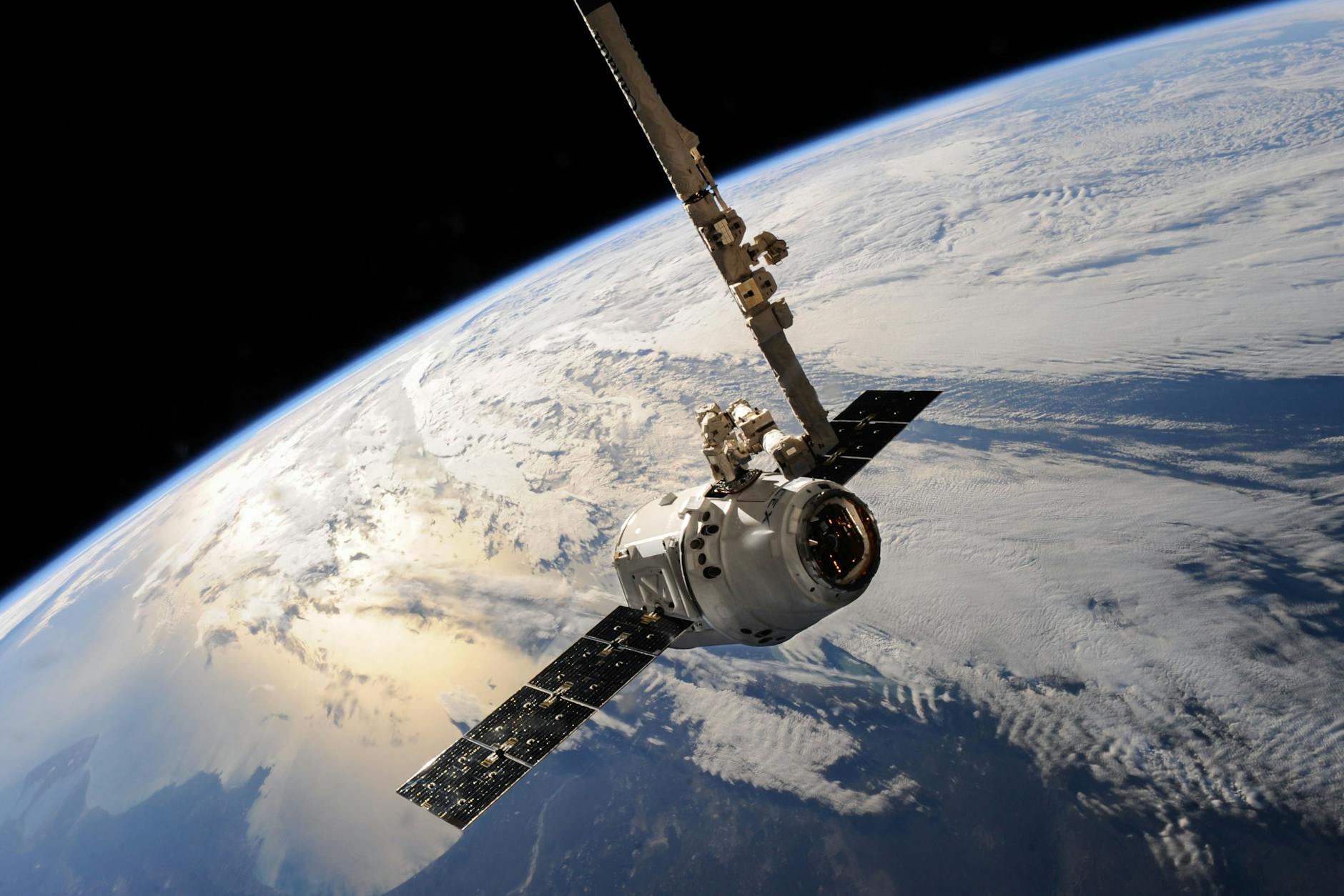
It generated infrasound waves, which are sound waves at frequencies too low for humans to hear. These waves were detected through perturbations in the orbit of the Gravity Field and Steady-State Ocean Circulation Explorer, or GOCE, making it the first time a satellite in orbit effectively acted like a seismograph.
In Antarctica, seismic waves from the quake caused the Whillans Ice Stream to slip by about 0.5 meters. Along the Sulzberger Ice Shelf, 13,000 kilometers away, the tsunami broke off icebergs. The largest measured 9.5 by 6.5 kilometers and was about 80 meters thick.
Even in Norway, the quake’s energy showed up in an unexpected way. In Sognefjorden and other fjords, the water appeared to seethe and form waves that rolled onto the shore. Scientists later concluded that seismic energy from the earthquake generated seiche waves there. A seiche is a standing wave in an enclosed or partly enclosed body of water, often described as water sloshing back and forth like in a bathtub.
These Norwegian seiches began roughly half an hour after the main shock reached Japan and continued for about three hours, with waves up to 1.5 meters high observed in Sognefjorden.
Why this earthquake was such a surprise
Despite Japan’s advanced earthquake monitoring, the magnitude of this event surprised many seismologists. The Japan Trench was known to generate large earthquakes, but not all experts expected one greater than magnitude 8.0 there.
A quake of this size usually requires a rupture length of at least 500 kilometers and a long, relatively straight fault surface. But the plate boundary in the Honshu rupture zone is not especially straight, making such a large earthquake unusual in that setting.
Later research connected the event to the same general mechanism as the 869 Sanriku earthquake, which also produced a large tsunami on the Sendai plain. Tsunami deposits in the region suggested that giant tsunamigenic earthquakes had happened there before, perhaps every 800 to 1,100 years. After 2011, researchers reassessed the long-term risk of great trench earthquakes in northeastern Japan.
More than a local disaster
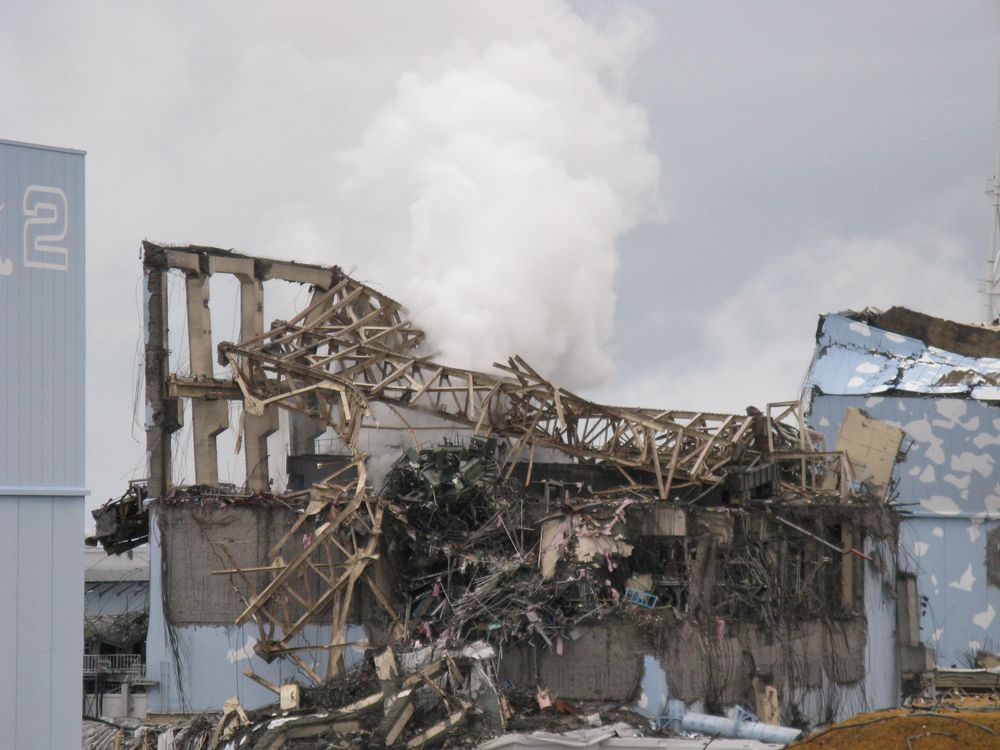
The 2011 Tōhoku earthquake is often remembered for the tsunami, the immense loss of life, and the Fukushima Daiichi nuclear disaster that followed. But it also stands out as one of the clearest examples of how a single geologic event can reshape the Earth system on multiple levels.
It moved land by meters, shifted the seabed by tens of meters, lowered coastlines, altered the length of the day, nudged Earth’s axis, and sent detectable disturbances across oceans, ice sheets, fjords, and into space.
Few natural events make the planet’s mechanics feel so visible. The Tōhoku quake was not only a tragedy in human terms. It was also a reminder that Earth is a dynamic world, where forces deep below the surface can redraw coastlines and subtly change the motion of the planet itself.