Azad Hind in WWII

In October 1943, Subhas Chandra Bose announced the Provisional Government of Free India, better known as Azad Hind, in Singapore. It was presented as the government of an independent India, even though it had been formed in exile during World War II and relied heavily on Japanese support. That contradiction is what makes Azad Hind so historically gripping: it looked like a state, spoke like a state, and acted like a state in some ways, yet much of its real power remained out of its hands.

For many Indians, however, its significance went beyond legal control or military strength. Azad Hind became a powerful symbol in the struggle against British rule, especially because it tried to turn the idea of independence into a functioning political reality.

The roots of Azad Hind lay in a wider movement of Indian nationalists living outside India during the war. Their aim was to seek independence from the British Raj by aligning with the Axis powers. The early steps came through conferences of Indian expatriates in Southeast Asia.

At a conference in Tokyo in March 1942, convened by Rash Behari Bose, the Indian Independence League was established as a political move toward an Indian state aligned with Japan. A second conference in Bangkok later invited Subhas Chandra Bose to take a leading role. At the time, he was in Germany and traveled to Japan by submarine before reaching Singapore.

Rash Behari Bose had struggled to keep the League organized and to secure resources for what became the Indian National Army, or INA. He was eventually replaced in leadership by Subhas Chandra Bose, who arrived in Tokyo in June 1943 and soon made clear that he intended to strike at British control in India from the east.

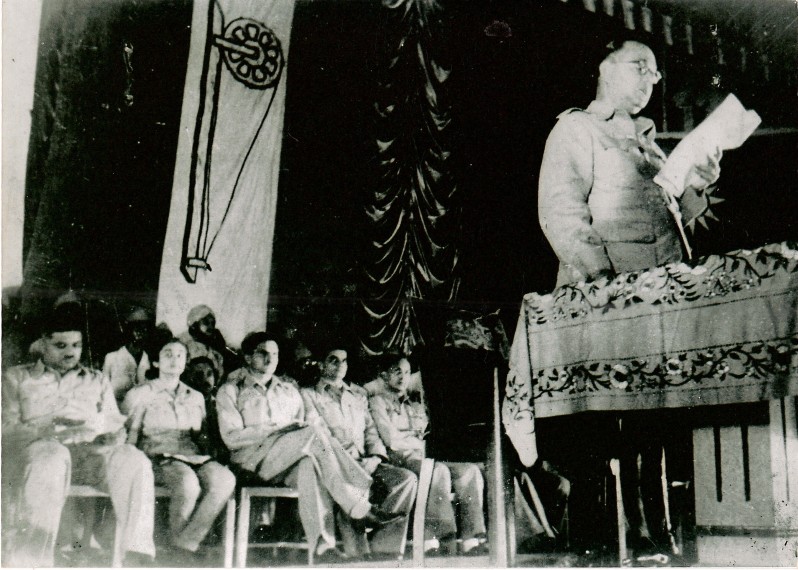
On 21 October 1943, at the Cathay Cinema Hall in Singapore, Bose formally proclaimed the Provisional Government of Free India. He described its purpose as launching and conducting the struggle to drive the British and their allies out of India.

DeepSwipe app banner

A Government Designed to Look Real

One reason Azad Hind still draws attention is that it was not just a slogan or a military unit. It had the outward features of a state. It had its own currency, courts, and civil code. A civil code is a set of laws governing everyday legal matters, while courts are institutions meant to apply those laws. These details helped give Azad Hind the appearance of legitimacy.

The government also had a cabinet and a structure of ministers. Subhas Chandra Bose served as head of state, prime minister, and minister for war and foreign affairs. Lakshmi Swaminadhan was minister in charge of women’s organization and also commanded the Rani Jhansi Regiment, a brigade of women soldiers in the INA. This regiment was described as the first of its kind established in Asia, making it one of the most striking features of Azad Hind’s military and political vision.

Other ministers handled finance, publicity, and administration, while officers from the Indian National Army were represented in the government. In addition, a group of secretaries and advisers supported Bose, all holding ministerial rank. Even so, the day-to-day workings of the government were not fully documented, and many specific responsibilities remain unclear.

The Islands That Became Azad Hind’s Main Territory

Azad Hind’s most visible territorial claim came when Japan handed over nominal authority of the Andaman and Nicobar Islands in late 1943. “Nominal authority” means authority in name rather than full practical control. Bose renamed the islands Shaheed and Swaraj, meaning “martyr” and “self-rule.”

This gave Azad Hind its first claim to actual territory under its administration. On paper, the government could levy taxes, make laws, and enforce them. To levy taxes means to officially collect money from the population to fund government activities. But the reality was far more limited.

Although the islands were under Azad Hind’s jurisdiction in theory, Japanese forces retained control over key instruments of power, especially the police. Lt. Col. A. D. Loganathan was placed as governor, but after the war he admitted that he had full control only over the islands’ very limited education department. He refused responsibility for other areas because Japanese authorities kept effective control.

That imbalance became brutally clear in the Homfreyganj massacre of 30 January 1944, when forty-four Indian civilians were shot by the Japanese on suspicion of spying. Many were linked to the Indian Independence League. Diwan Singh, the League’s leader in Port Blair, had already been tortured to death in the Cellular Jail after trying to protect islanders from Japanese atrocities during the occupation.

These events show the gap between Azad Hind’s formal claims and its actual governing power. It had the shell of authority, but critical decisions remained elsewhere.

War, the INA, and the Limits of Independence in Exile

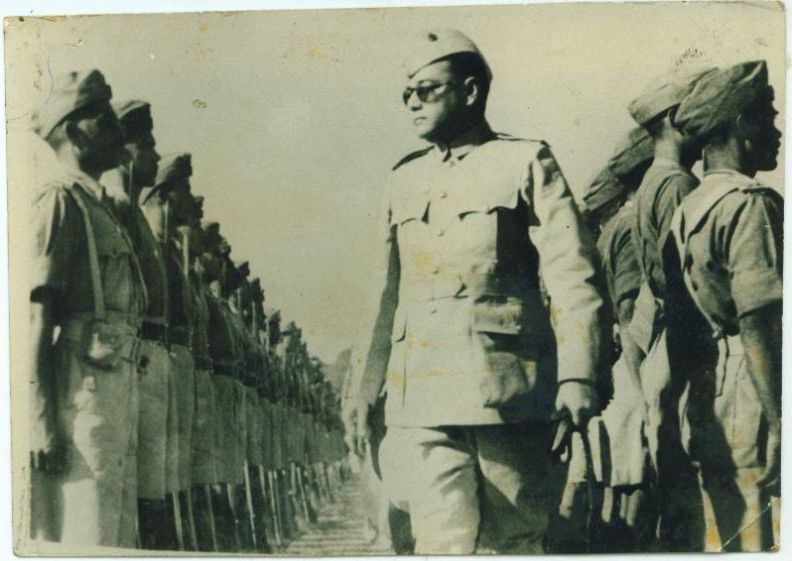
Azad Hind declared war on Britain and the United States the same night it was proclaimed. Its military force, the Indian National Army, entered combat alongside Japanese forces on the Indo-Burma Front. The INA fought against the British Indian Army and Allied troops, especially in the Imphal-Kohima campaign.

The INA achieved some dramatic successes. At the Battle of Imphal, its forces breached British defenses in Kohima and reached Moirang. On 18 April 1944, a unit led by Col. Shaukat Malik captured Moirang in Manipur, and Azad Hind administration took control of this territory. Another INA column under Col. Gulzara Singh penetrated deep into India, and the Azad Brigade advanced by outflanking Anglo-American positions.

But these gains could not be sustained. The INA depended heavily on Japanese logistics and supplies. Logistics refers to the movement and delivery of food, equipment, ammunition, transport, and other essentials that keep an army operating. This dependence proved disastrous when Allied air dominance, damaged supply lines, and torrential rain undermined the campaign. British bombing also hurt morale. Once the siege of Imphal failed, the Japanese shifted resources away from South Asia toward the Pacific war, and Azad Hind’s hopes of marching on Delhi faded.

A State Under One Dominant Leader

Inside the government, Bose was the unquestioned central figure. He was given the title “Netaji,” roughly meaning “leader,” and exercised virtual authoritarian control over both the government and the army. The cabinet existed as an advisory body, but it did not share equal responsibility or power.

This concentration of authority was part of the controversy surrounding Bose and Azad Hind. Britain portrayed him as a dangerous figure and accused him of fascist tendencies, pointing to his alliance with the Axis and his support for a centrally organized, self-sufficient, semi-socialist India under firm one-party control after independence. Bose, however, also criticized British rule as hypocritical, arguing that Britain claimed to fight for democracy while denying democratic rights and equality to its colonial subjects in India.

He also declared support for abolishing racial discrimination against Burmese, Japanese, and other Asians. At the same time, his political alignment with Japan and the Axis remains one of the most debated parts of his legacy.

Why Azad Hind Still Mattered After It Fell

Azad Hind collapsed as the war turned against Japan. Its administration in the islands ended when British forces retook them. The INA was defeated while trying to defend Rangoon without Japanese support. Bose left Burma, returned to Singapore, and later disappeared from the political scene in 1945 after a reported plane crash while attempting to escape toward the Soviet Union.

Yet the end of Azad Hind did not end its impact. The British were alarmed by how public perception changed after the war. Men once condemned as traitors and collaborators were increasingly seen by many Indians as liberators. The INA trials, in which hundreds of officers were charged with treason, became a politically dangerous issue for the British Raj. There was fear that prosecuting these men openly would inflame anti-British feeling and trigger protest and violence.

That reaction reveals why Azad Hind remains historically important. Its military campaign failed, its authority was sharply limited, and it depended on Japanese backing from beginning to end. But it also gave visible form to the idea that Indian independence could be claimed, organized, and defended, even under extreme wartime conditions. In that sense, Azad Hind was both a fragile wartime creation and a powerful political symbol whose influence outlasted its brief existence.

Stories About Azad Hind

Azad Hind and the INA in WWII

Azad Hind and the INA in WWII

Otehr Stories like this

History of Japan — When the Military Took the Wheel

History of Japan — When the Military Took the Wheel

1947–1948 and the Creation of Israel

1947–1948 and the Creation of Israel

Korea Under Japanese Rule: Forced Labor and War

Korea Under Japanese Rule: Forced Labor and War

World War II: Factories vs. Firepower—Why the Allies Won

World War II: Factories vs. Firepower—Why the Allies Won

Hiroshima and Nagasaki Atomic Bombings

Hiroshima and Nagasaki Atomic Bombings

World War II: From Victory to the Cold War

World War II: From Victory to the Cold War

Micronesia’s Ocean Code: Stick Charts and Stone

Micronesia’s Ocean Code: Stick Charts and Stone

Philosophy Across Cultures: Four Traditions, Four Aims

Philosophy Across Cultures: Four Traditions, Four Aims

Auschwitz in WWII: The Largest Mass Murder Site

Auschwitz in WWII: The Largest Mass Murder Site

Which Countries Lead Manufacturing Today

Which Countries Lead Manufacturing Today

Economics: Why Keynes Changed the Debate

Economics: Why Keynes Changed the Debate

Why Civilians Pay So Much in War

Why Civilians Pay So Much in War

Swipe through history like a wartime radio signal—download DeepSwipe and uncover more stories behind the headlines.